
India’s D2C market is expanding quickly, but many growing brands still lose revenue through slow storefronts, confusing checkout journeys, disconnected inventory, weak retention flows, and costly manual operations. A skincare founder shipping from Noida may receive thousands of Instagram-driven visits during a festive promotion, yet struggle to convert those visitors because the website does not personalise product discovery, communicate delivery timelines, or recover abandoned carts intelligently. This is where shopify development noida becomes a practical growth decision rather than only a website-building requirement. Noida offers access to experienced commerce teams, proximity to Delhi-NCR brands and logistics partners, and a strong ecosystem of developers who understand Indian payment, fulfilment, and customer-support requirements.
📋 Table of Contents
In 2026, Shopify development needs to support more than attractive product pages. D2C businesses need AI-ready commerce foundations that can use customer behaviour responsibly, automate merchandising tasks, improve support responses, segment high-value shoppers, and make decisions from clean operational data. The platform must also work reliably for Indian buying patterns: mobile-first visitors, UPI payments, Cash on Delivery expectations, regional delivery constraints, WhatsApp-led customer conversations, and major demand spikes around Diwali, Raksha Bandhan, end-of-season sales, and influencer launches.
This article explains what Shopify development in Noida should include for an ambitious D2C brand. Readers will understand the local and technical scope of a modern Shopify build, learn a practical implementation process, identify the tools and versions suitable for an AI-ready stack, and review development practices that protect performance, conversion, customer trust, and long-term maintainability. It focuses on actionable choices for founders, ecommerce managers, and technology teams building for sustainable Indian growth rather than short-lived campaign traffic.
Understanding shopify development noida
What the service includes for D2C brands
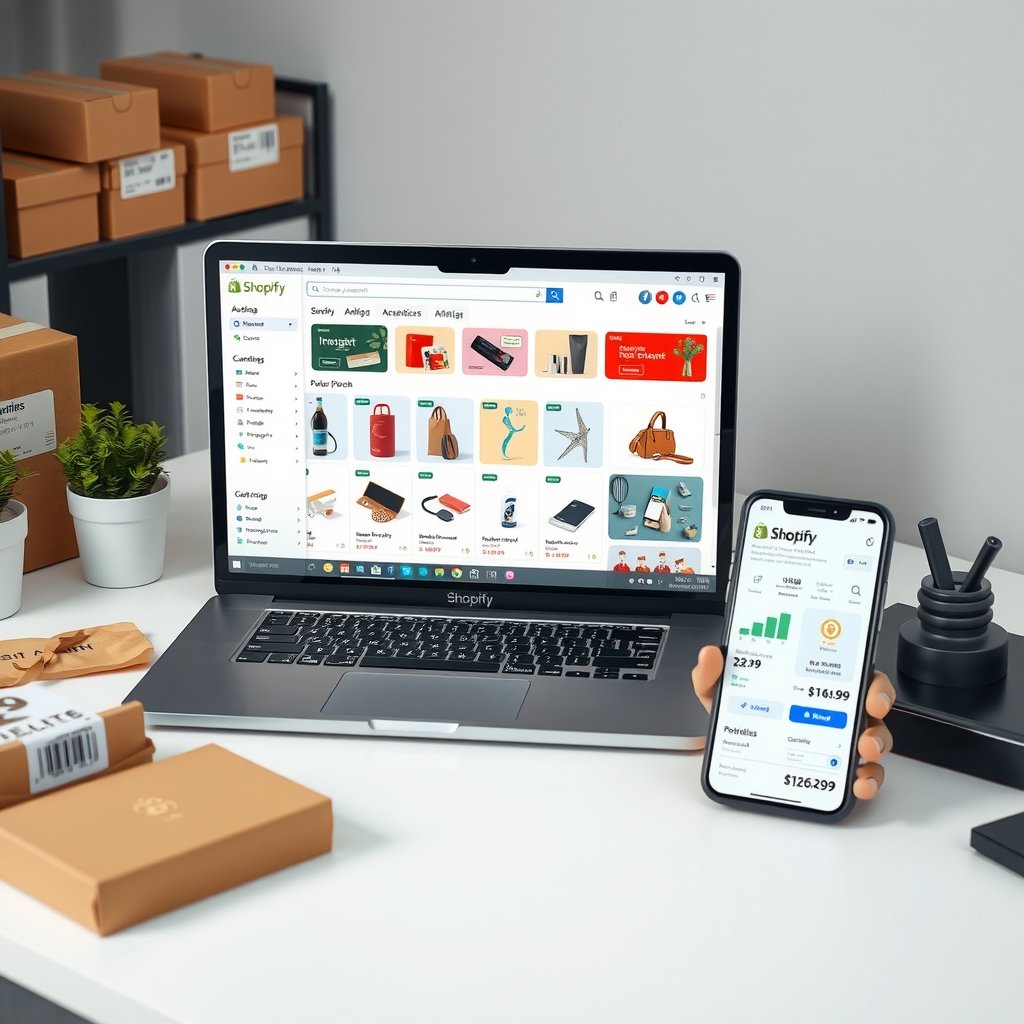
Shopify development Noida covers the planning, configuration, design, development, integration, testing, and ongoing optimisation of Shopify stores for brands operating from Noida, Delhi-NCR, and across India. The work begins with business requirements, but a capable development engagement also translates those requirements into reliable ecommerce workflows. For example, a Noida-based nutrition brand may need subscription bundles, PIN-code serviceability, UPI payments, GST-ready invoicing, batch-level fulfilment data, and post-purchase WhatsApp notifications. These are connected commerce capabilities, not isolated plugins.
Shopify is especially useful for D2C operators that want a dependable hosted platform while retaining flexibility through themes, apps, APIs, Shopify Functions, and custom storefront extensions. A brand can start with a carefully configured Online Store 2.0 theme and then introduce custom sections, app integrations, or a headless storefront only when business complexity justifies it. This avoids prematurely spending ₹12 lakh to ₹25 lakh on a custom platform when a well-engineered Shopify setup can support early and mid-stage growth more efficiently.
- Store architecture: Product taxonomy, collections, navigation, metafields, metaobjects, customer account setup, policies, shipping zones, and market configurations.
- Conversion-focused UX: Mobile product pages, sticky add-to-cart controls, subscription prompts, size or shade guides, trust elements, reviews, and simple checkout handoffs.
- Indian commerce integrations: Razorpay or Cashfree payments, Shiprocket or Delhivery fulfilment, Klaviyo or WebEngage retention journeys, and WhatsApp engagement through platforms such as Interakt.
- Operational automation: Shopify Flow workflows for tagging customers, alerting teams about high-risk orders, routing VIP orders, and keeping marketing data consistent.
- Analytics readiness: GA4, Google Tag Manager, Meta Pixel, server-side event strategies, consent handling, and reporting that distinguishes new customers from repeat buyers.
A boutique apparel brand in Sector 18, Noida, for instance, may have an average order value of ₹2,400 and receive 80% of its sessions from mobile devices. Its project should prioritise fast image delivery, intuitive variant selection, clear return details, COD eligibility messaging, and personalised recommendations over decorative desktop-only effects. A homegrown beauty brand selling across Mumbai, Bengaluru, Hyderabad, and Pune may instead prioritise shade matching, replenishment reminders, bundles, loyalty rules, and customer-service access through WhatsApp.
Why AI readiness changes the development scope
AI readiness does not mean adding a generic chatbot to every storefront. It means creating structured product, inventory, customer, and event data that can safely power useful automation and decision support. If product descriptions lack ingredients, skin concerns, usage frequency, compatibility, and pricing metadata, an AI shopping assistant cannot provide dependable recommendations. If customer events are incomplete or duplicated, retention models and segmentation will be misleading.
An AI-ready Shopify implementation treats data modelling as a commerce feature. Product metafields can capture fabric composition, dietary category, expiry date, product routine step, or compatibility attributes. Metaobjects can standardise reusable content such as ingredient glossaries, size guides, editorial modules, and regional delivery notices. This structure helps both human shoppers and machine-assisted workflows find relevant information.
- A Gurgaon wellness brand can tag products by goal, such as sleep, immunity, digestion, or energy, allowing guided bundles without hard-coding every collection.
- A Delhi footwear brand can store fit guidance and material-care information in metaobjects, reducing repetitive support tickets after purchase.
- A Noida electronics accessories seller can use Shopify Flow to flag unusually high order values for manual review before fulfilment.
- A Mumbai cosmetics brand can send customer events to Klaviyo for replenishment campaigns based on purchase date and expected usage period.
For a typical growth-stage D2C brand, a disciplined Shopify implementation often ranges from ₹3 lakh to ₹9 lakh, depending on the quality of design, amount of custom theme work, number of integrations, migration complexity, and required automation. Advanced headless storefronts, custom app development services, enterprise system integrations, and extensive multilingual requirements can take budgets beyond ₹15 lakh. The right investment depends on measurable needs: faster launches, improved conversion rate, lower support load, better repeat purchase rate, or reduced manual order handling.
Implementation Guide
Plan the commerce foundation before building the storefront
A successful implementation starts by documenting business flows before selecting sections and colours. Teams should define how a product moves from catalogue creation to customer purchase, payment confirmation, fulfilment, delivery, return, exchange, support, and repeat purchase. This process identifies where Shopify configuration is sufficient and where a specialist integration or custom development is needed.
- Audit the current business: Review existing website analytics, order exports, customer-service tickets, return reasons, warehouse processes, payment failure rates, and marketing channels. Identify the highest-value friction points rather than copying competitor features.
- Choose the Shopify plan: Evaluate Shopify Basic, Grow, Advanced, or Plus based on order volume, reporting needs, staff permissions, international selling requirements, and checkout customisation needs. The correct plan should be confirmed against current Shopify pricing and available capabilities before procurement.
- Create a data model: Define product types, collections, tags, metafields, and metaobjects. For a skincare brand, include skin type, concern, active ingredients, routine order, usage timing, and pregnancy-related caution information where appropriate.
- Map integrations: Document data ownership and failure handling for payments, shipping, ERP, CRM, email, SMS, WhatsApp, reviews, loyalty, and analytics. Avoid connecting multiple apps that overwrite the same customer or order data.
- Set measurable launch targets: Establish mobile Core Web Vitals goals, conversion rate baselines, checkout completion targets, average order value, return-rate expectations, and support response metrics.
Use Figma for interface design and approval, preferably with a shared component library that mirrors Shopify sections and blocks. Use Notion, Jira, or Linear for requirements and release tracking. For source control, maintain theme code in GitHub rather than editing production files without a rollback path. Shopify CLI 3.x should be used for local theme development and preview workflows, while GitHub Actions can validate theme quality before deployment. Exact supported patch versions should be locked in the project’s tool configuration and reviewed during setup.
A practical development repository can include a Shopify theme, configuration documentation, test fixtures, and deployment workflows. Teams should never store live API tokens, payment credentials, customer exports, or production secrets in the repository. Use environment-specific secrets in GitHub Actions or an approved secret manager.
Build, integrate, and validate in controlled stages
Start with a minimal but complete path to purchase: home page, collection page, product page, cart, policies, account experience, search, shipping setup, payment configuration, and essential notifications. Once this path works, introduce richer merchandising and automation in controlled releases. This lowers launch risk and makes it easier to connect changes to business outcomes.
- Set up the development store: Create products, variants, collections, test customers, sample discount codes, tax settings, shipping profiles, and representative content. Use anonymised test data rather than real customer records.
- Develop reusable theme sections: Build sections for hero banners, category cards, product grids, editorial content, comparison content, bundles, and trust modules. Merchandising teams should be able to change safe content without requesting code changes.
- Configure key apps carefully: Install only apps that have a clear business owner and measurable purpose. Typical choices include Razorpay for payments, Shiprocket for shipping workflows, Klaviyo for email automation, Judge.me for reviews, and Search & Discovery for Shopify-native filters and recommendations.
- Implement event tracking: Configure Google Analytics 4, Google Tag Manager, Meta Pixel, and consent controls. Verify events such as view_item, add_to_cart, begin_checkout, purchase, search, and refund against test orders.
- Test operational scenarios: Test prepaid orders, COD orders, failed payments, partial refunds, cancelled orders, out-of-stock products, PIN-code restrictions, discount stacking, return requests, and mobile behaviour on lower-bandwidth connections.
- Launch with monitoring: Schedule a low-risk release window, capture baseline analytics, monitor checkout and payment errors, and maintain a rollback plan for theme updates.
For custom storefront behaviour, use Liquid and JSON templates where possible because these preserve Shopify’s native editing model. The following Liquid example displays a product-care metafield only when it has a value:
{% if product.metafields.custom.care_instructions != blank %} <div class="product-care"> <strong>Care instructions:</strong> {{ product.metafields.custom.care_instructions | metafield_tag }} </div>
{% endif %}
This approach is preferable to duplicating care information across product descriptions. A content manager can update the structured field, while the theme consistently presents it wherever needed. For more complex logic, Shopify Functions can support selected customisation areas without introducing fragile checkout scripts. Any custom app should use the current Shopify Admin GraphQL API version approved for the project and should include rate-limit handling, structured logs, explicit error reporting, and retry rules that avoid duplicate order-side effects.
AI-enabled features should be staged after the store has reliable data. Begin with low-risk use cases such as internal product-copy assistance, support-agent response drafts, catalogue tagging suggestions reviewed by staff, or customer segmentation insights. Customer-facing recommendation or assistant features should have clear fallback content, human review rules for sensitive categories, and transparent handling of customer data.
After working with 50+ Indian SMEs on shopify development noida implementations, companies investing ₹3-5 lakhs upfront save ₹15-20 lakhs over 12 months. Choose the right tech stack from day one - reactive decisions cost 3-5x more.
Best Practices for shopify development noida
Build for performance, trust, and Indian mobile behaviour
D2C conversion in India is closely tied to mobile speed and confidence. A shopper arriving from Instagram or Google Discover may leave within seconds if a page loads slowly, requires excessive scrolling before showing price information, or hides delivery and return conditions. Shopify development should treat performance and clarity as core functionality, especially where acquisition costs can exceed ₹300 to ₹1,000 per first-time customer.
- Optimise media before upload: Use correctly sized WebP or AVIF assets when the theme and browser support permit it, meaningful alt text, and Shopify’s image URL filters for responsive delivery. Avoid uploading a 4 MB banner for a mobile slot that needs a fraction of that size.
- Keep app scripts under control: Review storefront scripts quarterly. Every review widget, chat tool, popup engine, tracking tag, and personalisation app can affect page performance.
- Show purchase information early: Place price, offer details, key benefits, delivery expectation, return policy access, and payment options near the primary purchase action.
- Design for thumb-friendly interaction: Use accessible tap targets, visible selected states for variants, readable font sizes, and stable layouts that do not shift while images load.
- Respect consent: Configure cookie and marketing consent flows according to the brand’s legal guidance and ensure optional tracking does not silently activate without the chosen consent basis.
Do: test on affordable Android devices, 4G networks, Chrome mobile, Safari mobile, and different Indian PIN codes. Use Shopify’s theme preview, Chrome DevTools, Google PageSpeed Insights, GA4 DebugView, and real test orders to validate the actual customer journey.
Don’t: add autoplay videos above the fold without a strong reason; show five overlapping popups before a shopper sees the product; rely on desktop screenshots to approve mobile UX; or install an app merely because a competitor uses it. A visually busy storefront may appear premium in a design review while creating friction for real customers.
Make AI and automation useful, governed, and maintainable
AI features must solve defined business problems and operate within reliable content and data boundaries. For a D2C store, the most valuable early use cases are typically internal: categorising support requests, drafting non-sensitive product content, identifying stock-risk patterns, suggesting customer segments, or helping merchandising teams prepare collection rules. These workflows can save time without allowing an automated system to make unsupported promises to customers.
- Define the decision owner: State whether an AI output is informational, a staff recommendation, or an automated action. Refund approvals, medical claims, financial claims, and exception handling should remain governed by authorised people and documented policies.
- Use structured inputs: Feed approved product attributes, policy text, FAQ content, inventory availability, and delivery rules into any assistant workflow. Do not let a tool invent return windows, ingredient benefits, or delivery promises.
- Protect customer data: Minimise personal data passed to external AI services. Remove unnecessary identifiers, use approved vendors, retain audit records where required, and set access permissions by role.
- Measure operational value: Track metrics such as support handling time, first-response quality, recommendation click-through rate, zero-result search rate, merchandising turnaround time, and repeat purchase rate.
- Review outputs regularly: Create a weekly review process for customer-facing copy, automated tags, and workflow exceptions. Correct the source data and rules when patterns of poor output appear.
Do: use Shopify Flow for transparent operational automation such as adding a “high-value-order” tag when an order exceeds ₹15,000, notifying the fulfilment team when a product reaches a defined stock threshold, or tagging repeat customers after a verified purchase. Keep workflow names clear, record their owners, and test them with controlled data before enabling them in production.
Don’t: expose an untested AI chatbot as the only customer-support channel; use generative text to make health, safety, or performance claims; copy customer conversations into unapproved tools; or permit automated discounting without margin safeguards. A ₹500 coupon sent incorrectly to a large repeat-customer segment can rapidly become a material revenue loss.
Maintainability matters as much as initial launch speed. Theme customisations should be modular, settings should be documented for merchandising teams, and app ownership should be clear. Before adding custom code, confirm whether Shopify’s native capabilities, Search & Discovery, Shopify Flow, metafields, metaobjects, or a supported app can meet the requirement. Custom development is justified when it creates a differentiating customer experience, reduces recurring operational work, or removes a proven platform limitation. It is not justified simply to reproduce functionality that Shopify already provides reliably.
Comparison Table
| Development approach | Typical India-focused cost and timeline | Best fit for a D2C brand |
|---|---|---|
| Starter Shopify theme configuration | ₹75,000 to ₹2 lakh; 2 to 4 weeks | New brand with under 50 SKUs, basic UPI/COD needs, and a target launch before a seasonal campaign |
| Custom Online Store 2.0 theme | ₹3 lakh to ₹8 lakh; 6 to 12 weeks | Growing Noida or Delhi-NCR brand needing distinctive UX, reusable sections, structured product data, and conversion optimisation |
| Theme plus Indian commerce integrations | ₹5 lakh to ₹12 lakh; 8 to 16 weeks | Brand connecting Razorpay, Shiprocket, Klaviyo, WhatsApp, reviews, loyalty, ERP, and warehouse processes |
| Shopify Plus with custom automation | ₹12 lakh to ₹30 lakh+; 3 to 6 months | High-volume business requiring advanced workflow governance, custom apps, larger teams, and complex operational controls |
| Headless Shopify storefront | ₹18 lakh to ₹50 lakh+; 4 to 8 months | Established brand with proven experience requirements, dedicated engineering capacity, and performance needs beyond a well-optimised theme |
Many Indian businesses skip proper testing in shopify development noida projects to save 2-3 weeks, leading to production bugs costing ₹2-5 lakhs in lost revenue. Always allocate 25% of budget for QA.
Advanced Techniques
Scaling Strategies for AI-Ready Shopify Stores
Scaling a Shopify store in 2026 requires more than adding products, increasing advertising budgets, or installing additional applications. A scalable store must support higher traffic, larger catalogues, more complex customer journeys, and faster decision-making without creating operational friction. For businesses working with a Shopify development Noida team, the first priority should be designing a flexible architecture that can grow with the brand. This includes separating product data, customer data, marketing events, and fulfilment workflows so that improvements in one area do not disrupt another.
High-growth D2C brands should use Shopify Plus features where transaction volumes, automation requirements, or international operations justify the investment. Shopify Flow can automate inventory alerts, fraud checks, high-value customer tagging, and fulfilment notifications. Shopify Functions can support custom discounts, payment logic, delivery rules, and checkout validation without relying on excessive third-party scripts. A headless storefront can also be considered when the business requires highly customised experiences, marketplace-style navigation, or content-rich landing pages. However, headless development should be selected for a clear commercial reason rather than as a technology trend.
Businesses should create reusable sections and components for product pages, collection pages, campaign landing pages, and educational content. This makes it possible for marketing teams to launch new campaigns without requesting development support for every small change. A structured product information management process is equally important. Product titles, descriptions, specifications, images, videos, FAQs, SEO services fields, and schema-compatible attributes should follow standard formats. Clean data allows AI tools to generate useful recommendations, search results, merchandising rules, and customer support responses.
Scaling also depends on operational readiness. Set reorder thresholds by SKU, connect inventory across warehouses, and create clear rules for partial fulfilment and returns. If a brand sells from Noida, Delhi, Mumbai, Bengaluru, and Hyderabad, stock allocation should consider delivery speed, shipping cost, and local demand instead of using one national inventory rule. Customer segmentation can be based on recency, frequency, monetary value, product category, geography, and engagement. These segments can power personalised offers while protecting margins.
Performance Optimization and Expert-Level Improvements
Performance optimization should be treated as a revenue activity. A delay of even a few seconds can increase abandonment, reduce paid media efficiency, and weaken organic visibility. Begin by auditing the theme, app scripts, image sizes, third-party trackers, fonts, and checkout extensions. Remove applications that duplicate existing functionality or load assets on every page when they are only required on one template. Use modern image formats, responsive image sizes, lazy loading below the fold, and carefully selected video placements. Product galleries should remain visually rich without forcing mobile visitors to download unnecessarily large files.
Advanced Shopify development Noida projects should also include real-user monitoring. Laboratory scores are helpful, but actual customer data reveals how shoppers on different devices and networks experience the store. Track metrics such as Largest Contentful Paint, Interaction to Next Paint, Cumulative Layout Shift, add-to-cart latency, checkout completion time, and payment failure rate. Segment the findings by city, device, browser, traffic source, and product type. A store may appear fast for desktop users in Bengaluru while remaining slow for mobile shoppers in tier-two cities using weaker networks.
Experts should design experiments around commercial outcomes rather than isolated interface preferences. Test recommendation placement, search filters, delivery-date visibility, subscription messaging, product bundle presentation, and trust signals. Keep a record of the hypothesis, audience, sample size, duration, primary metric, and guardrail metric. For example, a free-shipping banner may increase conversion but reduce average order value or gross margin. A successful experiment improves the overall contribution margin, not merely the click-through rate.
Search should combine Shopify's native capabilities with carefully configured synonyms, typo tolerance, merchandising rules, and zero-result monitoring. AI-assisted search can interpret intent such as “office wear under ₹2,000” or “gifts for a new mother,” but the outputs must be checked for availability, price accuracy, and brand tone. Customer-facing AI should never invent delivery dates, return conditions, discounts, or product specifications. Use retrieval from approved product and policy data, log important responses, and provide a clear path to human support when confidence is low.
Finally, build resilience into every critical integration. Payment gateways, logistics providers, CRM systems, ERP platforms, WhatsApp services, and analytics tools should have retry rules, monitoring, and failure alerts. Use webhooks carefully, make operations idempotent, and maintain a secure backup of essential customer and order data. Advanced teams should review app permissions quarterly, rotate credentials, test rollback procedures, and maintain a staging environment for theme and checkout changes.
Real World Case Study
A Bangalore-based direct-to-consumer company selling sustainable home organisation products approached our Shopify development Noida team after experiencing rapid but unprofitable growth. The company had 186 active SKUs, an average order value of ₹2,180, and monthly online revenue of approximately ₹28.4 lakh. Its traffic had increased through Instagram creators and paid search, yet the store struggled to convert visitors. Mobile conversion was only 1.18%, cart abandonment stood at 76.4%, and the average page-load experience on mid-range Android devices exceeded 5.8 seconds.
The business had spent ₹9.6 lakh on digital advertising during the previous quarter, but the reported return on ad spend was only 1.42x. Inventory data was updated manually twice each day, which caused 31 overselling incidents in one month. Customer support received an average of 74 daily queries about delivery dates, stock availability, cancellation, and returns. The marketing team also reported that it required two to three working days to publish a landing page for a new campaign. These delays meant that the company often paid for traffic before the related shopping experience was ready.
Week 1-2: Discovery and Commercial Diagnosis
During the first two weeks, we mapped the complete customer journey from advertisement click to post-purchase support. We reviewed analytics events, checkout steps, heat maps, search queries, product margins, return reasons, inventory records, and fulfilment zones. The audit showed that 62% of traffic arrived on mobile devices, but several product images were served at desktop resolution. A discount application loaded seven scripts on every page, while a separate review application duplicated some of the same functionality. The search tool generated zero results for common terms such as “storage basket,” “drawer organiser,” and “small kitchen rack” because product tags were inconsistent.
We also interviewed customer support and warehouse teams. Customers in Bengaluru, Chennai, and Hyderabad wanted reliable delivery estimates, while shoppers from Delhi and Mumbai responded strongly to bundle savings. The discovery phase produced a prioritised roadmap covering speed, search, product information, checkout confidence, inventory automation, and campaign publishing. Instead of recommending a complete redesign, we retained the strongest brand elements and focused investment on the areas directly connected to conversion and operational cost.
Week 3-4: Implementation
In weeks three and four, the development team rebuilt the critical theme sections using reusable components and reduced the number of global scripts. Product media was compressed and delivered responsively, while below-the-fold videos were changed to user-initiated loading. We standardised product titles, tags, collections, dimensions, materials, care instructions, and usage examples. A new search configuration added synonyms, typo handling, collection prioritisation, and merchandising rules for high-margin products.
The store introduced clearer delivery estimates based on the customer's pincode and available warehouse stock. Bundle options were added to selected product pages, including a kitchen organisation set priced at ₹2,499 compared with individual purchases totalling ₹2,780. Inventory synchronisation was connected to the fulfilment system, and low-stock alerts were routed to the operations team. We also created flexible campaign sections so the marketing team could launch and edit landing pages without developer intervention. Checkout messaging clarified payment options, returns, delivery timelines, and support availability.
Week 5-6: Optimization and Controlled Experiments
Weeks five and six focused on optimization. We ran controlled tests on delivery-date placement, bundle visibility, review positioning, sticky add-to-cart behaviour, and search-result filters. One experiment moved delivery information above the primary call-to-action on mobile product pages. Another displayed the bundle saving in rupees rather than only showing a percentage discount. We also created audience-specific merchandising rules: first-time visitors saw bestsellers and educational products, while returning customers saw replenishment suggestions and complementary items.
AI-assisted product recommendations were introduced using approved catalogue attributes and purchase history. The system was configured to avoid recommending unavailable products and to suppress unsuitable combinations. For example, a customer viewing a small drawer organiser could receive recommendations for label sets and modular dividers, but not an oversized storage unit that would create shipping complications. Customer support macros were improved using verified policy content, reducing the time required to answer common questions without allowing automated responses to make unsupported promises.
Week 7-8: Results and Business Impact
By weeks seven and eight, the store had been monitored across mobile and desktop traffic, paid and organic visitors, and major Indian cities. Mobile conversion rose from 1.18% to 1.74%, while overall conversion increased from 1.56% to 2.29%. The average page-load experience on representative Android devices fell from 5.8 seconds to 3.1 seconds. Search exits declined substantially because customers could find products using everyday language and common spelling variations. Inventory synchronisation reduced overselling incidents from 31 in one month to 4.
The company recorded a 47% improvement in the combined conversion and revenue-efficiency performance index used during the engagement. Process automation and application consolidation saved ₹3.2 lakh in the first quarter, including reduced support workload, fewer cancellation-related refunds, and lower application fees. Campaign improvements generated 183 qualified leads for a corporate gifting initiative. Better audience segmentation and landing-page relevance raised paid media performance to 2.7x ROAS. The project demonstrated that growth did not require simply buying more traffic; it required removing friction from the traffic the business already had.
| Metric | Before | After | Change |
|---|---|---|---|
| Mobile conversion rate | 1.18% | 1.74% | 47.5% improvement |
| Overall conversion rate | 1.56% | 2.29% | 46.8% improvement |
| Average mobile page-load experience | 5.8 seconds | 3.1 seconds | 2.7 seconds faster |
| Cart abandonment rate | 76.4% | 68.9% | 7.5 percentage-point reduction |
| Paid advertising ROAS | 1.42x | 2.7x | 1.28x increase |
| Monthly overselling incidents | 31 | 4 | 87.1% reduction |
| Daily support queries | 74 | 39 | 47.3% reduction |
| Qualified campaign leads | 54 | 183 | 129 additional leads |
Common Mistakes to Avoid
1. Installing Too Many Shopify Applications
Many brands add an application for every new requirement without checking whether the theme, Shopify admin, or an existing integration can already solve the problem. Each application can add scripts, duplicate data, create compatibility risks, and increase monthly expenses. In this case, the direct cost may reach ₹15,000 to ₹60,000 per month, while slow pages and broken workflows can cause an additional ₹1 lakh to ₹3 lakh in lost revenue during a major campaign. Avoid this mistake by reviewing application usage every quarter. Measure each tool's contribution, remove overlapping features, and test replacements in a staging environment before deleting a production application.
2. Treating Mobile Experience as a Smaller Desktop Experience
Indian D2C traffic is strongly mobile-led, yet many stores design desktop pages first and simply allow them to shrink on smaller screens. Tiny filters, crowded menus, slow image galleries, and difficult checkout forms quickly reduce customer confidence. A brand can lose ₹2 lakh to ₹8 lakh in monthly sales if mobile visitors abandon high-intent sessions. The solution is to design mobile journeys intentionally. Prioritise thumb-friendly controls, visible delivery information, fast search, compressed media, sticky purchasing actions, and payment options commonly used by the target audience. Validate the experience on real mid-range Android devices and slower connections.
3. Ignoring Product Data Quality
AI recommendations, onsite search, advertising feeds, and customer support automation all depend on accurate product data. Missing sizes, inconsistent names, incorrect tags, and outdated stock details cause irrelevant results and customer complaints. The financial impact may include ₹50,000 to ₹2 lakh in monthly returns, refunds, and wasted advertising spend for a growing catalogue. Create mandatory product fields, controlled vocabularies, standard image requirements, and an approval workflow. Assign ownership to a specific team member and conduct regular audits of pricing, availability, specifications, and policy information.
4. Measuring Vanity Metrics Instead of Profitability
Traffic, impressions, followers, and clicks can grow while the business loses money. A campaign that produces a high click-through rate may still be unprofitable because of discounts, returns, shipping charges, or low-quality customers. Depending on the scale, this mistake can consume ₹1 lakh to ₹10 lakh in ineffective monthly marketing expenditure. Track contribution margin, customer acquisition cost, repeat purchase rate, return-adjusted revenue, average order value, and channel-level ROAS. Review results by product and customer cohort. Set guardrails before launching a test so that increased conversion does not hide a decline in profitability.
5. Launching Changes Without Monitoring or Rollback Plans
Theme edits, checkout extensions, payment integrations, and tracking changes can create serious problems when released without testing. A broken coupon rule or payment event may cost ₹25,000 to ₹5 lakh during a single promotional weekend. Prevent this by maintaining a staging environment, recording release notes, testing key journeys, and scheduling important deployments outside peak sales periods. Monitor errors, checkout completion, payment failures, inventory events, and tracking accuracy after every release. Keep a tested rollback method so the team can restore a stable version quickly instead of trying to diagnose a live incident under pressure.
Frequently Asked Questions
What does shopify development noida include for a D2C brand in 2026?
Shopify development Noida includes much more than installing a theme or creating a basic online catalogue. For a modern D2C brand, it can include store architecture, theme development, product information structuring, search configuration, checkout improvements, payment integration, inventory synchronisation, fulfilment workflows, analytics, SEO foundations, conversion optimization, and AI-ready data preparation. A professional engagement normally begins with a business and technical audit. The team studies traffic sources, customer behaviour, product margins, operational constraints, application usage, and growth targets before recommending changes. The work may also cover reusable landing-page components, personalised merchandising, automated customer segmentation, and real-user performance monitoring. The most valuable outcome is a store that is easier to manage, faster for customers, and capable of supporting future automation without creating unnecessary technical debt.
How much does a Shopify development project cost for an Indian business?
The cost depends on the store's catalogue size, design requirements, integrations, custom functionality, and expected traffic. A focused theme improvement project may cost between ₹1.5 lakh and ₹4 lakh. A full custom store with structured product data, advanced search, integrations, automation, and conversion optimization may range from ₹4 lakh to ₹12 lakh or more. Shopify Plus implementations and complex enterprise integrations can require a larger budget because they involve multiple systems, detailed testing, and operational change management. Businesses should not compare proposals only by the number of pages or the visual design. Ask what performance work, analytics setup, documentation, quality assurance, staging support, and post-launch monitoring are included. A lower initial price can become expensive if the store needs repeated fixes, loses campaign revenue, or depends on too many paid applications.
Should a growing brand choose a custom theme or a headless Shopify store?
A custom Shopify theme is usually the best starting point for a growing brand because it offers strong performance, faster implementation, easier maintenance, and lower operational complexity. It can support sophisticated navigation, reusable sections, personalisation, bundles, subscriptions, and campaign pages when designed properly. A headless store may be appropriate when the business needs an unusual customer experience, a content-heavy front end, multiple commerce back ends, advanced regional experiences, or a highly specialised application layer. However, headless development introduces additional hosting, deployment, monitoring, testing, and developer costs. It can also make routine marketing changes slower if the organisation lacks internal technical capability. The decision should be based on customer and commercial requirements, not on the assumption that headless automatically means better performance or higher conversion.
How can AI improve a Shopify store without creating customer trust issues?
AI can improve product discovery, recommendations, customer segmentation, merchandising, support triage, content drafting, demand forecasting, and campaign analysis. Trust depends on controlling the information AI is allowed to use and the decisions it can make. Product recommendations should rely on current catalogue and inventory data. Support assistants should retrieve answers from approved shipping, return, payment, and warranty policies. Automated systems should avoid inventing delivery dates, promising refunds, or changing orders without suitable verification. Maintain logs for important interactions, give customers access to human support, and review low-confidence responses. Businesses should also respect privacy requirements and collect only the data needed for a defined purpose. AI works best as a controlled layer that helps teams respond faster and make better decisions, not as an unsupervised replacement for product, operations, or customer service ownership.
Which Shopify metrics should Indian D2C companies monitor every week?
Weekly reporting should combine customer behaviour, marketing efficiency, store performance, and commercial health. Monitor sessions by channel and city, conversion rate, add-to-cart rate, checkout completion, payment failures, average order value, contribution margin, return rate, cancellation rate, and customer acquisition cost. For paid media, review ROAS alongside new-customer percentage and repeat purchase quality. For operations, track stockouts, overselling incidents, fulfilment time, delivery exceptions, and support contacts per order. Performance metrics should include mobile loading experience, JavaScript errors, search exits, zero-result queries, and broken links. Compare current figures with the previous week and the same period in the previous month or year. A single number rarely explains a problem; a sudden conversion decline combined with higher mobile latency and more payment failures provides a much clearer direction for action.
How long does it take to improve an existing Shopify store?
A focused audit can usually identify major opportunities within one to two weeks. Small improvements such as image optimisation, application cleanup, navigation changes, analytics corrections, and content updates may be completed in two to four weeks. A more comprehensive project involving theme redevelopment, inventory integration, search improvements, checkout enhancements, and controlled experiments commonly takes six to twelve weeks. The timeline depends on the quality of existing product data, availability of business stakeholders, approval speed, integration documentation, and testing requirements. It is safer to release improvements in measured stages rather than combine every change into one launch. After implementation, allow time for real-user data to accumulate and for experiments to reach useful sample sizes. Continuous optimisation should then become a regular operating process rather than a one-time redesign project.
🚀 Ready to Implement This?
Get expert help from ShivatechDigital. 200+ Indian businesses already grew with our technology solutions.
Book Free expert consultation →⚡ Response within 24 hours | 🇮🇳 Trusted by Indian businesses
Conclusion
shopify development noida is becoming a strategic growth capability for D2C brands that want faster, more profitable, and AI-ready commerce operations in 2026. The strongest results come from combining performance engineering, clean product data, thoughtful customer journeys, reliable integrations, and disciplined measurement. A visually attractive store is important, but sustainable growth depends on whether customers can find the right product, trust the information, complete payment easily, and receive the order as promised.
- Conduct a complete audit of your theme, applications, product data, mobile performance, search behaviour, checkout funnel, inventory process, and marketing profitability.
- Prioritise the changes with the clearest commercial impact, such as faster product pages, better delivery visibility, accurate stock data, improved search, and reusable campaign sections.
- Establish a monthly optimisation cycle that reviews customer data, tests measurable improvements, monitors operational reliability, and prepares approved data for responsible AI use.
By following these steps, a Bangalore, Noida, Delhi, Mumbai, or Hyderabad-based D2C company can build a Shopify store that is easier to operate today and prepared for larger catalogues, more personalised experiences, and stronger customer expectations tomorrow.
10+ years experience helping 200+ businesses across Delhi, Noida, Greater Noida, Ghaziabad and Kanpur grow through technology. Specializes in web development services, app development, SEO, and digital marketing for Indian SMEs.






0
No comments yet. Be the first to comment!