
Gurgaon businesses are competing for attention in a market where customers can scroll past a polished advertisement in less than a second. A café in Sector 29, a property consultant in Golf Course Road and a D2C brand shipping across India may all be trying to reach the same audience on Instagram, yet a large view count does not automatically mean more enquiries or sales. Rising media costs, crowded feeds and quickly changing formats make it harder to tell which videos are building a business and which are simply collecting views. Effective social media marketing in 2026 starts by connecting each Reel to an audience need and a measurable next step—not by chasing every trending audio.
📋 Table of Contents
For Gurgaon companies, Reels can introduce a local service, demonstrate a product, answer a customer question or bring viewers into a store. Their return on investment (ROI) depends on what happens beyond the play count: profile visits, qualified WhatsApp conversations, bookings, store visits and attributable revenue. That means planning creative, distribution and measurement together. A useful strategy also recognises that a viewer in DLF Phase 3 may respond to different details than a customer in Jaipur or Bengaluru, even when both see the same video.
This first half explains how to evaluate Reels as a business channel, build a practical production and publishing workflow, and apply habits that protect both creative quality and budget. You will see how to set goals, use accessible tools, test concepts, track outcomes and compare Reels with other formats using illustrative INR figures. The numbers are planning examples, not promised results; actual performance varies by industry, audience, offer and execution. The aim is to help Gurgaon teams make decisions from evidence, so creative experiments can become a repeatable part of their marketing rather than an occasional burst of activity.
Understanding social media marketing
What Reels ROI means for a Gurgaon business
ROI is a way to compare the value generated by a campaign with its cost. For Reels, the investment may include filming, editing, creator fees, staff time and paid distribution. The return might be revenue, leads or another outcome that the business has assigned a credible monetary value. A simple revenue-based calculation is: (attributable revenue minus campaign cost) divided by campaign cost, multiplied by 100. If a Gurgaon salon spends ₹30,000 on production and promotion and can reliably attribute ₹75,000 in bookings to the campaign, the illustrative ROI is 150%. This calculation is only as trustworthy as its cost records and attribution method.
Not every Reel should be judged by immediate sales. An introduction to a new restaurant may build awareness; a menu demonstration may encourage profile visits; a limited-time booking video may drive enquiries. Match the measure to the purpose, and avoid treating reach, views and revenue as interchangeable. A video with 80,000 plays could produce fewer qualified leads than one with 8,000 plays if the larger audience is outside the service area or has little buying intent.
- Awareness: Track reach among relevant locations, completed views and meaningful profile visits. For a new café in Sector 56, local reach may matter more than broad national exposure.
- Consideration: Track saves, shares, product-page visits and repeat engagement. A home-interiors firm might publish a room-planning Reel that viewers save before requesting a expert consultation.
- Conversion: Track qualified enquiries, appointments, purchases and revenue. A property team can count site-visit requests that mention a campaign code or arrive through a tagged landing page.
- Efficiency: Compare cost per qualified lead or purchase, not only cost per thousand impressions. A lower cost is useful only when lead quality remains acceptable.
For example, a ₹20,000 test for a Gurgaon fitness studio could produce 40 enquiries, but if only 10 match its location, schedule and membership price, the useful cost per qualified enquiry is ₹2,000. Counting all 40 as equal would disguise the campaign’s real performance.
How social media marketing turns attention into action
Reels can support several stages of a customer journey. Short-form video offers an opportunity to show a product in use, introduce a staff member, answer an objection or make a local offer easy to understand. A viewer may watch, visit the profile later, search for the business by name and then book through a website. This path is not always a straight line, so measurement should combine platform insights with the business’s own records rather than crediting every sale to the last click.
Build the content around a clear audience, promise and action. A Gurgaon physiotherapy clinic could create a short series about desk-work mobility, using a qualified practitioner and a careful disclaimer that general tips are not a personal diagnosis. A bakery could show a cake being decorated and state which Gurgaon neighbourhoods can receive delivery. A B2B software firm in Cyber City might use a founder-led Reel to explain one operational problem before inviting viewers to read a detailed product page. In each case, the message is more useful when it answers a real customer question instead of relying on a trend alone.
Before publishing, define the next step the viewer can actually take. That might be sending a keyword by direct message, using a tracked booking link, calling a listed number or visiting a shop. Keep that action consistent with the offer and avoid vague prompts that leave the audience unsure what to do. A Reel about a ₹1,499 introductory class should make the price, eligibility and booking route easy to find.
- Local relevance: Mention a service area, landmark or delivery boundary when it helps viewers decide whether the offer applies to them.
- Credibility: Demonstrate the experience, process or product clearly. Avoid unsupported claims such as guaranteed results.
- Continuity: Align the Reel with the profile, landing page and sales response so a curious viewer encounters the same offer and terms.
For a business serving Gurgaon and Noida, location-based creative can be tested against a broader version. If the local version attracts fewer views but more appointment requests, it may be more valuable. The right interpretation depends on the business goal, the full cost and the quality of the outcomes—not on a single headline metric.
Implementation Guide
Step 1: Set a measurable objective and prepare tracking
Start with one campaign objective, a defined audience and a period long enough to collect useful evidence. “Get more engagement” is difficult to act on; “generate 25 qualified consultation requests from Gurgaon residents over four weeks at a cost below ₹1,500 each” is more operational. The target should reflect real sales capacity and margins, not an optimistic benchmark borrowed from another company. Record the baseline—such as current weekly enquiries, average order value and response time—before launching.
- Choose the outcome: Decide whether the Reel is meant to create local awareness, qualified leads, bookings or purchases. Keep one primary outcome and a small set of supporting measures.
- Define a qualified result: Agree on what makes an enquiry usable. A property lead may need a preferred area and budget; a restaurant reservation may need a date, party size and valid contact details.
- Make tracking practical: Use a unique link with UTM parameters, a distinct offer code or a dedicated enquiry form. Record campaign source in the customer relationship management system (CRM) or a controlled spreadsheet.
- Set a budget and stop rule: Allocate a test amount the business can afford to learn from. For example, test three creative concepts with ₹5,000 in paid spend each, then review lead quality before increasing investment.
- Check the response journey: Confirm that the landing page works on mobile, the booking route is clear and staff can respond promptly. Paid reach is wasted if enquiries sit unanswered.
Tools should be selected for the workflow, and the team should confirm current availability and interface changes before relying on a feature. Meta Business Suite can help schedule posts and review account-level insights; Instagram Insights provides performance signals for eligible accounts. For editing, teams can use Instagram Edits where available or CapCut, checking the installed release and local licensing terms rather than assuming every feature or music track is cleared for commercial use. Canva’s current web or app edition can support simple branded layouts. Google Analytics 4 (GA4) can measure website activity, while a CRM or a well-maintained spreadsheet can connect enquiries to outcomes. Where API details are relevant, verify the active Meta Graph API version in Meta’s developer documentation at implementation time; do not hard-code an outdated version number. These products update regularly, so “current version” should be checked in the account or official product documentation before the team records it in its process.
Step 2: Create, publish, test and improve the Reel
Build a repeatable production flow instead of filming without a purpose. Write a short script with an opening that identifies a problem or outcome, a middle that demonstrates value, and an ending that states one next action. Plan vertical framing, readable captions and clear audio. Record several versions of the opening so the team can test different hooks while keeping the main message consistent. Use genuine footage where possible; stock visuals that do not represent the actual service can weaken trust.
- Develop concepts: Select three audience questions, such as “What does this service cost?”, “How long does delivery take?” or “What should I check before booking?” Turn each into one Reel with a distinct promise.
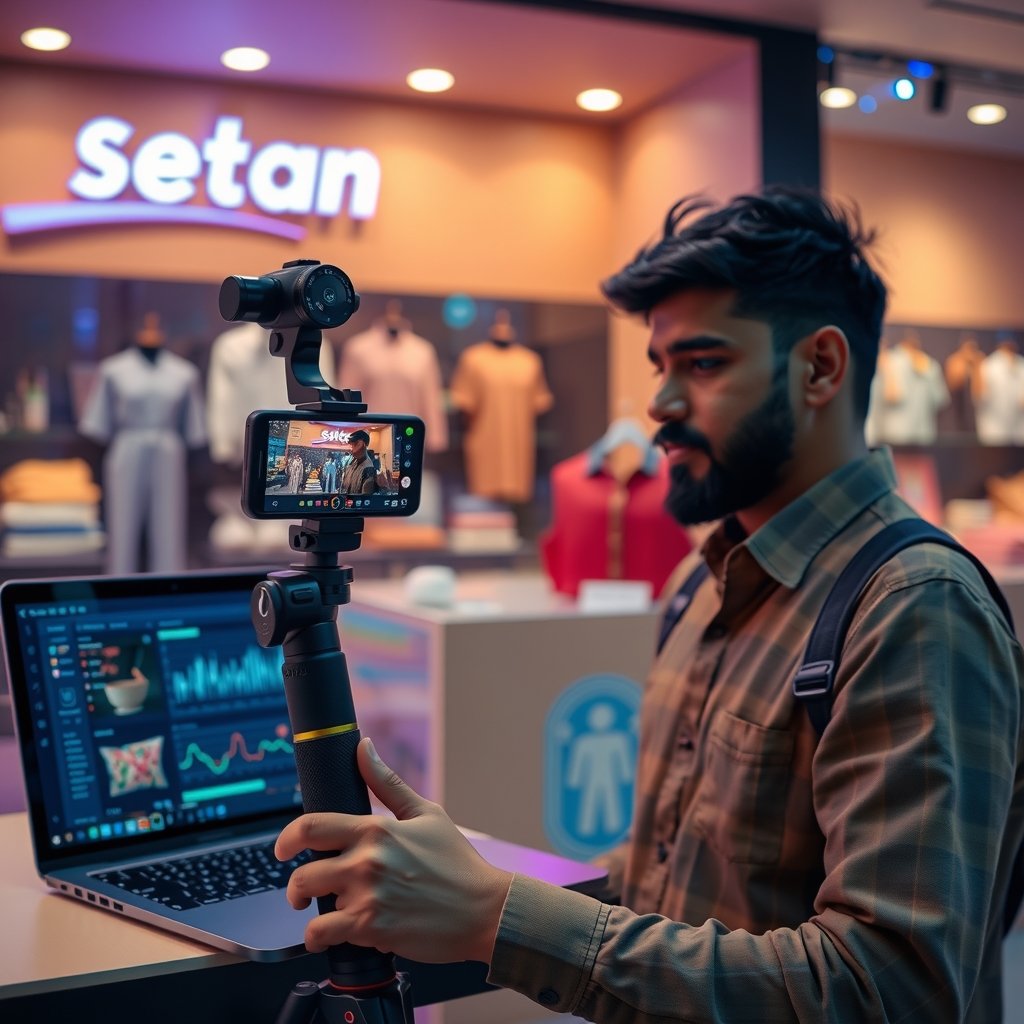
- Film efficiently: Batch related clips in one session. A small Gurgaon business could set aside two hours to record six short demonstrations with a phone, tripod, window light and an external microphone, if available.
- Edit for comprehension: Remove pauses, keep on-screen text concise and add accurate captions. Check that prices, disclaimers and location details remain legible on a small screen.
- Publish consistently: Use Meta Business Suite or the platform’s native publishing tools to schedule when the account’s audience is active. Treat suggested posting times as a starting point, then review the account’s own results.
- Test and learn: Change one major variable at a time—such as the opening, offer or call to action—where possible. Compare qualified outcomes across similar periods and budgets, not just view counts.
- Close the loop: Ask sales or service staff to label enquiry quality and outcomes. Use the findings to update future scripts, targeting and budget decisions.
For a tracked website campaign, a tagged link could look like this: https://example.in/book?utm_source=instagram&utm_medium=organic_social&utm_campaign=gurgaon_reels_july. Replace the example address with the business’s real destination, use consistent campaign naming, and verify the collected data in GA4. Do not place personal customer information in UTM parameters. If the conversion happens by phone or WhatsApp, maintain a consent-aware record of source and outcome using the organisation’s established data-handling practices.
Review early delivery signals without making decisions from a few impressions. If people leave immediately, revise the opening or improve relevance. If viewers watch but do not visit the profile, clarify the offer or next step. If enquiries arrive but do not convert, investigate price fit, response time and qualification before spending more. This makes the process a learning cycle rather than a one-time content calendar.
After working with 50+ Indian SMEs on social media marketing implementations, companies investing ₹3-5 lakhs upfront save ₹15-20 lakhs over 12 months. Choose the right tech stack from day one - reactive decisions cost 3-5x more.
Best Practices for social media marketing
Do: make the creative useful, recognisable and measurable
A strong Reel earns attention by helping the viewer understand something, see something or make a decision. It does not have to look like a national television advertisement. Clear sound, natural delivery and honest demonstrations can outperform a highly polished concept that hides the actual offer. Gurgaon brands should also consider how people watch: many viewers browse without sound, commute between locations or view on a small screen. Good captions and a clear visual sequence make the message easier to follow.
- Lead with relevance: State the problem, benefit or location early. A “Gurgaon same-day delivery” message is clearer than a long brand introduction if delivery coverage is the customer’s main question.
- Keep one primary message: Avoid fitting the full company history, every product and several offers into one short video. A single idea is easier to remember and test.
- Show proof responsibly: Use real product footage, qualified staff and accurate customer feedback with permission. Disclose material partnerships and endorsements as required by applicable Indian rules and platform policies.
- Make accessibility part of editing: Add accurate captions, use readable contrast and do not rely on colour alone to communicate price or status.
- Align the destination: Ensure the landing page, direct-message response and in-store team can explain the offer shown in the Reel, including conditions and expiry dates.
- Review business outcomes: Report reach and watch behaviour alongside qualified enquiries, attendance, purchases and net revenue where those data are available.
For example, a Sector 29 restaurant can test a Reel showing a lunch plate with the serving time, price and reservation route visible. If the video attracts saves but few bookings, the restaurant can review availability and booking friction before assuming the creative failed. A Gurgaon training provider might show a short lesson excerpt, state the batch start date and direct prospects to a page with syllabus and fees. In both cases, the viewer receives enough information to assess fit without an inflated promise.
Don’t: confuse popularity with profit or sacrifice trust
Views are useful as a distribution signal, but they do not prove incremental revenue. A Reel can be widely watched by people who cannot buy, have no need for the service or are attracted by an unrelated joke. Similarly, a low-cost lead can be poor value if the person is unreachable or unsuitable. Establish a common definition of a qualified conversion before comparing campaigns, and include relevant production and promotion costs when evaluating ROI.
- Don’t buy followers or engagement: Artificial activity distorts analytics and cannot replace a relevant local audience.
- Don’t copy every trend: Use a format only when it suits the brand, audience and offer. A trend without a connection to the business can generate attention without intent.
- Don’t hide material terms: Put important prices, eligibility conditions and limitations where viewers can find them. Avoid bait offers that change when a customer enquires.
- Don’t publish unlicensed material: Confirm commercial usage rights for audio, footage, fonts and creator content. Platform availability does not automatically mean a track is cleared for every business use.
- Don’t over-target on tiny samples: A handful of conversions is not enough to establish a stable winning audience or creative. Keep tests proportionate and note uncertainty in reports.
- Don’t ignore comments and messages: Set a response owner and service standard. A slow or confusing reply can undo the trust created by the video.
- Don’t claim guaranteed results: Avoid unsupported health, finance, property or performance claims. Seek appropriate professional review where the subject is regulated or sensitive.
Protect customer privacy while measuring. Collect only the information needed for the enquiry, explain how it will be used, restrict access and follow the organisation’s retention and consent procedures. When staff ask customers how they heard about a business, offer a neutral set of options rather than leading them toward Instagram. Better records create better campaign decisions and a more trustworthy customer experience.
Comparison Table
The figures below are illustrative planning examples for a Gurgaon local-service campaign, not market averages or guaranteed outcomes. They assume a total test budget of ₹30,000 per format, including relevant production and promotion costs. “Qualified leads” should be defined consistently before comparing channels; actual costs and conversion rates will vary by business, creative, audience and period.
| Format | Illustrative spend and reach | Illustrative business result |
|---|---|---|
| Organic Instagram Reel | ₹12,000 production; 30,000 local accounts reached | 24 qualified enquiries; ₹500 per enquiry |
| Paid Instagram Reel | ₹30,000 total; 75,000 accounts reached | 60 qualified enquiries; ₹500 per enquiry |
| Instagram Story ads | ₹30,000 total; 60,000 accounts reached | 36 qualified enquiries; about ₹833 per enquiry |
| Static Instagram feed ads | ₹30,000 total; 50,000 accounts reached | 30 qualified enquiries; ₹1,000 per enquiry |
| Local creator Reel partnership | ₹30,000 total fee and production; 45,000 accounts reached | 45 qualified enquiries; about ₹667 per enquiry |
These example results would make the paid Reel and creator partnership worth further investigation, but they would not establish that either will outperform the other in a new campaign. Before reallocating budget, check whether the enquiries converted, whether the formats used comparable offers and audiences, and whether each cost includes all relevant work. A business should also assess whether a channel reached new customers or merely received credit for people who would have converted anyway. Use the table as a framework for consistent measurement, then decide based on the quality and value of actual Gurgaon customer outcomes.
Many Indian businesses skip proper testing in social media marketing projects to save 2-3 weeks, leading to production bugs costing ₹2-5 lakhs in lost revenue. Always allocate 25% of budget for QA.
Advanced Techniques
Once a Reels programme has established a reliable publishing rhythm, the next challenge is to grow results without simply increasing spend. For businesses targeting Gurgaon, that means balancing city-specific relevance with creative that can travel across nearby markets such as Delhi, Noida and Faridabad. Strong social media marketing at this stage relies on a repeatable testing system: every Reel should have a defined audience, a clear job in the customer journey and a measurable outcome. Views can indicate distribution, but qualified enquiries, store visits and attributable revenue show whether the work is delivering commercial value.
Scale creative and distribution without losing relevance
Build a creative library around customer needs rather than producing one generic video repeatedly. A Gurgaon property firm, for example, might create distinct Reels about commute times, neighbourhood amenities, home financing and apartment walkthroughs. A restaurant could test lunch offers, chef-led preparation, customer reactions and delivery packaging. Keep the central offer consistent while changing one creative element at a time, such as the opening line, visual sequence or call to action. This makes results easier to interpret and helps the team identify concepts that can be adapted for different audiences.
Use a structured distribution plan. Start with organic publishing to identify promising topics and audience responses. Then use paid promotion for the strongest assets, with separate campaigns for prospecting and retargeting. Prospecting can introduce a useful idea or offer to people in selected Gurgaon neighbourhoods; retargeting can show a more specific proof point to people who watched a substantial portion of a video or visited a relevant page. Avoid expanding to every audience at once. Increase budgets gradually when cost per qualified lead and lead quality remain stable, and retain a control group or campaign where possible so that apparent improvement is not mistaken for incremental impact.
Optimize performance beyond views
Experts should connect creative reporting to the complete conversion path. Track video retention, profile visits, landing-page sessions, form completion, sales acceptance and eventual revenue. If a Reel earns strong watch time but few enquiries, the issue may be the offer, audience or next step rather than the video itself. If enquiries rise but sales teams reject them, review the targeting and qualification process before increasing spend. Use consistent campaign naming and UTM conventions, and record the creative version, placement, audience and offer for each asset.
Advanced teams can use sequential messaging: an introductory Reel establishes a problem, a follow-up demonstrates the solution, and a later asset addresses an objection. Refresh creative when frequency rises or response weakens, but do not retire a campaign based on a single poor day. Compare performance over suitable time windows and account for conversion delays. For Gurgaon brands, test local context thoughtfully, including commute patterns, seasonal demand and audience language preferences. Scale only after confirming that the additional reach preserves lead quality and that the business can respond quickly enough to convert demand.
Real World Case Study
The following case study describes an eight-week campaign for a Bangalore-based home-interiors company seeking enquiries from homeowners and property buyers in Gurgaon. The company had a capable sales team and an attractive portfolio, but its Reels programme was not producing a predictable pipeline. The campaign figures below are presented as a practical example of how a structured test can be measured; results for another business will vary with its offer, audience, sales process and market conditions.
Before the work began, the company was spending INR 6.8 lakh per month across broad social campaigns, including Reels placements. Reporting showed 126 enquiries in the previous eight weeks, but only 74 were considered qualified by the sales team. The average cost per enquiry was approximately INR 10,794, and the team could not confidently connect many closed projects to a specific creative or campaign. Several videos accumulated views, yet calls to action directed viewers to a general page that did not explain the Gurgaon service area or make it easy to request a consultation.
Week 1-2: Discovery
The team reviewed the prior eight weeks of campaign data, sales notes, audience comments and lead follow-up records. Interviews with sales representatives revealed that many prospects wanted clarity about design timelines, apartment-size suitability and budget before booking a consultation. The team mapped the customer journey from Reel view to enquiry and identified two tracking gaps: inconsistent source labels in the lead system and no reliable distinction between qualified and unqualified enquiries. It also audited existing video assets and grouped them by customer question, rather than treating every post as an interchangeable brand video.
Discovery produced a baseline, a shared definition of a qualified lead and a short list of testable hypotheses. The campaign would speak to Gurgaon prospects while making the company's Bangalore experience a credibility point, not a distraction. The team agreed to monitor spend, qualified enquiries, booked consultations, sales acceptance and attributed revenue together.
Week 3-4: Implementation
The company launched a set of short Reels featuring room transformations, design decisions explained by a consultant and practical budget-planning tips. Each video focused on one customer question and used a clear, specific next step: request a design consultation for a Gurgaon home. The landing page was revised to reflect the service area and collect essential qualification details without creating an unnecessarily long form. Tracking labels were standardized so each enquiry could be connected to its campaign and creative.
Organic posts were used to observe initial audience response, while paid campaigns tested selected videos with relevant Gurgaon audiences. Prospecting and retargeting were kept separate, allowing the team to distinguish new reach from follow-up engagement. Sales staff received a short lead-handling guide and a response-time target, so campaign performance would not be undermined by slow or inconsistent follow-up.
Week 5-6: Optimization
The first tests showed that videos answering budget and timeline questions generated more qualified conversations than broad portfolio montages. The team shifted budget toward those themes and produced alternate openings to see which captured attention without changing the underlying message. It excluded placements and audiences that produced inexpensive but consistently unsuitable enquiries. Retargeting creative addressed common objections and invited interested viewers to take the next step.
Optimization also included weekly checks of lead quality, not just cost per lead. Sales feedback informed the next creative batch, and the team reviewed where prospects dropped out between form submission and consultation booking. Because response improved after the follow-up process was clarified, the team avoided attributing every gain to advertising alone. Budget increases were measured and gradual, with campaign changes logged to keep comparisons meaningful.
Week 7-8: Results
By the end of the eight-week period, the campaign recorded 183 leads, with a higher share meeting the agreed qualification criteria. The business reported a 47% improvement in qualified-lead efficiency against its baseline measure and saved INR 3.2 lakh compared with the planned spend required to generate a comparable volume under its earlier approach. Attributed campaign revenue produced a 2.7x return on ad spend. These figures reflect the stated measurement period and attribution method; they should not be interpreted as a guaranteed outcome or as proof that every lead became a customer.
The table compares the baseline with the campaign outcome. Cost and efficiency figures are useful only when read alongside the quality and revenue measures, which is why the team retained sales acceptance and ROAS in its review.
| Metric | Before | After eight weeks |
|---|---|---|
| Leads generated | 126 | 183 |
| Qualified leads | 74 | 116 |
| Qualified-lead efficiency | Baseline | 47% improvement |
| Cost per enquiry | INR 10,794 | INR 6,066 |
| Spend saved against comparable plan | INR 0 | INR 3.2 lakh |
| Return on ad spend | Not reliably attributed | 2.7x |
Common Mistakes to Avoid
Small campaign decisions can create substantial waste when repeated across multiple videos or weeks. These five mistakes are especially costly when a brand is trying to improve Reels ROI in Gurgaon.
1. Optimizing for views instead of business outcomes
A Reel with a large number of plays may still attract people who have no intent to enquire. If a business spends INR 75,000 promoting a video that earns attention but generates no qualified conversations, the full amount is at risk without a useful pipeline result. Avoid this by agreeing on the campaign objective before production. Track qualified leads, consultations or sales alongside retention and reach. Views help diagnose creative distribution; they should not be the only definition of success.
2. Reusing one generic video for every audience
A broad video may fail to answer the specific concerns of a Gurgaon homeowner, restaurant customer or local service buyer. Repeating it for a month can waste INR 50,000 or more in media spend while providing little information about what customers actually need. Avoid this by creating a small set of customer-question-led variations. Keep the offer stable during a test, change one major creative element at a time, and use sales feedback to select the next topic.
3. Sending interested viewers to a confusing destination
A strong Reel can lose a prospect if the destination page is generic, slow or unclear about service coverage. At INR 1,200 per enquiry, losing 25 potential enquiries through a broken or confusing path represents INR 30,000 in wasted acquisition opportunity, even before considering lost sales. Test the full journey on mobile before launch. Make the service area, offer and next step consistent with the video, and remove form fields that do not help qualify or serve the prospect.
4. Scaling spend before confirming lead quality
Increasing a daily budget because the cost per form submission looks low can rapidly amplify irrelevant enquiries. An extra INR 1 lakh in spend may be wasted if the sales team rejects most of the resulting leads. Avoid this by checking qualification rate, contactability and consultation bookings before increasing investment. Scale in measured increments, review the results after an appropriate conversion window, and pause audience or creative combinations that repeatedly produce poor-fit prospects.
5. Ignoring follow-up speed and measurement hygiene
Leads can go cold while a team waits several days to respond, and inconsistent tracking can make an effective campaign look weak or an ineffective one look successful. If 20 of 100 enquiries are not contacted promptly and each represents INR 2,000 in acquisition cost, INR 40,000 of paid opportunity may be put at risk. Set clear ownership and response-time expectations, record lead outcomes, and use consistent campaign tags. Review the marketing and sales data together each week rather than relying on platform-reported conversions alone.
Frequently Asked Questions
How should a Gurgaon business measure social media marketing ROI from Reels?
Begin by defining the outcome that matters to the business, such as a qualified enquiry, a booked appointment, a store visit or completed purchase. Then record the full cost of producing and distributing the content, including media spend, production time and any applicable agency or creator fees. Use consistent tracking links and campaign naming, and connect enquiries to sales outcomes wherever possible. Review video metrics such as reach and retention to understand creative performance, but compare them with lead quality, conversion rates and attributed revenue. For businesses with longer sales cycles, assess results over a suitable period instead of judging a campaign only by same-day conversions. A practical ROI view combines platform data with the business's own lead and revenue records.
How many Reels should a business publish each week?
There is no universal number that guarantees results. A smaller business may learn more from two or three well-planned Reels each week than from daily posts made without a clear purpose. Choose a cadence the team can sustain while maintaining useful ideas, clear editing and accurate information. Rotate among customer questions, demonstrations, testimonials where permission has been granted, and product or service explanations. Track performance by content theme and audience response, then use those findings to decide what to produce next. If publishing more frequently reduces quality or leaves no time to respond to enquiries, the extra volume may not help. The right schedule is one that supports consistent learning and timely follow-up, not one chosen solely to satisfy a posting target.
Should Gurgaon brands use local creators for Reels?
Local creators can help a campaign feel familiar and provide access to a relevant community, but location alone does not make a partnership effective. Evaluate whether the creator's audience matches the business's intended customers, whether their style suits the brand and whether they can communicate the offer naturally. Agree in advance on deliverables, usage rights, disclosure expectations, review process and measurement approach. A creator's engagement numbers should be considered alongside audience fit and the ability to drive meaningful actions. For a Gurgaon business, a creator who understands neighbourhood preferences may be more useful than one with a larger but less relevant following. Start with a limited test, use trackable links or codes where appropriate, and compare the total partnership cost with qualified enquiries and downstream results.
What is a reasonable budget for a Reels campaign?
A suitable budget depends on the business's average sale value, margins, customer acquisition capacity and the cost of reaching the intended audience. Instead of selecting a figure only because competitors spend it, estimate how many qualified enquiries the business can handle and what acquisition cost would be commercially acceptable. Set aside enough budget to test a few distinct creative ideas and audiences, but avoid spreading a small amount across too many combinations to produce useful evidence. Include production and follow-up costs in the plan, not just advertising spend. Begin with a controlled test and define in advance what would justify scaling, revising or stopping. If the sales team cannot contact the leads promptly, increasing the advertising budget is unlikely to solve the underlying problem.
How long does it take to see results from Reels?
Early indicators such as reach, watch time and engagement can appear soon after publishing, but reliable business results often take longer. The timeframe depends on the audience size, offer, purchase decision and how quickly the business follows up. A low-cost, immediate purchase may show a conversion pattern faster than a home renovation or other considered service. Allow enough time for people to view the content, enquire, speak with the sales team and make a decision. Compare similar periods and avoid making major strategic changes in response to a small number of early outcomes. Review leading indicators weekly and downstream outcomes over a longer window. The goal is to identify a repeatable path from attention to qualified demand, not to promise a fixed return within a particular number of days.
Can a small business create effective Reels without a large production team?
Yes. Clear ideas and authentic demonstrations can be more useful than elaborate production when they answer a real customer question. A small team can plan a batch of short videos around common enquiries, record them in good natural light, use clear audio and add readable captions. Keep each video focused on one point, show the product or process where relevant, and make the next step easy to understand. Before publishing, check factual claims, customer permissions and brand details. A repeatable simple format also makes it easier to compare different openings or topics. Invest in production upgrades only when there is a clear reason, such as improving sound, accessibility or product visibility. Consistency and customer relevance matter more than equipment alone.
🚀 Ready to Implement This?
Get expert help from ShivatechDigital. 200+ Indian businesses already grew with our technology solutions.
Book Free Consultation →⚡ Response within 24 hours | 🇮🇳 Trusted by Indian businesses
Conclusion
Social media marketing can make Reels a measurable growth channel for Gurgaon businesses when creative, distribution and follow-up are planned as one system. A compelling video is only the beginning: performance improves when teams learn which customer questions attract qualified interest, send viewers to a relevant next step and connect enquiries to commercial outcomes. Local relevance can make a message more useful, but it must be supported by sound measurement and a responsive sales process. Treat each campaign as a series of informed tests rather than a one-time bet, and scale only when lead quality and returns remain credible.
Three actionable next steps:
- Audit the last eight weeks of Reels and identify which themes generated qualified enquiries, not merely views.
- Create a small test plan with distinct customer questions, a clear Gurgaon-focused offer and consistent tracking for each creative.
- Review campaign and sales outcomes together every week, then shift budget toward proven combinations only after checking lead quality and follow-up capacity.
10+ years experience helping 200+ businesses across Delhi, Noida, Greater Noida, Ghaziabad and Kanpur grow through technology. Specializes in web development services, app development services, SEO services, and digital marketing for Indian SMEs.







0
No comments yet. Be the first to comment!