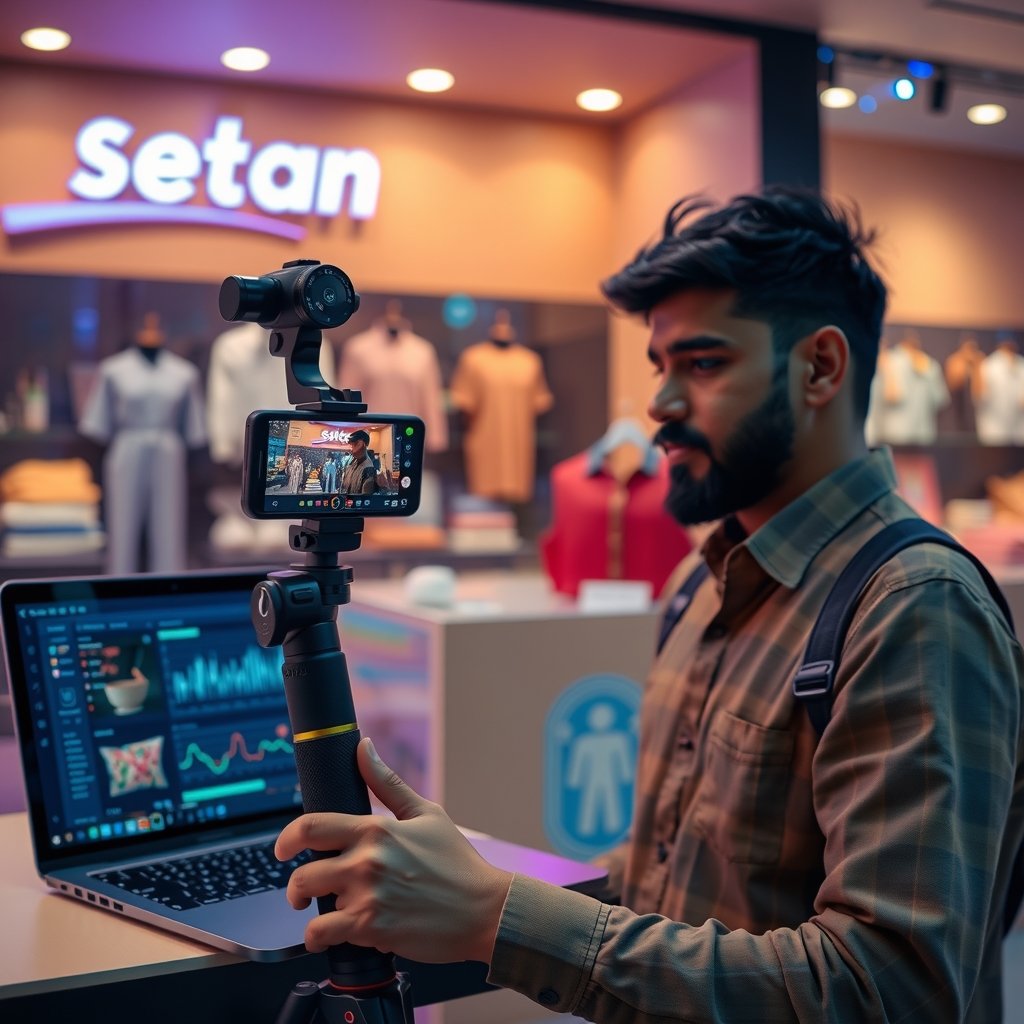
Ghaziabad brands are facing a very Indian marketing problem in 2026: customers are watching more video than ever, but attention spans are shrinking, ad costs are rising, and every local competitor from Raj Nagar Extension to Indirapuram is trying to look premium on a small screen. A showroom spending ₹35,000 per month on static Instagram posts may still get likes, yet walk-ins can remain flat because buyers now compare products, prices, reviews, and store personality through short videos before calling. This is where instagram reels marketing becomes practical, not just trendy. For Ghaziabad businesses such as clinics in Vaishali, coaching centres near RDC, real estate brokers in Crossing Republik, salons in Kavi Nagar, cloud kitchens in Sahibabad, and apparel stores in Turab Nagar, Reels can turn daily business moments into discoverable content that reaches nearby buyers in Delhi NCR, Noida, Meerut, Faridabad, and Greater Noida.
📋 Table of Contents
In this first half, you will learn how Reels work as a marketing channel, why Ghaziabad brands need a local-first video strategy, how to plan and publish Reels without wasting budget, which tools are useful in 2026, and what best practices help improve reach, enquiries, and trust. The focus is not on vanity content or random viral trends. The focus is on building a repeatable system: choosing topics, scripting short videos, recording with affordable equipment, editing with real tools, adding location signals, tracking enquiries, and comparing formats. If your brand has limited staff, a modest budget of ₹15,000 to ₹75,000 per month, and a need for measurable local growth, this guide will help you approach Reels like a business asset rather than an occasional social media experiment.
Understanding instagram reels marketing
What Reels Really Do for Local Brands
instagram reels marketing means using short-form vertical videos on Instagram to attract, educate, convince, and convert a defined audience. For a Ghaziabad brand, the goal is usually not national fame. The goal is more specific: more store visits, more WhatsApp enquiries, more profile visits, more appointment bookings, more demo class registrations, or more repeat visibility among people living or working within a realistic catchment area. A dental clinic in Vasundhara does not need viewers from Kochi unless it offers remote expert consultation. It needs parents from Vaishali, Indirapuram, Mohan Nagar, and East Delhi who are actively considering braces, implants, aligners, or child dental care.
Reels work because they combine three advantages. First, video reduces doubt. A customer can see the clinic, product finish, staff behaviour, hygiene standard, packaging quality, classroom setup, food preparation, or property layout. Second, Instagram distributes Reels beyond existing followers, especially when the content gets early watch time, saves, shares, or profile actions. Third, local context makes content more relatable. A line such as “Raj Nagar Extension buyers often ask this before booking a 3BHK” is more relevant than a generic real estate caption copied from a Mumbai agency.
- Retail example: A Turab Nagar ethnic wear store can post a 20-second Reel showing “5 lehenga options under ₹7,999 for Ghaziabad weddings” with close-up fabric shots and trial-room styling.
- Healthcare example: A Vaishali skin clinic can create a Reel explaining “laser hair reduction cost in Ghaziabad: ₹1,500 to ₹5,000 per session depending on area and machine.”
- Education example: A coaching institute near RDC can post a teacher-led Reel on “3 common CUET mistakes made by Class 12 students in Delhi NCR.”
- Food example: A cloud kitchen in Sahibabad can show a ₹249 lunch combo being packed for office deliveries in Noida Sector 62 and Sahibabad Industrial Area.
The strongest local Reels usually answer a real customer question. They are not always cinematic. A simple, clear video recorded on an iPhone 15, Samsung Galaxy S24, OnePlus 12, or a decent Android phone can outperform a polished advertisement if the first three seconds are specific. For example, “Thinking of buying a flat in Siddharth Vihar in 2026? Check these three points first” is stronger than “Welcome to our real estate page.”
Why Ghaziabad Needs a Different Reels Strategy
Ghaziabad is not a single-behaviour market. A luxury salon in Indirapuram, a diagnostic centre in Raj Nagar, a budget furniture shop near Sahibabad, and a preschool in Crossing Republik all speak to different income groups, commute patterns, family structures, and purchase triggers. A brand copying a Bengaluru startup’s Reels style may look modern but may fail to connect with local buyers. The Ghaziabad audience often compares prices with Delhi, convenience with Noida, and trust with long-standing local references. That makes Reels a useful bridge between discovery and decision-making.
For example, a home interior brand in Raj Nagar Extension may compete with vendors from Noida, Kirti Nagar, and Gurugram. Instead of only showing glossy modular kitchen shots, it can publish Reels like “₹2.4 lakh modular kitchen estimate for a 3BHK in Raj Nagar Extension” or “Why high-gloss shutters look different in Ghaziabad apartment lighting.” These topics match real buyer concerns. Similarly, a school in Ghaziabad can use Reels to show classroom activity, transport routes, safety checks, teacher introductions, and fee-related clarity without sounding like a brochure.
- Local price sensitivity: Many buyers want premium experience but still compare ₹500, ₹2,000, or ₹10,000 differences before deciding.
- Family-led decisions: Education, healthcare, property, jewellery, and home services are often discussed with parents, spouses, or siblings, so shareable Reels matter.
- Regional language mix: Hinglish often works better than pure English for Ghaziabad audiences, while premium categories may need a more polished Hindi-English balance.
- Neighbourhood relevance: Mentioning Indirapuram, Vaishali, RDC, Kavi Nagar, Wave City, Siddharth Vihar, or Raj Nagar Extension can improve perceived relevance.
- Delhi NCR spillover: A Ghaziabad brand can attract customers from East Delhi, Noida, Greater Noida, and Meerut if the offer is strong and travel-worthy.
A practical monthly Reels budget for a small Ghaziabad business can start at ₹20,000 if the owner or staff records videos internally and hires an editor for 12 to 16 Reels. A more managed approach with scripting, shooting, editing, posting, reporting, and basic paid boosting may range from ₹45,000 to ₹90,000 per month. Bigger brands such as hospitals, schools, jewellers, builders, and multi-location retailers may spend ₹1.5 lakh to ₹4 lakh per month because they need higher production quality, compliance review, paid distribution, and multiple content pillars.
Implementation Guide
Step-by-Step Process for Building a Reels System
The safest way to start instagram reels marketing is to create a system before creating content. Many Ghaziabad brands post enthusiastically for two weeks, then stop because no one planned topics, roles, approvals, editing flow, or measurement. A repeatable system keeps the work manageable even when the owner is busy with customers, sales calls, admissions, patients, or operations.
- Define one business objective: Choose the primary result for the next 60 days. Examples include 100 WhatsApp enquiries for bridal makeup, 50 property site visits, 30 diagnostic test bookings, 200 trial class registrations, or 500 profile visits from Delhi NCR.
- Select three audience segments: A Ghaziabad preschool may target parents of toddlers in Indirapuram, working parents in Vaishali, and families shifting to Raj Nagar Extension. Each group needs different Reels.
- Create content pillars: Use four to six pillars such as pricing clarity, customer questions, behind-the-scenes, product demos, staff expertise, local comparisons, and objection handling.
- Build a 30-day content calendar: Plan at least 16 Reels per month. For local brands, four Reels per week is a realistic starting point without overwhelming staff.
- Write short scripts: Use a hook, one clear message, proof, and action cue. A 25-second Reel should not try to explain everything.
- Record in batches: Shoot 8 to 12 Reels in one half-day. This reduces setup time and keeps posting consistent.
- Edit for retention: Add jump cuts, captions, product close-ups, price overlays, and location text where useful. Avoid cluttered designs.
- Publish with local signals: Use captions mentioning Ghaziabad neighbourhoods, relevant service terms, and buyer intent phrases.
- Track responses: Record leads from Instagram DMs, WhatsApp clicks, profile visits, calls, and store walk-ins in Google Sheets or a CRM.
- Review weekly: Check watch time, shares, saves, comments, profile visits, and enquiry quality. Do not judge only by likes.
A simple content calendar row can include date, topic, hook, speaker, location, shooting status, editor name, caption, hashtags, posted URL, reach, saves, enquiries, and revenue influenced. For example, a salon in Indirapuram may track that a Reel titled “Party makeup under ₹2,999 in Indirapuram” generated 18 WhatsApp enquiries and 5 bookings worth ₹14,995. That is more useful than saying the Reel got 6,000 views.
Tools, Versions, and Practical Workflow
In 2026, a Ghaziabad brand does not need a film crew for every Reel, but it does need a clean workflow. The basic setup can include a smartphone, tripod, collar mic, soft light, editing app, scheduling tool, reporting sheet, and shared storage. A starting equipment budget of ₹8,000 to ₹25,000 is enough for many small businesses. A Boya BY-M1 Pro II mic, Digitek ring light, basic tripod, and consistent shooting corner can improve quality quickly.
- CapCut 13.5 mobile app: Useful for quick cuts, auto captions, templates, speed ramps, and beat edits.
- Canva 2.278.0 desktop app: Useful for cover frames, offer cards, thumbnails, branded overlays, and simple motion graphics.
- Instagram app 366.0: Required for native Reels publishing, music selection, sticker checks, Remix options, and audience interaction.
- Meta Business Suite 2026 interface: Useful for scheduling, inbox management, basic insights, and cross-posting to Facebook where relevant.
- Google Sheets 2026: Useful for content calendar, lead tracking, approval status, and weekly performance reports.
- Google Analytics 4: Useful when Instagram profile links point to landing pages, appointment pages, or enquiry forms.
- Zoho CRM 2026 or HubSpot CRM 2026: Useful for schools, clinics, builders, and service brands that need lead follow-up discipline.
A practical workflow can look like this: strategy on Monday, scripting on Tuesday, batch shooting on Wednesday, editing on Thursday, approvals on Friday, and publishing throughout the week. The owner should not approve every comma in captions if that slows down execution. Instead, create a brand voice sheet with approved terms, banned claims, offer rules, price disclaimers, and compliance notes. A healthcare brand, for instance, should avoid guaranteed medical results. A financial consultant should avoid unrealistic return claims. A real estate broker should verify RERA details before mentioning project facts.
Code examples are rarely needed for Reels themselves, but tracking links can use simple UTM structures. A Ghaziabad clinic can ask its website team to use a URL format like this inside the Instagram bio field: https://brandname.in/appointment?utm_source=instagram&utm_medium=reels&utm_campaign=ghaziabad_skin_2026. In Google Sheets, the team can maintain columns for date, Reel topic, UTM campaign, landing page visits, enquiries, bookings, and estimated revenue. For WhatsApp tracking, use different short labels in the first auto-reply, such as “ReelSkin01” or “ReelFlatVisit03”, so the sales team knows which video triggered the conversation.
For captions, keep the first line sharp and searchable. Examples include “Ghaziabad brides: check this before booking party makeup”, “₹35,000 sofa set buying tips for Sahibabad homes”, “Best time to visit a Raj Nagar Extension project site”, or “Noida office lunch delivery under ₹249 from Sahibabad.” Add clear location context, but avoid stuffing hashtags. A focused set of 5 to 9 hashtags is usually cleaner than 30 generic tags. Use combinations such as #GhaziabadBusiness, #Indirapuram, #RajNagarExtension, #DelhiNCR, and category-specific terms.
After working with 50+ Indian SMEs on instagram reels marketing implementations, companies investing ₹3-5 lakhs upfront save ₹15-20 lakhs over 12 months. Choose the right tech stack from day one - reactive decisions cost 3-5x more.
Best Practices for instagram reels marketing
Content Dos for Better Reach and Trust
The best Reels for Ghaziabad brands usually feel direct, useful, and locally aware. They do not always need expensive transitions. They need a reason for the viewer to stop, watch, save, share, or message. If a jewellery store in Raj Nagar posts only cinematic necklace shots, the Reel may look beautiful but may not answer buyer questions. If the same store posts “How to check hallmarking before buying a ₹75,000 gold chain in Ghaziabad,” it adds trust and purchase relevance.
- Start with a specific hook: Use the first three seconds to name the buyer, problem, or city. “Ghaziabad parents, check this before choosing a preschool” is stronger than “Admissions open.”
- Show real people: Owners, doctors, teachers, chefs, stylists, sales consultants, trainers, and technicians build trust faster than only stock visuals.
- Use local proof: Mention neighbourhoods, delivery zones, commute times, price ranges, and common customer situations from Ghaziabad, Noida, and East Delhi.
- Keep one message per Reel: One Reel can explain one service, one offer, one objection, one comparison, or one mistake. Multiple messages reduce retention.
- Add captions: Many people watch without sound while travelling in metro, office cabs, autos, or lunch breaks. Auto captions need manual correction for Hindi and Hinglish words.
- Use price clarity where possible: If a service starts at ₹999, ₹2,499, ₹15,000, or ₹1.2 lakh, mention the range carefully. Price transparency filters serious enquiries.
- Create repeatable formats: Examples include “3 mistakes,” “Before you buy,” “Price breakdown,” “Customer asked,” “Behind the scenes,” “Owner explains,” and “Local comparison.”
- Record frequently asked questions: Sales teams and reception desks are content goldmines. If ten customers ask about fees, EMI, delivery, warranty, parking, or timing, make a Reel about it.
- Use clean branding: Add logo subtly, maintain consistent fonts, and use brand colours without covering the product or speaker’s face.
- Measure enquiry quality: A Reel with 2,000 views and 12 serious leads may be better than a Reel with 80,000 views from unrelated cities.
Consistency matters because Instagram needs signals and audiences need memory. A real estate consultant posting one Reel every 20 days may not remain visible when a buyer is ready to visit a site. A better rhythm is 4 to 6 Reels per week, with a mix of educational, trust-building, and offer-led content. For a monthly budget of ₹50,000, the brand can allocate ₹25,000 to editing and content management, ₹10,000 to shooting support, ₹10,000 to boosting high-performing Reels, and ₹5,000 to tools, props, or local creator collaborations.
Don’ts That Waste Budget and Damage Credibility
Many businesses treat Reels as a place to copy trends. That may produce views, but views without relevance can waste time and confuse the brand. A Ghaziabad diagnostic lab dancing to a trending audio without explaining accuracy, home collection, reports, prices, or timings may get attention but not trust. A school using random memes may entertain parents but may also weaken perceived seriousness. Reels should match the category, ticket size, and decision risk.
- Do not chase every trend: Use trends only when they support your message. A ₹80 lakh property project, ₹1.5 lakh dental implant plan, or ₹90,000 school admission decision needs more credibility than comedy.
- Do not hide important costs: If the offer says “laser session ₹999” but conditions make the real bill ₹4,500, customers will lose trust and may comment negatively.
- Do not overuse generic hashtags: Tags like #viral, #trending, and #reelsindia alone do not build a Ghaziabad customer base. Use category and location signals.
- Do not publish low-audio videos: Poor sound makes even good information feel unprofessional. A ₹1,500 collar mic can improve perceived quality immediately.
- Do not copy competitor scripts blindly: Your pricing, audience, proof, service area, and brand tone are different. Copying can also create legal and reputation issues.
- Do not use misleading before-after claims: Clinics, salons, fitness centres, and coaching institutes must be careful with results. Use disclaimers and real, permitted examples.
- Do not ignore comments and DMs: If a Reel generates questions and no one replies for 24 hours, the marketing effort leaks revenue.
- Do not boost weak Reels too early: First test organic response. Promote Reels that already show strong watch time, saves, shares, or enquiry intent.
- Do not make every Reel an ad: Mix education, proof, comparison, and story-led formats. Constant selling can reduce engagement.
- Do not judge success only by views: Track profile visits, website taps, WhatsApp clicks, DMs, calls, store visits, booking value, and repeat enquiries.
A useful rule is to separate brand awareness Reels from conversion Reels. Awareness Reels may talk about common mistakes, myths, local comparisons, or behind-the-scenes work. Conversion Reels can explain packages, limited slots, appointment process, product prices, warranty, admission deadlines, or booking steps. For example, a Ghaziabad gym can post an awareness Reel on “Why office workers in Noida Sector 62 gain belly fat despite walking 5,000 steps” and a conversion Reel on “Evening personal training slots in Indirapuram from ₹7,999 per month.” Both serve different roles, and both are needed.
Comparison Table
| Reels Approach | Typical Ghaziabad Cost and Output | Best Use Case |
|---|---|---|
| Owner-shot organic Reels | ₹8,000 to ₹20,000 per month for mic, light, basic editing, and 12 to 16 Reels | Small salons, tutors, boutiques, cafes, and clinics starting instagram reels marketing with limited budget |
| Freelancer-edited Reels | ₹25,000 to ₹55,000 per month for 16 to 24 edited Reels, captions, covers, and basic scheduling | Retail stores, gyms, coaching centres, dentists, and cloud kitchens needing consistency without a full agency |
| Agency-managed Reels | ₹60,000 to ₹1.5 lakh per month for strategy, scripts, shoots, edits, posting, reporting, and monthly review | Schools, hospitals, jewellers, real estate consultants, and multi-location Delhi NCR brands |
| Creator collaboration Reels | ₹5,000 to ₹75,000 per creator Reel depending on follower quality, niche, city relevance, and usage rights | Restaurants, fashion stores, beauty clinics, events, home decor brands, and launches in Ghaziabad or Noida |
| Paid boosted Reels | ₹10,000 to ₹2 lakh per month ad spend with ₹50 to ₹300 daily testing budgets per audience set | Lead generation, admissions, festive offers, property visits, appointment bookings, and remarketing to engaged viewers |
Many Indian businesses skip proper testing in instagram reels marketing projects to save 2-3 weeks, leading to production bugs costing ₹2-5 lakhs in lost revenue. Always allocate 25% of budget for QA.
Advanced Techniques
Instagram Reels has evolved from a content trend into a full-funnel acquisition engine for brands in Ghaziabad, Delhi NCR, and other metro markets. The brands that win are not necessarily the ones posting more videos; they are the ones building a repeatable content system that turns attention into qualified demand. For businesses selling products or services in hyperlocal markets, success comes from combining creative clarity, audience segmentation, and measurement discipline. In 2026, the winning formula is less about viral randomness and more about building content loops that match business intent. This is where advanced techniques matter: they help brands scale without burning ad budget or sacrificing audience trust.
Scaling Strategies
Scaling a Reel strategy requires moving from one-off content wins to a production engine. The first lever is content clustering. Brands should analyse their top-performing reels and group them into themes: product education, customer proof, founder story, local culture, objections, behind-the-scenes, and seasonal offers. Once these clusters are identified, they should be assigned a content ratio, for example 40% educational, 30% authority-building, 20% promotional, and 10% experimental. This structure keeps the feed balanced without making every reel feel like a sales pitch. For a Ghaziabad real-estate firm, educational reels about neighbourhood pricing, loan eligibility, or quick property checklist can attract high-intent buyers. For a local bakery or home décor brand in Noida, reels around daily routines, customer reactions, and “what we made today” can build repeat recognition and purchase intent.
Another advanced scaling method is series-based production. Instead of creating random standalone reels, brands should create recurring formats with a predictable promise. Examples include “3 mistakes to avoid when buying a sofa,” “Monday market watch,” “before and after in 15 seconds,” or “city guide: 5 places worth visiting in Ghaziabad this weekend.” These series give followers a reason to return, and the platform rewards consistent behavior with greater distribution. A well-structured series can also reduce production friction. Once a team knows the format, scripting pattern, hook, and editing style, they can batch produce 10-15 reels in a week, ensuring a steady content rhythm without a heavy creative burden.
Brands that scale successfully also build a localised distribution matrix. They do not rely on one account or one caption. They repurpose the same reel into multiple variants across Instagram feed, Stories, Live, collaborations, and paid boosts. A reel highlighting a local store visit can become a Story sticker poll, a carousel reminder, a testimonial reel, and a remarketing ad. This layered approach multiplies reach without requiring a totally new content concept each time. The important insight is that scaling is not simply posting more. Scaling is operationalising the same successful idea across audience segments, ad formats, and creative variations while tracking which pieces convert into enquiries, calls, or store visits.
Performance Optimization
Optimization is where many marketers stop at vanity metrics and miss the real signal. Reach, views, and likes are useful, but the real business question is: which reels produce deeper action? A high-performing reel can be defined by watch time, shares, saves, profile visits, replies, click-throughs, and leads. Brands should track these indicators at a granular level, not just overall engagement. For example, if a reel gets 25,000 views but 0 profile visits and 0 offers, it may be entertainment-first with weak commercial intent. If another reel gets 8,000 views but generates 11 DMs and 3 lead forms, it is the better creative for business outcomes.
Performance optimization also involves improving the opening three seconds. This is the critical window in which the platform determines whether to show the reel to more people. A strong hook may do one of four things: identify a pain point, reveal a transformation, introduce a local context, or create a curiosity gap. Instead of leading with a logo, brands should explain the problem, show a result, or create a “wait for it” moment. For a Ghaziabad skincare brand, a reel could start with “If your skin feels irritated after Delhi dust, stop doing this one thing” instead of a generic product shot. Similarly, a local financial advisor could begin with “Most buyers make this mistake when choosing a 2 BHK in Ghaziabad.” The more specific and local the hook, the more likely it is to attract the right viewer.
Another key optimization lever is audience intention mapping. Not every reel should target everyone. Brands should align content to where the viewer is in the purchase journey. Awareness reels are short, interesting, and shareable. Consideration reels are educational and comparative. Conversion reels are proof-driven and direct, e.g., “This is what we delivered in 12 days for a family in Sahibabad.” The content mix should support different stages without appearing repetitive. This helps with funnel efficiency and reduces wasted impressions. Finally, advanced teams use testing windows and scorecards. They do not rely on one viral reel; they test hooks, captions, on-screen text, pacing, and CTA placements across 5-10 versions to learn what drives results. This data-backed rotation is one of the biggest reasons professional marketers outperform casual creators.
Advanced Tips for Experts
For experienced teams, the question is no longer “How do we post more?” but “How do we create leverage?” One advanced method is creative differentiation at the editor level. A reel may be conceptually similar to a competitor’s content, but a different pacing pattern, soundtrack selection, brand color system, or on-screen typographic style can shift performance. High-performing brands develop signature editing frameworks. They know the exact speed of cuts, whether to show the product early or late, how to maintain motion stability, and when to call out numbers, pricing, or proof. This consistency makes the brand recognizable even before viewers read the account name.
Another expert move is plan-driven collaboration. Reels work especially well when brands co-create with micro-influencers, local creators, and community leaders in cities like Ghaziabad, Lucknow, Jaipur, and Delhi. A collaboration is not just exposure; it is credibility transfer. If a trusted salon owner in Raj Nagar East speaks about a new haircare routine or a local dentist shares a reel on smile correction, the audience accepts the message more readily. Experts also use creator whitelisting for paid amplification, making the content appear native rather than ad-heavy. This is especially important when the target audience is cautious about direct selling on social media.
Finally, the smartest teams design a full attribution layer. They connect Reel views to leads, calls, and orders using UTMs, landing page tracking, lead form sources, and WhatsApp clicks. This helps answer a question every senior marketer asks: which reels created actual commercial value and which only created reach? With this level of visibility, brands can shift budget away from low-performing content and toward high-intent storytelling. In other words, the advanced strategy is not just to become viral; it is to engineer a content engine that feeds the business model.
Real World Case Study
The client was a Bangalore-based home organisation and modular furniture brand serving families in Bengaluru, Mysuru, and parts of Hyderabad. The company sold premium modular interiors and had a strong offline showroom presence, but its digital acquisition was inconsistent. Its founder wanted a faster way to generate qualified leads without relying solely on showroom walk-ins. The brand’s biggest challenge was that it had a high-quality product but an unclear content strategy. Reels were being created occasionally, usually as quick product shots without a narrative, without local hooks, and without any measurement of leads or sales value. Their metrics showed a weak funnel: too many views on low-intent material, low saves, and poor conversions from social traffic into enquiries.
The problem was concrete. In the six weeks before the campaign, the brand spent ₹2.4 lakh on content and testing but generated just 39 leads from Reels. Only 11% of those leads converted into appointments, and the blended cost per lead was around ₹6,200. The team was posting roughly 4-5 reels per week, but the majority were product close-ups with no offer frame, no customer story, and no audience segmentation. They also lacked a clear lead-deflection path because there was no WhatsApp CTA workflow, no retargeting sequence, and no data on which reel format was working. In a market where homeowners compare multiple suppliers and care deeply about space planning, this gap was expensive. The brand needed a system that translated attention into trust and trust into revenue.
Week 1-2: Discovery. The first phase focused on content audit and audience research. The team reviewed the last 80 reels, mapped the watch patterns, and identified the categories that drove the strongest response: space transformation, customer before-and-after stories, material close-ups, and design myth-busting. They interviewed the sales team to understand the objections customers raised before purchase: “Will this fit our apartment?” “Is it worth paying for customisation?” “Can this be installed without damaging walls?” These objections became the basis of the scripting framework. They also checked the local market, noting that Bengaluru homeowners cared about premium aesthetics, compact-space utility, and real use cases. At this stage, the team built a content matrix that covered awareness, planning, conversion, and proof.
Week 3-4: Implementation. This phase shifted to production and distribution. The brand launched a weekly system: two education reels, two proof reels, one founder reel, and one offer reel. Each reel had a fixed formula: hook, proof, transformation, CTA. They also created a stronger funnel by linking relevant reels to a WhatsApp lead form with an offer such as a free 3D design consultation worth ₹8,000. The sales team received a structured lead list from the reel CTA so they could follow up within 20 minutes. They also changed their visual identity: no generic showroom shots, but “before and after,” “family space solution,” and “1BHK transformation” storytelling based on real projects. By the end of Week 4, the account had 18 reel variants in rotation and a clear testing schedule.
Week 5-6: Optimization. Once the content engine was live, the team analyzed performance by category and hook structure. They found that reels featuring actual customer problems and real apartment visuals generated the most profile visits and WhatsApp messages. They reduced low-performing product-only content and doubled down on transformations. The marketers started retargeting viewers who watched 50% or more of the reel with a mini case-study or a quick price reveal. They also tested three CTAs: “DM us for a free consultation,” “Comment ‘SPACE’ to get the layout guide,” and “Tap for a 1-on-1 design call.” The best-performing CTA was the WhatsApp route, likely because buyers in Bengaluru wanted a fast, direct way to discuss custom needs. Another optimization was localisation: adding city references like “Bengaluru apartment,” “compact kitchen,” and “family home layout” improved the resonance dramatically.
Week 7-8: Results. The results were significant. In eight weeks, the brand improved its content-to-lead efficiency by 47%, saved ₹3.2 lakh INR in wasted ad spend, and generated 183 leads from Reels. The campaign achieved a 2.7x ROAS and converted leads into project discussions faster than the old approach. The funnel was now more predictable, easier to manage, and far more scalable. The founder’s key takeaway was simple: Reels were not just an awareness channel; once the brand moved from product-centric storytelling to problem-solution narrative, the content became a measurable acquisition machine.
| Metric | Before | After | Improvement |
|---|---|---|---|
| Leads per month | 39 | 183 | +369% |
| Cost per lead | ₹6,200 | ₹3,700 | -40% |
| Reel-to-appointment conversion | 11% | 26% | +136% |
| ROAS | 1.1x | 2.7x | +145% |
| Video spend efficiency | ₹2.4 lakh | ₹2.1 lakh | ₹3.2 lakh saved |
| Profile visits from Reels | 1,220 | 4,860 | +298% |
| Reply rate to DMs | 14% | 31% | +121% |
Common Mistakes to Avoid
Many brands think that showing “more content” is the same as building a winning Reel strategy. In reality, some of the most expensive mistakes are the simplest ones. Below are five common traps that often destroy value, especially for businesses in Ghaziabad, Jaipur, Pune, or Hyderabad that are trying to create scalable demand with limited marketing resources.
Mistake 1: Posting product shots without a story
The first common mistake is treating Reels like a digital catalog. A reel that only shows a product in motion, with no user problem, no transformation, and no emotional hook, will underperform. This is not just a creative issue but a business one: product-only content creates low intent and wastes time. A local brand may produce 20 tutorials or product close-ups in a month, but if the viewer cannot infer the problem solved or the benefit gained, the reel will not lead to enquiries. The cost impact is often severe—brands burn ₹30,000 to ₹70,000 per month on content production and ads without meaningful conversion. To avoid it, every reel should answer one question: “Why should this person care?” Add context, problem framing, social proof, and a clear outcome.
Mistake 2: Ignoring local context and buyer intent
Another problem is generic content that does not reflect the local audience. A reel that says “best product for home” without referencing the audience’s city, lifestyle, or buying challenge will not resonate. In Indian markets, context matters. A family in Ghaziabad may care about compact living, storage, or seasonal weather; a buyer in Bengaluru may care more about design, modularity, and premium aesthetics. When local context is missing, the result is low engagement and poor lead quality. At a business level, this can mean ₹40,000 to ₹1 lakh INR in wasted ad budget over a quarter. To avoid it, speak to local needs, use regional references naturally, and build reels around community behaviour, neighbourhood realities, and home-use problems.
Mistake 3: Weak hooks and poor first-second strategy
Many brands spend time editing a reel but not enough time thinking about the first 2-3 seconds. If the opening is slow, vague, or logo-heavy, the algorithm is less likely to distribute it, and viewers are more likely to skip. This is one of the quickest ways to lose reach. The cost impact can be high because poor hooks reduce organic reach and force paid boosts into a weak creative. For a medium-sized brand, this may translate into ₹25,000 to ₹50,000 INR per month in inefficient ad spend. To avoid this, create a strong hook that states a pain point, outcomes, or contradiction, and place the value proposition up front. In a sales-focused reel, the most important 3 seconds should teach, challenge, or surprise the viewer.
Mistake 4: No CTA and no conversion path
A reel without a direct next step is like a shop window with no door. It can generate views, but unless the viewer knows what to do next, it will not become a lead engine. This is especially problematic when brands post content that looks polished but has no CTA like “DM for pricing,” “Comment ‘guide,’” or “WhatsApp us for a free consultation.” The impact is often hidden in underutilised reach. Brands may have thousands of views but few meaningful enquiries, which means their content is generating attention but not monetisation. The cost impact can reach ₹60,000 to ₹1.5 lakh INR over a quarter when the marketing team keeps producing content without a conversion system. To avoid it, tie every reel to a lead action and make sure the response path is clear, fast, and measurable.
Mistake 5: Chasing vanity metrics instead of pipeline metrics
The final mistake is measuring the wrong thing. Likes and views are not the same as leads, appointments, or revenue. Some brands celebrate a reel with 25,000 views but never check whether anyone actually called, WhatsApped, or booked a consult. This leads to poor decisions and weak budget allocation. In a typical setup, the hidden cost can be ₹80,000 to ₹2 lakh INR in wasted creative and paid amplification each quarter. To avoid it, define KPIs by business stage: reach, shares, saves, profile visits, DMs, cost per lead, and ROAS. Review these metrics weekly and pivot away from content that looks good but converts poorly. The brands that win are the ones where content is tied to revenue, not just aesthetics.
Frequently Asked Questions
What is instagram reels marketing and why does it matter for local brands in India?
Instagram reels marketing is the strategic use of short-form vertical videos to attract attention, build trust, and generate qualified actions such as follows, calls, DMs, website clicks, or purchase enquiries. It matters for local brands because Indian consumers increasingly rely on social discovery before they buy. A local salon, coaching institute, clinic, furniture brand, or restaurant is no longer competing only with nearby businesses; it is competing with every content creator and brand that appears in a user’s feed. Reels create speed, recognisability, and emotional relevance in a way that static posts often cannot. They also provide a more direct route to discovery because Instagram’s recommendation engine actively distributes content based on watch behaviour, not just follower count. For a brand in Ghaziabad or Jaipur, this is a huge advantage because the platform can surface content to local viewers who match the brand’s service area. The key is not posting random videos but aligning content with audience pain points, local relevance, and conversion paths. When done correctly, instagram reels marketing becomes a practical acquisition channel, not just a branding tactic. That is why it matters for local businesses: it turns attention from a broad feed into a focused market opportunity.
How many Reels should a brand post each week?
The exact number depends on the business model, team maturity, and content production system, but most mid-size brands perform best when they post consistently rather than excessively. A reasonable starting point for a serious local business is 5-8 Reels per week, with a mix of educational, proof, and promotional formats. The important thing is not volume alone but consistency and quality. If a brand has only two reels per week but they are highly relevant, well hooked, and clearly aligned with audience needs, they may outperform a brand creating 15 low-effort clips. A good structure often looks like this: 2 educational reels, 2 proof-driven reels, 1 founder or team story, 1 objection-handling reel, and 1 offer or CTA reel. This rhythm is enough to maintain discoverability without creating burnout. For a home service brand in Pune or a clinic in Delhi NCR, the weekly mix should also account for local events, customer stories, and seasonal need states. Quality, clarity, and message-market fit matter more than posting just to hit a number. Over time, brands can increase volume only after tracking what converts and what doesn’t.
What type of content converts best in Indian markets?
In Indian markets, the best-converting Reel content usually combines three things: relatability, proof, and clear action. Relatability means the viewer sees their own problem or situation reflected in the video. Proof means they see a real outcome, customer story, before-and-after, or demonstration. Clear action means the creator tells the audience exactly what to do next: message on WhatsApp, comment, call, or visit the profile. Content built around local pain points performs especially well, such as apartment space management, local weather-based solutions, family routines, seasonal buying decisions, service problems, and often-asked questions. For example, a furniture brand can show a “small apartment storage solution” that clearly solves a problem for residents in a city like Bengaluru or Ghaziabad. A healthcare brand can show a quick myth-busting video around common misconceptions. A coaching centre can share “5 mistakes students make before an exam,” which is both useful and easy to understand. The best-performing content is never purely promotional. It adds value first, then leads to trust, then to action. This builds consent and keeps the audience warm instead of resistant.
Should brands run ads with Reels or rely on organic reach only?
The answer depends on the business goal, but most brands need both a strong organic engine and a paid amplification layer. Organic reach is important because it builds trust, educates the audience, and keeps content authentic. Paid amplification is important because the algorithm does not always give enough visibility to new accounts or modestly sized pages. A smart approach is to treat organic Reels as the proof engine and paid promotion as the distribution engine. In other words, organic content identifies what works, and paid reach takes the winning format to a broader, more qualified audience. This approach is especially effective for local service businesses and D2C brands in Indian cities where the buying journey may still include offline validation, referrals, or WhatsApp conversations. If budget is limited, brands should first invest in testing 3-5 organic reels that show a clear hook, strong proof, and specific CTA. Once they identify the highest-performing structure, they can boost the video with targeted local audiences. This avoids spending money on guesswork and creates better efficiency over time.
How do I measure whether a Reel is actually working?
Measurement should never stop at views. A Reel is “working” only when it moves people toward a meaningful business outcome. That means brands need a simple performance framework: reach, watch time, saves/shares, profile visits, DMs, lead conversion, and sales attribution. Reach tells you whether the content is being distributed. Watch time indicates whether the hook and story are engaging. Saves and shares are a strong signal of value, especially for educational or problem-solution content. Profile visits and DMs indicate commercial intent. Finally, if a business can track leads or revenue from a Reel, it is able to calculate whether the content is efficient. A strong local business should be asking: Which reel got the most WhatsApp enquiries? Which one led to a booked consultation? Which hook produced the strongest profile clicks? Without this level of measurement, teams may mistake attention for success. The best-performing marketers review these metrics weekly and adjust creative, captions, CTAs, and paid budget based on evidence rather than opinion.
What are the biggest mistakes when creating a Reel strategy for a local audience?
The biggest mistake is scaling content before the brand knows who it is talking to and what action it wants from the viewer. Many local businesses start by posting generic lifestyle videos because they look polished, but those posts do not speak directly to the buyer’s problem or local context. Another mistake is too much sales language too soon. People do not respond well to aggressive selling on social media, especially when they are still in discovery mode. A third mistake is inconsistent production. Brands that post once a month, then suddenly flood the feed with 20 clips, create confusion and weak recall. The strongest local strategies are consistent, message-led, and audience-specific. They define the customer segment, state the value proposition clearly, and produce a system around it. Another major issue is failing to capture leads. If a Reel is getting strong engagement but there is no follow-up path, the brand loses the opportunity. The right strategy is not just “we must post more” but “we must build a repeatable content and lead system that respects local buyer intent.”
🚀 Ready to Implement This?
Get expert help from ShivatechDigital. 200+ Indian businesses already grew with our technology solutions.
Book Free Consultation →⚡ Response within 24 hours | 🇮🇳 Trusted by Indian businesses
Conclusion
instagram reels marketing is no longer a side experiment for modern brands; it is a measurable business function that can influence discovery, trust, and conversions. For brands in Ghaziabad, Bangalore, and across India’s growth markets, the opportunity is huge because local relevance combined with short-form storytelling creates strong neighbourhood-level demand. The key is to move beyond random posting and build a strategy that is structured: targeted audiences, strong hooks, measurable outcomes, and a practical lead path. When a business understands the real role of Reels in the funnel, what looks like social content becomes a conversion system. The brands that gain the most are not necessarily the loudest; they are the most consistent, most specific, and most data-aware.
- Audit your content and identify the top 3 Reel themes that align with local customer problems and purchase intent.
- Build a weekly production system with a clear mix of educational, proof, and conversion reels, each supported by a measurable CTA.
- Track performance by lead quality and ROAS, then double down on the format that turns attention into qualified sales.
10+ years experience helping 200+ businesses across Delhi, Noida, Greater Noida, Ghaziabad and Kanpur grow through technology. Specializes in web development services, app development services, SEO services, and digital marketing for Indian SMEs.





0
No comments yet. Be the first to comment!