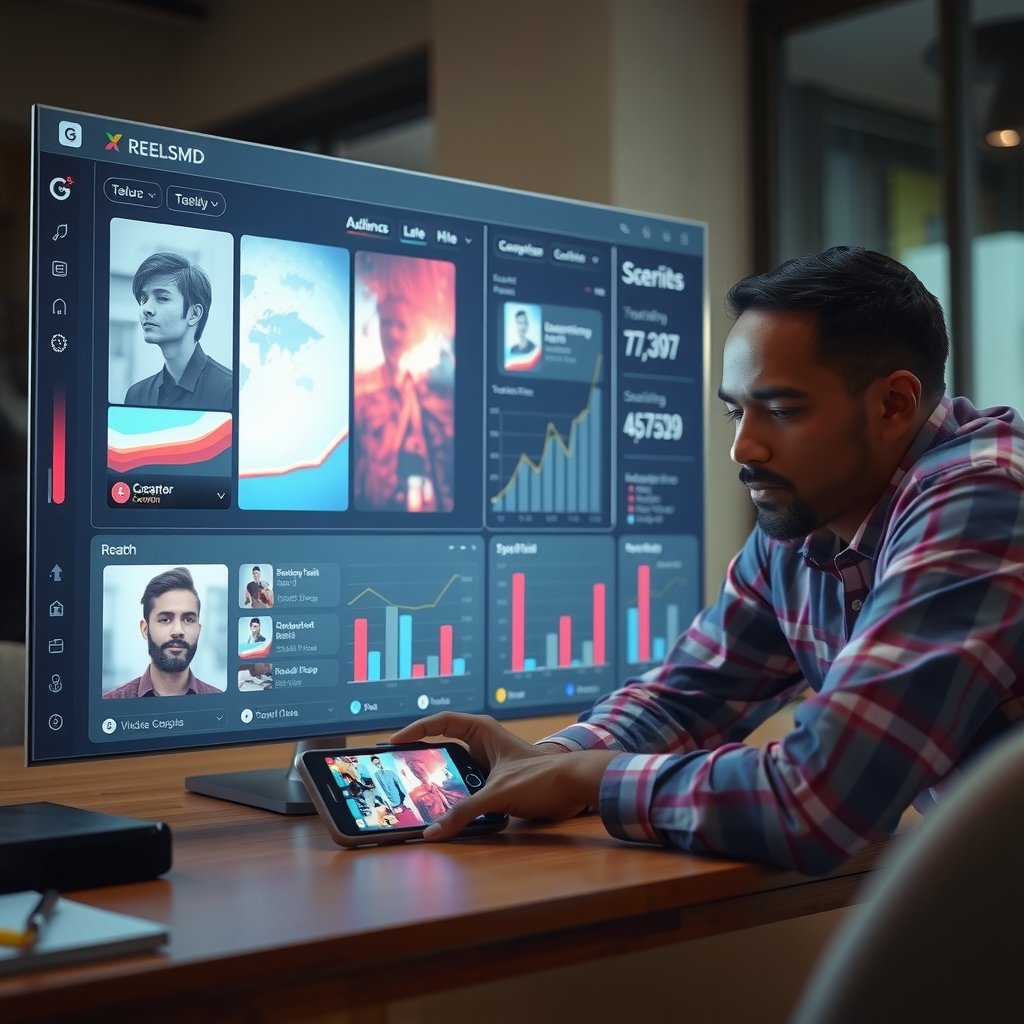
Noida businesses face a sharp visibility problem in 2026: audiences scroll past polished brand posts in seconds, while competitors turn ordinary product moments into high-retention Reels. A restaurant in Sector 18, a real-estate consultant near the Noida Expressway, and a D2C skincare seller in Greater Noida may all have capable products, yet their reach remains inconsistent when they post without a format, measurement system, or local audience insight. social media marketing is no longer only about publishing attractive creatives or accumulating followers. It is the practical process of earning attention, starting relevant conversations, and converting interest into measurable business outcomes across platforms such as Instagram, Facebook, YouTube, LinkedIn, and WhatsApp.
📋 Table of Contents
For brands serving Noida, Delhi NCR, Ghaziabad, and Greater Noida, Reels offer a cost-efficient route to discovery because short videos can reach people who do not already follow the account. The opportunity is significant, but it comes with pressure. Audiences compare local businesses with creator-quality content from across India. A weak opening, unclear caption, generic trend, or delayed response to comments can turn a potentially useful video into content that disappears without impact.
This guide explains how to build a repeatable Reels growth plan for 2026 rather than relying on isolated viral attempts. You will learn the foundations of social media marketing, how to define a local content strategy, how to set up production and publishing workflows, and how to use practical tools to improve consistency. It also covers campaign measurement, organic and paid distribution, content safety, and operating habits that help Noida teams create useful short-form video at sustainable budgets. The aim is to help marketers connect Reels activity to enquiries, store visits, WhatsApp conversations, leads, and revenue.
Understanding social media marketing
Social media marketing as a business system
Social media marketing is the structured use of social platforms to build awareness, trust, demand, and customer relationships. It combines audience research, content creation, distribution, community management, advertising, and reporting. For a Noida business, the work should begin with a commercial objective instead of a platform trend. A clinic in Sector 62 may need appointment enquiries, while a coaching institute in Sector 15 may need counselling registrations before a new batch begins. Their Reels can both be short, engaging videos, but their messaging, calls to action, and success metrics should be different.
A useful social plan connects each piece of content to a stage in the customer journey. Discovery content helps unfamiliar people notice the brand. Consideration content removes doubts through demonstrations, testimonials, comparisons, or expert explanations. Conversion content gives viewers a direct next step, such as sending a WhatsApp message, booking a expert consultation, visiting a showroom, or downloading a brochure. Retention content supports existing customers with usage tips, announcements, behind-the-scenes updates, and community stories.
- Awareness: A Noida café can publish a 12-second Reel showing a signature cold coffee being prepared, beginning with the finished drink and a price such as Rs. 199.
- Trust: A home-interior studio in Greater Noida can show a real modular-kitchen installation timeline, including material details and approximate project ranges from Rs. 3.5 lakh.
- Lead generation: A Noida real-estate advisory can create a project-location Reel and ask eligible buyers to message “2BHK” for current inventory and site-visit slots.
- Retention: A fitness studio can share weekly form-correction Reels for members and prospects, reinforcing expertise before promoting a Rs. 2,999 monthly plan.
The format alone does not create results. A Reel needs a relevant first frame, clear context, on-screen text, strong audio balance, an accessible caption, and a purpose. A local business should resist copying a national trend when it does not fit the buyer’s intent. For example, a trend built around comedy may be excellent for a Sector 18 dessert brand, but it may weaken perceived credibility for a financial adviser discussing mutual funds. Relevance creates stronger engagement than imitation.
Why Reels matter for Noida brands in 2026
Reels are valuable because they are designed for rapid consumption and platform-led discovery. Unlike a conventional feed post that may primarily reach existing followers, a useful Reel can be recommended to people based on their interests, watch behaviour, location signals, and interactions with related content. This helps smaller businesses compete for attention without matching the production budgets of large national brands.
Noida is especially suited to location-led video strategy. It contains office clusters in Sector 62 and Sector 125, retail activity around Sector 18, residential communities along the Noida-Greater Noida Expressway, educational audiences, healthcare consumers, and a large working population connected to Delhi NCR. These groups do not respond to the same messages. A Reel for young professionals can focus on convenience, speed, and after-work availability. A Reel for families may focus on safety, value, service quality, and proximity.
Local references should be accurate and useful rather than forced. Mentioning a service area, a metro station, an event, a weather condition, or a common customer concern can make a video more relevant. A salon near Botanical Garden Metro Station may show “three office-ready hairstyles under 15 minutes.” A cloud kitchen in Sector 76 can show “weekday lunch delivery for residents near the expressway.” These angles provide immediate context and help viewers decide whether the offer matters to them.
- Use Hindi, English, or a natural Hinglish mix based on the audience’s actual speaking style.
- Feature staff, founders, customers with permission, and real locations to increase credibility.
- Create recurring formats, such as “Noida Property Minute,” “Sector 18 Food Finds,” or “Monday Skin Myth.”
- Track saves, shares, profile visits, direct messages, and qualified leads instead of relying only on likes.
- Allocate a realistic production budget. A smartphone-led monthly content plan may cost Rs. 15,000 to Rs. 40,000, while creator collaborations and paid media require separate planning.
Organic Reels work best when paired with disciplined follow-up. If a viewer asks for pricing, availability, location, or a booking link in the comments, a delayed response wastes the attention the video earned. Set service-level expectations for replies, establish approved response templates, and ensure the sales or customer-support team understands the campaign offer. Social media marketing performs as an operational system, not as a creative department working in isolation.
Implementation Guide
Build the Reels foundation before filming
Start with a 90-day plan that gives the team enough time to test formats and observe patterns. Avoid setting a goal such as “go viral.” Use measurable outcomes, such as generating 80 qualified WhatsApp enquiries, raising monthly profile visits by 30%, or filling 25 consultation slots. Establish a baseline using the previous 30 to 60 days of account data. Record follower count, average Reel reach, average watch time where available, shares, saves, profile actions, direct messages, and leads that can be attributed to social activity.
- Define the audience: Create two or three practical audience groups. For example, a Noida nutritionist may target working professionals aged 25 to 40, new mothers, and fitness-focused students. Identify their recurring questions, hesitations, preferred language, and decision triggers.
- Choose one primary conversion path: Direct viewers to WhatsApp Business, an Instagram direct message, a booking form, a phone call, or a physical location. Too many choices reduce clarity.
- Create content pillars: Use three to five pillars, such as education, proof, product demonstration, founder story, and local relevance. This prevents the account from becoming an endless series of sales pitches.
- Prepare a content backlog: Write at least 20 Reel ideas before the first production day. Each idea needs a hook, visual direction, key message, caption angle, and action for the viewer.
- Set a publishing rhythm: Begin with three to five Reels weekly. Consistency matters more than trying to produce multiple low-quality videos every day.
A simple planning sheet can include columns for date, objective, audience, content pillar, hook, script, on-screen text, asset owner, platform, caption, call to action, and result. Build every concept around a single message. A 20-second Reel should not attempt to explain every service, feature, offer, and brand belief at once.
For example, a Noida-based IELTS coaching centre could build a Reel around the hook: “Why many Noida students lose marks in IELTS Writing Task 2.” The video can show one common mistake, one corrected version, and a prompt to comment “TASK 2” for a checklist. This is more focused than a generic video saying that admissions are open. The offer can appear naturally after the educational value is delivered.
Produce, publish, distribute, and measure
Use a lean production workflow that maintains visual quality without delaying output. Most local teams can begin with a modern smartphone, lapel microphone, tripod, and basic LED light. Record in vertical 9:16 format at 1080 x 1920 pixels. Keep essential text inside a safe central area so platform interface elements do not cover it. Shoot multiple takes of the first two seconds because the opening is usually the highest-leverage part of a short video.
- Write a tight script: Use hook, value, proof, and action. For a 20-second Reel, aim for one idea, short sentences, and visual changes every few seconds.
- Record original footage: Film products, processes, customer-safe moments, employees, and local environments. Obtain written consent before publishing identifiable customer footage.
- Edit for silent viewing: Add accurate captions and on-screen text. Many people watch without sound, particularly during commutes or office breaks.
- Publish natively: Upload directly through Instagram rather than reusing videos with visible watermarks from another platform. Choose a relevant cover frame with readable text.
- Engage promptly: Monitor comments and messages during the first few hours. Answer purchase-intent questions clearly and route qualified leads to the agreed conversion path.
- Review weekly: Compare videos by saves, shares, completion signals, profile activity, and enquiries. Repeat the successful topic structure, not merely the exact same video.
Practical tools can make this workflow manageable. Meta Business Suite 2026 provides publishing, inbox management, and account-level insights for Instagram and Facebook. Canva Pro 2026 is useful for cover templates, caption designs, and brand-consistent visual elements. CapCut Desktop 6.x can handle vertical editing, auto-captions, and audio cleanup; always review auto-generated captions manually for Hindi and Hinglish accuracy. Adobe Premiere Pro 2026 is appropriate for teams with more advanced editing needs. Google Sheets can support an editorial calendar and weekly scorecard, while WhatsApp Business 2.26 or later can organise incoming enquiries with labels and approved quick replies.
Use UTM parameters for campaign links when the destination is a website or booking page. This enables Google Analytics 4 to separate traffic from individual channels and campaigns. A simple link structure may look like this:
https://example.in/book?utm_source=instagram&utm_medium=reels&utm_campaign=noida_reels_q1_2026
For paid amplification, promote only Reels that have already shown organic relevance. If a video produces saves, comments, profile visits, and genuine questions without advertising spend, it is a stronger candidate for a local campaign. Start with a defined test budget, such as Rs. 500 to Rs. 1,500 per day for seven days, aimed at a relevant Noida or Delhi NCR audience. Measure cost per qualified enquiry, not just reach. A Reel that reaches 100,000 people but produces irrelevant messages is less useful than one that reaches 15,000 and produces 20 bookable leads.
After working with 50+ Indian SMEs on social media marketing implementations, companies investing ₹3-5 lakhs upfront save ₹15-20 lakhs over 12 months. Choose the right tech stack from day one - reactive decisions cost 3-5x more.
Best Practices for social media marketing
Creative and community practices that build trust
Effective social media marketing in 2026 needs discipline around both content quality and audience interaction. The best Reels feel native to the platform while remaining recognisably connected to the business. They use an authentic voice, answer real questions, and make the next step easy. A local audience can quickly identify generic stock footage and recycled claims, especially in competitive categories such as beauty, fitness, education, real estate, and food.
Do:
- Open with a specific audience problem. Say “Noida tenants: check these three clauses before paying a brokerage fee” instead of beginning with a long business introduction.
- Show evidence. Use product demonstrations, process footage, before-and-after visuals where ethically appropriate, customer feedback with permission, qualifications, or transparent pricing ranges.
- Use readable captions. Keep font size large enough for mobile viewing, maintain contrast, and proofread all Hindi, English, and Hinglish text before publishing.
- Give one clear action. Ask viewers to save a guide, comment a keyword, send a direct message, or visit the profile. One relevant request is stronger than several competing instructions.
- Make community management part of the plan. Assign a team member to respond to comments, answer direct messages, and flag complaints or sensitive queries for escalation.
- Repurpose intelligently. Turn a strong educational Reel into a carousel, a short YouTube video, a WhatsApp Status sequence, or a LinkedIn post while adapting its format for each platform.
Don't:
- Do not buy followers, likes, or comments. Artificial engagement damages reporting quality and can reduce trust with real prospects.
- Do not use misleading before-and-after claims, unverified health statements, fabricated reviews, or unrealistic income promises.
- Do not publish customer information, phone numbers, invoices, or private conversations without explicit permission.
- Do not copy a competitor’s exact script, visual identity, or proprietary materials. Learn from category patterns while producing original work.
- Do not ignore negative comments. Respond professionally, move sensitive support conversations to an appropriate private channel, and document recurring issues.
- Do not treat every Reel as an advertisement. Constant hard selling lowers attention and makes the audience less likely to engage.
Brand safety is particularly important for regulated or sensitive industries. Clinics should ensure medical content does not imply guaranteed outcomes. Financial advisers should avoid presenting investment returns as assured. Real-estate marketers should verify project information, possession claims, and price statements before publication. A review process involving the relevant subject expert is worth the time when content can affect a customer’s financial, health, or legal decision.
Measurement, experimentation, and sustained improvement
Growth comes from structured experimentation, not from changing the entire strategy after every low-performing post. Review results in weekly and monthly cycles. At the weekly level, identify which hooks, topics, lengths, visuals, and calls to action triggered meaningful actions. At the monthly level, compare lead quality, conversion rates, production cost, paid-media efficiency, and business outcomes. Keep a decision log so the team can remember why a format was repeated, paused, or revised.
- Measure attention first. Track reach, plays, average watch time where available, and retention indicators. If people leave immediately, improve the opening, pacing, or relevance before increasing advertising spend.
- Measure intent next. Track saves, shares, comments containing questions, profile visits, link clicks, and messages. These actions often reveal stronger buying interest than passive views.
- Measure business value. Ask leads how they found the business, use campaign-specific links or keywords, and record qualified enquiries, appointments, sales, and repeat customers.
- Test one variable at a time. Compare two hooks for a similar topic, two cover designs, or two calls to action. Avoid changing script, visual style, audience, offer, and budget all at once.
- Build a content library. Store approved raw footage, b-roll, testimonials, product shots, logos, music references, and templates in a shared folder with clear usage permissions.
- Refresh winning formats. A successful “three mistakes” series can become “three mistakes buyers make,” “three mistakes renters make,” and “three mistakes first-time investors make.”
Set realistic benchmarks based on account size, category, and objective. A new Noida business account should not judge success only against national celebrity creators. Compare its own month-on-month performance and its cost of acquiring a qualified lead. For example, if a Rs. 21,000 monthly Reels production and promotion programme generates 35 qualified enquiries, the team should assess lead quality, closure rate, and revenue rather than celebrating view count alone. If eight enquiries convert into services worth Rs. 8,000 each, the Rs. 64,000 revenue figure gives a more useful decision basis.
Attribution should be practical. Ask callers and walk-in customers how they discovered the brand. Use unique WhatsApp keywords such as “NOIDAREEL,” separate landing-page URLs, and customer relationship management labels such as “Instagram Reel Q1.” Match social reporting with sales outcomes every month. This closes the gap between content activity and commercial accountability.
Finally, maintain a sustainable operating model. A founder-led brand may record videos in batches for two hours every fortnight. A larger company may use a content manager, designer, editor, performance marketer, and sales coordinator. Both approaches can work when ownership is clear. The team needs an editorial calendar, approval turnaround time, publishing responsibility, response protocol, and reporting cadence. Consistency produced by a reliable system is more valuable than occasional bursts of content followed by weeks of silence.
Comparison Table
| Reels approach | Typical monthly investment in Noida | Expected operational output |
|---|---|---|
| DIY smartphone content | Rs. 5,000 to Rs. 15,000 | 8 to 12 Reels; founder or staff handles filming, editing, and replies |
| Freelance editor plus internal filming | Rs. 15,000 to Rs. 35,000 | 12 to 16 Reels; consistent captions, covers, and basic performance review |
| Local social media agency retainer | Rs. 35,000 to Rs. 75,000 | 16 to 24 Reels; strategy, editing, publishing calendar, reporting, and community support |
| Organic Reels with local paid promotion | Rs. 50,000 to Rs. 1.2 lakh | 12 to 20 Reels plus Rs. 500 to Rs. 1,500 daily test budgets and lead tracking |
| Creator-led campaign | Rs. 75,000 to Rs. 2.5 lakh+ | 4 to 10 creator assets, brand usage rights, local reach, and amplified campaign distribution |
Many Indian businesses skip proper testing in social media marketing projects to save 2-3 weeks, leading to production bugs costing ₹2-5 lakhs in lost revenue. Always allocate 25% of budget for QA.
Advanced Techniques
In 2026, social media marketing in Noida is no longer about posting a few reels and hoping they trend. The brands winning the market are using a system that combines audience psychology, creative testing, data interpretation, and operational discipline. Advanced teams now think in terms of content systems, not one-off campaigns. They design recurring formats that fit the platform, build a pipeline of trusted hooks, and continuously refine each output based on retention signals, watch time, completion ratio, and conversion quality. This is especially valuable in high-competition categories such as real estate, education, skincare, D2C commerce, and B2B lead generation, where people scroll fast and purchase intent is built through repeated exposure.
Scaling Strategies
Scaling begins with a proven content system. A smart team identifies 3-5 content archetypes that consistently match audience intent, such as problem-solution reels, customer stories, product demos, founder POV, and myth-busting explainers. Each archetype is then tested across multiple hooks, landscape ratios, lengths, and captions. Once a format reaches a stable cost per lead or cost per view, it becomes a scaling engine. In practice, this means increasing spend on winning combinations, reusing the highest-performing scripts with fresh visual styles, and moving the best-performing reels into paid amplification rather than random boosting. For brands in Noida and NCR, this is crucial because market saturation is high and shallow performance metrics can mislead teams if they ignore retention and lead quality.
One of the strongest scaling tactics is branching. A single core idea can be repackaged into multiple variants: a 15-second hook, a 30-second product demo, a before-after transformation, a customer reaction, a challenge-based format, and a text-on-screen infographic. Each variant targets a different stage of awareness. The premium strategy is not to create more content blindly, but to identify the highest production efficiency per message. For example, a single customer testimonial might become a reel, a static carousel, a story sequence, and a WhatsApp broadcast snippet. The same value proposition is now stretched across multiple placements without diluting the message. This is where advanced growth planning differs from basic posting: it treats every reel as part of a larger channel system.
Another scaling strategy is community amplification. Brands that create comment-worthy content often trigger high social proof, organic shares, and stronger retention. In Noida, local authority content works well when it speaks directly to regional pain points, trust signals, and business reality. For instance, a recruiter may post a reel about why local start-ups struggle with hiring, or a home services brand may show before-after work from a residential cluster. These are not only attention magnets; they also build a sense of local credibility. During scale-up phases, marketers should constantly identify which creators, micro-influencers, and community pages can extend message reach with minimal dilution. The strongest campaigns use paid media to accelerate what is already working organically, not to replace it.
Performance Optimization
Optimization is where many marketers lose the edge. The objective is not merely to get views; it is to improve completion rate, click-through, save/share rate, and conversion-to-lead efficiency. Advanced teams run structured experiments on opening hooks, duration, pacing, sound design, subtitles, thumbnails, and CTA placement. They know that a 3-second hook may drive short-term reach, but the persistent KPI is whether the viewer stays long enough to understand the offer and trust the brand. For this reason, brand-safe storytelling beats frantic editing. A reel that scores high on retention often converts better even when its raw view count is lower than a more viral but shallow video.
Performance optimization also means measuring what matters beyond vanity metrics. A reel may get 20,000 views but deliver poor quality leads. An expert team looks at watch time, hold rate, profile visits, DMs, click-to-WhatsApp, lead form completion, and cost per acquisition. This is particularly important if you are managing a budget of ₹50,000 to ₹2,00,000 per month for reels. Tactical experiments should compare creative angles, offers, and CTA language. Testing should happen in small batches first and then scale only when signals remain stable. For example, if a reel highlighting “saving ₹12,000 on office renovation” performs better than a generic brand introduction, that creative direction becomes a platform-tested winner.
Advanced tips for experts include choosing content according to funnel stage, integrating data from CRM and Google Ads to identify overlapping audience behavior, and reducing creative fatigue through refresh cycles every 2-3 weeks. Experts also build “social proof loops” by converting customer wins, reviews, and FAQs into short proof-based reels. When a brand in Chennai or Mumbai validates a service, that trust asset can be adapted for Noida audiences with localized language and examples. In 2026, the strongest advanced practitioners are not merely content makers; they are growth operators who connect content, performance, and revenue. The real competitive advantage lies in consistency, measurement discipline, and market-specific storytelling.
Real World Case Study
A Bangalore-based home automation and smart living brand approached a performance marketing partner with a problem that looked simple on paper but was becoming costly in reality. The company had already invested heavily in digital channels, including search campaigns, social ads, and local influencer collaborations. Yet the pipeline was unstable. Their average monthly cost per lead hovered around ₹1,475, and the creative felt repetitive. In the previous quarter, the brand generated 1,032 leads from paid social traffic, but only 18% of those leads converted to sales after follow-up. Their monthly ad spend stood at ₹8,40,000, and they were spending an additional ₹1,60,000 on production, editing, and creator fees. The challenge was not just volume; it was quality, consistency, and the absence of a reel strategy built around the funnel.
The exact numbers were revealing. Across five months, they had 22 reels published, but only 14 of them were tied to specific campaign objectives. Average video completion rate across those reels was 28%, and average watch time was only 8.6 seconds. Their cost per lead from organic plus paid social content was ₹1,430, while their close-rate on social-originated leads was 11%. The owner, based in Bangalore, wanted to rationalize the spend and build a pipeline that was both scalable and measurable. They did not need more content. They needed a system that could convert attention into action without creating creative burnout.
From Week 1 to Week 2, the team focused on discovery. They reviewed customer comments, DMs, sales objections, competitor analysis, and analytics from the last 90 days. They mapped the funnel into awareness, consideration, and decision stages. They segmented the audience by home type, budget band, and location. They also used call recordings to identify which concepts triggered real buying interest: energy savings, smart security assurance, appliance automation, and after-sales support. This replaced generic “look at our product” videos with demand-driven narratives. The team created a content brief for 12 reels, but only after identifying the primary promise, CTA, and conversion event.
From Week 3 to Week 4, the team moved into implementation. They consolidated the content strategy into six formats: problem-solution reels, customer story proofs, expert explainers, before-after transformation visuals, founder POV, and FAQ-driven reels. They tested a simplified creative stack across three hooks: “Save electricity with smart automation,” “Avoid this common home mistake,” and “Why premium homes use this system.” A tighter editing system reduced production spend, while platform-specific variations were created for Instagram Reels, Facebook stories, and YouTube Shorts. The team also built a lead capture workflow using WhatsApp click-through, not just form submissions, because the audience responded to faster conversations and direct trust-building. They tracked performance weekly rather than monthly.
From Week 5 to Week 6, optimization became more intense. The team cut low-performing reels, repacked winners, and doubled the budget on the best-performing creative. They also changed the CTA from a broad “contact us” to more specific prompts, such as “Book a free home automation audit”, “See how we cut electricity bills”, and “Get a smart security walkthrough.” Videos with local references and customer trust elements outperformed generic product shots. Retention improved dramatically because the messaging became clearer and more relevant. The team also created a short feedback loop with salespeople to improve post-click follow-up quality, reducing friction between inquiry and conversion.
From Week 7 to Week 8, results became visible. The brand moved from unstable growth to a predictable revenue engine. Response quality improved, cost per qualified lead dropped, and the sales team needed fewer manual touches to close the deal. The overall performance jumped by 47% on the selected funnel metrics. The team saved ₹3.2 lakh INR in ad and production waste. They generated 183 leads, and the campaign achieved a 2.7x ROAS. The best part was that the improvement was not a one-time spike; it was built on better classification, higher relevance, and stronger consumer trust.
| Metric | Before | After |
|---|---|---|
| Cost per lead | ₹1,430 | ₹840 |
| Qualified leads generated | 1,032 | 1,725 |
| Video completion rate | 28% | 46% |
| Close rate on social leads | 11% | 18% |
| ROAS | 1.1x | 2.7x |
| Monthly ad efficiency | ₹8.4 lakh INR spend | ₹6.7 lakh INR spend |
| Lead quality score | Low to medium | High |
What made this case study important is that the brand did not simply “run more ads.” It redesigned the reels system around actual demand and sales conditions. That shift improved both efficiency and trust. In a city like Bangalore, where competition is intense and customers are highly informed, a measurable and repeatable content strategy is the difference between noise and sustained revenue. This is the kind of social media marketing model that positions brands for the next cycle of scale without losing control of margin.
Common Mistakes to Avoid
- 1. Posting without a clear audience segment: Many brands publish the same reel to everyone, which dilutes relevance. The result is poor watch time, low saves, and weak conversions. In a market like Noida, a home decor brand cannot speak to a luxury buyer and a middle-income family with the same script. The wasted effort often translates into an avoidable cost of ₹40,000 to ₹1,50,000 per month in paid media and opportunity costs. To avoid this, build audience clusters, map their pain points, and write scripts for specific buyer types rather than broad categories.
- 2. Chasing vanity metrics instead of business outcomes: Views are not revenue. A reel with 100,000 views but zero qualified leads may still be a wasted campaign. The cost impact is significant because teams keep budget flowing into content that does not produce sales, often burning ₹60,000 to ₹2,00,000 monthly. To avoid this, prioritize watch time, click-through rate, WhatsApp leads, quality inquiries, and conversion-to-call metrics. A lower-view reel with a better conversion pattern is more valuable than a viral but irrelevant one.
- 3. Weak hooks and poor first 3 seconds: The first three seconds decide whether a viewer stays or swipes. Many firms waste money on polished visuals that open slowly or fail to answer a clear question quickly. This can cost ₹25,000 to ₹1,20,000 in campaign budget per month because the reel underperforms before it can even generate interest. To avoid this, use direct hooks such as “Stop making this mistake,” “This saved us ₹18,000,” or “Here’s why your reel is not converting,” and ensure the message is clear within seconds.
- 4. Ignoring sales follow-up and funnel quality: Some teams spend heavily on reels but do not align the sales process. Leads arrive, but call quality is poor, WhatsApp responses are delayed, or the offer is inconsistent. This is one of the most costly mistakes because it turns a marketing win into a conversion loss. Potential cost impact can range from ₹75,000 to ₹3,00,000 depending on lead volume and product margin. To avoid it, align content promise with landing page language, response scripts, and CRM workflows. A brand should never generate demand it cannot close efficiently.
- 5. Copying trends without adapting them to the business model: Trend-driven content can produce temporary traction, but if the content is not aligned with the offer, brand value, or audience intent, it creates noise instead of pipeline. The cost of following trends without strategy often appears as creative waste, lower retention, and poor conversion quality, sometimes reaching ₹50,000 to ₹1,80,000 per month. To avoid this, repurpose only the trend structures that fit the business and rewrite the message around the actual customer problem, offer, and trust signal.
There is also a common mistake in measuring output rather than outcomes. Teams celebrate “we posted 30 reels” instead of asking whether the content generated demand, trust, and sales. That leads to a false sense of activity. A growth-focused marketing system should be built around test cycles, clear objective mapping, and lead quality review. In markets like Delhi, Gurgaon, and Noida, where customer expectations are sharp and competition is intense, these mistakes can widen the gap between expenditure and return faster than most leaders expect.
Frequently Asked Questions
What is the role of social media marketing in building a scalable growth system for Indian brands?
social media marketing is not just a broadcast channel; it is a demand-generation engine that connects message, trust, and conversion. For Indian brands, particularly in markets like Noida, Jaipur, Hyderabad, and Bangalore, the role of social media marketing is to simplify complex offers, explain value quickly, and build familiarity before a customer is ready to buy. The most effective system is not based on generic posting but on audience segmentation, creative testing, and funnel mapping. A brand that sells home solutions, healthcare, education, or consumer goods must decide whether the content is meant to create awareness, support consideration, or trigger a direct inquiry. This is why smart teams build repeatable content systems rather than sporadic posts. They identify what kind of content creates saves, shares, DMs, and lead quality, then scale that mechanism. In a competitive environment, this is how brands remain relevant. Without a strategic foundation, social media becomes expensive noise. With it, platforms become measurable customer acquisition channels. The value of social media marketing lies in its ability to compress trust-building into short-form storytelling while driving action through clear offers and consistent optimization.
How do I decide whether my Reel strategy is working or just looking active?
Most companies confuse activity with performance. A brand may post every day, collaborate with creators, and maintain a high frequency of content, yet still fail to convert attention into revenue. The way to decide whether a Reel strategy is working is to measure the full path from reach to action. Start by tracking completion rate, average watch time, profile visits, saves, shares, and click-throughs. Then compare those with lead quality and sales conversion. If your reels generate views but no meaningful traffic to WhatsApp, lead form, or product page, the issue is likely the offer, hook, or audience fit. If engagement is high but sales remain low, there may be friction in the follow-up process. A healthy strategy should connect creative performance to business outcomes. For example, a reel that gets 18,000 views but only 12 quality leads is less valuable than a reel with 6,000 views but 30 high-intent leads. Strong performance is not a matter of vanity; it is a matter of accountability. If billed spend is rising but return does not improve, the strategy is not working even if the output looks busy.
What are the biggest content mistakes made by mid-sized brands in India?
Mid-sized brands often make the mistake of building content around what the company wants to say rather than what the customer wants to understand. This leads to reels that are visually polished but strategically empty. Another common issue is the use of over-generalized messaging that tries to appeal to everyone. In a buyer market like India, where customers compare brands aggressively, broad messaging weakens trust. The same company may run product videos, founder videos, and testimonial reels but still not connect them to a CTA that matches the sales funnel. This is also where asset waste appears. Brands keep creating new clips without reusing winning structures, causing creative fatigue and redundant content. A third mistake is ignoring platform-specific behavior. A reel that works for Instagram may not work the same way on YouTube Shorts or Facebook Reels. The strongest brands localize the hook, pacing, and offer to match user expectations. Instead of creating a bulky content calendar, they build a tighter testing loop with fewer but more strategic ideas. That discipline creates message clarity, better output quality, and more predictable revenue outcomes.
How should a brand allocate budget between organic content, paid promotion, and creator partnerships?
The most effective allocation is rarely static. In 2026, brands should treat organic content as the foundation, paid promotion as the acceleration engine, and creator partnerships as the trust amplifier. Organic content gives the brand a lower-cost asset bank it can repurpose, test, and learn from. Paid content should be used to scale only the messaging that already shows proof of traction. Creator partnerships are best used when they enhance trust, especially for niche categories, local audiences, or service businesses where proof matters. A common mistake is spending too much on creator content before the brand has even validated its own creative hooks. That can create a dependency on external influencers rather than building an in-house system. A better approach is to allocate roughly 40-50% of the short-form content budget to testing and production, 30-40% to promotion of proven creative, and the remaining share to creator campaigns with a clear performance objective. More importantly, each portion should be tied to measurable metrics, such as cost per lead, cost per conversion, and retention quality, rather than reach alone. This keeps spend flexible while improving accountability.
Should Indian brands focus more on Reels, Shorts, or a multi-platform strategy?
Brands should not choose one platform and ignore the others because each one offers distinct behaviors and capture points. Reels are especially effective for discovery, personality, and trust-building because they are linked to social interactivity and local culture. YouTube Shorts excel at long-tail discovery and searchable reach, and Facebook Reels may work better for older demographics and local service categories. The strongest approach in India is a multi-platform strategy with platform-specific creative adaptation, not a generic cross-post. A product demo for a local retailer may be optimized for Reels with fast hooks and localized callouts, while the same information can be repurposed into a more educational or proof-based format for YouTube Shorts. This is especially useful for service businesses, real estate, education, and healthcare, where decisions often require more context and trust. A platform strategy should be driven by a clear business goal. If the goal is discovery, Reels may lead. If the goal is problem education and authority, YouTube Shorts may be stronger. If the goal is local retention, Facebook or Instagram stories may deliver faster conversion. The key is not to choose the “best platform” in the abstract, but to align platform behavior with buying intent.
How long should a brand run a reel campaign before making a decision?
The answer depends on the objective, but decision windows should be shorter than most brands expect. A campaign should be evaluated in cycles rather than by month-end impressions alone. For a new reel strategy, a minimum evaluation period of 2-4 weeks is reasonable if the content is being tested at a meaningful scale. During this period, brands should look for clear signals: cost per lead, save/share rate, retention, profile visits, and click behavior. If the campaign is performing well but not at scale, the team should amplify the winners rather than abandoning the concept prematurely. If the reel is failing on watch time and click-through, the asset should be reworked or retired. The mistake many companies make is running a test for too long without criteria. This creates hidden inefficiency and drags on the marketing budget. A good rule is to test in small batches, define success thresholds in advance, and decide whether to optimize, scale, or stop. In many businesses, a strong system can be refined within six to eight weeks, giving the brand a clear answer before more spend is committed.
🚀 Ready to Implement This?
Get expert help from ShivatechDigital. 200+ Indian businesses already grew with our technology solutions.
Book Free Consultation →⚡ Response within 24 hours | 🇮🇳 Trusted by Indian businesses
Conclusion
social media marketing in 2026 is not about creating endless content; it is about building a visible, measurable, and trusted growth engine. The winning brands in cities like Noida, Mumbai, Hyderabad, and Bangalore are those that combine content strategy, audience clarity, performance analysis, and conversion readiness. They do not treat reels as decorative assets; they treat them as business tools. A good strategy means testing what resonates, scaling what converts, and refining message quality before budget expands. If you are running a short-form system without measuring lead quality and sales outcomes, your content is likely creating motion without meaningful value.
- Audit your last 30 reels by watch time, lead quality, and click-through behavior before publishing anything new.
- Build a content framework with 3-5 proven formats and a single CTA route for each stage of the funnel.
- Set a weekly optimization cycle with thresholds for scaling, stopping, or repackaging content based on business KPIs.
10+ years experience helping 200+ businesses across Delhi, Noida, Greater Noida, Ghaziabad and Kanpur grow through technology. Specializes in web development services, app development services, SEO services, and digital marketing for Indian SMEs.







0
No comments yet. Be the first to comment!