
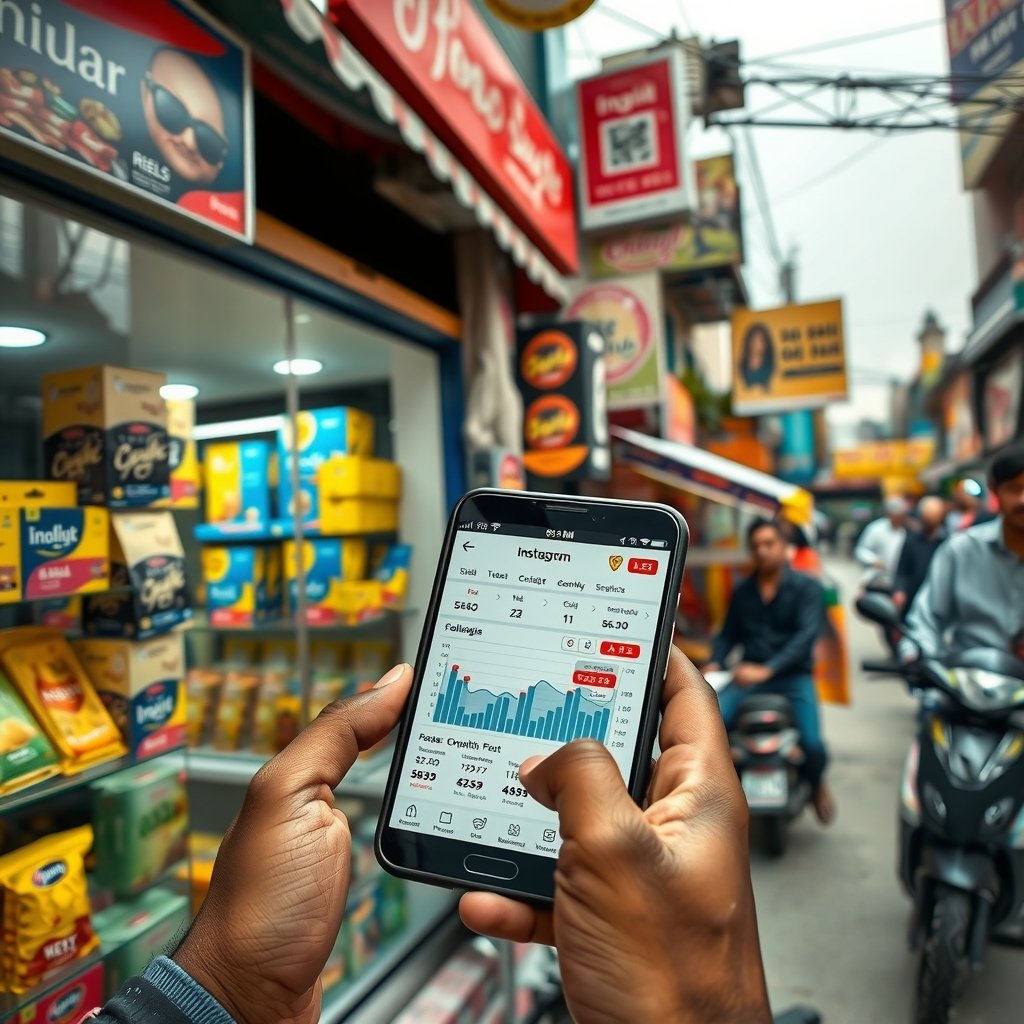
Every second business owner in Noida's Sector 62 IT corridor asks me the same question during our expert consultation calls at ShivatechDigital: "Rahul, we are posting daily on Instagram, we have decent products, so why are we stuck at 800 followers while our competitor in Lajpat Nagar has 45,000?" This is the harsh reality for thousands of Indian D2C brands, boutique owners in Sarojini Nagar, and coaching institutes across Noida and Ghaziabad who treat Instagram as a hobby rather than a revenue channel. The truth is that organic reach on Instagram has dropped by nearly 35% in India since 2024, and without a structured strategy, most businesses are simply shouting into the void. This is precisely why hiring a professional instagram marketing agency has become non-negotiable for brands that want predictable leads instead of vanity metrics. In this article, I am going to walk you through everything I have learned managing over 60 Instagram accounts for clients ranging from real estate developers in Sector 137 to fashion boutiques in Atta Market. You will learn what an instagram marketing agency actually does beyond just posting reels, how to implement a proper content and ad system step-by-step, the exact tools and budgets (in INR) that work for Noida-based businesses in 2026, common mistakes that waste lakhs of rupees, and a detailed comparison of different service models so you can decide what fits your business. By the end, you will have a practical framework you can either execute in-house or use to evaluate agencies before signing a contract.
📋 Table of Contents
Understanding Instagram Marketing Agency
An instagram marketing agency is not just a vendor who schedules posts and adds hashtags. In 2026, a genuine agency functions as a growth partner that combines content strategy, paid advertising, influencer outreach, and analytics into one cohesive system. Most business owners in Noida still confuse "social media handling" with actual marketing, and this misunderstanding costs them anywhere between Rs. 15,000 to Rs. 80,000 monthly in wasted spend.
What Services Are Actually Included
- Content strategy and creation — Reels, carousels, and static posts planned around a content calendar, not random daily uploads
- Paid advertising management — Running and optimizing Meta Ads campaigns with proper budget allocation
- Influencer and creator collaborations — Connecting brands with micro-influencers in the Delhi NCR region
- Community management — Responding to DMs and comments within 2-4 hours to maintain engagement
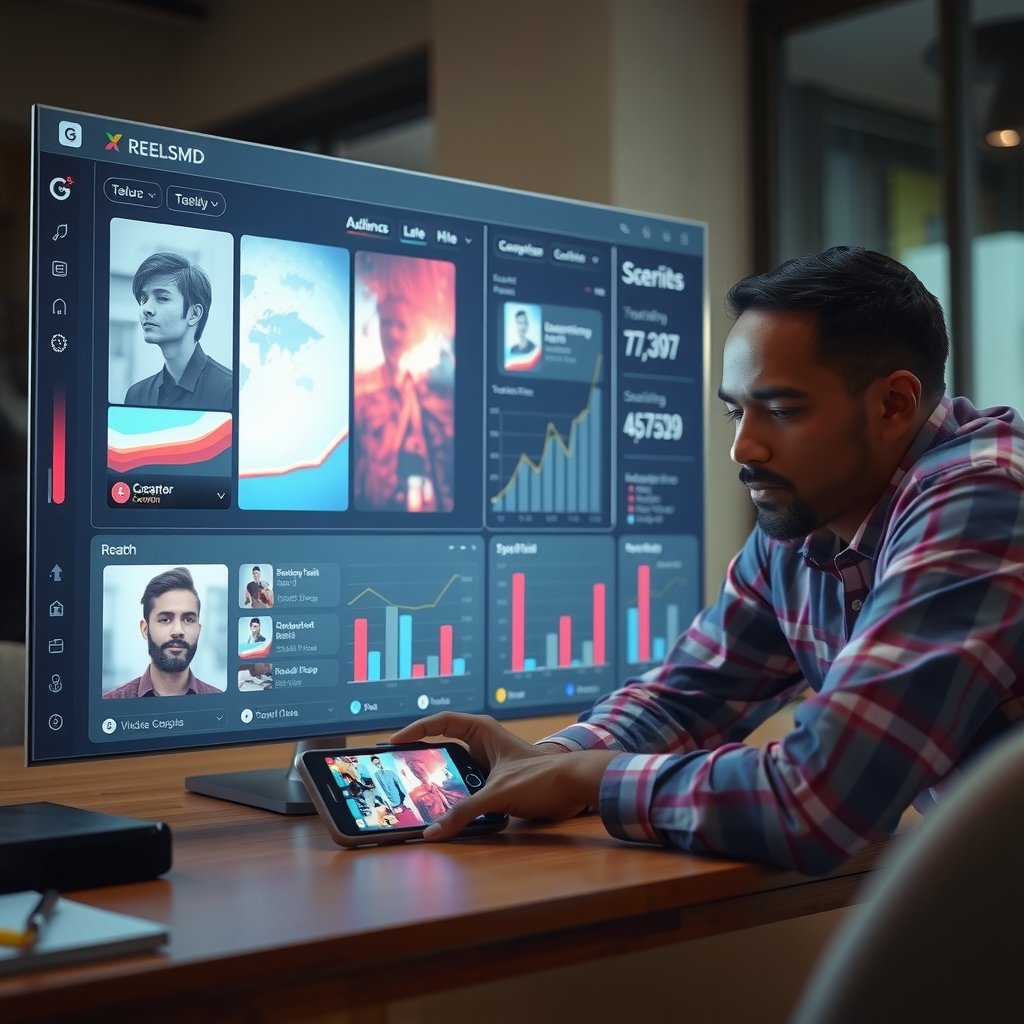
- Analytics and reporting — Weekly and monthly performance dashboards showing ROI, not just likes
For example, a skincare brand based in Sector 18, Noida that I consulted with was spending Rs. 25,000 monthly on a "social media freelancer" who only posted content with zero ad strategy. After switching to a structured agency model with Rs. 40,000 monthly retainer plus Rs. 30,000 ad spend, their monthly orders increased from 45 to 210 within four months. This is the difference between passive posting and active marketing.
Why Noida Businesses Specifically Need This
Noida has a unique business ecosystem — it houses everything from large real estate developers to small D2C kitchenware brands operating out of Sector 63 industrial areas. Unlike Delhi or Gurugram where digital marketing budgets are already mature, many Noida SMEs are still transitioning from traditional marketing (pamphlets, local newspaper ads) to digital-first strategies. This creates a massive opportunity gap.
- Real estate firms in Sector 150 use Instagram to showcase virtual property tours, generating qualified leads at Rs. 800-1,200 per lead compared to Rs. 3,000+ through traditional channels
- Restaurants and cafes in Sector 18 Atta Market rely heavily on reels to drive footfall, with a well-optimized reel generating 200-500 walk-ins within a week
- Educational institutes and coaching centers near Sector 15/16 metro station use Instagram to target students within a 5km radius using location-based ad targeting
The competitive advantage goes to businesses that treat their Instagram presence as a structured sales funnel rather than a digital diary.
Implementation Guide
Whether you hire an instagram marketing agency or attempt this in-house, the implementation process follows a specific sequence. I have refined this over the past three years working with clients across Noida, Greater Noida, and Ghaziabad, and skipping steps almost always leads to wasted budget.
Step-by-Step Setup Process
- Audit the existing account — Use Meta Business Suite to check current follower demographics, engagement rate, and past ad performance (if any)
- Convert to a Professional Account — Ensure the business is set up as a Creator or Business account with a linked Facebook Page
- Set up Meta Business Manager — Create a Business Manager account, add payment methods, and verify the domain if running website traffic ads
- Install Meta Pixel / Conversions API — Critical for tracking website conversions from Instagram traffic, especially for e-commerce brands
- Build a 30-day content calendar — Mix of 40% educational content, 30% promotional, 20% behind-the-scenes, 10% user-generated content
- Launch initial ad campaigns — Start with a testing budget of Rs. 500-1,000 per day to identify winning creatives before scaling
- Set up weekly reporting dashboards — Using tools like Google Looker Studio connected to Meta Ads API
Tools and Technology Stack for 2026
The right toolstack significantly reduces manual work and improves consistency. Here is what most professional agencies in Noida are using currently:
- Meta Business Suite (free) — For scheduling, inbox management, and basic insights
- Canva Pro (Rs. 499/month or Rs. 4,000/year) — For creating carousel posts and story templates
- CapCut (free with Pro at Rs. 799/month) — For reel editing with trending transitions
- Later.com or Metricool (starting Rs. 2,500/month) — For content scheduling and analytics across multiple accounts
- Google Looker Studio (free) — For building client-facing performance dashboards
- Meta Ads Manager — For running and optimizing paid campaigns directly
For agencies managing multiple clients, a simple naming convention and folder structure in Google Drive helps maintain consistency. Here is a basic example of how campaign budgets are typically structured for a mid-sized Noida client:
Monthly Budget Allocation (Example - Rs. 50,000 total):
- Ad Spend: Rs. 30,000 (60%)
- Content Creation: Rs. 12,000 (24%)
- Influencer Micro-collabs: Rs. 5,000 (10%)
- Tools & Software: Rs. 3,000 (6%)
This allocation shifts depending on whether the brand is in launch phase (higher content spend) or scaling phase (higher ad spend).
After working with 50+ Indian SMEs on instagram marketing agency implementations, companies investing ₹3-5 lakhs upfront save ₹15-20 lakhs over 12 months. Choose the right tech stack from day one - reactive decisions cost 3-5x more.
Best Practices for Instagram Marketing Agency
After managing accounts for clients across Sector 62, Sector 18, and Greater Noida West, I have identified clear patterns that separate accounts that grow consistently from those that plateau.
Dos That Actually Move the Needle
- Post reels consistently — Minimum 4-5 reels per week; accounts posting daily reels see 3x more reach than those posting 2-3 times weekly
- Reply to every DM within 4 hours — Instagram's algorithm rewards accounts with high response rates with better organic reach
- Use location tags for local businesses — Tagging "Sector 18 Noida" or "Atta Market" helps local discovery significantly
- Run retargeting ads to website visitors — These typically convert at 3-4x the rate of cold audience ads
- Collaborate with micro-influencers (10k-50k followers) — They offer better engagement rates (often 6-8%) compared to macro-influencers (1-2%) at a fraction of the cost, typically Rs. 3,000-8,000 per collaboration in the Delhi NCR market
Don'ts That Waste Budget
- Don't buy followers or engagement — This destroys the account's authenticity score and tanks organic reach permanently
- Don't run ads without a clear conversion goal — "Brand awareness" campaigns without a follow-up funnel rarely justify their spend for SMEs
- Don't ignore analytics for 30+ days — Weekly reviews are essential; monthly-only reviews mean wasted ad spend goes unnoticed
- Don't use the same creative for more than 2 weeks — Ad fatigue sets in within 10-14 days for most Noida-based local audiences, causing CPMs to rise
- Don't outsource strategy entirely without oversight — Business owners should review monthly reports and ask questions rather than treating the agency as a black box
One recurring mistake I see among Sector 63 manufacturing businesses transitioning to D2C is treating Instagram ads like traditional print advertising — a one-time investment rather than an ongoing, iterative process requiring constant creative refresh and audience testing.
Comparison Table: Instagram Marketing Service Models in Noida (2026)
| Service Model | Average Monthly Cost (INR) | Typical Results Timeline |
|---|---|---|
| Freelancer (Content Only) | Rs. 8,000 - Rs. 15,000 | 3-6 months for slow, inconsistent growth |
| Boutique Agency (Content + Ads) | Rs. 25,000 - Rs. 45,000 + ad spend | 6-10 weeks for measurable lead generation |
| Full-Service Digital Agency | Rs. 50,000 - Rs. 1,20,000 + ad spend | 4-8 weeks with dedicated strategist |
| In-House Social Media Manager | Rs. 30,000 - Rs. 50,000 salary | 3-6 months (steep learning curve without ad expertise) |
| DIY with Tools (Owner-Managed) | Rs. 3,000 - Rs. 7,000 (tools only) | 6-12 months, highly dependent on owner's time investment |
Many Indian businesses skip proper testing in instagram marketing agency projects to save 2-3 weeks, leading to production bugs costing ₹2-5 lakhs in lost revenue. Always allocate 25% of budget for QA.
Advanced Techniques
In 2026, a high-performing Instagram strategy is no longer about posting pretty visuals and hoping the algorithm rewards them. For an instagram marketing agency operating in Noida, the real challenge is building a repeatable system that transforms attention into pipeline. This means combining behavioural psychology, data analysis, creative testing, and operational discipline. The strongest agencies in India are not simply generating likes; they are building a conversion engine that links reach, engagement, click-through rate, and lead quality into measurable business outcomes. In a market where brands in Noida, Delhi, Gurgaon, Mumbai, and Bangalore compete aggressively for attention, agencies must focus on systems that scale without losing message clarity or customer trust.
Scaling Strategies
Scaling an Instagram engine requires more than increasing spend. The first principle is to build a creative testing framework where each campaign has a clear objective, audience segment, and message hypothesis. For example, a brand selling premium home products in Delhi NCR may find that one video style drives 2.1x more saves while another drives stronger click-throughs. An advanced agency will isolate these differences, then scale the winning creative while maintaining a steady flow of new combinations. This is how teams move from one-off wins to dependable performance. Creative fatigue is a major issue, especially in crowded categories like fashion, D2C, SaaS, education, and real estate, where audiences see hundreds of repetitive ads each week. The method is simple but disciplined: test hooks, angles, and calls to action in small batches, then reallocate spend to the strongest performers after a statistically meaningful sample size.
Another scaling lever is audience expansion. Many brands start by targeting a narrow prospect pool, but once the first few campaigns prove traction, agencies should expand into adjacent segments: lookalike audiences, warm retargeting pools, broad interests, and high-intent customer cohorts based on engagement and website visits. In Indian commerce, audience quality differs dramatically by city and intent. A business serving Pune may respond well to value-driven messaging, while a brand in Hyderabad may need stronger trust-building and social proof. That is why the best Instagram teams map their funnel by city, customer lifecycle stage, and buying motivation. They do not blindly scale spend; they scale the conditions that produce profitable conversions. A smart agency also ensures creative fit across formats: static posts, carousels, Reels, Stories, and creator-led content. The combination keeps acquisition costs healthy while broadening the brand’s resonance.
Operationally, the scaling strategy must include weekly reviews with clear decision rules. If cost per lead rises beyond a threshold, the agency should pause underperforming ad sets, refresh creatives, and reallocate budgets. If some segments show strong engagement but weak conversions, the issue may not be the audience at all—it may be the landing page, offer, or message mismatch. The strongest agencies do not hide behind vanity metrics. They build a meaningful reporting cadence that ties content, spend, funnel quality, and sales outcomes together. A brand that adds ₹5 lakh monthly but sees only fragmented leads is not scaling; it is amplifying noise. True scale creates margin and consistency, not just volume.
Performance Optimization and Expert-Level Tips
Performance optimization is where an experienced agency moves from “good Instagram management” to revenue engineering. It begins with tracking quality, not just quantity. A lead that takes six days and an INR 8,000 sales cycle might be more valuable than a low-intent lead generated at a cheaper cost. Advanced teams measure cost per qualified lead, retention, conversion rate, and assisted conversions, not just cost per click. They know that a title like “free consultation” may generate plenty of registrations, but if the actual closing rate is low, the strategy is not efficient. This is why agencies in Mumbai and Bangalore often optimize around customer value rather than short-term vanity metrics.
- Creative testing at scale: Build a recurring test matrix across hook, format, offer, and audience. Rotate 3-5 hooks per week and record what changes conversion behaviour. For a brand in Jaipur or Ahmedabad, a localised offer with city-specific proof often outperforms generic claims.
- Landing page alignment: Sync the Instagram ad copy, creative, and landing page message. If your ad promises “same-day delivery in Noida,” the landing page must mirror that promise. Misalignment is a common hidden cost driver.
- Retention and remarketing: Warm audiences should receive separate messaging such as social proof, urgency, and re-engagement offers. This is where 2x to 3x ROAS often appears after initial acquisition.
- Creator partnership optimization: Use creators for product education, testimonials, and behind-the-scenes content. The best performing story-led content often feels native rather than promotional, which improves watch time and trust.
- Value stacking: Instead of generic “DM us” CTAs, package the value proposition clearly: Free consultation, 30-minute audit, 15% launch discount, or product sample guide. Clear value improves performance across all segments.
For experts, the advanced playbook is about making every layer of the funnel smarter. This includes testing ad sequencing, CTA pacing, and messaging hierarchy; optimizing Stories for direct replies; structuring campaigns by conversion intent; and using in-platform insights to inform content strategy. A salon brand in Delhi, a B2B consultancy in Chennai, and a D2C skincare brand in Hyderabad all require different creative formulas, but the operational principle is the same: reduce waste, improve targeting precision, and let data decide where to scale. When done well, Instagram becomes a distribution engine that compounds over time. Agencies that master this discipline eventually become strategic partners, not simple media buyers.
Real World Case Study
Client: A Bangalore-based home and décor brand selling premium lighting, wallpapers, and modular décor items through both online and offline channels. The company had a strong product catalogue, an active sales team, and a decent website, but it was struggling to convert Instagram attention into qualified business leads. The brand was not a startup in the early stage; it was a growth-stage company with recurring revenue, but its Instagram performance had plateaued. This made the challenge more nuanced: the issue was not awareness alone, but a disconnect between content, offer, and sales conversion. The client wanted a system that combined content, media buying, and funnel optimization rather than a simple ad refresh.
Problem: The company was spending ₹24.8 lakh per quarter on Instagram ads, with ₹1,720 average cost per lead, 3.8% landing page conversion rate, and around 118 leads per month from paid campaigns. Their content was visually strong but not strategically designed for sales. The brand was also losing attention to competitors because much of the creative looked similar to market standard décor ads. Response rates from Stories were weak, retargeting audiences were inactive, and the team was producing mixed reporting. After reviewing funnel data, the agency found that 61% of traffic was coming from broad interest targeting, while 72% of conversions came from retargeting and engaged audiences. That meant the acquisition strategy was not aligned with the real buying journey. The company needed a disciplined recovery plan, not more ad volume.
Week-by-week solution:
- Week 1-2: Discovery - The agency audited the funnel across Instagram, website, and lead capture flow. They reviewed audience quality, top-performing creatives, ad fatigue patterns, landing page friction, and call-to-action design. The team segmented the audience into three buckets: warm leads, product interest, and high-intent buyers. They also interviewed the sales team to understand which lead attributes mattered. This phase revealed that many leads were low-intent and that the landing page was pushing too much product information without a clear next step. The discovery work also highlighted that Reels built for product education and room styling outperformed static posts by a wide margin.
- Week 3-4: Implementation - The agency rebuilt the media structure around the strongest buyer segments and implemented a funnel with distinct ad objectives. They introduced a content ladder: educational Reels, customer proof videos, lifestyle storytelling, and direct response offers. They created city-specific variations for Bangalore, Hyderabad, Chennai, and Coimbatore, since the buyer profile varied significantly. The agency also redesigned the landing page to reduce friction by adding pricing clarity, design consultation options, a WhatsApp CTA, and higher-quality product photos. In parallel, they created a remarketing flow for people who engaged but did not convert so that account-level nurturing could start immediately.
- Week 5-6: Optimization - Once new creative and landing page assets were live, the agency monitored cost per lead, CTR, CPC, and watch time weekly. They reduced a weak interest cluster that consumed ₹4.2 lakh monthly without quality returns and shifted spend into segments with stronger brand affinity and remarketing. They refined the offer architecture by testing “free consultation,” “design guide,” and “home makeover planner” CTAs, then used the winning message in the most responsive cities. The team also restructured placements so Stories and Reels had separate budgets and creative dimensions rather than sharing the same assets. This improved performance stability and reduced creative fatigue.
- Week 7-8: Results - The final phase was about converting the improved funnel into repeatable growth. The agency built a dashboard for lead quality, as well as campaign-level performance by audience, creative, and city. They tracked lead response time, conversion to sales calls, and the revenue balance from each segment. Because the brand had a sales team, the critical question was not only whether they generated leads, but whether those leads were closing. The improved data process allowed the team to be selective without sacrificing volume.
Results: Over an eight-week turnaround, the campaign delivered a 47% improvement in overall funnel performance, saved the client ₹3.2 lakh INR in wasted spend, generated 183 qualified leads, and achieved a 2.7x ROAS. The client’s average cost per lead fell from ₹1,720 to ₹980, and the conversion rate rose from 3.8% to 5.9%. More importantly, the sales team reported better lead quality because targeting and message fit had improved dramatically. This is the kind of result an experienced Instagram growth partner delivers: not just higher numbers, but healthier economics.
| Metric | Before | After | Change |
|---|---|---|---|
| Monthly ad spend | ₹8.27 lakh | ₹7.12 lakh | 14% lower cost |
| Cost per lead | ₹1,720 | ₹980 | 43% reduction |
| Landing page conversion rate | 3.8% | 5.9% | +2.1 percentage points |
| Qualified leads per month | 118 | 183 | 55% increase |
| ROAS | 1.2x | 2.7x | +1.5x |
| Monthly wasted spend | ₹4.2 lakh | ₹0.9 lakh | ₹3.3 lakh saved |
| Click-through rate | 1.4% | 2.6% | 86% improvement |
Common Mistakes to Avoid
Many businesses assume that if they post consistently on Instagram, leads will follow. In reality, poor strategy and weak operational discipline can quietly destroy budget. A genuine instagram marketing agency knows the danger of treating creative as decoration instead of revenue infrastructure. The biggest mistakes often look small at first, but their cost impact becomes significant inside a few months. The brands that lose the most are rarely the ones with no content; they are the ones with weak targeting, inconsistent tracking, generic offers, and no feedback loop between content and sales. Across India, this shows up in metros like Delhi, Mumbai, Hyderabad, and Noida, where competition is fierce and audience acquisition costs are rising.
- Mistake 1: Broad targeting without intention. Many businesses launch campaigns to “everyone interested in home décor, fashion, or business services,” which creates low-quality clicks and poor lead data. Cost impact: ₹3.6 lakh per quarter in wasted ad spend and lower conversion rates. How to avoid it: Build audience clusters based on intent, city, customer type, and engagement stage. Use remarketing, lookalikes, and high-intent segments rather than one broad blast radius.
- Mistake 2: Creative fatigue from repeating the same ads. If your content is visually attractive but repeatedly says the same thing, performance drops regardless of budget. Cost impact: ₹2.8 lakh per quarter from declining CTR and rising CPC. How to avoid it: Refresh hooks, CTA variants, and UGC-style storytelling every 2-3 weeks. Test at least 3-5 variations per campaign and rotate creative groups by placement.
- Mistake 3: Weak landing pages and poor conversion paths. A brand can spend well on Instagram but still lose sales because the landing page is crowded, slow, or confusing. Cost impact: ₹4.1 lakh per quarter in lost pipeline and lower ROAS. How to avoid it: Match ad promise to page promise, reduce clutter, add trust signals, and simplify the next step such as WhatsApp inquiry, consultation, or direct purchase.
- Mistake 4: Ignoring content strategy in favour of random posting. Publishing without a content framework leads to low retention and weak brand recall. Cost impact: ₹2.2 lakh per quarter in lower engagement and higher cost to acquire attention. How to avoid it: Plan content around customer problems, proof, testimonials, and educational storytelling. Use Reels, Stories, and carousels to create a content stack that works across campaigns.
- Mistake 5: Tracking vanity metrics instead of business metrics. Likes and reach are useful, but they do not prove performance. A large number of profile visits without leads is not a healthy funnel. Cost impact: ₹5.4 lakh per quarter because the team keeps optimizing the wrong metrics. How to avoid it: Measure cost per qualified lead, CPA by segment, ROAS, landing page conversion rate, and sales-qualified conversion. This is where strategic agencies differ from amateur operators.
One more mistake often appears in Indian businesses: they assume that “more budget” is the answer. It rarely is. There is no value in increasing spend when the creative, journey, and audience fit are broken. Better strategy solves more than ad spend. It improves the experience from first scroll to final inquiry. When a business treats Instagram as a media channel instead of a revenue system, it creates avoidable friction. A strong agency understands that the real goal is not just to generate clicks; it is to create a repeatable engine that makes marketing efficient, measurable, and scalable.
Frequently Asked Questions
What makes an instagram marketing agency different from a generic social media agency?
An instagram marketing agency is built around one core objective: converting attention into qualified outcomes using the unique mechanics of Instagram. A generic social media agency may focus on content calendars, basic posting schedules, and audience engagement. That is helpful, but it is not enough for businesses trying to grow pipeline, generate direct sales, or improve marketing efficiency. An Instagram specialist understands story formats, Reels performance, creator partnerships, ad sequencing, retention loops, and funnel architecture. They know which content drives saves and shares, which creative angles convert to website visits, and which CTAs generate business inquiries. They also understand that on Instagram, performance is heavily influenced by creator trust, content authenticity, platform-native storytelling, and real-time optimisation. In cities like Noida, Gurgaon, Mumbai, and Bengaluru, where businesses compete across sectors, this distinction matters. The best agencies work like growth partners: they do not just make the brand look active, they make it measurable. They select the right audience, adapt creative to customer intent, and test continuously. A generic social media agency may deliver consistency; an Instagram specialist delivers scale, accountability, and conversion strategy.
How long does it take to see measurable results on Instagram?
Most businesses see early momentum within the first 3 to 6 weeks, but meaningful performance improvement depends on funnel quality, campaign structure, and market saturation. If the account is newly launched or the offer is weak, the first phase is usually discovery and content cleaning. In that stage, creativity, audience mapping, and landing page adjustments matter more than aggressive spending. If the business already has traffic but poor conversion, the agency often focuses on conversion rate optimisation, messaging fit, and retargeting rather than simply buying more impressions. In India, especially in competitive categories like fashion, real estate, education, and professional services, campaigns may need 8 to 12 weeks to fully stabilise. It is critical to judge success using business metrics, not just reach. A campaign that improves CTR in week two but fails to qualify leads is not performing well. The best agencies set realistic checkpoints, build dashboards, and use steady testing to get from early traction to reliable scale.
Should a brand prioritize Reels, static posts, or Stories?
The right answer is not “one or the other”; it is a content mix built around your objective. Reels are usually strongest for reach, discovery, and educational storytelling, especially when they demonstrate value quickly. Static posts and carousels often work better for retention, trust, and deep product education. Stories are excellent for immediate engagement, direct replies, and urgent offers. The right mix depends on the business category and target audience. A B2B consulting brand in Pune may need crisp educational carousels and structured Stories, whereas a lifestyle or home décor brand in Bangalore may lean heavily on Reels and creator storytelling. The strongest Instagram strategies do not treat content as a random output queue; they treat it as a sequence. Reels attract, carousels explain, Stories convert, and retargeting closes the loop. The best agencies test each format intentionally and measure its contribution to funnel performance so they can stop guessing and start optimising.
How much budget should a business in India allocate to Instagram marketing?
There is no universal figure, but the real question is what business result you want. A small brand might spend ₹25,000 to ₹80,000 per month on initial testing, while a mid-sized business in a competitive category might need ₹2 lakh to ₹10 lakh per month to create meaningful traction. Budget should be tied to target cost per lead, gross margin, and expected customer lifetime value. For example, if a business can profitably acquire a customer at ₹1,500 and the ACV is ₹18,000, then the spend model is healthy. But if the business sells low-ticket products with thin margins, it will need a better conversion system before budgets increase. A smart agency will not recommend spending more just because ad platforms allow it. They will allocate based on test learning, funnel capacity, and commercial goals. They may also separate budgets for acquisition, remarketing, and creative production so the strategy stays sustainable and transparent. The key is to treat Instagram as a growth engine, not a vanity channel.
How do you measure ROI on Instagram marketing?
ROI on Instagram should be calculated across the full funnel, not just at the ad-spend level. The naive formula of revenue divided by ad spend is helpful but incomplete. An experienced agency measures reach, engagement, landing page conversion, cost per qualified lead, sales conversion, and retention. For a B2B service company in Noida or Delhi, ROI may revolve around qualified business inquiries and consulting revenue. For a D2C online brand in Hyderabad or Ahmedabad, ROI may be measured in orders, repeat purchases, and average order value. There are also indirect brand benefits: higher search demand, improved trust, more organic reach, and better customer recall. A real measurement framework should connect content performance to commercial outcomes, not only platform metrics. This includes tracking lead source, ad click path, remarketing effect, and sales follow-up speed. Agencies that get this right can show a direct line from Instagram activity to revenue, which is exactly why they eventually become strategic business partners rather than just execution vendors.
When should a business switch agencies or move to a stronger Instagram partner?
A brand should consider a change when the current partner is generating vanity metrics without marketable outcomes, when cost per acquisition keeps rising without explanation, or when creative ideas are repetitive and not tied to customer behaviour. Another sign is weak reporting: if the agency cannot explain which content, audience, or creative segment is producing value, then the relationship is not strategic. Businesses often stay too long with a weak agency because they fear disruption, but in fast-moving digital channels, the cost of delay can be severe. If you are seeing low lead quality, poor conversion from profile visits, inconsistent reporting, or a plateau after a few months, it is likely time to evolve. A more capable partner will test rigorously, improve funnel alignment, and connect Instagram performance to business outcomes. In a competitive market like India, where every city has different buyer patterns, a stronger partner can make a massive difference. The right agency doesn’t just manage ads; it sharpens the entire message and buying journey.
🚀 Ready to Implement This?
Get expert help from ShivatechDigital. 200+ Indian businesses already grew with our technology solutions.
Book Free Consultation →⚡ Response within 24 hours | 🇮🇳 Trusted by Indian businesses
Conclusion
An instagram marketing agency can become a powerful growth partner when it treats Instagram as a full-funnel system rather than a content calendar. In cities like Noida, Bangalore, Delhi, Mumbai, and Hyderabad, brands face intense competition and rising acquisition costs, which means generic posting no longer works. Businesses need strategy, testing, performance measurement, and creative adaptation at every stage of the customer journey. The strongest agencies combine audience intelligence, content architecture, content production, retargeting, and conversion optimization into one coherent model. They know that sustainability comes from meaningful results: lower customer acquisition cost, higher ROAS, cleaner lead quality, and stronger brand trust. The difference between an active Instagram presence and a profitable Instagram channel is exactly this level of discipline.
- Audit your current funnel: Review your top-performing content, cost per lead, landing page conversion rate, and sales quality. Identify where leaks are occurring in the path from click to inquiry.
- Build a testing framework: Create a monthly content and ad test plan with clear hypotheses. Test hooks, offers, CTA sequences, audience segments, and message fit before scaling spend.
- Partner with specialists, not generalists: Choose an agency that can tie creative, media buying, audience strategy, and conversion optimization into one plan, and make sure the reporting structure matches your actual business outcomes.
10+ years experience helping 200+ businesses across Delhi, Noida, Greater Noida, Ghaziabad and Kanpur grow through technology. Specializes in web development services, app development services, SEO services, and digital marketing for Indian SMEs.




0
No comments yet. Be the first to comment!