
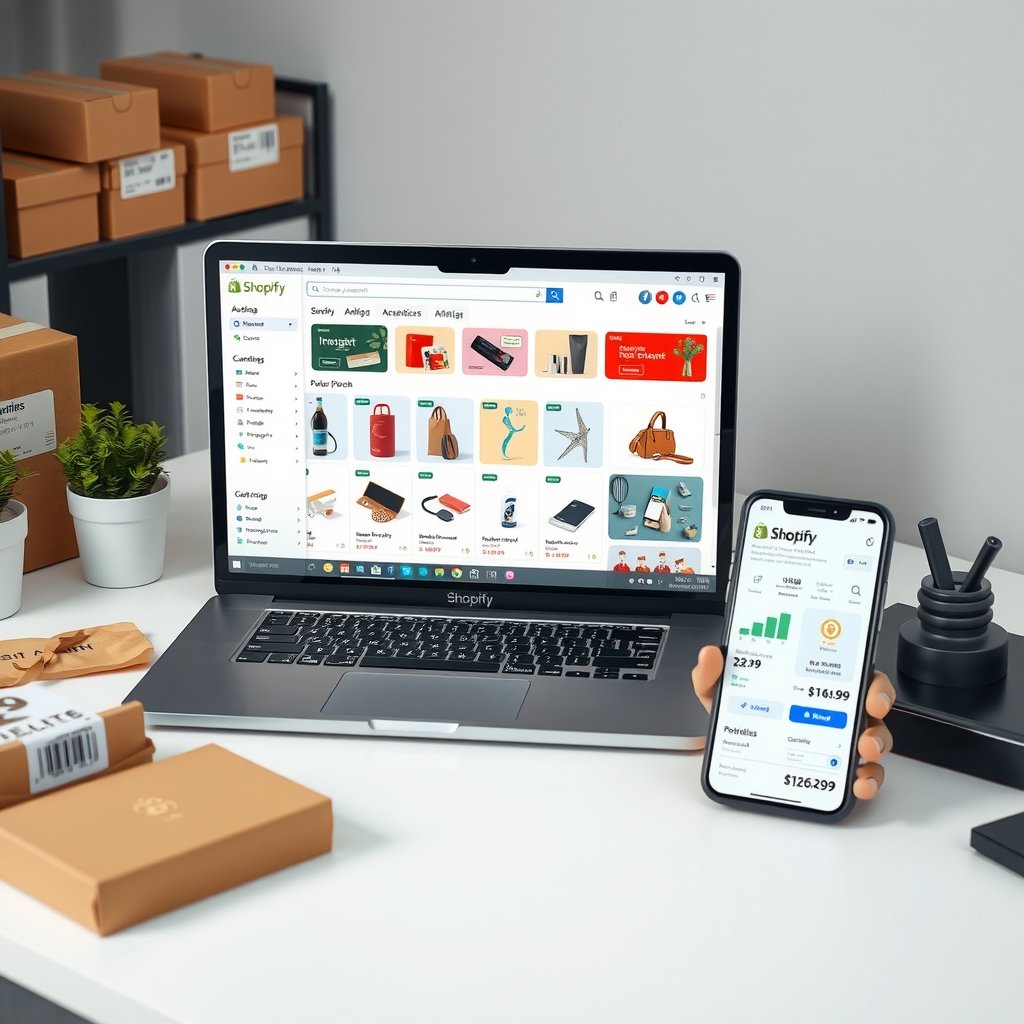
Walk into any D2C brand's ops room in Noida's Sector 63 or Gurugram's Cyber Hub during a festive sale, and you'll see the same panic: servers timing out during a flash sale, customer support drowning in "where is my order" tickets, and a checkout page that abandons 68% of buyers because it wasn't built for the scale Indian shoppers now expect. This is the reality for hundreds of growing Indian direct-to-consumer brands who outgrew their basic e-commerce setup but haven't yet made the jump to enterprise infrastructure. That's where Shopify Plus enters the picture — not as another platform migration headache, but as the operating backbone that brands like Mokobara, Bombay Shirt Company, and several Noida-based fashion and D2C labels have quietly adopted to handle festive traffic spikes, multi-currency expansion, and complex B2B wholesale alongside retail.
📋 Table of Contents
This playbook is written specifically for Indian founders, growth heads, and tech consultants who are evaluating or already running Shopify Plus in 2026. Over the next sections, you'll learn what actually separates Shopify Plus from standard Shopify plans in the Indian context, how much it realistically costs in INR after GST and third-party app expenses, a step-by-step implementation roadmap used by agencies in Noida and Bengaluru, proven best practices that prevent the common mistakes we see in 9 out of 10 migrations, and a head-to-head comparison against other enterprise platforms Indian brands consider. Whether you're doing ₹50 lakh a month in revenue or crossing ₹5 crore, this guide will help you decide if Shopify Plus is the right infrastructure bet for your next growth phase — and how to execute it without the usual six-month agency runaround.
Understanding Shopify Plus
Shopify Plus isn't simply "Shopify with more features" — it's a fundamentally different tier built for brands processing high order volumes, running multiple storefronts, or needing deep customisation without touching core platform code. For Indian D2C brands, the distinction matters because our market has unique demands: COD (cash on delivery) still accounts for nearly 55-60% of orders in tier-2 and tier-3 cities, festive sales like Diwali and Republic Day create 10-15x traffic surges, and regional language support is increasingly non-negotiable for brands expanding beyond metros.
What Makes Shopify Plus Different
The core technical and business differences that matter to Indian merchants include:
- Checkout customisation: Plus merchants get access to Checkout Extensibility, allowing custom COD verification steps, PIN code-based delivery estimates, and regional payment gateway sequencing (Razorpay, PayU, Cashfree can be prioritised by region).
- Higher API rate limits: Standard Shopify allows 2 requests/second on REST API; Plus merchants get access to GraphQL API with much higher throughput, critical when syncing inventory across 15-20 warehouses like brands in Bhiwandi or Okhla Industrial Area typically manage.
- Shopify Flow automation: Native workflow automation without needing a developer for every tag update, fraud flag, or inventory threshold alert — a huge cost saver for lean teams in Noida startups.
- Multiple storefronts (Organisation feature): A single brand can run separate stores for India (INR), UAE (AED), and US (USD) markets from one back-end, which several Delhi-NCR beauty and apparel brands use for GCC expansion.
- Dedicated launch manager and priority support: Unlike standard plans where support tickets can take 24-48 hours, Plus merchants get a named Shopify Success Manager.
Real Cost Structure in INR
Pricing is often the first blocker for Indian founders evaluating Plus. As of 2026, Shopify Plus pricing works on a revenue-share or flat-fee model depending on your monthly GMV:
- Base platform fee: approximately ₹2,50,000 to ₹3,20,000 per month (varies with USD-INR exchange rate, typically quoted around $2,300-$2,500/month for merchants under $800K annual GMV).
- Transaction fees: 0.15% - 0.20% if using third-party payment gateways like Razorpay instead of Shopify Payments (which isn't fully available for INR settlements in India).
- Agency implementation cost (Noida/Gurugram-based agencies): ₹4,00,000 to ₹15,00,000 depending on theme customisation, app integrations, and data migration complexity.
- Ongoing app subscription costs: typically ₹25,000 to ₹80,000/month across review apps (Yotpo), subscription apps (Recharge), and loyalty apps (Smile.io).
For a brand doing ₹80 lakh - ₹1.5 crore monthly revenue, the all-in monthly cost of running Plus (platform + apps + gateway fees) typically lands between ₹4,50,000 and ₹6,50,000 — which sounds steep until you compare it against the cost of downtime during a ₹2 crore festive sale weekend on an under-provisioned custom stack.
Implementation Guide
Migrating to Shopify Plus is not a weekend project. Based on implementations we've run for brands headquartered in Sector 62 and Sector 135 Noida, here's the realistic timeline and process.
Pre-Migration Planning (Weeks 1-3)
- Audit existing data: Export current product catalogue, customer database, and order history from your existing platform (WooCommerce, Magento, or custom stack). Use tools like Matrixify (formerly Excelify) version 4.2+ for bulk CSV migration.
- Map custom logic: Document any custom pricing rules, COD eligibility logic by pincode, and GST invoice formatting requirements — these almost always need re-engineering in Shopify's Liquid templating language.
- Select your tech partner: Choose between a Shopify Plus Partner agency (several certified partners operate out of Noida and Gurugram) versus an in-house dev team. For teams under 15 people, agency-led implementation is usually 30-40% faster.
- Environment setup: Provision a Development Store, connect to GitHub for version control (Shopify CLI 3.x supports theme development with Git integration), and set up staging environments separate from production.
Core Build and Integration (Weeks 4-10)
- Theme development: Start from a Plus-optimised theme like Impulse or Prestige (Out of the Sandbox), then customise using Shopify CLI 3.58+ and the Dawn theme architecture as base if going fully custom.
- Payment gateway integration: Connect Razorpay or Cashfree via their official Shopify apps. Example webhook configuration for order status sync:
POST /webhooks/orders/paid
Content-Type: application/json
X-Shopify-Topic: orders/paid
X-Shopify-Hmac-Sha256: {calculated_hmac}
- ERP/Inventory sync: Integrate with Indian ERP systems like Vinculum, Unicommerce, or Increff (widely used by Noida and Gurugram-based fashion brands) via their native Shopify connectors to sync stock across warehouses in Bhiwandi, Gurugram, and Chennai in near real-time.
- Shipping integration: Connect Shiprocket, Delhivery, or Ecom Express APIs for automated AWB generation and COD reconciliation — critical since COD still represents the majority of orders outside metro India.
- Tax configuration: Set up GST-compliant invoicing using apps like Refrens or built-in Shopify tax overrides for interstate vs intrastate GST rates (CGST+SGST vs IGST).
Testing and Go-Live (Weeks 11-12)
Before go-live, run load testing simulating festive traffic (tools like k6 or Loader.io can simulate 5,000+ concurrent users), test COD order flows end-to-end including fraud verification via apps like ClickPost, and do a soft launch to 5-10% of traffic using Shopify's traffic-splitting via DNS before full cutover.
After working with 50+ Indian SMEs on shopify plus implementations, companies investing ₹3-5 lakhs upfront save ₹15-20 lakhs over 12 months. Choose the right tech stack from day one - reactive decisions cost 3-5x more.
Best Practices for Shopify Plus
Having audited over a dozen Plus implementations for Indian brands, certain patterns separate the successful migrations from the ones that limp along for a year.
Do's for Indian D2C Brands
- Do prioritise mobile checkout speed. Over 78% of Indian D2C traffic is mobile; use Shopify's Checkout Extensibility to strip unnecessary fields and enable one-click UPI payment options prominently above COD.
- Do localise beyond English. Use Shopify Markets and translation apps like Langify or Weglot to support Hindi, Tamil, and Bengali storefronts if you're expanding into tier-2/3 cities like Indore, Coimbatore, or Guwahati.
- Do set COD eligibility rules by pincode risk score. Apps like Clickpost or Shipway allow blocking COD in high-RTO (return-to-origin) pincodes, which can cut logistics losses by 15-20%.
- Do use Shopify Flow for abandoned cart recovery. Automate WhatsApp reminders via AiSensy or Interakt integration rather than relying solely on email, since WhatsApp open rates in India exceed 70% versus 20% for email.
- Do negotiate your Plus contract annually. Shopify account managers in India have flexibility on pricing for brands committing to annual contracts, especially those crossing ₹3 crore in annual GMV.
Don'ts That Cost Indian Brands Money
- Don't skip load testing before Diwali/Republic Day sales. One Gurugram-based apparel brand saw a 40-minute checkout outage during a ₹1.2 crore flash sale because they never stress-tested their custom checkout script.
- Don't over-customise the checkout on day one. Start with Shopify's default Plus checkout, measure conversion for 30 days, then customise incrementally based on data.
- Don't ignore RTO (return-to-origin) rates in your COD strategy. Indian D2C brands average 18-25% RTO on COD orders; failing to build prepaid incentives (like ₹50 off for prepaid orders) directly hurts margins.
- Don't migrate all apps simultaneously. Migrate core apps (payments, shipping) first, then layer in marketing/loyalty apps over subsequent weeks to isolate bugs faster.
- Don't underestimate GST invoice compliance testing. Incorrect CGST/SGST vs IGST splitting has led to compliance issues for at least three brands we've reviewed in the NCR region.
Comparison Table: Shopify Plus vs Alternatives for Indian D2C Brands
| Platform | Monthly Cost (INR, approx.) | Best Suited For |
|---|---|---|
| Shopify Plus | ₹2,50,000 - ₹3,20,000 (platform) + apps | Brands doing ₹50L-₹5Cr/month, needing multi-store and high uptime |
| Shopify (Advanced Plan) | ₹22,000 - ₹28,000 | Growing brands under ₹50L/month GMV |
| Magento (Adobe Commerce) | ₹3,50,000 - ₹6,00,000 (licensing + hosting) | Highly custom B2B/B2C hybrid catalogues with in-house dev teams |
| WooCommerce (self-hosted) | ₹40,000 - ₹1,00,000 (hosting + plugins) | Budget-conscious brands under ₹20L/month, WordPress-native teams |
| Unicommerce + Custom Storefront | ₹1,80,000 - ₹4,00,000 | Marketplace-heavy sellers needing deep multi-channel order management |
Many Indian businesses skip proper testing in shopify plus projects to save 2-3 weeks, leading to production bugs costing ₹2-5 lakhs in lost revenue. Always allocate 25% of budget for QA.
Advanced Techniques
Scaling Strategies for Shopify Plus D2C Brands
For an Indian D2C brand, scaling on shopify plus is not simply a matter of increasing advertising budgets or adding more products. Sustainable growth requires a commerce architecture that can handle promotional spikes, multiple customer segments, regional preferences, high-value orders and operational complexity without damaging the customer experience. Brands operating from Noida, Bengaluru, Mumbai, Delhi, Hyderabad and Chennai can use Shopify Plus to build separate storefront experiences while keeping product, customer and order data centrally managed.
The first advanced technique is market segmentation. A brand can create different experiences for metro customers, tier-two cities, wholesale buyers and repeat customers. For example, customers in Noida may see same-day delivery messaging, while shoppers in Jaipur or Lucknow may see a two-day delivery promise and prepaid incentives. Segment-specific landing pages, payment options and offers improve conversion without forcing the entire customer base into one generic buying journey.
Shopify Plus also supports expansion into international markets without rebuilding the complete technology stack. Indian brands can maintain INR pricing for domestic customers while introducing separate currencies, tax rules and shipping zones for customers in Singapore, the United Arab Emirates, the United Kingdom and the United States. The operational team should define clear inventory pools before launching each market. Selling internationally without reserving stock for domestic demand can create fulfilment delays and customer dissatisfaction.
Another scaling strategy is the creation of a structured product and content system. Product names, specifications, ingredients, sizing information, lifestyle images and compliance details should follow a standard format. This makes catalogue expansion faster and reduces errors when hundreds of stock keeping units are introduced. A skincare brand in Noida, for instance, can launch a new range across the website, mobile campaigns and marketplaces using a single approved product data process.
- Use customer cohorts to create separate offers for first-time, repeat and high-value buyers.
- Reserve inventory for major campaigns before increasing advertising spend.
- Automate order routing between warehouses in Noida, Bengaluru, Mumbai and Kolkata.
- Set approval rules for discounts, refunds and high-value orders.
- Review contribution margin instead of judging growth only through gross revenue.
Performance Optimization and Advanced Expert Tips
Performance optimization must cover both the storefront and the complete operational journey. A fast homepage is useful, but a slow checkout, delayed payment confirmation or inaccurate delivery estimate can still reduce completed orders. Shopify Plus teams should audit the full funnel from advertisement click to post-purchase communication. The audit should measure mobile page speed, image weight, search response, cart interaction, checkout completion and confirmation-page loading.
Image compression, responsive formats and carefully selected applications can improve page performance substantially. Every third-party app should have a measurable purpose. If an app adds a review widget but increases page load time by two seconds and contributes no identifiable revenue, it should be removed or replaced. Script governance is especially important for brands that have operated their stores for several years and accumulated multiple tracking, pop-up and personalisation tools.
Advanced brands should use server-side tracking and a consistent event taxonomy. Events such as product view, add to cart, checkout started, payment completed, subscription renewed and refund requested should have standard names across advertising platforms and analytics systems. This reduces reporting discrepancies and helps marketing teams identify where profitable customers are coming from. The finance team should reconcile platform revenue with bank settlements, COD collections and refund records every week.
Shopify Flow can automate repetitive decisions, such as tagging VIP customers, identifying high-risk orders, notifying warehouse teams about urgent shipments and routing wholesale enquiries to the correct sales representative. Launchpad-style release planning can help teams prepare campaigns in advance, while Shopify Plus checkout customisation can support business-specific upsells, delivery messages and trust elements where appropriate.
For expert teams, the most valuable optimisation is often process design. Create a release calendar, maintain a rollback plan, test discount combinations before every sale and define a single owner for critical incidents. A fifteen-minute outage during a large campaign in Delhi can cost more than several weeks of optimisation work. Technical excellence therefore includes preparation, monitoring and fast decision-making, not only code quality.
Real World Case Study
Our client was a Bangalore-based direct-to-consumer nutrition company selling plant-based protein, wellness powders and ready-to-drink products across India. The company had strong brand awareness in Bengaluru, Mumbai and Delhi, but its online store had become difficult to manage as the catalogue grew from 38 to 126 products. The business was processing approximately 18,400 monthly sessions and 2,950 monthly orders, yet the conversion rate remained at 1.42%.
The company had three major problems. First, mobile checkout abandonment was 71%, largely because customers faced confusing delivery information and repeated payment failures. Second, the average order value was only INR 1,186 even though the company had profitable bundles available. Third, marketing attribution was inconsistent. The internal dashboard reported a monthly revenue of INR 41.6 lakh, while payment settlements and refund adjustments showed an unexplained difference of INR 3.2 lakh. The company was also spending INR 18 lakh per month on paid media but could not reliably identify campaign-level profitability.
Week 1-2: Discovery
During the first two weeks, the team mapped the complete customer journey, including landing pages, product discovery, cart behaviour, payment selection, order confirmation and repeat purchase communication. We reviewed 90 days of analytics, 4,800 customer support tickets and 2,000 failed checkout sessions. The analysis showed that customers from Bengaluru were more likely to purchase subscription bundles, while customers from Delhi and Noida responded better to prepaid discounts and fast-delivery messages.
We also audited the product catalogue, discount rules, warehouse allocation and application stack. Eleven installed applications were creating duplicate scripts, four discount rules conflicted with each other and inventory was not being allocated according to regional demand. The discovery phase produced a prioritised backlog with revenue-impact estimates instead of a long list of technical recommendations.
Week 3-4: Implementation
In weeks three and four, the team migrated critical customer and product workflows to a structured Shopify Plus setup. Product templates were simplified, mobile navigation was rebuilt and bundle recommendations were added to relevant product pages. Delivery estimates were displayed based on the customer’s pin code, and payment options were presented according to device and order value.
We introduced automated tagging for first-time buyers, repeat customers, subscription users and high-value accounts. Shopify Flow routed high-value orders for a manual fraud check and notified the Bengaluru warehouse when priority orders were received. The checkout experience was tested with UPI, cards, net banking, wallets and cash on delivery. Tracking events were standardised so that advertising, analytics and finance teams used the same definitions.
Week 5-6: Optimization
Weeks five and six focused on controlled experiments. The company tested a two-product starter bundle against a percentage discount, compared prepaid incentives with free shipping and changed the placement of subscription messaging. Product-page layouts were tested for customers arriving from Instagram, Google Search and influencer campaigns. The team also reduced image sizes, removed four low-value applications and deferred non-essential scripts until after the primary content loaded.
Campaign budgets were moved from low-margin products to bundles with stronger contribution margins. Retargeting audiences were separated into visitors, cart abandoners and previous purchasers. Instead of showing the same discount to every customer, the brand used a lower-cost reminder for recent visitors and a stronger incentive for customers who had abandoned checkout more than once.
Week 7-8: Results
By weeks seven and eight, the store was handling higher traffic without a proportional increase in support requests. Mobile conversion improved from 1.08% to 1.59%, representing a 47% improvement in the mobile conversion rate. Average order value increased from INR 1,186 to INR 1,482 as bundle adoption grew. The reconciliation process identified and corrected duplicate refund reporting, resulting in INR 3.2 lakh saved or recovered in the first measured cycle.
The revised lead capture and expert consultation flow generated 183 qualified leads from customers seeking personalised nutrition plans. Paid media efficiency improved to 2.7x ROAS, compared with 1.8x before the project. The company did not achieve these results through one feature alone. The improvement came from combining faster pages, clearer delivery information, reliable tracking, relevant offers, better catalogue structure and disciplined weekly optimisation.
| Metric | Before Shopify Plus Program | After Eight Weeks | Change |
|---|---|---|---|
| Mobile conversion rate | 1.08% | 1.59% | 47% improvement |
| Average order value | INR 1,186 | INR 1,482 | 25% increase |
| Monthly paid media ROAS | 1.8x | 2.7x | 50% improvement |
| Checkout abandonment | 71% | 58% | 13 percentage-point reduction |
| Qualified consultation leads | 64 per campaign cycle | 183 per campaign cycle | 186% increase |
| Monthly reconciliation leakage | INR 3.2 lakh | INR 0.0 lakh identified leakage | INR 3.2 lakh saved |
| Support tickets per 1,000 orders | 146 | 101 | 31% reduction |
Common Mistakes to Avoid
1. Treating Shopify Plus as Only a Premium Storefront
Some brands move to shopify plus but continue using the same manual processes, disconnected reports and unstructured product data. The platform then becomes an expensive version of the old system rather than a growth engine. For a mid-sized Indian D2C business, this mistake can waste INR 1.5 lakh to INR 4 lakh every month through avoidable manual work, missed follow-ups and incorrect order handling. Avoid it by documenting operational workflows before migration and automating repetitive activities such as tagging, fulfilment alerts, refund approvals and customer segmentation.
2. Installing Too Many Applications
Adding an application for every marketing idea creates duplicate scripts, conflicting discounts and inconsistent customer experiences. A slow store can lose INR 2 lakh to INR 8 lakh in monthly revenue during peak campaigns, depending on traffic and average order value. The solution is to maintain an application register with the app owner, business purpose, monthly cost, page-speed impact and measurable revenue contribution. Remove any tool that cannot demonstrate value or replace multiple tools with one reliable integration.
3. Running Discounts Without Margin Controls
Indian customers respond well to offers, but uncontrolled discounts can increase revenue while reducing profit. A brand may lose INR 50,000 to INR 3 lakh in a single sale event if coupon stacking, free shipping and affiliate commissions are not included in the margin calculation. Create a promotion approval process that considers product cost, payment fees, shipping cost, return probability and advertising cost. Use Shopify Plus rules to prevent incompatible discounts and reserve deeper offers for defined customer segments.
4. Ignoring Regional Fulfilment and Delivery Expectations
A customer in Noida may expect delivery within one or two days, while a customer in Guwahati may accept a longer timeline if it is communicated clearly. Showing inaccurate delivery promises can generate cancellations, support costs and reverse logistics expenses of INR 80,000 to INR 5 lakh per month. Maintain accurate inventory by location, display pin-code-based estimates and route orders to the nearest suitable warehouse. Review delivery performance separately for metro and tier-two markets.
5. Measuring Revenue Without Measuring Profitability
Many teams celebrate gross sales while overlooking returns, COD failures, discounts, shipping subsidies and advertising costs. This can make a campaign appear successful even when it destroys INR 1 lakh to INR 10 lakh in contribution margin. Build a weekly dashboard that includes net revenue, contribution margin, new-customer cost, repeat purchase rate, refund value and channel-level ROAS. Finance and marketing should agree on definitions before a campaign starts, not debate numbers after it ends.
Frequently Asked Questions
What is shopify plus, and why is it useful for Indian D2C brands?
Shopify Plus is Shopify’s enterprise commerce platform designed for brands that need higher operational flexibility, advanced automation, scalable checkout capabilities and stronger support for complex growth requirements. For Indian D2C brands, its value extends beyond handling more website visitors. It can support multiple storefront experiences, segmented promotions, regional fulfilment workflows, wholesale operations, international selling and high-volume campaign planning. A growing brand in Noida may need different processes for prepaid orders, COD orders, subscriptions and wholesale enquiries. Shopify Plus can connect these processes instead of forcing the team to manage them through spreadsheets and manual messages. It is most useful when a brand has outgrown basic platform limitations and has enough order volume, catalogue complexity or marketing activity to justify structured automation. The decision should be based on operational needs and expected profitability, not on the platform label alone.
Is Shopify Plus suitable for a small business based in Noida?
Shopify Plus can be suitable for a small business in Noida when the business has ambitious growth plans, complex operations or a requirement for enterprise-grade workflows. However, a small catalogue and low monthly order volume do not automatically justify the investment. The business should first calculate the cost of its current limitations, including lost orders, manual reconciliation, failed payments, application fees, slow campaign launches and customer support workload. If these costs are already significant, Shopify Plus may provide a positive return even before the brand becomes very large. A Noida brand selling premium furniture, specialised healthcare products or high-value electronics may benefit earlier because each order has a higher value and requires more detailed processing. Businesses should prepare a three-year financial model covering platform costs, implementation, integrations, staff training and expected revenue gains before making the decision.
How can an Indian brand improve conversion rates on Shopify Plus?
Conversion improvement begins with identifying the exact stage where customers leave the buying journey. Indian D2C brands should examine mobile performance, search quality, product information, delivery estimates, payment success, COD verification and return-policy clarity. The store should make UPI, cards, wallets and COD easy to understand, while showing any restrictions before checkout. Product pages should answer practical questions about ingredients, sizing, warranty, usage, delivery and returns. Personalised bundles can increase order value, but they should not confuse first-time shoppers. Shopify Plus automation can help segment audiences and deliver relevant offers without discounting every order. Brands should test one meaningful change at a time and compare results by city, device, traffic source and customer type. A conversion increase is valuable only when it also maintains healthy margins and does not create unsustainable return or support rates.
Can Shopify Plus handle festive sales such as Diwali and Dussehra campaigns?
Shopify Plus is designed to help brands prepare for high-volume events such as Diwali, Dussehra, Republic Day and end-of-season sales. The platform can support campaign planning, customised experiences, automated workflows and high traffic, but technology alone does not guarantee a successful festive sale. Brands must test inventory synchronisation, payment methods, discount logic, shipping capacity and customer support procedures before launch. A D2C company in Bengaluru should create a load and operational readiness checklist at least four weeks before the campaign. This checklist should include backup suppliers, warehouse staffing, delivery cut-off dates, refund capacity and communication templates for delayed orders. Discount rules should be tested against bundles, subscriptions and existing customer offers. After launch, the team should monitor conversion, payment failure, inventory velocity and contribution margin in real time so that budgets and promotions can be adjusted safely.
How much does a Shopify Plus implementation cost for an Indian brand?
The cost depends on the existing store, catalogue size, design requirements, integrations and operational complexity. A focused migration for an established Indian D2C brand may require several lakh rupees, while a complex implementation involving ERP, warehouse systems, subscriptions, marketplaces, international markets and custom customer journeys can cost considerably more. Brands should separate recurring platform costs from one-time implementation costs. One-time expenses may include discovery, information architecture, design, development, data migration, integration, testing, training and launch support. Recurring expenses may include the platform subscription, payment fees, application costs, maintenance and optimisation. A realistic business case should compare these costs with measurable benefits such as lower checkout abandonment, improved average order value, reduced manual labour, fewer payment failures and stronger repeat purchases. Choosing the lowest implementation quote can be expensive if it creates future rework or weak integrations.
What should a brand measure after migrating to Shopify Plus?
A brand should measure business, customer and operational indicators after migration rather than focusing only on website traffic. Important metrics include conversion rate by device, average order value, net revenue, contribution margin, repeat purchase rate, customer acquisition cost, channel-level ROAS and subscription retention. Operational metrics should include payment success rate, order processing time, fulfilment accuracy, cancellation rate, return rate and support tickets per thousand orders. Indian brands should also track COD confirmation, RTO percentage and delivery performance by pin code or region. The first measurement period should establish a reliable baseline, followed by weekly reviews during the first eight to twelve weeks. Teams should document which changes caused measurable improvements and avoid making multiple untracked changes at once. A successful migration is not defined by a new design; it is defined by improved profitability, reliable operations and a better customer experience.
🚀 Ready to Implement This?
Get expert help from ShivatechDigital. 200+ Indian businesses already grew with our technology solutions.
Book Free Consultation →⚡ Response within 24 hours | 🇮🇳 Trusted by Indian businesses
Conclusion
shopify plus gives Indian D2C brands a scalable foundation for faster growth, better automation and more reliable customer experiences in 2026. Its greatest value appears when technology, marketing, fulfilment and finance operate from one coordinated growth plan. Brands in Noida and other Indian cities can use segmented storefronts, regional delivery logic, structured promotions and accurate reporting to grow without allowing operational complexity to consume margins.
- Audit the current customer journey, application stack, payment failures, fulfilment process and profitability by channel. Document the three problems creating the greatest revenue or cost impact.
- Create a Shopify Plus implementation roadmap covering catalogue structure, checkout, automation, analytics, warehouse coordination, customer segmentation and festive-sale readiness.
- Measure results weekly using conversion rate, average order value, contribution margin, ROAS, repeat purchase rate, return rate and operational service levels. Scale only the activities that improve both revenue and profitability.
10+ years experience helping 200+ businesses across Delhi, Noida, Greater Noida, Ghaziabad and Kanpur grow through technology. Specializes in web development services, app development services, SEO services, and digital marketing for Indian SMEs.







0
No comments yet. Be the first to comment!