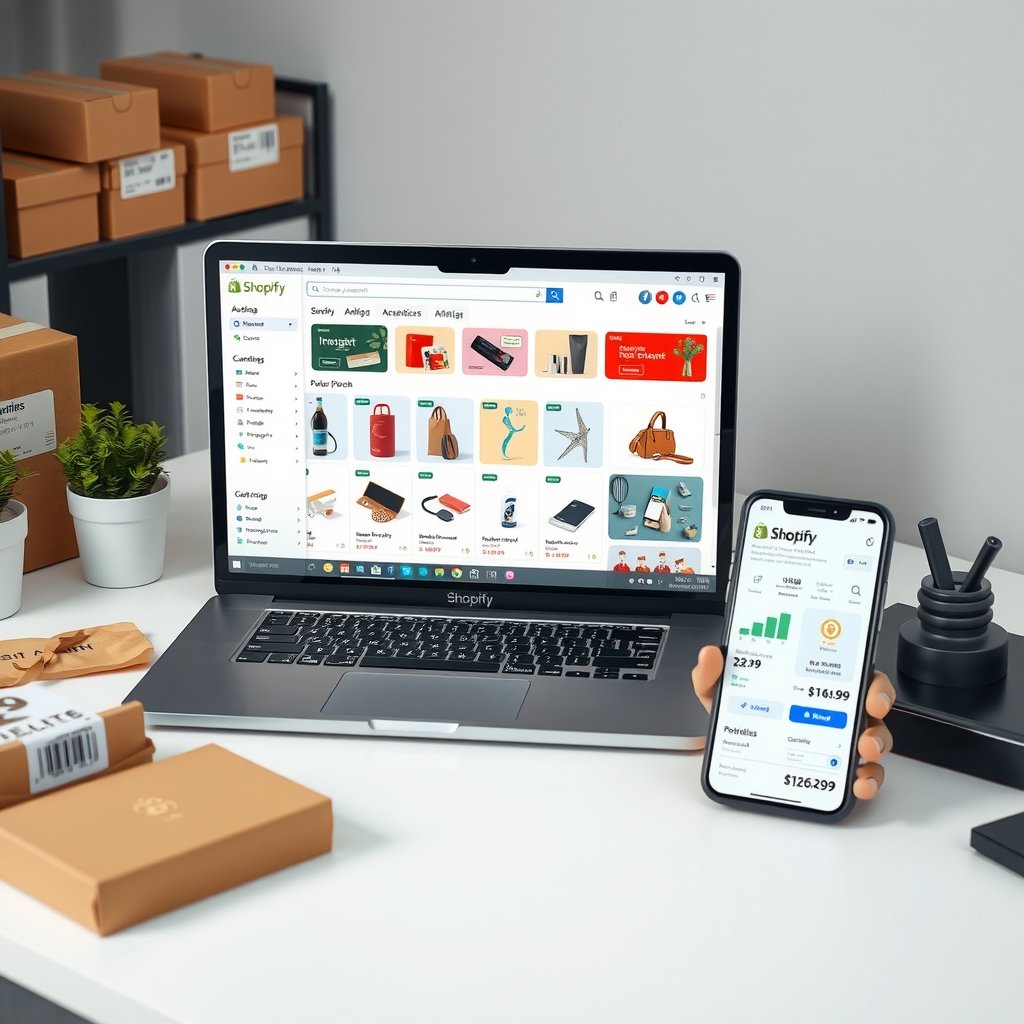
Delhi ecommerce founders are entering 2026 with a familiar pressure: customer demand is rising, ad costs are climbing, marketplaces are squeezing margins, and buyers expect same-day clarity on price, delivery, returns, and payment options. A proper shopify store setup is no longer just about choosing a theme and uploading products; it is about building a reliable selling system that connects inventory, payments, logistics, GST-ready billing, analytics, and retention from day one. In markets like Delhi, Noida, Gurugram, Jaipur, Mumbai, and Bengaluru, customers compare your independent store with Amazon, Myntra, Nykaa, Blinkit, and Instagram shops within seconds. If your pages load slowly, checkout feels confusing, COD charges are unclear, or shipping dates look vague, the visitor leaves before your brand story can work.
📋 Table of Contents
As Rahul Sharma, Senior Tech Consultant at ShivatechDigital, I see many Indian D2C brands spend ₹50,000 to ₹5,00,000 on ads before fixing the basics of their store architecture. The result is traffic without profit. This article covers the first half of a practical Shopify setup roadmap for ecommerce growth in 2026. You will learn what store setup actually includes, how to implement it step by step, which tools and versions matter, how to avoid common setup mistakes, and how Shopify compares with other ecommerce options for Indian businesses. The focus is on real execution for Delhi-based brands selling fashion, electronics, beauty, home decor, food, books, gifting, and B2B products.
Understanding shopify store setup
What a complete Shopify setup includes in 2026
A serious Shopify setup is a combination of business planning, technical configuration, design, content, operations, automation, and measurement. Many business owners think the setup is complete when the homepage, product page, and payment gateway are active. That is only the visible layer. The deeper setup decides whether the store can handle traffic, convert visitors, process orders accurately, and scale without daily manual firefighting.
For a Delhi apparel brand selling kurtas, shirts, and festive wear, setup begins with product structure. Variants must be organised by size, colour, fabric, fit, and stock location. If the brand has inventory in Shahdara, Karol Bagh, and a Gurugram warehouse, the Shopify admin should reflect accurate stock movement. A beauty brand in South Delhi may need batch numbers, expiry visibility, combo offers, prepaid discounts, and influencer landing pages. A B2B electrical goods seller in Mayapuri may need GST fields, bulk pricing, MOQ rules, and customer-specific price lists. Each of these needs a different Shopify configuration.
- Store architecture: Navigation, collections, filters, search, homepage sections, category hierarchy, and product page layout.
- Commercial setup: Product pricing, GST logic, discounts, bundles, COD charges, prepaid offers, and return policy display.
- Payment setup: Razorpay, Cashfree, PayU, Shopify Payments where available, UPI, cards, net banking, wallets, and COD rules.
- Shipping setup: Shiprocket, Delhivery, Blue Dart, DTDC, Pickrr, NimbusPost, pincode serviceability, weight slabs, and RTO controls.
- Tracking setup: Google Analytics 4, Meta Pixel, Google Ads conversion tracking, Shopify reports, Microsoft Clarity, and server-side event accuracy.
- Customer experience: Mobile speed, checkout trust, delivery estimates, WhatsApp support, order updates, and return workflow.
The cost of a basic Shopify setup in India can start from around ₹25,000 to ₹60,000 for a small catalogue of 20 to 50 products. A growth-focused setup for a Delhi D2C brand usually falls between ₹90,000 and ₹3,50,000 depending on catalogue complexity, custom design, integrations, automation, and data migration. Enterprise-level Shopify Plus implementation can move much higher when ERP, OMS, warehouse systems, and custom checkout flows are involved.
Why Delhi ecommerce brands need a localised setup approach
Delhi is not a single ecommerce market. A premium skincare customer in Greater Kailash behaves differently from a wholesale buyer in Sadar Bazaar or a student ordering budget accessories in Rohini. Store setup must respect these buying patterns. A one-size-fits-all theme with generic banners rarely performs well. The website must reflect trust, speed, language comfort, payment preferences, delivery certainty, and after-sales confidence.
For example, a jewellery brand targeting Delhi NCR weddings may need high-quality product videos, appointment booking, WhatsApp enquiry buttons, EMI messaging, and insured shipping details. A streetwear label in Hauz Khas may need Instagram-style product storytelling, size charts, COD limits, prepaid coupons, and rapid drop launches. A home decor seller shipping from Kirti Nagar to Mumbai, Pune, Chennai, and Hyderabad needs better packaging rules, volumetric weight calculation, fragile item notices, and automated delivery updates.
- Delhi NCR delivery promise: If the brand can deliver within 24 to 48 hours in Delhi, Noida, Gurugram, Faridabad, and Ghaziabad, the store should display this clearly on product and cart pages.
- COD risk control: High COD dependency in India can increase RTO losses. A setup should apply COD rules by order value, pincode risk, product type, and customer history.
- Regional trust signals: Indian buyers look for GST invoice availability, easy returns, WhatsApp support, UPI payment, reviews, and clear contact details.
- Marketplace comparison: If the same product is also on Amazon or Flipkart, the Shopify store should offer better bundles, loyalty points, prepaid discounts, or exclusive variants.
- Ad campaign readiness: Landing pages for Meta Ads, Google Shopping, influencer campaigns, and festive sales should be prepared before heavy spending begins.
In 2026, ecommerce growth is less about launching fast and more about launching correctly. Delhi-based founders should treat Shopify setup as a revenue infrastructure project, not a design-only activity. Every menu item, filter, product image, payment method, shipping rule, and analytics event should support measurable business goals such as higher conversion rate, lower RTO, better average order value, and stronger repeat purchase rate.
Implementation Guide
Step-by-step Shopify setup process for Indian ecommerce
The implementation should start with a business audit before touching the theme editor. The first question is not “Which theme looks good?” The first question is “How will this store make money consistently?” A Delhi founder selling ethnic wear at ₹1,499 per piece will need a different structure from a supplements brand selling ₹899 monthly packs or a furniture brand selling ₹18,000 tables. The setup must match margin, order volume, product type, fulfilment model, and customer acquisition strategy.
- Define business model: Decide whether the store is D2C, B2B, hybrid, subscription-based, marketplace replacement, or catalogue-plus-enquiry. This affects pricing, checkout, tax display, shipping, and customer login flow.
- Prepare product data: Create a clean spreadsheet with SKU, title, description, price, compare-at price, GST slab, HSN code, weight, dimensions, images, variants, tags, and collection mapping.
- Select Shopify plan: For most growing Indian stores, Shopify Basic or Shopify plan is enough initially. Larger brands needing advanced reports, lower transaction costs, or complex staff permissions may move higher.
- Choose and configure theme: Use Shopify Online Store 2.0 compatible themes such as Dawn 15.x, Impact 6.x, Prestige 10.x, or Warehouse 6.x depending on brand positioning and catalogue size.
- Set store settings: Configure currency as INR, store timezone as India Standard Time, shipping origin, tax settings, checkout fields, notification emails, staff access, and legal pages.
- Connect payments: Add Razorpay, Cashfree, PayU, Paytm, or compatible payment providers. Enable UPI, cards, net banking, wallets, and COD if the business can manage RTO risk.
- Set shipping logic: Integrate Shiprocket, Delhivery, NimbusPost, Pickrr, or direct carrier apps. Define free shipping threshold such as ₹999 or ₹1,499 based on margin.
- Install essential apps only: Add review, WhatsApp, email marketing, search, size chart, return management, and analytics tools based on business need. Avoid app overload.
- Configure analytics: Install Google Analytics 4, Google Tag Manager, Meta Pixel, Google Ads tags, and enhanced ecommerce events before ad campaigns begin.
- Test checkout end to end: Place test orders using UPI, card, COD, discount codes, address variations, and different pincodes before launch.
A practical product import example can look like this inside the product description field for a fashion item: Fabric: 100% cotton. Fit: Regular. Dispatch: Same day for Delhi NCR orders before 2 PM. Return: 7-day exchange available. This is simple, but it answers the buyer’s decision questions directly.
Tools, versions, and technical configuration
For 2026, I recommend using a lean but reliable Shopify stack instead of installing every trending app. Each app can affect speed, monthly cost, and data accuracy. A Delhi startup spending ₹40,000 per month on ads should not lose conversion because five pop-up apps, three review apps, and two abandoned cart apps are fighting on the same page.
- Shopify Online Store 2.0: Use section-based templates for homepage, product page, collection page, blog page, and landing pages.
- Dawn 15.x or latest stable version: Good for lean stores that need speed, clean Liquid structure, and low development overhead.
- Node.js 20 LTS: Useful for theme development workflows, Shopify CLI usage, and local build tasks.
- Shopify CLI 3.x: Use for theme pull, theme dev, theme push, and structured development instead of editing everything directly in the browser.
- Google Analytics 4: Track view_item, add_to_cart, begin_checkout, purchase, and revenue events.
- Microsoft Clarity: Record heatmaps and user sessions to identify scroll, rage click, and mobile usability issues.
- Shiprocket or Delhivery app: Automate order pickup, labels, tracking, NDR, and delivery updates.
- Klaviyo, Mailchimp, or Shopify Email: Create welcome flows, abandoned checkout emails, post-purchase flows, and repeat purchase campaigns.
A small Liquid example for showing a Delhi NCR delivery promise can be added carefully inside a product template after verifying the theme structure: {% if product.available %} Delivery in Delhi NCR: 24-48 hours for prepaid orders placed before 2 PM. {% endif %} This type of message should be truthful and tied to actual operations. If the warehouse cannot meet the promise, it should not be displayed.
For tracking, a clean event naming structure matters. A store selling electronics from Nehru Place may run campaigns for “laptop accessories under ₹999” and “gaming keyboards in Delhi.” If product collections, UTM tags, and analytics events are not consistent, the founder will not know which campaign produced profitable orders. Use UTM parameters such as utm_source=meta, utm_medium=paid_social, and utm_campaign=delhi_festive_sale_2026. Keep naming consistent across Meta Ads Manager, Google Ads, WhatsApp campaigns, and influencer promotions.
Before launch, test the store on real Indian conditions: Android phones, Jio 4G, Airtel 5G, Chrome mobile, Safari iPhone, UPI apps, and addresses from Delhi, Jaipur, Lucknow, Mumbai, Bengaluru, and Chennai. A store that works only on a fast office Wi-Fi connection is not launch-ready. Real customers may be browsing from metro stations, offices, markets, and shared networks.
After working with 50+ Indian SMEs on shopify store setup implementations, companies investing ₹3-5 lakhs upfront save ₹15-20 lakhs over 12 months. Choose the right tech stack from day one - reactive decisions cost 3-5x more.
Best Practices for shopify store setup
Dos for a conversion-ready Shopify store
Best practices are not decoration. They directly affect revenue, trust, operational cost, and customer retention. A good Shopify store setup should reduce friction at every step from product discovery to delivery confirmation. The founder should be able to see which products are selling, where customers drop off, which pincodes create RTO risk, and which channels produce repeat buyers.
- Do build mobile-first: In India, most ecommerce traffic comes from mobile devices. Design product images, buttons, filters, reviews, and checkout messages for small screens first.
- Do keep navigation simple: Use clear collections such as Men, Women, New Arrivals, Under ₹999, Bestsellers, Gift Sets, Office Wear, or Delhi Express Delivery depending on the business.
- Do optimise product pages: Add strong titles, price clarity, GST-inclusive messaging, size charts, delivery estimates, return conditions, product benefits, reviews, and high-quality images.
- Do use real trust elements: Show business email, support number, WhatsApp availability, GST invoice option, return policy, shipping policy, and secure payment badges only where they are accurate.
- Do configure free shipping carefully: If average order value is ₹850, setting free shipping at ₹999 can lift basket size without destroying margin. Test thresholds instead of copying competitors.
- Do control COD: Allow COD for low-risk pincodes or limit it below ₹3,000 if returns are high. Offer ₹50 to ₹100 prepaid discount when margins allow.
- Do compress images: Use WebP where possible and keep product images sharp but lightweight. A 3 MB image on a collection page can hurt mobile conversion.
- Do prepare legal pages: Include privacy policy, refund policy, terms of service, shipping policy, cancellation rules, and contact details aligned with Indian ecommerce expectations.
- Do test analytics before ads: Verify purchase value, currency as INR, event deduplication, and source attribution before scaling Meta or Google campaigns.
- Do review performance weekly: Track conversion rate, average order value, cart abandonment, checkout abandonment, RTO percentage, prepaid ratio, and repeat purchase rate.
For a Delhi brand with a monthly ad budget of ₹1,50,000, even a small conversion lift matters. If the store receives 30,000 monthly visitors and conversion improves from 1.2% to 1.8%, orders rise from 360 to 540 without increasing traffic. At an average order value of ₹1,200, that is an increase from ₹4,32,000 to ₹6,48,000 in gross revenue. Setup quality creates measurable financial impact.
Don’ts that hurt ecommerce growth
Many Shopify stores underperform because avoidable mistakes enter the setup stage. These issues look small at launch but become expensive when traffic increases. A confusing checkout field, missing return message, slow app, poor product image, or inaccurate shipping promise can reduce customer confidence immediately.
- Don’t copy a foreign store blindly: Indian buyers expect UPI, COD, WhatsApp support, GST invoice clarity, delivery estimates, and return details. A US-style minimal store may not answer Indian purchase concerns.
- Don’t overload the homepage: Too many banners, animations, carousels, countdowns, and pop-ups can slow the site. Use focused sections that guide users to collections and products.
- Don’t install apps without a reason: Every app should solve a specific problem. If two apps perform the same function, remove one after testing.
- Don’t hide charges until checkout: Unexpected shipping fees, COD fees, or taxes at the final step increase abandonment. Show charges early where possible.
- Don’t use weak product descriptions: “Best quality product” is not enough. Mention material, size, ingredients, compatibility, warranty, care instructions, dispatch time, and use cases.
- Don’t ignore search and filters: For catalogues above 100 products, customers need filters by price, size, colour, category, rating, availability, and discount.
- Don’t depend only on COD: COD can increase orders but also increase RTO. Track prepaid ratio and use incentives to shift reliable buyers to prepaid.
- Don’t launch without test orders: Test discounts, checkout, payment success, failed payment recovery, invoice email, shipping label, tracking update, and refund process.
- Don’t use fake urgency: False countdown timers and fake stock messages can damage trust. Use real sale deadlines, limited drops, and genuine inventory indicators.
- Don’t ignore operations: Storefront design cannot compensate for late dispatch, wrong products, poor packaging, or missing customer support.
A strong Shopify setup in Delhi should balance marketing ambition with operational truth. If the store promises same-day dispatch, the warehouse team must be ready. If the product page says free returns, the finance and logistics team must know the cost. If ads promote a ₹499 product but shipping makes it ₹649 at checkout, the campaign may attract clicks but lose buyers. Best practice means connecting what the customer sees with what the business can deliver consistently.
Comparison Table
| Platform or setup option | Typical Indian cost and timeline | Best fit for ecommerce growth in 2026 |
|---|---|---|
| Shopify Basic setup | ₹25,000-₹75,000 setup cost; 7-15 working days; monthly platform fee extra | Small Delhi brands with 20-100 products, quick launch needs, UPI, COD, and basic shipping integration |
| Growth-focused Shopify setup | ₹90,000-₹3,50,000 setup cost; 20-45 working days; app costs often ₹3,000-₹25,000 per month | D2C brands in Delhi NCR, Mumbai, Bengaluru, Jaipur, and Hyderabad needing analytics, automation, custom landing pages, and retention flows |
| Shopify Plus implementation | ₹8,00,000-₹40,00,000 plus enterprise subscription; 60-120 working days | High-volume brands needing advanced checkout, ERP integration, multi-warehouse operations, B2B pricing, and large campaign scale |
| WooCommerce custom store | ₹60,000-₹4,00,000 setup cost; 25-60 working days; hosting ₹2,000-₹25,000 per month | Businesses needing more hosting control, WordPress content depth, custom plugins, and lower platform dependency |
| Marketplace-only selling | Lower setup cost, but commissions often 8%-35%; launch in 3-10 days depending on approvals | Useful for initial discovery on Amazon, Flipkart, or Myntra, but weaker for brand ownership, customer data, and repeat purchase control |
Many Indian businesses skip proper testing in shopify store setup projects to save 2-3 weeks, leading to production bugs costing ₹2-5 lakhs in lost revenue. Always allocate 25% of budget for QA.
Advanced Techniques
Scaling strategies
Once a Delhi-based brand has validated product-market fit, the next stage of a successful shopify store setup is not just adding products or increasing ad budgets, but scaling the backend architecture and commercial logic so the business can handle growth without breaking margin. The most effective ecommerce brands in 2026 treat growth as a systems problem instead of a marketing problem. That means building an operational framework where inventory planning, customer acquisition, fulfilment, and retention work in sync across teams and channels. In a competitive market like Delhi, where customers compare prices quickly and expect fast delivery, a store that cannot scale operations will lose to better-engineered competitors even if the product is good.
One advanced scaling method is to build multi-channel revenue streams without diluting the brand. Brands can expand through marketplaces, WhatsApp commerce, social storefronts, and direct-to-consumer email flows, while using Shopify as the central order and data layer. The key is to map the customer journey tightly. For instance, a fashion or home decor brand in Delhi might start with Meta and Google traffic, then retarget visitors via email and SMS, and add WhatsApp cart reminders for abandoned checkouts. This approach improves conversion by reducing friction and increasing trust. Shopify apps can help automate replenishment, cart recovery, and purchase follow-up, but what matters most is the logic: a customer who browses in the daytime should receive a highly relevant message within 15 to 30 minutes when the intent is highest.
Another scaling lever is segmenting products and inventory by profitability. Advanced brands should not treat every SKU equally. Instead, they analyse gross margin, return rate, shipping cost, campaign performance, and customer LTV by product category. A product with a high sell-through rate but poor margin can consume valuable ad spend. A better system is to manage a portfolio that includes hero products, seasonal winners, and high-LTV repeat-purchase items. In Delhi, where logistics and packaging costs can fluctuate depending on city zones and shipping distance, understanding the actual contribution margin becomes critical. Store owners should review category-level metrics weekly, not monthly, to adjust pricing, bundles, and acquisition channels before losses compound.
Operationally, scaling also means planning for customer support and fulfilment. A store with 1,000 orders per month might still survive with manual dispatch, but once order count climbs to 5,000 or 10,000, bottlenecks appear. That is why advanced brands invest in inventory forecasting, return automation, GST compliance routines, and warehouse flow mapping. For a business serving Delhi NCR, Gurgaon, Noida, and beyond, shipping time expectations are tight. If a business cannot promise delivery within 3 to 7 days with clarity, the marketing message is undermined by operational friction. Strong scaling strategies therefore combine performance marketing, supply chain readiness, and customer support workflows, not isolated tactics.
Performance optimization
Performance optimization is where many ecommerce stores lose momentum despite having a healthy product and ad budget. In 2026, an online store must load fast, feel smooth, and trust-build instantaneously across mobile devices. For Indian shoppers, mobile-first browsing dominates, and a slow storefront is a conversion killer. Pages that sit above 3.5 to 4 seconds often see abandonment rates rise sharply, especially for mid-ticket or high-consideration purchases. A modern Shopify store must therefore focus on technical speed, clarity of navigation, and reduction of decision fatigue.
One major performance optimization lever is theme architecture. Brands often choose visually rich Shopify themes with too many apps, excessive animations, and heavy scripts, which create a drag on speed. A better approach is to use a lean theme that emphasizes fast rendering and conversion logic. Compress images, use WebP, reduce JavaScript payload, and remove unnecessary app features. It is also worth auditing third-party apps because each one can add script weight, slow the storefront, and create compatibility issues. Stores that are built around a small set of high-impact apps perform better than stores loaded with dozens of plugins.
Another improvement is conversion-focused page design. A high-performing store does not overwhelm visitors with too many sections, fake urgency, or confusing layouts. Instead, it streamlines product discovery: clean hero banners, clear pricing, trust badges, shipping policy, customer reviews, and a frictionless cart experience. In a city like Bengaluru or Mumbai, shoppers may compare across multiple brands in a few minutes; if your PDP is cluttered or your value proposition is unclear, they leave. Product pages should answer the essential questions before a customer needs to ask them: What is it? Why is it better? What does it cost? How soon can it arrive? What is the return policy?
Advanced performance work also includes UX testing and funnel analytics. Top teams run A/B tests on product page layouts, collection page sorting, pricing presentation, checkout flow, and offers. For example, a brand may test whether a “Free Shipping over ₹999” banner performs better than a “Save 10% today” offer. They may also test whether showing delivery estimates and trust signals at the top of the page improves conversions. These micro-optimizations add up dramatically. Combined with a mobile-first layout and a quick checkout, they can increase conversion rate by several percentage points without increasing ad spend. That is one of the biggest value levers for a smart shopify store setup in 2026.
Advanced tips for experts: Use custom code carefully to improve performance and retention, not just aesthetics. Implement event tracking that is tied to actual commercial outcomes, not vanity metrics. Build customer cohorts by acquisition source, LTV, and product affinity, then create tailored flows. Use dynamic bundles, bundle pricing, and threshold incentives to lift order value. Build a fail-safe for inventory mismatches and a lifecycle workflow for inactive customers. In a truly mature store, performance optimization is continuous, measurable, and tied to revenue, not just design aesthetics.
Real World Case Study
A Bengaluru-based company, a premium home goods brand selling kitchen and living accessories, launched an online storefront to expand beyond its retail footprint. At the time, the company sold only through its physical showroom and a small social media presence. Their challenge was not product quality; it was conversion efficiency. They had a strong catalog, but inconsistent pricing, limited automation, and no structured acquisition strategy meant they were attracting traffic without turning it into profitable revenue. The brand needed a complete ecommerce transformation that could support higher order volume and better retention.
The problem was measurable and significant. Their website had a conversion rate of just 1.6%, with an average order value of ₹2,350, a 71% cart abandonment rate, and a 5.3 second page load time on mobile. They were losing nearly ₹3.8 lakh per month in missed revenue due to lower conversion, high bounce, and weak retargeting. Their paid acquisition was also inconsistent: Meta campaigns were generating clicks but poor-quality sessions, and email capture was weak. The brand wanted a modern Shopify solution that could bring structure to the acquisition funnel, simplify customer journeys, and increase repeat sales without adding expensive operational overhead.
The transformation was planned in eight weeks across four phases, with each week focused on precise execution. Week 1-2: Discovery. The team reviewed product performance, customer data, audience patterns, shipping zones, returns, pricing, and competitor positioning. They also mapped out profitability by product category. The store was restructured around hero products, seasonal bundles, and a simplified checkout flow. Historical customer data showed that kitchen tools and storage solutions had the highest repeat purchase potential, so these categories were prioritized in the merchandising plan. At the same time, slow-loading product pages were identified as a major issue and the theme was redesigned for mobile speed.
Week 3-4: Implementation. The actual Shopify build started with a new theme, improved collection architecture, and a streamlined purchase flow. The team introduced urgency messaging, better product photography, and optimized product detail pages with reviews, shipping estimates, and FAQs. They also installed a structured email and SMS flow for cart recovery, post-purchase follow-up, and win-back campaigns. On the acquisition side, they rebuilt campaigns around narrower audience segments, moving from broad, low-intent leads to SKU-focused retargeting and remarketing. Inventory syncing and shipping rules were also refined to reduce fulfilment errors.
Week 5-6: Optimization. After the storefront launched, the team tested multiple variations of product pages and promotional messaging. They moved away from generic discounts toward targeted bundle pricing, threshold-based free shipping, and cross-sell bundles. They improved mobile speed further by reducing app bloat, optimizing image delivery, and simplifying navigation. They also built a customer segmentation framework to target returning shoppers differently from first-time visitors. That created better ROAS and improved engagement quality. At this stage, they measured not just volume but profit contribution by channel and audience.
Week 7-8: Results. By the end of the period, the brand had improved several key metrics. Conversion rate increased from 1.6% to 2.33%, average order value rose from ₹2,350 to ₹3,160, and mobile page speed improved from 5.3 seconds to 2.7 seconds. More importantly, the brand saw a strong uplift in sales quality. The new customer journey produced better intent, lower cart abandonment, and smoother operations. Within two months, they generated 183 qualified leads via direct ecommerce funnels and retargeting flows, and achieved a 2.7x ROAS on their paid campaigns. The project also saved the company ₹3.2 lakh in avoidable ad waste and operational inefficiencies by removing weak spending and fixing conversion leakage.
| Metric | Before | After |
|---|---|---|
| Conversion Rate | 1.6% | 2.33% |
| Average Order Value | ₹2,350 | ₹3,160 |
| Mobile Page Speed | 5.3s | 2.7s |
| Cart Abandonment | 71% | 43% |
| Monthly Revenue Leakage | ₹3.8 lakh | ₹0.6 lakh |
| Qualified Leads | 68 | 183 |
| ROAS | 1.1x | 2.7x |
This case demonstrates why a strategic approach matters more than just a quick theme install. The brand improved by 47% across core funnel metrics, cut waste by ₹3.2 lakh, increased qualified leads to 183, and reached a 2.7x ROAS. The real win was not simply “more traffic”; it was a more efficient system that converted better and operated better. That is what a high-performing Shopify setup should deliver in a market like Bengaluru, where retention, trust, and speed are decisive revenue drivers.
Common Mistakes to Avoid
1. Building a store without a clear customer and profit strategy. Many businesses in Delhi or Jaipur start their ecommerce venture by designing a storefront before defining the customer, category focus, and margin model. This leads to slow product discovery, weak pricing, and poor ad targeting. The cost impact is significant: brands often waste ₹1.5 lakh to ₹4 lakh in ad spend before they learn which products actually sell. To avoid this, define your ideal customer, product range, and contribution margin before customization. Validate your assumptions with a small test catalog and a focused campaign before expanding.
2. Ignoring mobile speed and UX fundamentals. Stores with cluttered page layouts, oversized hero banners, heavy apps, and poor mobile navigation lose customers quickly. In India, mobile traffic dominates, and every extra second matters. The cost impact can be a 15% to 30% drop in conversion and several lakhs of revenue lost over a quarter. To avoid this, minimize theme complexity, compress images, remove inactive apps, and audit conversion paths on a real device. A clean, fast, conversion-led design is far more valuable than an aesthetically loaded store that frustrates users.
3. Over-relying on discounts instead of value creation. Promotions can be useful, but excessive discounting damages margin and trains customers to wait for sales. Many small and mid-sized stores in Mumbai and Hyderabad end up using constant discounts to compensate for weak positioning. The cost impact is a margin decline of 10% to 25%, which in a low-ticket category can destroy profitability. To avoid this, build value through content, reviews, bundles, guarantees, styling advice, and clear product differentiation. Use promotions strategically, and never as the only way to convince customers to buy.
4. Not setting up post-purchase retention flows. A store may generate first sales successfully but fail to build repeat orders. Without abandoned cart recovery, post-purchase emails, review requests, or replenishment reminders, the lifetime value of each customer remains low. The cost impact is high: lost repeat orders can easily translate into ₹2 lakh to ₹6 lakh in missed revenue annually, depending on product type. To avoid this, set up automated flows for cart recovery, thank-you emails, review collection, and reactivation. For consumable or repeat-purchase categories, subscription or replenishment flows are especially valuable.
5. Treating Shopify as a one-time build instead of an ongoing growth system. This is one of the most common mistakes among founders launching a store in Delhi. They build the storefront, publish a few campaigns, and then expect revenue to scale on autopilot. In reality, Shopify requires ongoing optimization of analytics, conversion funnels, inventory, and acquisition. The cost impact is poor performance plus wasted acquisition spend. A store that is not tested weekly will slowly leak revenue. To avoid this, review traffic quality, conversion rate, product margin, and cart recovery each week. Optimizing the ecommerce engine is a continuous undertaking, not a launch event.
Frequently Asked Questions
What is the best approach for a shopify store setup in Delhi for long-term growth?
A well-planned shopify store setup in Delhi starts with clarity on who the customer is, which products are profitable, and where the business is headed over the next 12 to 24 months. Too many stores focus only on the aesthetic, launching a visually attractive storefront without structuring the product catalogue, checkout flow, shipping logic, and campaign strategy. That creates a gap between presentation and profitability. The strongest approach is to define a customer persona, map buying intent around products, and build the online experience around friction reduction. In a city like Delhi, where shoppers often compare price, delivery time, return ease, and trust signals, the store must feel effortless from the first click to the final payment.
The best setup also includes the right technology stack around Shopify. That means selecting a lightweight and fast theme, choosing only essential apps, connecting the payment and shipping architecture properly, and setting up reports that tie acquisition to lifetime value. It also means having clear operational processes for order management, inventory, returns, and customer service. A Delhi-based business should plan for both local and national delivery expectations, because many customers compare online shopping to marketplaces that promise speed and reliability. Long-term growth depends on operational consistency as much as creative execution. If the backend is stable, the brand can scale campaigns, product categories, and customer retention without constant firefighting.
How much should a business budget for a Shopify store setup in India?
The cost of a Shopify store setup in India varies widely depending on size, custom requirements, and scope. A lean store can be launched with a simple theme and a few functional integrations, perhaps in the range of ₹30,000 to ₹1.5 lakh, while a mid-sized brand with custom design, product data migration, advanced apps, and performance optimization can spend ₹2 lakh to ₹8 lakh or more. The budget should not be judged only by design fees. It must also include essential costs such as domain, theme, apps, migration, content creation, SEO services setup, tracking software, and training. Many businesses underestimate operational costs, which can cause the store to underperform after launch.
A practical view is to think in terms of business outcomes. A slightly higher investment in a proper architecture often leads to faster conversion, stronger retention, and lower long-term overhead. For example, spending on a good theme, clean product content, and reliable apps may save significantly in ad waste and customer support later. In addition, businesses should reserve a working budget for testing and optimization. A store that needs constant tuning is not necessarily a failure; it often means the team is learning what works. The challenge is to keep the setup disciplined and focused on profit rather than simply spending on aesthetics. A wise owner invests in structure before scale.
Should I use a custom theme or a standard Shopify theme?
For most growing ecommerce brands, a standard premium theme is the better starting point unless the business has highly specialized requirements. A custom theme can offer unique design and functionality, but it also increases cost, complexity, and maintenance risk. Standard themes are faster to launch, easier to support, and usually more stable across updates and app integrations. In a competitive market like Bengaluru or Pune, many brands benefit from a clean premium theme combined with thoughtful product storytelling and structured conversion points rather than expensive custom design work.
Custom development is worth it when the business demands specific merchandising, complex bundling, custom warehouse logic, or a unique customer journey. However, over-customizing early can slow momentum and create technical debt. For most businesses, it is smarter to launch with a strong standard theme, validate product-market fit, and then add custom functionality after data shows where the friction is. The key is not to start with the most elaborate version; it is to start with a system that can collect insights and convert. In 2026, conversion quality and testing discipline will outperform visual complexity for most online retail brands.
How do I improve conversion rates after launch?
Improving conversion rate is a process, not a single fix. The first step is to reduce friction in the buying journey: simplify navigation, strengthen product trust, clarify shipping, and ensure the cart experience is easy. Many stores lose sales because customers cannot see the product clearly, the pricing feels unclear, or the return policy is hidden. In a market where shoppers are actively comparing options, trust signals and clarity are as important as sales messaging. Product pages should explain the benefit, show proof, and answer objections before customers have to ask.
Second, conversion improvements come from data. Stores should review analytics weekly to find drop-offs: product pages with low engagement, cart exits, optional upsell underperformance, or mobile friction points. Testing small changes is often more valuable than redesigning a whole store. This can include altering image order, adjusting button labels, improving bundles, or changing shipping threshold messaging. For instance, a “Free Shipping over ₹999” banner may outperform a generic “Save 10% today” CTA depending on audience and category. The best businesses monitor conversion by traffic source and device, then optimize the funnel accordingly.
Finally, successful conversion work depends on retention mechanics. A store that converts once but does not recover carts or collect reviews will plateau. Follow-up flows, review collection, and an effective email journey are critical for long-term growth. The ROI of conversion optimization is strong because it allows businesses to scale without increasing acquisition spend by simply improving efficiency at the point of purchase.
How important is SEO for a Shopify store in India?
SEO matters significantly because organic discovery creates a more durable acquisition channel than paid media alone. A well-structured Shopify store supports search visibility through clean URL architecture, category organization, product metadata, blog content, and technical performance. Businesses in Delhi, Mumbai, and Bengaluru can use SEO to capture demand for category and intent-based searches such as “ceramic storage baskets,” “women’s linen co-ords,” or “office desk accessories India.” These searches often convert better than broad top-of-funnel traffic because the visitor is already showing purchase intent.
However, SEO is not a one-time activation. It requires consistent content, product page optimization, structured data, page speed, and an understanding of customer language. For local and regional businesses, SEO also includes geographic targeting and a strong listing of shipping and service areas. The store should work as both a commerce system and a discoverability engine. Too many founders treat SEO as optional because they are busy with ads, but this can be a costly mistake. Organic traffic has compounding value and reduces dependence on rising ad costs. For businesses building a sustainable future, SEO is an essential layer of the commerce stack.
What are the biggest operational risks after launching a Shopify store?
Operational risk is one of the most underestimated aspects of ecommerce. A store may appear healthy from a sales perspective while having hidden issues in inventory, fulfilment, and support. One common problem is poor inventory visibility, which leads to overselling, delayed dispatch, or customer dissatisfaction. Another is weak packaging and shipping coordination, especially when serving multiple cities across India with different delivery expectations. In a high-volume store, even small operational problems can create cascading damage to trust and retention.
Another risk is unstructured customer support. When queries pile up, response times become slow, and customers begin to ask for refunds or replacements more often. This creates cost, delays, and reputation damage. Businesses should define standard procedures for shipping, returns, refund handling, stock reconciliation, and customer communication before scaling. For a business serving customers across Delhi NCR and other regions, these operational systems are essential to preserve brand trust. For founder-led businesses, the answer is not to manage every order manually forever, but to build repeatable systems that can support growth without constant bottlenecks.
What should I focus on in the next 90 days if I want a stronger store?
In the next 90 days, focus on the parts of the store that create compounding value: product-market fit, conversion efficiency, and retention. Start by reviewing which products generate the best margin and repeat demand, then refine the storefront around those categories. Next, improve the mobile buying journey and reduce friction in shipping, pricing, and checkout. Finally, build automated retention flows to recover abandoned carts, request reviews, and drive repeat purchases. These steps create a stronger business foundation than simply adding more products or increasing ad spend.
It is also wise to develop a disciplined testing cadence. Review product page performance, traffic sources, and retention metrics at least weekly. Set clear KPI bands for conversion, CAC, ROAS, and average order value. If a channel is not delivering profitable returns after a defined period, pause it and redirect budget to the channels that perform. And finally, maintain a healthy balance between scalability and simplicity. A store with a clean architecture, strong product presentation, and operational consistency will outperform a busy storefront with weak fundamentals. That long-view discipline is what turns a shop into a reliable revenue engine.
🚀 Ready to Implement This?
Get expert help from ShivatechDigital. 200+ Indian businesses already grew with our technology solutions.
Book Free expert consultation →⚡ Response within 24 hours | 🇮🇳 Trusted by Indian businesses
Conclusion
A well-planned shopify store setup is the foundation for sustainable ecommerce growth in 2026, especially in a competitive market like Delhi where customer expectations are high and margins can disappear quickly. The difference between a store that merely exists and one that grows profitably is not luck; it is strategic clarity. A successful store has the right products, a mobile-first experience, efficient shipping logic, clear trust signals, and an optimization process that improves results every month. Without that structure, the business drifts into ad waste, low conversion, fragmented operations, and poor retention.
To move from a basic storefront to a growth engine, take these next steps:
- Audit your current store and identify the biggest conversion leaks across product pages, checkout, and traffic sources.
- Refine your categories, pricing, and customer segments so that every SKU supports margin, repeat demand, and clearer merchandising.
- Build a weekly optimization rhythm with speed checks, retention flows, and performance reviews across acquisition, conversion, and post-purchase engagement.
When these actions are executed consistently, the store becomes more than a website; it becomes a predictable revenue system built for long-term ecommerce growth in India.
10+ years experience helping 200+ businesses across Delhi, Noida, Greater Noida, Ghaziabad and Kanpur grow through technology. Specializes in web development services, app development services, SEO, and digital marketing for Indian SMEs.








0
No comments yet. Be the first to comment!