
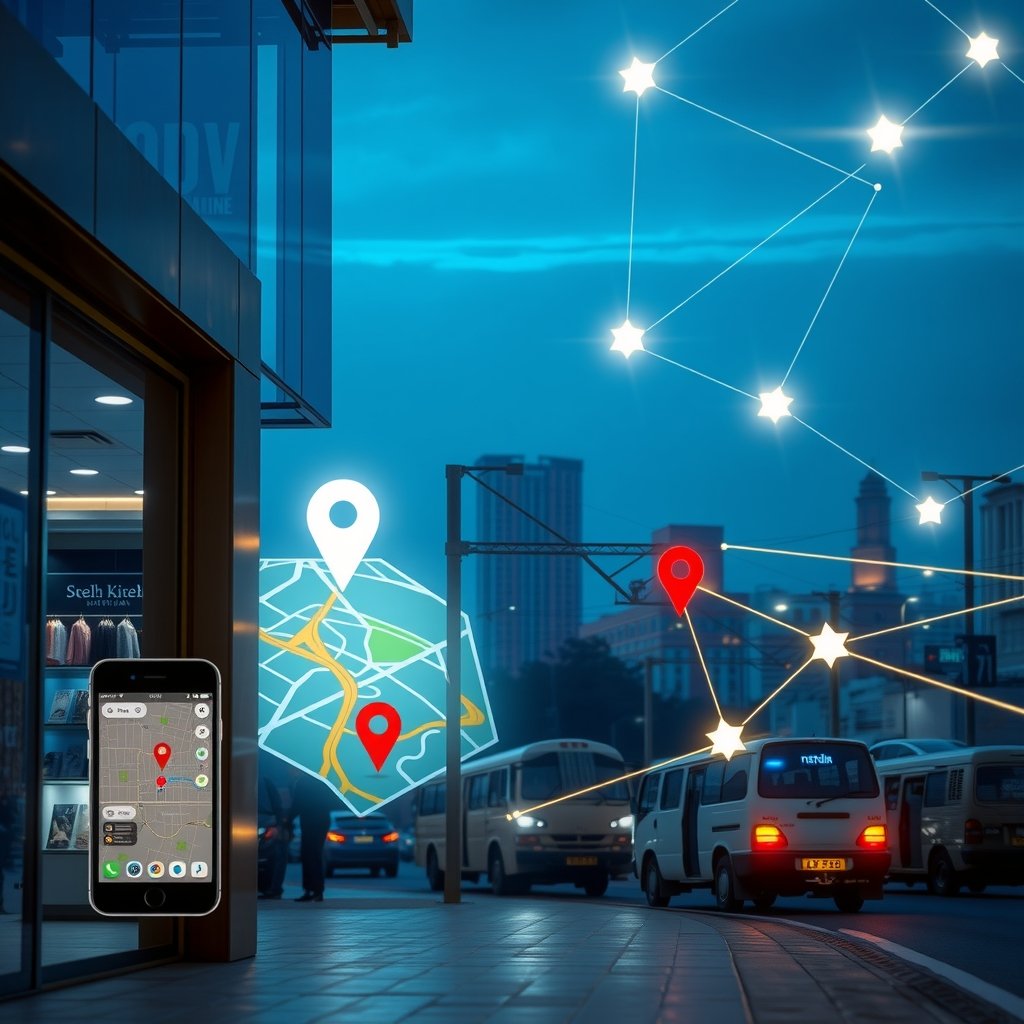
Across Noida’s crowded commercial corridors—from Sector 18 retail outlets and Film City agencies to clinics near Sector 76 and B2B firms in Sector 62—being visible on Google is no longer enough. Customers increasingly ask AI-powered search tools for a “best nearby dermatologist,” “reliable GST consultant in Noida,” or “same-day AC repair near me,” and they expect concise, trustworthy answers. Businesses with incomplete profiles, inconsistent addresses, poor review management, and generic website pages are being omitted before a potential customer even compares options. This is why local SEO services noida has become a practical growth priority for companies serving specific neighbourhoods, apartment clusters, industrial areas, and nearby NCR markets.
📋 Table of Contents
In 2026, local search is shaped by Google Maps, Google Business Profile results, AI Overviews, voice queries, hyperlocal intent signals, customer reviews, and entity-level trust. A business may have a polished website yet lose enquiries to a competitor whose hours, services, photographs, FAQs, ratings, and location data are better maintained. For a Noida business paying ₹35,000 to ₹1,50,000 per month for digital marketing, a weak local presence can quietly waste a meaningful share of the acquisition budget.
This guide explains how local search works in Noida’s competitive market, how AI search is changing local discovery, and how to implement a practical optimisation system. You will learn how to choose location-led keywords, strengthen Google Business Profile signals, create useful local content, manage citations and reviews, measure map-pack performance, and avoid common tactics that create short-term visibility but damage long-term trust. The aim is not to chase a single ranking position; it is to build a consistent local presence that helps Noida customers find, verify, and contact your business with confidence.
Understanding local seo noida
How local discovery works for Noida businesses
Local SEO is the process of improving a business’s visibility when users search for products or services with geographic intent. In Noida, that intent may be explicit, such as “interior designer in Sector 137 Noida,” or implied, such as “best physiotherapy clinic near me” from a mobile user standing near Noida-Greater Noida Expressway. Search engines combine relevance, distance, prominence, freshness, and user behaviour signals to decide which businesses appear in map results, traditional organic results, AI-generated summaries, and voice responses.
For local seo noida, proximity matters, but it is not the only factor. A dental clinic in Sector 50 can appear for relevant searches from Sector 51 or Sector 76 if its category selection, services, reviews, website information, and engagement signals are stronger than nearby alternatives. At the same time, it may not rank equally well for a person searching from Sector 18 because local result sets often change block by block. This makes city-wide ranking reports useful but incomplete; businesses need neighbourhood-level measurement.
- Relevance: A Google Business Profile category, service list, page title, and on-page copy should clearly explain what the business offers. A “Skin Care Clinic” profile is more relevant to “acne treatment Noida” than a generic “Health and Beauty” listing.
- Distance: Search systems estimate how close the searcher is to a business or the location named in the query. A café in Sector 18 should not pretend to operate from Sector 62 merely to capture another catchment area.
- Prominence: Reviews, ratings, local media mentions, reputable directory citations, branded searches, backlinks, and recognised expertise all contribute to local trust.
- Freshness: Updated hours, current photos, recent reviews, active posts, and accurate service details help search platforms avoid serving stale local recommendations.
- Conversion clarity: Customers need immediate answers about pricing ranges, appointment availability, parking, delivery radius, WhatsApp support, and payment methods.
Consider a home cleaning company serving Sector 74, Sector 75, Sector 76, and Sector 78. If its website only says “premium cleaning services in Delhi NCR,” search engines and AI systems have limited proof that it serves Noida residents. A stronger setup would include a verified Noida address or legitimate service-area configuration, dedicated service pages, coverage details, testimonials from local customers, and consistent contact information. Instead of spending ₹60,000 on broad lead-generation ads alone, the company can allocate part of its budget to building durable local assets that keep generating qualified enquiries.
Why AI search changes the local SEO opportunity
AI search does not replace local SEO; it raises the standard for what qualifies as a reliable answer. Google AI Overviews, conversational search experiences, voice assistants, and AI-enabled browsers often synthesise information from business profiles, websites, review platforms, structured data, maps, and third-party references. When a user asks, “Which Noida CA can help with startup GST registration?” the answer may prioritise businesses that have clear service definitions, current customer feedback, credible qualifications, and corroborating web references.
AI systems are particularly effective at interpreting longer and more specific questions. This creates an opportunity for Noida businesses to publish useful pages that solve real local concerns rather than repeating one keyword. A pest-control provider can answer whether services are available for high-rise societies in Sector 137, whether child-safe treatment is available, what a typical 2BHK treatment costs, and how quickly technicians can visit. That content can support AI-driven discovery because it is specific, verifiable, and closely aligned with customer intent.
- A Sector 18 salon can publish service-specific information for bridal makeup, hair spa, and party makeup rather than relying on a single “best salon in Noida” page.
- A Sector 62 IT staffing firm can explain hiring timelines, technical recruitment specialisations, and industries served across Noida, Gurugram, and Delhi.
- A Greater Noida property consultant can maintain accurate project-area pages for Noida Extension, Pari Chowk, and Yamuna Expressway rather than making unsupported “top broker” claims.
- A Noida diagnostic centre can clearly state test preparation requirements, sample collection areas, reporting timelines, and NABL-related credentials where applicable.
The commercial impact can be substantial. A local clinic with an average expert consultation value of ₹800 and a treatment conversion rate of 25% does not need thousands of irrelevant visitors. An additional 40 qualified monthly calls can produce meaningful revenue when profile accuracy and review trust improve booking rates. Local SEO therefore needs to be treated as an operating discipline involving reception staff, sales teams, website owners, and marketing teams—not as a one-time keyword exercise.
Implementation Guide
Build a reliable local entity foundation
The first implementation priority is consistency. Search platforms need a stable representation of your business: legal or customer-facing name, primary phone number, accurate address, service area, business category, operating hours, website URL, and services. Before creating new pages or running AI content workflows, audit every existing local data source. A mismatch between “ABC Dental Care,” “ABC Dental Clinic Noida,” and “ABC Dental & Implant Centre” can fragment trust if these variations are used without a clear reason.
- Audit business details: Document the official business name, address, landmark, phone number, website, hours, service areas, appointment URL, and social profile URLs. Use the same primary data across the website, Google Business Profile, Justdial, IndiaMART where relevant, Practo for healthcare businesses, and industry-specific platforms.
- Optimise Google Business Profile: Select the most precise primary category, then add only genuine secondary categories. Add services with clear names, upload original photos, define holiday hours, enable messaging only if staff can respond promptly, and complete attributes relevant to the business.
- Create location-aware website pages: Build a primary Noida location page with original operational details. If you serve multiple legitimate areas, create pages only where each page has unique value, such as local service availability, route details, staff coverage, or customer requirements.
- Strengthen contact signals: Put the exact phone number, address, hours, and directions information in the footer or contact area. Ensure mobile users can tap to call or request an appointment without scrolling through excessive promotional text.
- Establish review operations: Train customer-facing staff to request reviews after a completed service. Ask for honest feedback; never offer payments, discounts, or fabricated review templates in exchange for positive ratings.
Use tools deliberately. Google Business Profile Manager is the core profile management platform. Google Search Console helps identify query impressions, page indexing issues, and local landing-page performance. Google Analytics 4 can track calls, contact-form submissions, WhatsApp clicks, appointment bookings, and direction-link interactions when configured properly. Screaming Frog SEO Spider 21.4 is useful for crawling title tags, canonicals, internal links, and missing metadata. BrightLocal 2026 plans or Semrush Local can support citation tracking and geo-grid monitoring, while PageSpeed Insights helps diagnose performance issues that affect mobile users.
A simple local business structured-data block can help search engines understand the information displayed on a location page. The details must match visible page content and real-world business information.
{ "@context": "https://schema.org", "@type": "LocalBusiness", "name": "Example Physiotherapy Clinic", "telephone": "+91-120-400-0000", "address": { "@type": "PostalAddress", "streetAddress": "Sector 76", "addressLocality": "Noida", "addressRegion": "Uttar Pradesh", "postalCode": "201304", "addressCountry": "IN" }, "openingHours": "Mo-Sa 09:00-20:00", "areaServed": ["Noida", "Sector 76", "Sector 77"]
}
Do not add a rating, review count, address, or service area that cannot be supported by the actual business. Structured data clarifies information; it does not create authority by itself.
Create content and measurement workflows for AI-led searches
Once the local entity foundation is accurate, map the questions customers ask before calling. Review call logs, sales WhatsApp chats, reception questions, Google Business Profile Q&A, Search Console queries, and competitor reviews. Group questions by service, urgency, price sensitivity, neighbourhood, and decision stage. This approach produces content that helps both conventional local search and AI-generated answers.
- Collect real questions: Record phrases such as “Do you provide pickup from Sector 137?”, “What is the cost for a 3BHK deep-cleaning service?”, or “Is Sunday appointment available in Noida?” Remove personal data before storing or analysing enquiries.
- Map questions to pages: Put core commercial intent on service pages, operational answers on the location page, and deeper explanations in supporting articles. Avoid publishing five nearly identical pages targeting “near Sector 18,” “near Sector 19,” and “near Sector 20.”
- Add evidence: Include staff credentials, process details, original photographs, service inclusions, transparent price ranges, policies, and realistic turnaround times. These details make content more useful and less generic.
- Improve internal linking: Link the Noida location page to relevant service pages and link service pages back to the location page using natural anchor text. Do not force exact-match anchors into every paragraph.
- Track local outcomes: Measure calls, bookings, direction requests, form completions, and qualified leads—not only impressions. Compare results by service category and locality every month.
For keyword research, combine Google Keyword Planner, Google Search Console, Semrush 2026, and manually observed autocomplete suggestions. Focus on intent patterns such as “service + Noida,” “service + sector,” “near me,” “open now,” “price,” “best,” “emergency,” and “same-day.” A keyword with 30 monthly searches can still be valuable if it reliably produces customers worth ₹15,000 each. The right strategy for an architect, corporate lawyer, or industrial supplier is different from the strategy for a restaurant or salon.
Set up a practical reporting sheet with columns for keyword theme, target URL, locality, average map position, organic clicks, calls, leads, booked revenue, review volume, and average rating. If a Noida repair business spends ₹25,000 per month on local SEO support and receives 20 additional jobs worth ₹3,000 each, the ₹60,000 in incremental revenue is only the starting point. Repeat customers, referrals, and lower dependency on paid advertising may increase the long-term value.
After working with 50+ Indian SMEs on local seo noida implementations, companies investing ₹3-5 lakhs upfront save ₹15-20 lakhs over 12 months. Choose the right tech stack from day one - reactive decisions cost 3-5x more.
Best Practices for local seo noida
Operational practices that build local trust
Effective local seo noida work depends on accurate operations. A strong ranking followed by unanswered calls, incorrect hours, or unavailable services creates poor customer experiences and can generate negative reviews. The marketing team should therefore establish a monthly local-data routine with business owners, front-desk staff, and service managers. This is especially important in Noida, where many businesses change office locations, expand service areas, update delivery zones, or operate differently during public holidays and high-demand periods.
- Keep hours current: Update regular, special, and holiday hours before Diwali, Holi, Republic Day, Independence Day, and regional closures. If a business is appointment-only, state that clearly instead of displaying misleading walk-in hours.
- Use authentic photos: Add recent exterior, interior, team, equipment, and service photos. For a restaurant, show seating and food; for a clinic, show reception and treatment infrastructure while protecting patient privacy.
- Respond to reviews professionally: Thank positive reviewers specifically and address negative feedback calmly. Never reveal customer records, medical details, order data, or personal information in a public response.
- Publish service clarity: State whether prices are starting rates, whether taxes are included, what is covered, and whether emergency or weekend charges apply. A transparent “deep cleaning starts from ₹3,499 for a 2BHK” statement is more useful than vague promotional copy.
- Maintain local relevance: Mention genuine Noida service areas, landmarks, parking availability, metro access, and delivery coverage where useful. Avoid inserting unrelated NCR localities just to expand keyword reach.
Do: use one verified Google Business Profile for each legitimate, customer-facing location; retain evidence of the address and business registration; assign a responsible employee to review listing edits; and monitor customer questions weekly. Do: encourage customers to describe their actual service experience, such as “AC installation in Sector 50” or “tax filing support near Sector 62,” without dictating wording.
Don’t: create virtual-office listings for areas where customers cannot meet or receive service according to platform rules. Don’t: stuff business names with slogans such as “Best Noida Dentist Cheapest Implant Clinic.” Don’t: use staff accounts, relatives, or bulk-review vendors to manufacture ratings. Don’t: copy testimonials, service descriptions, or photos from a competitor. These tactics may create short-lived movement but expose the profile to suspension, removal, reputation loss, and wasted recovery costs.
Content, technical, and AI-search quality standards
AI-oriented local content should be easy to verify, easy to scan, and grounded in direct business knowledge. Instead of publishing long pages that repeat “local seo noida” unnaturally, answer the questions that influence a customer’s decision. Use headings that match service intent, concise paragraphs, transparent limitations, and clear supporting evidence. For regulated fields such as healthcare, legal services, finance, and education, ensure that claims are reviewed by qualified professionals before publication.
- Write for specific intent: Create one strong page for “corporate tax consultant in Noida” only if the firm genuinely offers corporate tax services. Explain scope, documents required, timelines, and the appropriate contact route.
- Demonstrate experience: Include practical process details that generic AI-generated content often misses: appointment steps, service checklists, delivery windows, qualification requirements, or local parking instructions.
- Use clean page structure: Keep one clear page topic, descriptive title tags, logical headings, readable URLs, mobile-friendly buttons, and compressed original images. Test key pages on Android devices and slower mobile connections.
- Protect index quality: Use canonical tags where duplicate variants exist, redirect permanently moved pages, avoid indexing internal search-result pages, and correct broken local links. Google Search Console’s URL Inspection tool can confirm whether important pages are crawled and indexed.
- Review performance by locality: Check whether Sector 18, Sector 62, Sector 75, Sector 137, and Noida Extension queries lead to different outcomes. Adjust content and profile information based on actual service coverage, not ranking reports alone.
Use AI tools as editorial assistants, not unsupervised publishing engines. ChatGPT, Gemini, Microsoft Copilot, and Claude can help organise common customer questions, create first-draft outlines, identify missing service details, or turn approved operational notes into clearer language. Human review remains essential because AI can invent prices, locations, policies, credentials, or local facts. Every published claim should be traceable to an approved internal source, public policy, or verifiable business record.
Do: create a review checklist before publishing: correct Noida address, accurate service coverage, verified price range, current phone number, valid staff credentials, and no unsupported “best” claim. Do: refresh pages when business operations change. Don’t: mass-produce hundreds of suburb pages with swapped place names. Don’t: hide keyword blocks, create doorway pages, or use automated content that offers no original information. Search systems increasingly identify low-value duplication, while customers quickly recognise content that lacks practical detail.
Comparison Table
| Local growth approach | Typical monthly investment in Noida | Expected measurable outcome after 3–6 months |
|---|---|---|
| Google Business Profile optimisation and review workflow | ₹12,000–₹30,000 | 15–40% increase in profile actions, including calls, direction requests, and website visits |
| Location page, service pages, and technical local SEO | ₹25,000–₹60,000 | 10–30 additional non-branded local keyword rankings and improved qualified organic enquiries |
| Citation cleanup across relevant Indian directories | ₹8,000–₹25,000 | 80–95% consistency across priority business listings, depending on existing data quality |
| AI-search content programme with expert review | ₹35,000–₹90,000 | 8–16 detailed service and question-led pages supporting long-tail discovery and conversions |
| Local SEO plus targeted Google Ads for high-intent services | ₹50,000–₹1,50,000 including ad spend | Faster lead volume while organic visibility compounds; cost per lead varies by industry and locality |
Many Indian businesses skip proper testing in local seo noida projects to save 2-3 weeks, leading to production bugs costing ₹2-5 lakhs in lost revenue. Always allocate 25% of budget for QA.
Advanced Techniques
For businesses competing in Noida, basic profile optimisation and directory listings are no longer enough. Search behaviour in 2026 is increasingly influenced by artificial intelligence, conversational queries, map-based discovery, review sentiment, and answers generated from multiple trusted sources. A strong local seo noida programme must therefore combine technical accuracy, useful local content, customer experience signals, and continuous testing. Advanced practitioners should focus on building systems that can scale across locations while preserving the local relevance that makes each branch, service area, and customer segment unique.
Scaling Local Visibility Across Locations and Services
Scaling local SEO begins with a structured location architecture. A company serving Noida, Greater Noida, Ghaziabad, and Delhi should create distinct, genuinely useful landing pages rather than copying one page and changing only the city name. Each page should include local service information, nearby landmarks, travel guidance, customer questions, service-area limitations, and testimonials from the relevant market. This gives search engines and AI systems stronger evidence that the business has a real presence in each area.
Use a central data sheet to manage business names, addresses, telephone numbers, opening hours, service categories, review links, photos, and local offers. This reduces errors when information is updated across Google Business Profile, Apple Business Connect, Bing Places, industry directories, and social channels. For multi-location brands, an approval workflow is essential. One incorrect phone number or outdated address can reduce calls, create poor user experiences, and weaken trust across several platforms at once.
Content scaling should also be based on customer intent rather than publishing volume. Build clusters around searches such as emergency services near Sector 62, affordable providers in Sector 137, commercial services around Noida Extension, and specialist support near Film City. Connect each local page to relevant service pages and explanatory guides. AI search systems can then understand the relationship between the business, its expertise, its service areas, and the questions local customers ask.
Experts should also monitor entity consistency. The brand name, founder information, service descriptions, professional credentials, and operating areas should remain consistent across websites, profiles, press coverage, and review platforms. When third-party sources describe the business accurately, AI-generated answers are more likely to include it for relevant local questions.
Performance Optimisation and Expert-Level Improvements
Performance optimisation involves more than reducing page-load time. A local landing page should make it easy for visitors to call, request directions, compare services, submit an enquiry, or book an appointment. Place important information near the beginning of the page, compress local images, remove unnecessary tracking scripts, and test forms on low-cost mobile devices. A technically fast page that hides its contact options behind several clicks will still lose potential leads.
Track performance by location, query type, device, and conversion action. Separate phone calls, WhatsApp enquiries, direction requests, appointment forms, and quote requests so that high-value actions are not mixed with low-intent page views. Use call recordings or properly configured conversion tracking to identify whether a lead was qualified, booked, or lost. This allows budgets to move towards the locations and services that generate revenue rather than merely impressions.
Advanced practitioners should test content and conversion elements systematically. Compare different service introductions, local proof points, review placements, offer formats, and form lengths. Measure results over a sufficient period because local rankings and lead quality can fluctuate by weekday, season, weather, and local events. Do not change five major elements at once, as that makes it difficult to identify what caused an improvement.
Another advanced technique is answer-focused content design. Write concise definitions, clear process explanations, pricing factors, eligibility details, and comparison points that can be extracted by AI search interfaces. Follow each short answer with deeper evidence, examples, and practical guidance. Maintain a review response process that addresses service details naturally instead of repeating keywords. Finally, audit suspicious or inaccurate information on external platforms every quarter. Strong local SEO is not a one-time campaign; it is an operating system for local visibility, trust, and measurable demand.
Real World Case Study
A Bangalore-based commercial interior design company approached our team after experiencing a sharp decline in qualified enquiries from organic search and map listings. The company served offices, retail outlets, clinics, and technology start-ups across Bengaluru, Whitefield, Koramangala, Indiranagar, Electronic City, and Yelahanka. It had operated for eight years and had a strong portfolio, but its digital visibility did not reflect its offline reputation.
The company had 312 published project pages, but 219 of them had almost identical descriptions. Its Google Business Profile received only 14 calls per month from discovery searches, while competitors generated between 35 and 60 calls. The website attracted 8,460 organic sessions in the previous quarter, yet only 46 enquiries were recorded, and just 19 were considered sales-qualified. The average cost per paid lead was INR 4,850, and the marketing team had spent INR 6.8 lakh in six months without being able to connect expenditure to closed projects. Tracking was also incomplete because telephone calls, WhatsApp conversations, and form submissions were counted separately.
Week 1-2: Discovery
During the first two weeks, we audited search visibility, location pages, business citations, reviews, conversion paths, and competitor positioning. We found that the company ranked well for its own brand name but rarely appeared for non-branded searches such as office interior designers near Whitefield and commercial renovation company in Koramangala. Its map profile used a broad category that did not accurately describe its highest-value services. The profile also contained old photographs, incomplete service descriptions, and no regular update schedule.
The discovery phase identified 37 priority search themes and six profitable geographic clusters. We interviewed the sales team to document common questions about budgets, timelines, approvals, material choices, and project disruption. We also reviewed 112 customer enquiries and discovered that buyers wanted transparent guidance about cost ranges and completion schedules before agreeing to a consultation. These findings became the basis for the implementation plan.
Week 3-4: Implementation
In weeks three and four, we rebuilt the main commercial service pages and created six location pages with original local information. Each page explained relevant project types, delivery timelines, local building considerations, and examples from the area. The business profile was updated with the correct primary and secondary categories, new project photographs, service details, operating hours, and a clearer enquiry route.
We standardised business information across 29 important directories and removed duplicate listings. The website received a simplified mobile enquiry form, click-to-call buttons, tracked WhatsApp links, and a downloadable project brief. Existing project pages were consolidated where they overlapped, while genuinely different projects were expanded with budgets, challenges, solutions, and measurable outcomes. We also created a review request process that asked satisfied clients to describe the type of project and service experience without offering incentives.
Week 5-6: Optimization
Weeks five and six focused on refining performance. Initial data showed that Whitefield and Electronic City pages generated more engagement but Koramangala produced higher-value consultation requests. We adjusted internal links, strengthened calls to action, and added frequently asked questions based on real sales conversations. The team published two useful guides each week covering office renovation planning, commercial interior budgets, and ways to reduce operational disruption during construction.
We tested two enquiry forms and found that a shorter form increased submissions by 31%, while a qualification question improved sales acceptance. Review responses were rewritten to address project type and customer concern naturally. Paid campaigns were narrowed to high-intent searches and aligned with dedicated landing pages. Duplicate conversion events were removed from analytics, giving management a more reliable view of lead volume and acquisition cost.
Week 7-8: Results
By the end of week eight, the company recorded a 47% improvement in qualified local visibility across its priority search themes. Organic and map-driven enquiries produced 183 leads during the measurement period, compared with 97 leads in the previous comparable period. The improved targeting and removal of wasteful campaigns saved INR 3.2 lakh. The combined paid and organic programme achieved a 2.7x ROAS, compared with an estimated 1.4x ROAS before the project.
The company did not rely on rankings alone. Its sales team reported better lead quality because visitors arrived after reading about budgets, timelines, and project categories. The business also reduced response delays by routing calls and forms to the correct service coordinator. This case demonstrates that local SEO results improve when technical work, useful local content, accurate profiles, conversion tracking, and sales operations are managed as one system.
| Metric | Before | After | Change |
|---|---|---|---|
| Qualified local visibility | Baseline index of 100 | 147 | 47% improvement |
| Monthly map discovery calls | 14 | 39 | 178% increase |
| Organic sessions per quarter | 8,460 | 12,780 | 51% increase |
| Qualified leads during period | 97 | 183 | 86 additional leads |
| Average cost per qualified lead | INR 4,850 | INR 2,940 | INR 1,910 reduction |
| Marketing waste identified | Not measured | INR 3.2 lakh saved | Budget recovered |
| Return on ad spend | 1.4x | 2.7x | 93% improvement |
Common Mistakes to Avoid
1. Creating Duplicate City Pages
Publishing nearly identical pages for Noida, Greater Noida, Delhi, and Ghaziabad can create thin content and confuse both users and search engines. A business may spend INR 40,000 to INR 1.5 lakh on mass-produced pages, yet receive little visibility from them. The cost also includes lost time spent maintaining pages that do not generate enquiries. Avoid this mistake by giving each location page a distinct purpose, local examples, service limitations, customer questions, and evidence of genuine service availability. If two pages cannot offer different value, combine them into one stronger page.
2. Ignoring Google Business Profile Accuracy
Incorrect categories, outdated hours, missing services, or an old telephone number can directly reduce calls and visits. For a small local company, this mistake can cost INR 25,000 to INR 1 lakh per month in missed opportunities, especially when customers search outside normal office hours. Audit the profile monthly and after every operational change. Confirm map placement, service areas, appointment links, photographs, attributes, and holiday schedules. Reply to reviews with specific, helpful information, and ensure that profile details match the company website and other trusted listings.
3. Buying Reviews or Using Incentivised Feedback
Purchased reviews may cost INR 10,000 to INR 75,000 in direct fees, but the larger risk is reputational damage, profile restrictions, and lost customer trust. Artificial reviews often use repetitive language and can be identified by platforms or prospective customers. Build a legitimate review process instead. Ask recent customers at an appropriate point in the service journey, make the process simple, and invite honest feedback. Respond professionally to negative reviews, explain corrective action where appropriate, and never promise a reward in exchange for positive wording.
4. Measuring Rankings Instead of Revenue
A company can spend INR 60,000 to INR 2 lakh each month tracking positions for broad keywords that produce little commercial value. Rankings fluctuate by device, location, personalisation, and search history, so a position report alone does not explain business performance. Connect analytics, call tracking, form submissions, direction requests, and customer relationship management records. Measure qualified leads, booked appointments, proposal value, and revenue by location. Keyword positions are useful diagnostic signals, but they should not be treated as the final business objective.
5. Publishing Content Without Conversion Paths
Helpful articles that never guide readers towards a relevant service page can waste between INR 20,000 and INR 1 lakh in writing and promotion costs. Visitors may learn from the content and then contact a competitor with a clearer next step. Every article should answer the immediate question first, then explain the appropriate service, eligibility, expected process, or local coverage. Use visible telephone links, enquiry forms, appointment options, and internal links without making the content feel aggressive. Review conversion data regularly and improve pages that attract traffic but produce no meaningful action.
Frequently Asked Questions
What does local seo noida involve for a business serving customers in Noida?
Local seo noida involves improving how a business appears when people in Noida search for nearby products, services, offices, professionals, and places. It includes Google Business Profile optimisation, accurate location information, useful service-area pages, local reviews, map visibility, technical website improvements, and content that answers neighbourhood-specific questions. It is not limited to adding the phrase “Noida” to every page. A credible strategy demonstrates where the business operates, what it provides, how customers can reach it, and why local buyers should trust it. In 2026, the work also includes making information clear enough for AI-powered search systems to understand and cite. Businesses should track calls, form submissions, direction requests, bookings, and qualified leads rather than relying only on rankings or website visits.
How long does it take to see results from a local SEO campaign?
Most businesses begin seeing early improvements within four to eight weeks when their profiles, technical issues, and conversion paths are corrected. Stronger organic rankings and consistent map visibility generally require three to six months, depending on competition, website quality, review strength, location, and the authority of competing businesses. A new business in a low-competition area may see calls quickly after profile verification and accurate category selection. A well-established market such as Noida Sector 18 or Sector 62 may require more evidence, useful content, and customer reviews before meaningful growth appears. Results should be assessed in stages: profile actions and indexing first, qualified enquiries next, and revenue contribution over a longer period. Seasonal patterns should also be considered before making decisions.
Is a Google Business Profile enough for local search growth?
A Google Business Profile is essential, but it is not enough for sustainable local search growth. The profile helps customers discover a business on Maps and local results, while the website provides deeper evidence about services, expertise, pricing factors, service areas, and customer outcomes. Search engines may also compare information from directories, professional associations, social platforms, reviews, and news coverage. If these sources contain different phone numbers, addresses, categories, or business descriptions, trust can weaken. A complete strategy connects the profile to strong location and service pages, consistent citations, genuine reviews, fast mobile experiences, and measurable conversion paths. Businesses should also maintain the profile regularly with current photographs, updates, questions, services, and operating information rather than treating verification as a one-time task.
How can AI search change local SEO in 2026?
AI search can change local SEO by answering conversational questions directly instead of showing only a list of links. A customer may ask which clinic near Noida provides weekend appointments, which agency serves a specific sector, or which contractor has experience with a certain project type. AI systems may assemble their answers from business profiles, websites, reviews, directories, and other trusted sources. Businesses should therefore publish clear factual information, explain services in natural language, answer common questions, maintain consistent business details, and collect authentic reviews that describe real experiences. Structured information can help machines interpret content, but it cannot replace useful evidence. Companies should monitor whether AI-generated answers describe their services correctly and address inaccurate third-party information when possible.
What local content works best for businesses targeting Noida customers?
The strongest local content connects a customer problem with a specific place, service, and decision stage. Examples include guides to choosing a provider near Sector 62, service comparisons for residents of Sector 137, cost factors for businesses in Noida Extension, or practical travel and appointment information for customers near a local landmark. Content should be based on real questions received by the sales or customer support team. Include local operating areas, realistic timelines, limitations, examples, photographs, and next steps. Avoid writing generic articles that simply repeat city names. A useful page should help a reader decide whether the business is suitable before contacting it. This improves user confidence and gives search systems clearer evidence about relevance, expertise, and geographic coverage.
How much should a business budget for local SEO in Noida?
The appropriate budget depends on competition, the number of locations, website condition, content requirements, review activity, and the value of each customer. A small single-location business may allocate INR 25,000 to INR 60,000 per month for profile management, technical improvements, local content, and reporting. A competitive multi-location company may require INR 75,000 to INR 2 lakh or more per month, particularly when it needs new landing pages, photography, conversion tracking, digital public relations, and ongoing testing. Businesses should not select a budget only by comparing monthly fees. Estimate the value of a qualified lead, the close rate, average customer value, and acceptable acquisition cost. A smaller focused programme with accurate measurement is usually better than a large campaign that reports traffic without proving revenue.
🚀 Ready to Implement This?
Get expert help from ShivatechDigital. 200+ Indian businesses already grew with our technology solutions.
Book Free Consultation →⚡ Response within 24 hours | 🇮🇳 Trusted by Indian businesses
Conclusion
Local seo noida in 2026 is becoming a practical growth discipline that combines local trust, AI-readable information, technical performance, and accountable lead generation. Businesses that maintain accurate profiles, publish genuinely useful local content, collect authentic reviews, and connect every marketing activity to revenue will be better positioned than those relying on keyword repetition or occasional directory submissions. The objective is not simply to appear in a map pack; it is to become the most credible and convenient answer for a nearby customer who is ready to act.
- Audit your Google Business Profile, website location pages, reviews, citations, and conversion tracking, then correct inaccurate or incomplete information.
- Build a 90-day content and optimisation plan around profitable Noida locations, real customer questions, service evidence, and measurable conversion actions.
- Review performance every month using qualified leads, booked opportunities, acquisition cost, and revenue rather than rankings alone, and reinvest budget in the locations and services that produce the strongest returns.
10+ years experience helping 200+ businesses across Delhi, Noida, Greater Noida, Ghaziabad and Kanpur grow through technology. Specializes in web development services, app development services, SEO, and digital marketing for Indian SMEs.







0
No comments yet. Be the first to comment!