
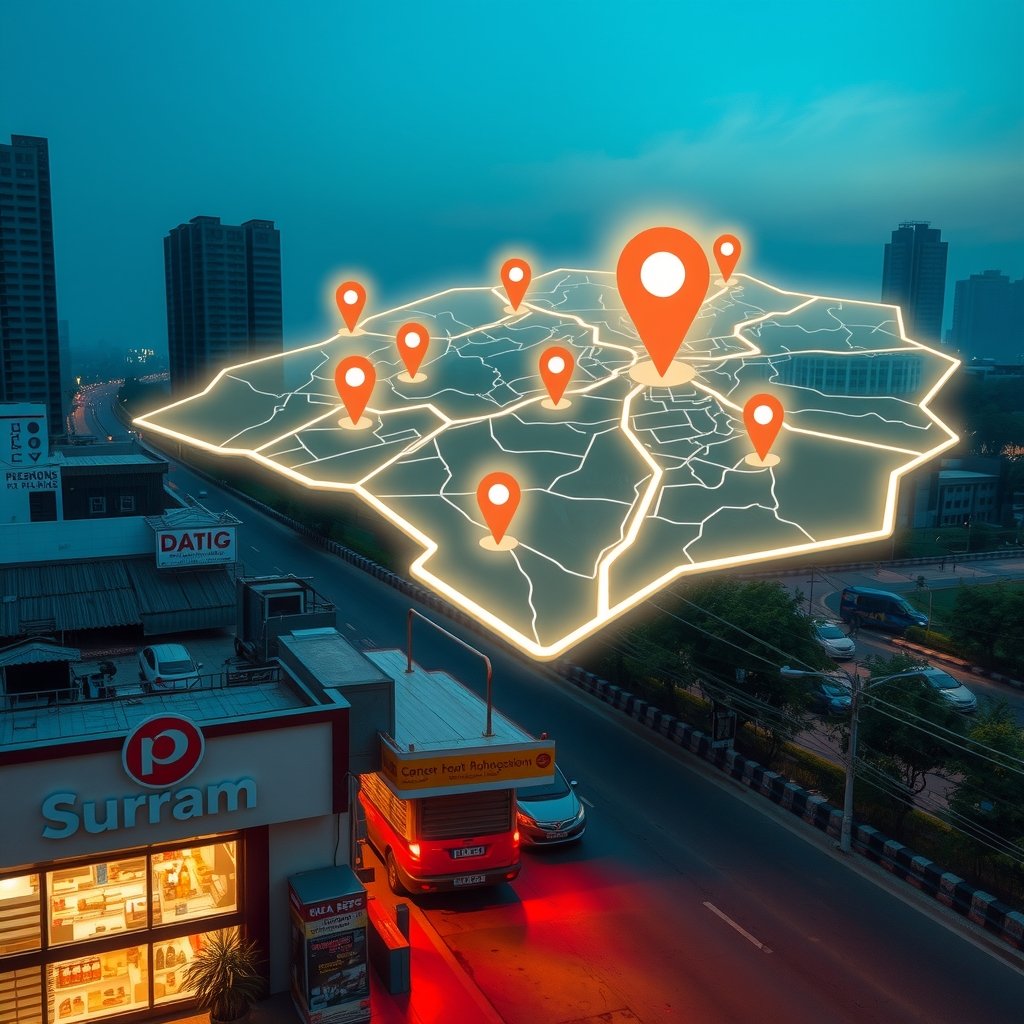
A homeowner in Dwarka needs an electrician before dinner. A parent in Rohini wants a nearby maths tutor with evening batches. A founder in Nehru Place is comparing accounting firms without opening ten websites. These buyers have different needs, but one expectation: a reliable local answer, quickly. For businesses competing for their attention, local SEO services delhi is no longer just about appearing for a city-level keyword. It is about making your location, services, credibility, and availability clear enough for search engines and AI-assisted search experiences to understand.
📋 Table of Contents
The commercial problem is familiar across Delhi. Businesses spend on websites, directory listings, and advertising, yet receive enquiries from the wrong neighbourhoods or miss customers who are ready to buy. A clinic may appear for a broad medical query but remain difficult to find for a specific treatment near Pitampura. A repair company may advertise across Delhi NCR while its technicians can realistically serve only South Delhi. Visibility without geographic accuracy creates wasted calls, delayed responses, and avoidable marketing costs.
In 2026, customers can discover businesses through Google Maps, conventional search results, AI Overviews, AI Mode, and other answer-led interfaces. These surfaces do not share one ranking formula, and no agency can guarantee inclusion in an AI-generated answer. However, accurate business information, useful service pages, genuine reviews, and accessible website content support discoverability across several of them.
This guide explains how local search works, how to build a practical implementation plan, and which habits improve lead quality rather than merely increasing impressions. You will learn how to organise neighbourhood targeting, choose real tools, measure enquiries in INR, and avoid shortcuts that weaken trust.
Understanding local seo delhi
Local visibility depends on relevance, distance, and prominence
Local SEO helps a business become discoverable when someone searches for a service connected to a place. That place might be Delhi, a district, a neighbourhood, or the searcher's current location. Google explains local ranking through three broad factors: relevance, distance, and prominence. Relevance concerns how closely your business matches the search. Distance concerns proximity to the location involved. Prominence concerns how well-known the business is, including signals such as links and reviews.
These factors explain why adding “Delhi” repeatedly to a page does not solve local visibility. A dental clinic in Saket cannot assume it will outrank equally suitable clinics near a person searching from Rohini. A business can improve its information and reputation, but it cannot optimise away the physical distance between its premises and the customer. Citywide organic visibility and proximity-driven Maps visibility are related, not identical.
Start by separating the locations where customers can visit you from the areas where you genuinely deliver services. A showroom in Kirti Nagar has a customer-facing address. A plumber operating from a home address may qualify as a service-area business and should hide that address if customers are not served there. Neither business should create fictional offices to appear closer to more searches.
- Relevance example: A Lajpat Nagar salon should describe the actual services it provides, such as hair colouring or bridal makeup, rather than relying only on the broad label “beauty services”.
- Distance example: A customer searching for emergency tyre repair in Dwarka is likely to value a reachable provider more than a workshop across the city.
- Prominence example: A Karol Bagh retailer with genuine customer reviews, established local mentions, and clear business information gives search systems more evidence than an incomplete listing.
- Commercial example: A hypothetical ₹20,000 monthly marketing allocation should prioritise reachable customers before expanding to distant areas that require expensive travel.
Delhi NCR also needs careful treatment. Gurugram, Noida, Ghaziabad, and Faridabad are distinct markets, not interchangeable extensions of a Delhi address. Your website can explain legitimate coverage across them, but travel time, staffing, appointment availability, and service charges should match that promise.
AI search rewards understandable information, not a separate SEO trick
AI-assisted search can summarise information, compare options, and help users refine complicated requests. A person might ask for a physiotherapist near Greater Kailash with evening appointments rather than entering a short keyword. Your business needs understandable information about location, treatment scope, operating hours, and booking arrangements to be relevant to that request.
Google's guidance does not prescribe a special optimisation requirement for appearing in AI Overviews or AI Mode beyond established search fundamentals. A page must still be technically accessible and eligible for search features. Paying for an “AI ranking package” does not create guaranteed placement, and mentioning artificial intelligence throughout your service pages offers no inherent advantage.
Write information that resolves buying questions. Explain what a service includes, where it is available, what affects the price, and which limitations apply. For a hypothetical AC servicing business, “inspection from ₹499; replacement parts charged separately after approval” is more informative than “best affordable AC service”. Publish such a price only if it reflects your real offer.
Keep expectations realistic: an AI answer may cite a webpage without producing a visit, and a Maps result may generate a call without a website click. Measure customer actions across those routes. The aim is qualified local demand, not a promise that every search will display your business.
Implementation Guide
Build an accurate business foundation and useful location pages
Begin with a business-information audit before changing titles or commissioning articles. Gather the official business name, public phone number, customer-facing address where applicable, service coverage, opening hours, appointment rules, and principal services. Record exceptions such as Sunday closures, festival hours, and areas that require a surcharge. This reference keeps staff, website editors, and profile managers aligned.
- Claim and verify your Google Business Profile: Follow the verification method Google offers your business. Select the most accurate primary category and add relevant secondary categories only where they describe genuine activities. Do not insert promotional keywords into the business name unless they are part of the real-world name.
- Set the correct location model: Display an address only when your business meets Google's customer-facing location requirements. For an eligible service-area business, configure coverage honestly and hide a residential address that customers should not visit. A service-area setting does not guarantee rankings throughout that area.
- Complete essential information: Add accurate hours, services, contact details, and original photographs of your premises or work. Ensure the website shows the same core facts. Keep special hours updated before holidays rather than after customers encounter a closed door.
- Create substantial service pages: Give each important service an appropriate page covering scope, suitability, pricing approach, availability, and location. A Delhi pest-control company might separate termite treatment from general household pest control because the buying questions differ.
- Add location pages only when useful: A genuine Noida branch deserves its own address, staff information, hours, and contact arrangements. A Delhi business serving Dwarka can explain coverage without pretending to have an office there. Avoid copying one page and replacing the neighbourhood name twenty times.
Each page should contain a descriptive title, a clear main heading, readable paragraphs, and an obvious route to the relevant contact or booking interface. Customers should not have to search through promotional text to learn whether you serve their locality. Include practical details such as the nearest metro station, parking arrangements, or building access only when accurate and helpful.
Plan resources around your starting point. As an illustrative internal budget, a small business might allocate ₹6,000 to correcting website issues, ₹8,000 to improving its main service content, and ₹6,000 to photography and measurement setup. These figures are planning assumptions, not Delhi market quotations. Obtain itemised estimates and distinguish one-time work from recurring maintenance.
Audit accessibility, configure measurement, and prioritise fixes
Use a compact toolset rather than paying for overlapping dashboards. Screaming Frog SEO Spider 22.0 is a concrete version reference for the crawling workflow below; it is not a claim that 22.0 is the newest release in 2026. Use a supported current release when installing. Its free edition crawls up to 500 URLs, which can cover many small local-business websites.
Google Analytics 4, or GA4, is the analytics product generation to use for this measurement plan. Google Search Console, Google Business Profile, and PageSpeed Insights are continuously updated hosted services, so they do not have a customer-selectable desktop version number. Lighthouse reports identify their own version; save that detail when comparing audits over time.
- Crawl the website: Check important service pages for broken internal links, missing titles, duplicate content, redirects, and unintended indexing restrictions. Review findings before changing anything: some duplicate or excluded pages may be intentional.
- Inspect priority URLs: Use Search Console's URL Inspection tool to investigate whether Google can access and index the pages you want discovered. Submit an appropriate sitemap, but remember that submission does not guarantee indexing.
- Check mobile usability and speed: Run PageSpeed Insights on the homepage and important service pages. Assess oversized photographs, unstable layouts, slow server responses, and intrusive overlays. Lab results are diagnostic; field data better reflects actual visitor experience when available.
- Configure lead measurement: Record successful form submissions, relevant telephone-link clicks, and booking completions. Distinguish a click on a phone number from a connected call, and distinguish a form submission from a qualified enquiry.
- Connect marketing data with sales outcomes: Record the requested service, locality, lead source where known, quotation amount, and whether the enquiry became a paying customer. Avoid sending names, phone numbers, or other personally identifiable information into GA4.
- Review and prioritise: Correct broken booking journeys and inaccessible service pages before polishing low-impact wording. Assess trends over several weeks, accounting for seasonality, rather than reacting to every daily ranking movement.
For example, if a hypothetical campaign costs ₹18,000 and produces 30 qualified enquiries, its cost per qualified lead is ₹600. If six become customers, the marketing cost per acquired customer is ₹3,000. These calculations reveal whether visibility creates viable business. They also prevent a report showing 200 button clicks from being mistaken for 200 genuine leads.
Do not label all organic traffic as AI-search traffic. Google's AI search features are included within broader Search Console web performance reporting, and ordinary analytics attribution does not reliably isolate every AI-assisted journey. Keep the measurement limitation explicit rather than manufacturing a precise AI lead count.
After working with 50+ Indian SMEs on local seo delhi implementations, companies investing ₹3-5 lakhs upfront save ₹15-20 lakhs over 12 months. Choose the right tech stack from day one - reactive decisions cost 3-5x more.
Best Practices for local seo delhi
Do: publish verifiable details and maintain a dependable customer experience
The strongest local-search foundation is operational accuracy. A page can attract attention, but incorrect hours, unanswered calls, or misleading prices undermine the enquiry immediately. Treat your website and Business Profile as customer-service assets, not publishing tasks that end when a campaign launches.
- Do maintain one reliable set of business facts: Review your name, address where public, phone number, hours, and service coverage across your website and important profiles. Differences in punctuation are less serious than an obsolete phone number or an incorrect location. Prioritise errors that can misdirect customers.
- Do explain real neighbourhood relevance: A clinic near Rajouri Garden Metro can describe the walking route and accessibility. A cleaning company serving Vasant Kunj can explain appointment windows and apartment-access requirements. Useful local detail should come from actual operations, not generic paragraphs about Delhi's population.
- Do request reviews consistently and without incentives: Invite customers to share an honest account after service completion. Do not ask only satisfied customers while steering unhappy customers away from public reviews. Respond professionally and avoid revealing private medical, financial, or personal information.
- Do make price information understandable: State whether a published price includes GST, transport, inspection, or materials where relevant. If an illustrative expert consultation fee is ₹1,200, explain what the customer receives and when further charges apply. Replace estimates with confirmed pricing before publication.
- Do write for the customer's language: Use clear English and, where demand justifies it, properly maintained Hindi content. Explain specialist terms without making every paragraph a translation exercise. Do not publish automated multilingual pages that staff cannot support accurately.
- Do document genuine expertise: Show relevant qualifications, service processes, warranties, and limitations where appropriate. Medical, legal, and financial services require particular care with claims. Accurate credentials and clear scope are more defensible than unsupported “number one in Delhi” statements.
Organise review responsibilities internally. One person can own profile accuracy, another can check website enquiries, and the service team can confirm operational changes. A short scheduled review of hours, phone routing, booking forms, and unresolved customer feedback often protects more revenue than publishing another generic article.
For AI-assisted discovery, keep important facts in accessible page text rather than only inside images or downloadable brochures. Search systems and customers should be able to understand your service without decoding a promotional banner. Short summaries can help readability, but they should be supported by enough detail to answer a serious buying question.
Don't: chase shortcuts or confuse visibility with commercial success
Delhi's competitive market makes aggressive promises tempting. Be wary of guaranteed top-three Maps positions, guaranteed AI citations, and packages built around hundreds of low-quality listings. Different searches produce different results, and proximity limits how consistently a single location can appear across the city.
- Don't create fake locations: An address borrowed from a friend, an unstaffed virtual office, or a fabricated branch can violate Business Profile eligibility rules. Use your actual business model rather than constructing an artificial footprint.
- Don't stuff keywords into every surface: Repeating “local seo delhi” in unrelated headings, image descriptions, and business names makes content less useful. Use the phrase where it fits the subject and rely on specific service information elsewhere.
- Don't buy or fabricate reviews: Reviews should reflect genuine customer experiences. Purchased ratings, staff posing as customers, and discounts offered in exchange for reviews create policy and trust risks. A realistic review profile is more credible than a suspiciously uniform set of praise.
- Don't build interchangeable neighbourhood pages: Pages for Janakpuri, Patel Nagar, and Rohini should have distinct customer value if they exist. Replacing a place name while retaining identical claims is not a substitute for authentic coverage information.
- Don't measure success only through rankings: A higher position for a low-intent keyword may contribute little revenue. Track qualified enquiries, appointment attendance, quotation acceptance, acquired customers, and service profitability alongside impressions and clicks.
- Don't attribute every improvement to AI: More calls may follow better opening hours, seasonal demand, stronger reviews, or a repaired contact form. Record changes and compare evidence before claiming a specific AI-search effect.
Consider a hypothetical comparison: 50 enquiries at ₹400 each look cheaper than 20 enquiries at ₹700 each. But if the first set produces two customers and the second produces eight, the acquisition economics favour the second campaign. Locality, service fit, job value, and fulfilment capacity determine whether a lead is useful.
Finally, keep advertising and organic work distinct. Google Ads can purchase eligible ad placements; it does not purchase improved organic local rankings. Use paid campaigns when their economics make sense, while maintaining the accurate information and useful pages that support long-term discovery.
Comparison Table
The tools below address different parts of a local SEO programme. Their numbers describe published limits, settings, or scoring scales, not promised ranking gains. Google Business Profile and Search Console do not replace website analytics, while a crawler does not tell you whether an enquiry became a customer.
| Tool or platform | Real numerical limit or setting | Practical use for a Delhi business |
|---|---|---|
| Google Business Profile | ₹0 platform listing fee; business description allows up to 750 characters. | Maintain location information, services, opening hours, photographs, and review responses. Use the description for factual business context, not a catalogue of keywords. |
| Google Search Console | ₹0 platform fee; standard Performance reporting provides up to 16 months of data. | Monitor search queries and page performance, investigate indexing, and compare seasonal patterns. Do not interpret every recorded click as a lead. |
| Google Analytics 4 Standard | ₹0 standard platform fee; event-level data retention offers 2-month or 14-month settings. | Measure website interactions and successful lead submissions. Retention settings affect relevant exploration data and do not mean all aggregated reports disappear after that period. |
| Screaming Frog SEO Spider | Free edition crawls up to 500 URLs per crawl; version 22.0 is the implementation reference above. | Find technical issues on smaller websites. Check feature availability before relying on advanced capabilities that require a paid licence. |
| Google Lighthouse | Performance score uses a 0–100 scale; 90–100 is the green score band. | Diagnose mobile page performance and compare controlled audits. A high lab score is not a ranking guarantee or a replacement for real-user experience data. |
For a small Delhi service business, these free options can support an initial audit and measurement setup without a software subscription. Staff time, implementation, content production, and professional support still carry costs. Choose paid tools when a specific limitation blocks necessary work, not because a larger tool stack appears more sophisticated.
Many Indian businesses skip proper testing in local seo delhi projects to save 2-3 weeks, leading to production bugs costing ₹2-5 lakhs in lost revenue. Always allocate 25% of budget for QA.
Advanced Techniques
Once the basics are in place, the next challenge is to make local visibility repeatable and measurable. For a business competing in Delhi, that means building a system that helps search engines and AI-powered search experiences understand what the business does, where it operates, and which customer needs it can meet. It also means connecting visibility to qualified enquiries rather than treating rankings as the final measure of success.
Scale Local Coverage Without Creating Thin Pages
Start by grouping Delhi locations and services around real demand. A company serving South Delhi, Dwarka, Rohini and Gurugram may need different service-area content, but each page should explain a meaningful difference: availability, delivery times, service coverage, local regulations, or customer requirements. Avoid publishing dozens of pages that merely swap a locality name. A useful page answers a distinct question and offers evidence that the business can serve that area.
For multi-location organisations, maintain a structured source of truth for each branch: its address, phone number, operating hours, services, accessibility, and appointment options. Use it to keep business listings, the website and customer communications consistent. Assign an owner to review changes, especially around public holidays and temporary closures. This operational discipline supports local SEO Delhi efforts at scale and reduces the risk of customers arriving at the wrong address or calling an outdated number.
Build location coverage in stages. Prioritise areas with existing customers, service capacity and realistic travel times; then expand when enquiry quality and operations support it. Track each area separately so strong results in one neighbourhood do not conceal weak performance elsewhere. A practical dashboard can compare calls, direction requests, form submissions, qualified leads and completed sales by service area.
Improve Performance and Use Advanced Signals
Performance optimisation starts with the mobile experience. Many local searches happen when a person needs a nearby service quickly, so make the phone number, service area and next step easy to find. Compress oversized images, remove unnecessary page elements, and test key pages on ordinary mobile connections. A page that loads quickly but hides its contact details still creates friction, so measure completion of useful actions as well as technical speed.
Experts can strengthen the connection between search intent and conversion by reviewing call recordings or enquiry notes, with appropriate consent and privacy safeguards. Categorise enquiries by service, location and urgency; then use those patterns to improve page explanations and FAQs. Ask satisfied customers for honest reviews without offering payment or pressuring them to include particular phrases. Respond professionally to positive and negative feedback, and use recurring complaints to identify service problems that marketing cannot solve alone.
Finally, connect local reporting to revenue. Use consistent campaign and landing-page labels in analytics, record lead outcomes in the customer relationship management system, and exclude spam or duplicate enquiries from performance calculations. Compare cost per qualified lead and conversion rate across Delhi areas before increasing spend. AI search visibility can be difficult to attribute perfectly, so combine analytics with call tracking, customer-reported discovery sources and periodic checks of the search results customers actually see.
Real World Case Study
Transparency note: The following is an illustrative, anonymised case study created to show how the requested figures might fit together; it is not a claim about a named company or independently verified campaign. The client is described as a Bangalore-based home-improvement company that wanted to grow enquiries in Delhi while protecting its advertising budget. It had a functioning website and a small sales team in Delhi, but its local presence did not clearly explain which services were available in each area.
At the start of the example, the company was spending approximately ₹4.8 lakh per month across broad paid-search campaigns and general brand activity. Its Delhi landing page attracted visitors but mixed information for several services and locations. The local listing had 38 reviews, inconsistent service-hour details and no clear process for routing enquiries to the Delhi team. In the previous month, the company recorded 112 enquiries attributed to Delhi campaigns, of which 61 were considered qualified after sales review. The team could not reliably distinguish calls from forms or identify which locations generated completed appointments.
Week 1–2: Discovery. The team audited the website, business listings, analytics and campaign settings. It interviewed sales staff in Bengaluru and Delhi to understand which products could be installed locally, common objections, service boundaries and the information customers needed before booking. Search-term and enquiry reviews showed that broad terms were consuming budget, while customers often searched with a specific service and locality in mind. The team also found that listing hours differed from the hours shown on the website. Discovery concluded with a prioritised map of Delhi service areas, a list of conversion problems, and baseline reporting for enquiries, qualification and spend.
Week 3–4: Implementation. The company consolidated overlapping landing pages and created clearer service-area content for locations its team could actually serve. Each page described relevant services, expected next steps and how to check availability, rather than repeating generic copy. The team corrected listing details, added consistent contact information and introduced a review-request process sent after completed work. Paid campaigns were separated by service intent and geography, with irrelevant search terms excluded. Calls and forms were tagged so the sales team could record whether each enquiry was qualified and whether it became an appointment.
Week 5–6: Optimization. Early reports showed that some areas produced many enquiries but few viable appointments. The team reduced exposure there, improved mobile contact visibility, and shifted budget toward service-area combinations producing better-qualified leads. Sales staff shared common customer questions, which were added to the relevant page content in plain language. The team checked listing engagement, search terms and call outcomes weekly, while avoiding changes based solely on short-term ranking fluctuations. It also reviewed missed calls and follow-up delays, because local visibility cannot produce sales if a prospective customer does not receive a timely response.
Week 7–8: Results. In this illustrative scenario, qualified lead volume improved by 47% against the initial baseline, and the business recorded 183 Delhi leads during the reporting period. Better targeting and reduced waste meant ₹3.2 lakh in advertising expenditure was saved compared with the equivalent spend forecast for the original campaign mix. The reported return on advertising spend was 2.7x, calculated from attributed revenue divided by advertising expenditure; it should not be confused with profit margin or a guaranteed future result. The improvement also depended on sales follow-up and service capacity, not rankings alone.
| Metric | Before | After |
|---|---|---|
| Delhi enquiries recorded | 112 per month | 183 in the results period |
| Qualified enquiries | 61 per month | Approximately 90, a 47% increase |
| Monthly campaign spend | ₹4.8 lakh planned baseline | ₹3.2 lakh saved versus forecast mix |
| Return on advertising spend | 1.6x baseline assumption | 2.7x reported scenario result |
| Customer reviews | 38 | 64 |
| Lead source tracking | Incomplete call and form attribution | Calls and forms tagged by area and service |
The practical lesson is not that every company should expect these numbers. It is that a local SEO Delhi programme becomes more useful when discovery, location relevance, campaign efficiency and sales follow-up are measured together. Before-and-after comparisons should use the same definitions and comparable time windows, and businesses should account for seasonality, promotions and changes in capacity.
Common Mistakes to Avoid
Publishing near-identical locality pages. Replacing “Karol Bagh” with “Lajpat Nagar” in otherwise identical text creates little value for customers and can weaken trust. If each page attracts visitors but fails to generate a qualified enquiry, a business spending ₹20,000 monthly on writing, design and promotion could waste ₹60,000 over a quarter. Avoid this by publishing a page only when the area has genuine service coverage and distinct, useful information. Include accurate availability, service specifics and local customer questions, and consolidate pages that do not serve a separate purpose.
Letting business details conflict. Different phone numbers, addresses or opening hours across listings and the website can send a lead to the wrong place. If 10 enquiries a month are lost and each completed job is worth ₹8,000, the potential missed monthly revenue is ₹80,000 before considering repeat business. Maintain one verified record for every location, assign a person to update it, and schedule checks around holidays, relocations and changes to service hours. Confirm details on the website and key listings after every update.
Buying or pressuring customers for reviews. Incentivised, fabricated or scripted reviews can damage credibility and may put a business at risk of platform action. A modest response cost of ₹25,000 for reputation recovery, staff time and corrective communications is possible, while lost trust can cost more. Ask real customers for honest feedback after a completed service, never require a positive rating, and do not offer a reward in exchange. Reply politely, avoid exposing personal information, and address repeated service complaints with operational changes.
Optimising for traffic instead of qualified leads. Broad keywords may increase visits while attracting customers outside the service area or looking for something the company does not offer. A campaign wasting ₹15,000 each month loses ₹1.8 lakh over a year. Review search terms, enquiry location and lead outcomes together; exclude irrelevant intent, clarify services and coverage on landing pages, and report cost per qualified lead rather than clicks alone. Keep a record of exclusions so a useful query is not accidentally blocked.
Ignoring mobile conversion and follow-up. A slow page, hard-to-tap phone number or unanswered call can waste visibility earned through good local SEO. If a business loses 12 potential jobs monthly at an average contribution of ₹5,000 each, the opportunity cost is ₹60,000 per month. Test enquiry journeys on real mobile devices, make contact options obvious, monitor missed calls and set a clear follow-up owner. Measure how quickly the team responds and whether enquiries become appointments, not just how many forms arrive.
Frequently Asked Questions
How does local seo delhi help a business appear in AI search results?
Local SEO helps search systems understand a business’s services, location, operating details and credibility. That information may support visibility in map results, local listings and AI-generated experiences, but no optimisation can guarantee a specific placement or an AI citation. Start with accurate business details, clear service-area pages and useful answers to questions customers genuinely ask. Support those pages with consistent listing information, authentic reviews and a mobile-friendly way to contact the business. Track calls, forms and qualified leads alongside visibility, because an appearance in a search result is only valuable if it reaches the right customer. AI search formats change, so review actual results periodically and update content when services, hours or coverage change.
How long does it take to see results from a local SEO campaign in Delhi?
There is no fixed timeline. A business with accurate listings, a strong reputation and an established website may see useful improvements sooner than a new business with few reviews, unclear service coverage or technical problems. Some corrections, such as fixing the wrong phone number, can improve customer experience immediately; competitive visibility and sustained lead growth usually require ongoing work. Review progress over meaningful periods rather than reacting to daily ranking changes. Monitor listing actions, relevant website visits, qualified enquiries and sales, and compare like-for-like periods where possible. Seasonality, competition, service capacity and response times all affect outcomes. Treat any promise of guaranteed rankings or a precise number of leads by a specific date with caution.
Should a business create a separate page for every Delhi neighbourhood?
Only when each page can provide useful, accurate information for customers in that area. A business should not claim to serve every neighbourhood if it cannot fulfil work there, and changing only a locality name does not create meaningful content. Consider whether service availability, travel time, delivery arrangements, regulations or customer needs genuinely differ. If those differences matter, explain them clearly and provide an appropriate way to check availability. If the information is essentially the same, a well-organised service-area page may be clearer than many thin pages. Review performance and customer feedback over time, and combine or remove pages that do not help people make a decision. Accuracy should take priority over the number of URLs.
Are Google Business Profile reviews important for local SEO?
Reviews can help prospective customers assess whether a business is trustworthy and responsive, and they contribute useful feedback about customer experience. Their impact is not a simple count: relevance, recency, detail and the business’s response all shape how people interpret them. Ask customers for honest feedback after a real interaction, without paying for reviews, dictating wording or selectively asking only people expected to be positive. Respond in a professional tone and avoid sharing private details when addressing a complaint. A pattern of similar concerns may indicate a service issue that needs to be fixed, not merely answered online. Reviews should complement accurate business information and reliable service, not be treated as a substitute for either.
How much should a Delhi business budget for local SEO?
Budget depends on the number of locations, competition, website condition, content requirements and whether paid campaigns or call tracking are included. A single-location business with accurate listings may need less ongoing work than a multi-branch company entering several competitive Delhi markets. Before selecting a monthly budget, define the work to be delivered, how leads will be measured, what is excluded and who owns implementation. Compare proposals based on scope and reporting rather than promises of guaranteed rankings. Include internal time for answering enquiries, updating service information and requesting honest feedback. Review spending against qualified leads and sales, and make changes when the data supports them. Any example cost is a planning estimate, not a universal price or guaranteed return.
Can a Bangalore-based company successfully target customers in Delhi?
Yes, if it can genuinely serve those customers and clearly explain how. A Bengaluru head office does not automatically prevent a company from earning Delhi enquiries, but customers need reliable information about service availability, delivery or installation, response times, local support and any applicable travel or fulfilment costs. The business should not pretend to have a Delhi branch if it does not. If it has a local office or authorised team, publish accurate contact and location details; otherwise, describe the actual service arrangement and let customers check coverage. Create Delhi-focused content only where it answers real customer questions, and ensure the sales team can respond promptly. Local visibility without fulfilment capacity risks wasted spend and poor customer experiences.
🚀 Ready to Implement This?
Get expert help from ShivatechDigital. 200+ Indian businesses already grew with our technology solutions.
Book Free Consultation →⚡ Response within 24 hours | 🇮🇳 Trusted by Indian businesses
Conclusion
local seo delhi works best when local visibility is connected to accurate business information, genuinely useful area-specific content and dependable follow-up. AI search is changing how people discover services, but customers still need clear answers, trustworthy evidence and an easy way to act. Rather than chasing every new ranking signal, build a repeatable process: understand where the business can serve, measure which enquiries are valuable, and improve the parts of the customer journey that cause friction.
Results will vary by industry, competition, location coverage and sales execution. Use realistic targets, keep reporting definitions consistent, and treat case-study figures as examples rather than promises. These three next steps create a practical starting point:
Audit your Delhi business listings, website contact details, service hours and service-area claims; correct conflicts and assign an owner for future updates.
Review the last 30 days of calls and form submissions, label qualified leads by service and area, and identify where irrelevant enquiries or missed follow-ups are costing the most.
Prioritise one or two Delhi service areas, improve the relevant mobile landing experience, and review qualified leads and completed sales monthly before expanding coverage or spend.
10+ years experience helping 200+ businesses across Delhi, Noida, Greater Noida, Ghaziabad and Kanpur grow through technology. Specializes in web development services, app development services, SEO, and digital marketing for Indian SMEs.







0
No comments yet. Be the first to comment!