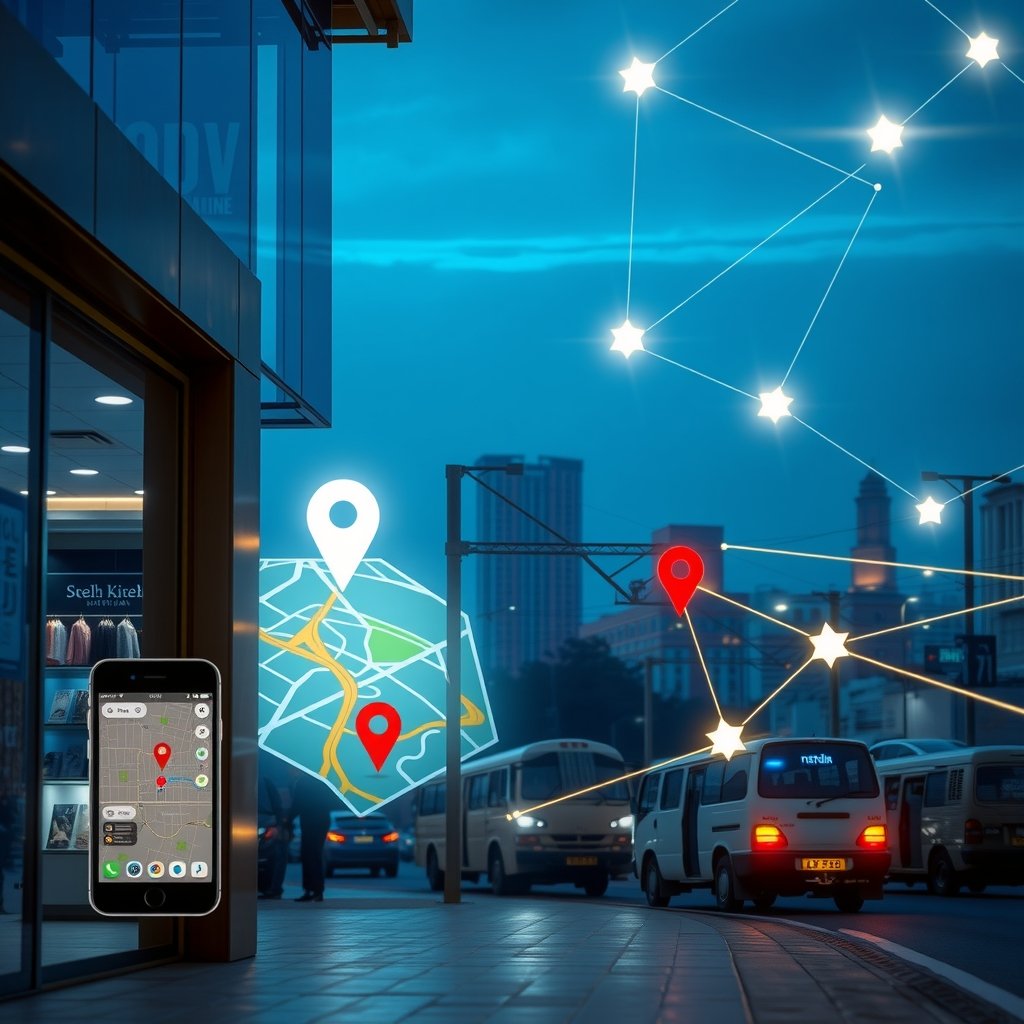
Across Noida’s crowded markets, industrial sectors and rapidly growing residential corridors, Indian businesses face a costly visibility problem: customers are searching with immediate intent, but the most relevant local brand is not always the one appearing in Google Maps, AI Overviews, voice results or “near me” recommendations. A clinic in Sector 18, a cloud kitchen in Sector 76 or a B2B automation company in Sector 62 may offer better service than a national competitor, yet lose enquiries because its digital location signals are fragmented. This is where local SEO services noida becomes a practical growth discipline rather than a checklist of directory submissions.
📋 Table of Contents
In 2026, local discovery is no longer limited to ten blue links. Google AI Overviews, Google Maps, Gemini-assisted search experiences, conversational search tools and voice assistants synthesise business information from websites, reviews, profiles, photos, menus, service pages and third-party mentions. When a buyer asks, “Which GST consultant near Noida Sector 15 can handle e-invoicing for a small manufacturer?” the answer may feature businesses whose data is clear, current, trusted and locally specific. Brands that only optimise a homepage for broad phrases such as “digital marketing agency” or “best dentist” risk becoming invisible during these high-value moments.
Noida presents a particularly demanding local search environment. The city has established commercial hubs such as Sector 62, Sector 63, Sector 18 and Film City; expanding housing clusters around Sector 74, Sector 75, Sector 76 and Sector 137; and intense competition from nearby Delhi, Ghaziabad, Greater Noida and Gurugram businesses. A local customer may compare options within five kilometres, while an enterprise procurement manager might look for specialised providers across the Delhi-NCR region. Search engines need dependable evidence to understand where a business operates, whom it serves, what it offers and why it deserves recommendation.
This article explains how Indian brands can build that evidence systematically. You will learn the foundations of location relevance, how AI search evaluates local entities, how to implement a reliable optimisation workflow, which modern tools to use, and which practices protect rankings, reputation and lead quality. The focus is not on shortcuts. It is on creating accurate business information and useful local content that helps real customers choose confidently.
Understanding local seo noida
Local relevance, entity trust and customer intent
Local SEO is the process of improving a business’s visibility when people search for products or services in a defined geographic area. For Noida businesses, this means appearing appropriately for searches involving the city, nearby sectors, landmarks, pin codes, service areas and “near me” language. It also means helping search engines connect a brand to a verified real-world entity: its legal name, address, phone number, category, operating hours, website, reviews, images and services.
The phrase local seo noida includes more than keyword placement. Search engines commonly assess local results through relevance, distance and prominence. Relevance concerns how closely the business information matches the search. Distance considers the searcher’s location or stated area. Prominence reflects authority and trust, often indicated by quality reviews, links, media mentions, historical consistency and engagement. AI-driven search layers extend this assessment by looking for supporting details that help produce a reliable natural-language answer.
For example, a physiotherapy clinic near Atta Market should not rely only on a generic “physiotherapy services” page. It should clearly state its clinic address, nearest landmark, appointment process, treatment specialisations, practitioner credentials, expert consultation timing and pricing context. A customer searching “sports injury physiotherapist in Noida Sector 18” needs details that distinguish a credible clinic from a listing with an incomplete profile.
- A bakery in Sector 50 can publish accurate delivery areas for Sector 41, Sector 49, Sector 51 and Sector 76 instead of claiming all Delhi-NCR locations without operational proof.
- An accounting firm in Sector 62 can create separate, substantive service pages for GST registration, payroll compliance and ROC filing, supported by its office details and professional credentials.
- A premium salon in Noida Extension can specify whether it serves Gaur City, Techzone 4 and Greater Noida West, including booking hours and parking information.
- A home appliance repair business can show service-area coverage for Noida, Greater Noida and Indirapuram while avoiding false storefront addresses in locations where it has no staffed office.
For Indian brands, data accuracy is especially important because addresses may be expressed in several valid formats. “A-42, Sector 63, Noida, Uttar Pradesh 201301” should not become “A42 Sec 63, Delhi NCR” on different profiles. Inconsistent variants create confusion for customers and reduce search engines’ confidence that mentions refer to the same organisation. The same principle applies to telephone numbers: use the preferred primary number in a consistent format and ensure that someone can answer or return calls during published hours.
Why AI search changes the local visibility standard
AI search systems aim to answer a user’s question directly, often by summarising information from multiple trusted sources. This raises the standard for local brands. A profile stuffed with repetitive city keywords may be ignored if its website lacks helpful proof, its reviews are outdated, its hours conflict across platforms or its service claims are vague. AI systems need source material that is both machine-readable and genuinely useful to people.
Consider a user asking, “What is the approximate cost of AC servicing in Noida before summer?” A strong local business can support a reliable answer by publishing a transparent service page: split AC servicing from ₹599, window AC servicing from ₹499, inspection charges where applicable, areas covered, expected visit windows, parts exclusions and booking contact details. These details can reduce poor-fit leads while enabling a clearer local recommendation.
Prominence should be earned through real operational quality. A Noida diagnostic centre that receives regular reviews mentioning “Sector 75,” “same-day report” and “home sample collection” gives search engines contextual evidence. The centre must still avoid directing customers to use specific phrases. Natural customer language is more credible and produces better long-term reputation signals.
Useful local signals for AI-assisted discovery include:
- Complete Google Business Profile categories, services, attributes, opening hours and appointment URLs.
- Location pages that explain specific services, boundaries, landmark access and customer expectations.
- Original photographs of the storefront, team, reception, products, vehicles or completed work, with sensible descriptive file names.
- Review responses that answer practical concerns without exposing personal information.
- Consistent business details across Apple Business Connect, Bing Places, Justdial, IndiaMART where relevant, social profiles and industry directories.
- Locally relevant mentions from chambers of commerce, event partners, trade associations, colleges or reputable Noida publications.
A small retailer does not need the budget of a national marketplace to compete. It needs a more complete and trustworthy local footprint. A Noida boutique spending ₹20,000 per month on local content, review operations and profile maintenance may generate more qualified calls than one spending ₹80,000 on untargeted display advertising. The measure of success is not simply an increase in impressions; it is a rise in calls, directions, appointment requests, WhatsApp enquiries and revenue from customers who can actually be served.
Implementation Guide
Build the local data foundation step by step
Start implementation with a controlled source of truth. Before changing listings, document the approved business name, address, primary phone number, website URL, email, hours, categories, service areas, booking URL and social handles. For multi-location brands, assign an owner for each location and use a shared spreadsheet or Airtable base to prevent unauthorised variations. This is critical for businesses with branches in Noida, Greater Noida, Delhi and Ghaziabad.
- Audit the existing footprint. Search the exact business name, primary number and old addresses in Google Search and Google Maps. Record duplicate listings, outdated phone numbers, conflicting hours and incorrect pins. Check major local platforms used by the intended audience.
- Verify the Google Business Profile. Complete the verification process using the real business location. Select the most precise primary category. A dental clinic should use “Dental clinic,” not a broad category such as “Health.” Add only legitimate secondary categories.
- Publish operational details. Enter regular hours, special holiday hours, appointment options, accessibility attributes, parking notes, services and product information where applicable. If a business is service-area only, hide the address according to Google’s policy rather than inventing a walk-in office.
- Standardise citations. Correct business name, address and phone details on priority third-party profiles. Prioritise platforms that rank, drive calls or are trusted in the company’s vertical, rather than submitting to hundreds of low-quality directories.
- Create a measurement baseline. Capture current calls, website clicks, direction requests, booking conversions, branded searches and non-branded local queries. Record the date so that changes can be evaluated against seasonality.
Use real tools with controlled access. Google Business Profile Manager should be the central profile-management tool. Google Search Console can reveal indexed location pages and search queries. Google Analytics 4, current stable release, should measure website engagement and conversion events. Google Tag Manager can deploy click tracking for telephone, WhatsApp and booking buttons without repeatedly changing website templates. For technical crawling, Screaming Frog SEO Spider 22 or later is suitable for checking titles, canonicals, redirects and structured data at scale. Semrush Local or BrightLocal can help monitor citations and local rankings, but neither replaces manual accuracy checks.
Define conversions that reflect real local demand. Track a click on tel:, a WhatsApp click, a contact-form submission, an online booking confirmation and a “Get directions” click. Do not treat page views as the sole success metric. If a Sector 18 clinic receives 120 map-driven calls but only 12 appointments, review call handling, pricing communication and availability before assuming an SEO issue.
Develop location pages and structured content
A good location page explains a real local presence or a clearly defined service area. It is not a duplicated template where “Noida” is replaced with “Delhi,” “Ghaziabad” or “Gurugram.” Each page should serve a distinct user need, contain accurate unique details and be linked sensibly from the site’s navigation or location hub.
For a physical office in Noida Sector 62, include the full address, landmark, pin code, primary contact method, hours, services available at that branch, directions or transport guidance, authentic team or office images and a clear booking path. A B2B cybersecurity provider could state that its Sector 62 office serves enterprise clients across Noida, Delhi-NCR and Greater Noida, while explaining whether consultations are on-site, remote or by appointment.
Use JSON-LD structured data to make key entity details easier for search engines to interpret. Structured data must match visible content and the Google Business Profile. Do not add review ratings that are not visible or falsely claim multiple locations.
{ "@context": "https://schema.org", "@type": "LocalBusiness", "name": "Example Noida Services", "telephone": "+91-120-456-7890", "address": { "@type": "PostalAddress", "streetAddress": "B-18, Sector 62", "addressLocality": "Noida", "addressRegion": "Uttar Pradesh", "postalCode": "201309", "addressCountry": "IN" }, "openingHours": "Mo-Sa 09:30-18:30", "url": "https://www.example.in/noida-sector-62/"
}
Validate implementation using Schema Markup Validator and Google Search Console’s URL Inspection tool. If the business runs on WordPress 6.7 or later, use a maintained SEO plugin only when its generated markup can be reviewed and controlled. Shopify stores should ensure store location details, pickup availability and policy pages match local operational reality. Avoid adding every schema type offered by a plugin merely because a checkbox is available.
Build content around decisions customers make locally. A pest-control company can publish a practical guide to monsoon pest prevention for Noida apartments. A modular kitchen studio can explain typical lead times, material options and installation coordination for high-rise projects in Sector 137. The content should answer genuine questions, demonstrate local familiarity and direct visitors to the correct service or location page.
After working with 50+ Indian SMEs on local seo noida implementations, companies investing ₹3-5 lakhs upfront save ₹15-20 lakhs over 12 months. Choose the right tech stack from day one - reactive decisions cost 3-5x more.
Best Practices for local seo noida
Operate a consistent weekly and monthly workflow
Local visibility improves when it is maintained like an operational system. Profiles change, customers post reviews, holiday hours shift, competitors alter categories and websites develop technical errors. Assign responsibility to a marketing owner and a location manager rather than treating local SEO as a one-time agency deliverable. A business investing ₹35,000 per month in local optimisation should know precisely how much time is spent on content, listings, review response, technical maintenance and reporting.
- Review profile accuracy weekly. Confirm that opening hours, phone numbers, service availability and temporary notices are current. Update festival hours before Diwali, Holi, Independence Day and local closures.
- Respond to new reviews promptly. Thank positive reviewers specifically and professionally. For negative reviews, acknowledge the concern, avoid arguments and move account-specific resolution to a private channel.
- Publish evidence monthly. Add recent photos, service updates, completed projects or team information where appropriate. A photo of an actual Noida showroom is stronger than a generic stock image.
- Check lead quality monthly. Compare calls, forms, bookings and closed revenue by location and service. Track which local queries produce customers rather than casual researchers.
- Audit competitors quarterly. Review leading map results for category choices, review velocity, service information, images and content gaps. Learn from their customer experience without copying their wording or manipulating ratings.
Use a sensible review-request process. Ask after a completed service, successful delivery or resolved support interaction. SMS, WhatsApp Business and email can each work if the message is short and sent with customer consent. A dentist in Noida Sector 50 can request feedback after an appointment; a furniture installer can ask after installation acceptance. Never offer cash, discounts, gift cards or other incentives in exchange for a positive review. A ₹500 voucher tied to a five-star review can damage trust and violate platform policies.
Measure performance by intent and geography. In GA4, create events such as generate_lead for forms and contact for phone or WhatsApp clicks. In Google Business Profile Performance, compare calls, messages, website visits and direction requests over equivalent periods. In Search Console, filter queries containing “Noida,” “Sector 62,” “Sector 18,” “near me” and core service terms. Attribution will not be perfect, but a consistent reporting method is enough to identify meaningful direction.
Do and do not optimise for shortcuts
Search engines and AI systems reward information that is accurate, useful and independently supported. Local SEO tactics that attempt to manufacture relevance may create a brief ranking change but often generate poor-quality leads, suspension risk or reputational harm. Indian brands should protect their profiles as carefully as they protect their GST registration, customer database and billing records.
Do follow these practices:
- Use the business’s real-world name consistently, including legal or customer-facing naming where appropriate.
- Create one verified profile for each legitimate, customer-facing location with distinct staff or operational presence.
- Describe service areas honestly, especially for technicians, consultants and home-service providers.
- Include transparent starting prices when pricing is stable enough to state, such as “basic laptop diagnosis from ₹399.”
- Earn local links through events, partnerships, sponsorships, professional memberships and useful community resources.
- Make location pages accessible on mobile networks and keep forms simple for customers using Android devices.
- Use Hindi, English or bilingual content when it reflects the customer base, while keeping essential address and service details unambiguous.
Do not use these practices:
- Do not add “Noida,” “best,” “top” or service keywords to the Google Business Profile name unless they are part of the actual business name used consistently offline.
- Do not create fake offices in Sector 18, Sector 62 or Greater Noida merely to expand map visibility.
- Do not copy the same 800-word service-area page across dozens of NCR locations with only the city name changed.
- Do not purchase bulk reviews or ask employees, relatives or vendors to pose as customers.
- Do not publish fabricated prices, unsupported awards, false availability or misleading “24/7” claims.
- Do not hide address, category or review content through technical tricks that make visible page content differ from structured data.
- Do not ignore negative feedback; an unanswered pattern of complaints can reduce both customer confidence and local conversion rates.
Content quality matters because AI-assisted search can combine details from many sources. If a salon claims “women-only services” on its website but its profile says “unisex salon,” a user may receive a confusing answer. If a repair provider states ₹299 inspection on one page and ₹999 on another, customers may abandon the booking flow. Establish a change-control process so that promotions, hours, service areas and prices are updated everywhere affected.
For brands with several outlets, use a central governance model with local input. The corporate marketing team can control categories, naming conventions, technical templates and reporting. Branch managers can submit updated photos, holiday hours, local service changes and verified customer questions. This balance reduces inconsistencies while retaining the local detail that makes each profile useful.
Comparison Table
| Local SEO approach | Typical monthly investment | Expected operational outcome in Noida |
|---|---|---|
| Basic profile maintenance only | ₹8,000 to ₹15,000 | 1 location, monthly hours and review checks; limited content improvement |
| Single-location local SEO programme | ₹25,000 to ₹45,000 | Profile optimisation, citation cleanup, 2 local pages and conversion tracking |
| Multi-location NCR programme | ₹60,000 to ₹1,20,000 | 3 to 8 verified locations, governance workflow and location-level reporting |
| Paid Google Ads local campaign | ₹30,000 to ₹1,00,000 media spend | Immediate visibility while budget runs; cost per lead varies by service competition |
| Organic local content and reputation programme | ₹40,000 to ₹75,000 | Monthly service content, review operations and stronger AI-search source material |
Many Indian businesses skip proper testing in local seo noida projects to save 2-3 weeks, leading to production bugs costing ₹2-5 lakhs in lost revenue. Always allocate 25% of budget for QA.
Advanced Techniques
Brands competing in Indian search results in 2026 need more than a verified Google Business Profile and a few location pages. AI-powered search systems now compare business entities, customer sentiment, service evidence, proximity, topical authority, structured data, and real-world availability before recommending a local provider. For companies targeting local seo noida opportunities, advanced execution means building a system that can scale across neighbourhoods, service categories, devices, and changing search journeys without creating thin or repetitive content.
Scaling Strategies for Multi-Location Growth
The first scaling principle is to create a reusable local-search framework rather than copying one page for every area. Build a location matrix containing each target city, neighbourhood, service, audience segment, buying intent, operating hours, delivery radius, and proof asset. A Noida business may create distinct content for Sector 18, Sector 62, Greater Noida, Indirapuram, and nearby Delhi areas, but each page must contain genuinely useful local information. Include relevant landmarks, travel patterns, service availability, customer questions, parking details, response times, and locally verified testimonials.
Use a central entity record to keep the name, address, phone number, categories, opening hours, service areas, and appointment links consistent. When a business operates from one address but serves several neighbourhoods, clearly distinguish its physical location from its service area. This prevents confusion for customers and reduces the risk of duplicate or misleading location signals. A structured content library can then support local landing pages, frequently asked questions, review responses, short videos, and AI-readable summaries while allowing every page to retain local specificity.
Scaling also requires operational ownership. Assign one person to monitor profile changes, one team to request and respond to reviews, and one content owner to update service information. Create monthly review-generation targets by branch, but never offer rewards for positive reviews. Instead, ask every genuine customer for honest feedback after delivery. Review language naturally strengthens relevance when customers describe services, neighbourhoods, use cases, and outcomes in their own words.
Performance Optimization and Expert-Level Improvements
Performance optimization begins with measuring the complete local journey, not only rankings. Track impressions in map results, profile actions, direction requests, phone calls, WhatsApp conversations, appointment bookings, qualified leads, conversion rates, and revenue by location. Use unique call-tracking numbers and campaign-tagged booking links while preserving the primary business number wherever platform rules require it. Separate branded searches from non-branded searches so that strong brand awareness does not hide weak discovery performance.
Improve page experience by reducing unused JavaScript, serving properly sized images, enabling browser caching, and prioritizing the content that answers a visitor's immediate question. A mobile visitor in Noida may be deciding whether to call while travelling, so the phone button, address, hours, pricing range, and directions should be visible without excessive scrolling. Add concise answer blocks that AI systems can interpret, followed by deeper explanations, evidence, and customer examples.
Experts should audit query variations rather than chasing one keyword. Compare searches such as “best dental clinic near Sector 62,” “emergency dentist Noida,” and “dentist open Sunday near me.” Map each intent to a relevant page or profile action. Monitor whether AI-generated answers mention the brand accurately, whether cited information is current, and whether competitors are being recommended for questions the business should own. Refresh outdated facts immediately, strengthen weak service pages with first-hand expertise, and use internal links that explain relationships between services, locations, and customer needs. The objective is a dependable local entity that search engines can understand and customers can trust.
Real World Case Study
A Bangalore-based home interiors company approached our team after eighteen months of inconsistent digital marketing. The company served homeowners in Whitefield, Indiranagar, Sarjapur Road, HSR Layout, and Electronic City, but its profile and website did not communicate those service areas clearly. It had 126 Google reviews, an average rating of 4.1, and an average of 96 monthly enquiries. Only 41 enquiries were considered sales-qualified because many visitors were outside the service area or were looking for services the company did not provide.
The client was spending approximately ₹4.8 lakh per month across paid search, social advertising, and listing platforms. Its monthly sales from tracked digital leads averaged ₹9.1 lakh, producing an estimated 1.9x ROAS. The marketing team reported that 38% of calls were missed during business hours, the website's mobile conversion rate was 1.6%, and the average response time for WhatsApp enquiries was 11 hours. Competitors with fewer completed projects were appearing more frequently in map results because their profiles had stronger local relevance and faster customer engagement.
Week 1-2: Discovery
During the first two weeks, we audited the company's Google Business Profile, local citations, website templates, review history, call records, advertising data, and service-area claims. We found 14 inconsistent phone-number formats, seven directory listings with outdated office information, three duplicate location pages, and no dedicated page for kitchen renovation, the highest-margin service. The profile category was too broad, and the service list contained generic descriptions that did not reflect the language used by Bangalore customers.
We also interviewed the sales team and analysed 412 historic enquiries. This revealed that customers frequently asked about apartment renovation timelines, society permissions, modular kitchen budgets, and whether the company served specific PIN codes. Those questions became the foundation for the content and conversion plan. We established baseline measurements for calls, direction requests, website forms, WhatsApp conversations, qualified leads, and booked consultations.
Week 3-4: Implementation
In weeks three and four, we corrected the core business information across important platforms, removed duplicate entries, and rebuilt the service architecture. The website received location-specific sections for Whitefield, HSR Layout, Sarjapur Road, and Electronic City, with original project evidence, realistic timelines, service boundaries, and local customer questions. The team added clear appointment actions, a mobile sticky call option, a shorter enquiry form, and an automated acknowledgement that promised a human response within one business hour.
We rewrote the profile services and uploaded new project photographs with descriptive file names and accurate captions. Rather than asking for artificial keyword-rich reviews, the company began a compliant review process after project milestones. Customers were invited to describe the service received and the area in which the project took place. Sales staff received a response framework for both positive and negative feedback, and every unanswered enquiry was assigned to a named employee.
Week 5-6: Optimization
Weeks five and six focused on improving the signals that initial data showed were weak. The team published answers to common questions about renovation costs, project stages, material choices, and apartment restrictions. It added short videos from completed homes and linked each project to the relevant service and neighbourhood. Paid campaigns were narrowed to high-intent searches and locations with profitable delivery economics. Low-quality placements were excluded, and budget was shifted towards campaigns that generated consultations rather than inexpensive but unqualified clicks.
We tested two versions of the consultation form, reviewed call recordings with consent, and reduced the average response time from 11 hours to 58 minutes. Profile posts were scheduled around completed projects, seasonal renovation demand, and useful maintenance advice. The company also created a weekly dashboard that compared search visibility with actual revenue, preventing the team from treating impressions as the final objective.
Week 7-8: Results
By the end of week eight, the company had generated 183 qualified leads from organic local discovery, profile interactions, and the refined paid campaigns. The combined local visibility and conversion programme delivered a 47% improvement in qualified enquiry volume compared with the baseline period. Better targeting and reduced waste saved ₹3.2 lakh in projected monthly marketing expenditure, while the campaign produced a 2.7x ROAS. The business also reduced missed calls and improved consultation attendance because customers received clearer service information before contacting the team.
| Metric | Before | After 8 Weeks | Change |
|---|---|---|---|
| Qualified monthly leads | 96 total enquiries, 41 qualified | 183 qualified leads | 47% improvement in qualified volume |
| Average Google rating | 4.1 from 126 reviews | 4.5 from 181 reviews | Stronger trust signal |
| Mobile website conversion rate | 1.6% | 3.4% | 112.5% relative increase |
| Average enquiry response time | 11 hours | 58 minutes | Over 91% faster |
| Monthly marketing waste identified | ₹3.2 lakh estimated | ₹0.0 lakh after reallocation | ₹3.2 lakh saved |
| Return on advertising spend | 1.9x | 2.7x | 42.1% improvement |
| Map-pack visibility for priority areas | 11% of tracked searches | 23% of tracked searches | 109% relative increase |
The important lesson was not a single ranking position. The result came from aligning accurate local information, useful content, faster operations, strong proof, and disciplined measurement. The same principles apply to Indian brands targeting Noida, Bangalore, Pune, Hyderabad, Mumbai, or any market where AI search increasingly evaluates the entire customer experience.
Common Mistakes to Avoid
1. Creating Duplicate Location Pages
Publishing near-identical pages for every Noida sector may appear efficient, but it creates thin content and weakens topical trust. A business can spend ₹40,000 to ₹1.5 lakh on templated pages, copywriting, and promotion without generating meaningful enquiries. Avoid this by creating a page only when the business has a real service connection and unique information for that location. Include local projects, service boundaries, travel expectations, customer questions, and proof that cannot simply be copied to another page.
2. Ignoring Profile Accuracy
An outdated address, incorrect holiday hours, broken appointment link, or mismatched telephone number can cost more than a ranking decline. If even five high-intent customers fail to reach the business each month, the lost revenue may easily exceed ₹25,000 for a professional service and much more for high-ticket categories. Maintain a monthly accuracy checklist, update seasonal hours in advance, and use one approved master record for all business information. Audit important directories after every relocation, phone change, or service-area update.
3. Buying Reviews or Using Incentives
Paid reviews and incentives for positive feedback can create a short-term appearance of growth but expose the business to removals, profile restrictions, reputational damage, and legal or platform-related costs. A small campaign costing ₹10,000 may lead to months of lost trust and several lakh rupees in missed sales if customers identify the manipulation. Request honest feedback from genuine customers after a meaningful service milestone. Respond professionally to criticism, resolve the underlying issue, and never ask customers to change a review in exchange for a benefit.
4. Measuring Rankings Without Revenue
A report showing improved positions may still hide poor commercial performance. Teams can spend ₹30,000 to ₹2 lakh each month tracking rankings and publishing content while failing to measure calls, consultations, qualified leads, and closed business. Connect profile actions, call tracking, forms, WhatsApp conversations, and customer relationship management records. Review the cost per qualified lead and revenue per location every month. If a keyword attracts visitors who cannot buy the service, reduce its priority even if its search volume looks impressive.
5. Neglecting Mobile Experience and Response Speed
A slow website and delayed response can waste the entire investment in visibility. For a local business receiving 100 enquiries, losing 20 prospects because the form is difficult or nobody replies promptly can represent ₹50,000 to ₹5 lakh in potential monthly revenue, depending on the industry. Compress images, simplify forms, display the phone number clearly, and show service areas before asking for lengthy information. Set a response standard of one business hour, create ownership for every lead, and review missed calls weekly. Local SEO succeeds when discovery turns into a timely, helpful conversation.
Frequently Asked Questions
What makes local seo noida different from traditional SEO?
Local seo noida focuses on helping a business become visible to people searching for products and services in Noida and nearby areas, while traditional SEO often targets broader national or informational queries. Local visibility depends on proximity, business-category relevance, profile completeness, customer reviews, location-specific content, operating hours, and the consistency of information across trusted platforms. In 2026, AI search adds another layer by evaluating whether a business genuinely answers a customer's situation. A Noida clinic, for example, should demonstrate its services, neighbourhood coverage, appointment process, emergency availability, and customer experience rather than simply repeating the phrase “Noida clinic.” Effective local work connects search visibility with calls, directions, WhatsApp conversations, appointments, and revenue. It also requires ongoing operational accuracy because incorrect hours or slow responses can lose customers even when rankings improve.
How long does it take to see results from a local SEO campaign in Noida?
Some improvements can appear within two to four weeks when the business corrects inaccurate information, removes duplicate listings, improves its profile categories, and responds faster to enquiries. More competitive searches usually require three to six months of consistent work because search engines need time to evaluate new content, reviews, links, engagement patterns, and business credibility. The timeline depends on competition, location density, website quality, review history, service demand, and whether the company has genuine local proof. A new business should first target precise service-and-area searches rather than expecting immediate visibility for broad terms. Measure progress through profile views, calls, direction requests, qualified leads, and booked appointments, not rankings alone. Seasonal demand can also affect results, so compare performance with an appropriate previous period and examine at least eight to twelve weeks of data before making major decisions.
How many reviews should an Indian local business receive each month?
There is no universal ideal number because a realistic review rate depends on transaction volume, industry norms, customer satisfaction, and how often a service is purchased. A small consultant receiving 25 customers a month should not suddenly publish 100 reviews, while a busy restaurant may naturally receive many more. The safest approach is to invite every genuine customer to share honest feedback through a simple, consistent process. Ask shortly after a successful delivery or completed milestone, provide clear instructions, and do not request only five-star ratings. Businesses should also respond to reviews with specific, human answers that address the customer's experience without exposing private information. A steady pattern of authentic reviews is generally more credible than an unnatural spike. Monitor sentiment and recurring complaints because reviews are not only ranking signals; they reveal operational issues involving waiting time, billing, communication, quality, and staff behaviour that directly influence repeat business.
Should a business create separate pages for every Noida sector?
A separate page is appropriate only when the business has a genuine reason to serve that sector and can provide useful, distinct information. For example, a home service company with different travel times, customer examples, parking considerations, or delivery conditions may justify pages for Sector 18, Sector 62, and Greater Noida. A business that merely replaces the sector name in an identical paragraph should not create separate pages because this produces thin, repetitive content. Start with one strong service-area page if the information is largely the same, then add focused pages when search data and customer demand support them. Each page should explain the exact service, who it is for, coverage limitations, expected response time, local proof, frequently asked questions, and a clear next action. Always keep the physical address truthful. Serving a sector does not mean pretending to have an office there.
How can AI search help a local business attract more customers?
AI search can help local businesses by matching detailed customer questions with businesses that demonstrate relevant expertise and reliable information. Instead of searching only “salon near me,” a customer may ask for a salon in Noida that offers hair treatment for sensitive scalps, opens before work, provides transparent pricing, and accepts weekend appointments. To appear in such recommendations, a business should publish clear answers, maintain accurate profile data, describe services precisely, collect authentic reviews, and provide evidence through photographs, videos, case studies, and expert explanations. Content should be written for people first, with natural language that reflects real customer questions. Businesses should monitor how AI systems describe them and correct inaccurate facts on their own properties and major platforms. AI visibility is not a replacement for local SEO fundamentals; it rewards businesses that make their identity, expertise, availability, and customer experience easy to verify.
What should be included in a local SEO report for management?
A useful management report should connect visibility to commercial outcomes. Include map impressions, discovery searches, branded searches, profile views, calls, direction requests, website visits, WhatsApp conversations, form submissions, qualified leads, appointments, sales, and cost per acquisition. Break results down by location, service, device, and campaign where reliable data is available. Show changes in review count, average rating, unanswered questions, profile actions, and important business-information corrections. For website performance, report mobile conversion rate, page speed issues, top landing pages, and the percentage of visitors who reach a meaningful action. Explain what changed during the reporting period and what the data suggests should happen next. Avoid presenting a long list of keyword positions without context. Senior decision-makers need to know whether local search is producing profitable customers, which locations are strongest, where money is being wasted, and which operational improvements will increase conversion.
🚀 Ready to Implement This?
Get expert help from ShivatechDigital. 200+ Indian businesses already grew with our technology solutions.
Book Free Consultation →⚡ Response within 24 hours | 🇮🇳 Trusted by Indian businesses
Conclusion
Local seo noida is becoming a business capability rather than a one-time marketing task. Indian brands that win in AI-assisted search will be the ones that combine accurate location data, useful answers, authentic customer proof, fast responses, and disciplined measurement. Visibility matters, but the final advantage comes from making it easy for a nearby customer to trust the business and take action.
- Audit the foundation: verify your Google Business Profile, service areas, contact details, hours, duplicate listings, reviews, and mobile conversion path. Correct the issues that can immediately block calls or visits.
- Build local evidence: publish genuinely useful service-and-location content, document completed work, answer customer questions, and create a consistent process for requesting honest reviews from real customers.
- Measure profitable growth: connect profile actions and website enquiries to your CRM, track qualified leads and revenue by location, and reallocate budget towards the services and neighbourhoods producing the strongest returns.
10+ years experience helping 200+ businesses across Delhi, Noida, Greater Noida, Ghaziabad and Kanpur grow through technology. Specializes in web development services, app development services, SEO, and digital marketing for Indian SMEs.








0
No comments yet. Be the first to comment!