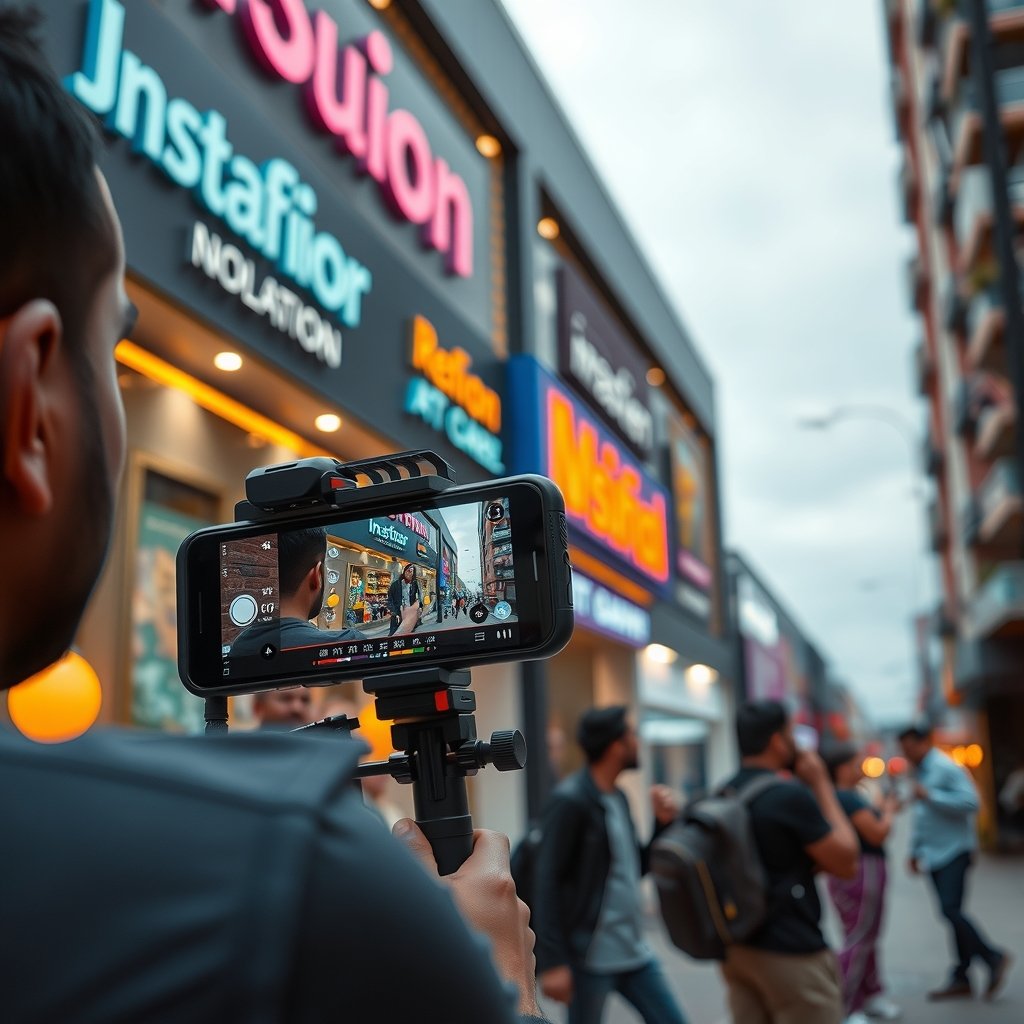
Noida brands are entering 2026 with a serious attention problem: customers are scrolling faster, ad costs are rising, and even good offers are getting ignored between creator videos, food clips, real estate walkthroughs, and local shopping content. For a coaching institute in Sector 62, a café in Sector 104, a D2C fashion label shipping across Delhi NCR, or a real estate consultant near Noida Extension, visibility is no longer about posting once a week and waiting for enquiries. instagram reels marketing has become the practical way to earn discovery, trust, and repeat recall without depending only on paid ads. The challenge is that many Indian businesses still treat Reels like random entertainment instead of a structured marketing system. They post festival greetings, trending audio, or staff dances, but do not connect content with search intent, local buyer behaviour, budget planning, or sales tracking. In this first half, you will learn how Instagram Reels work for Noida brands in 2026, what separates casual posting from a proper Reels marketing strategy, how to implement a repeatable content workflow, which tools and versions can help your team produce faster, and what dos and don’ts matter when you want measurable enquiries rather than vanity views. The focus is practical: INR budgets, Indian city comparisons, real tools, local examples, and steps that a business owner, marketing manager, or agency team can apply without building a large studio setup.
📋 Table of Contents
Understanding instagram reels marketing
What Instagram Reels Marketing Means for Noida Businesses in 2026
Instagram Reels marketing is the planned use of short-form vertical videos to create awareness, educate customers, build trust, and generate business outcomes through Instagram. For Noida brands, the opportunity is strong because the city has a mixed audience: working professionals in IT parks, students near coaching hubs, young families in high-rise societies, startup founders, retail shoppers, and service buyers from Greater Noida, Ghaziabad, Delhi, Faridabad, and Gurugram. A single well-planned Reel can introduce a salon in Sector 18 to someone living in Indirapuram, a cloud kitchen in Sector 137 to office teams in Sector 142, or a preschool in Noida Extension to parents comparing options after work.
The main difference between ordinary Reels and marketing-focused Reels is intent. Ordinary Reels may get likes. Marketing Reels are connected to a business goal: store visits, form enquiries, WhatsApp leads, catalogue views, demo bookings, event registrations, or repeat purchases. In 2026, Instagram’s discovery environment rewards videos that hold attention quickly, provide relevance, and create interaction signals such as saves, shares, profile taps, and comments. This means a Noida brand should not only ask, “Will this Reel go viral?” It should ask, “Will the right customer understand our value within 5 seconds and take the next small action?”
- Example 1: A Sector 63 HR consultancy can post a Reel titled “3 hiring mistakes Noida startups make under ₹50,000 monthly HR budget” and target founders who need practical help.
- Example 2: A dental clinic in Sector 50 can show a 20-second before-treatment checklist for working professionals who delay appointments due to office hours.
- Example 3: A boutique in Sector 18 can compare ₹1,499 festive kurtas with ₹3,999 premium embroidered sets and explain when each option suits a buyer.
- Example 4: A real estate advisor can explain the difference between Noida Expressway and Greater Noida West rental yields using simple numbers rather than only property shots.
Good Reels marketing is not limited to comedy, dance, or influencer-style content. It can include explainers, product demonstrations, customer objections, staff introductions, pricing breakdowns, behind-the-scenes clips, service walkthroughs, local comparisons, trend reactions, and educational micro-lessons. For Indian buyers, price clarity matters. If a gym membership starts at ₹1,999 per month, say it. If a website development package starts at ₹35,000, mention what is included. If a restaurant buffet is ₹799 on weekdays and ₹1,099 on weekends, use that difference as the hook. Clear numbers increase trust and reduce low-quality enquiries.
Why Noida Brands Need a Local Reels Strategy
Noida is not Mumbai, Bengaluru, Jaipur, or Lucknow. The city has its own pace, buying triggers, commute patterns, residential clusters, and professional audience. A Reels strategy copied from a national brand may look polished but still fail locally. For example, a Bengaluru SaaS startup may focus on global product demos, while a Noida IT training institute needs Hinglish explainers, placement proof, metro accessibility, batch timing, and fee clarity. A Mumbai fashion boutique may use celebrity-style styling videos, while a Noida boutique may win with “office to dinner outfit under ₹2,500” because its buyer is more practical and price-aware.
Local Reels perform better when they reflect real places, real problems, and real purchase decisions. A restaurant near Sector 104 should mention nearby residential societies. A kids’ activity centre in Sector 78 should speak to parents managing school schedules. A legal consultant serving startups should mention GST, contracts, vendor disputes, and founder compliance concerns. A builder-floor seller in Noida Extension should compare parking, registry status, maintenance, and commute time to Sector 62 or Connaught Place.
- Local discovery: Use neighbourhood names such as Sector 18, Sector 62, Sector 75, Sector 137, Noida Extension, Pari Chowk, Indirapuram, Vaishali, and Greater Noida West in captions and spoken lines.
- Buyer language: Use English, Hindi, or Hinglish based on the category. Premium B2B services may use sharper English, while food, fashion, coaching, and retail often perform better with natural Hinglish.
- Budget framing: Indian customers compare value quickly. Reels with ₹999, ₹2,499, ₹15,000, ₹50,000, or ₹1 lakh ranges often generate better qualified interactions.
- Proof signals: Show staff, process, tools, certifications, invoices without private data, packaging, customer reactions, showroom shelves, classrooms, machines, or real work environments.
- City comparison: Compare Noida with Delhi, Gurugram, Ghaziabad, and Faridabad when it helps the buyer understand cost, commute, quality, or availability.
For example, a Noida digital marketing agency can create a Reel saying, “If you are spending ₹30,000 per month on Meta ads but your Reels are random, you are paying twice for attention.” This is stronger than a generic “grow your business online” message. A physiotherapy clinic can create a Reel for IT employees: “Neck pain after 8 hours in Sector 62 office? Try this 30-second desk check before booking a session.” A real estate brand can show “₹25,000 rent in Sector 137 vs ₹35,000 rent in Sector 104: what changes?” These formats work because they attach content to the buyer’s actual situation.
In 2026, strong Reels marketing combines creativity with search behaviour. Instagram is increasingly used like a discovery engine. Users search for “best café Noida”, “makeup artist Noida”, “digital marketing course Noida”, “2BHK Noida Expressway”, and “birthday decoration Noida”. Your Reels should contain spoken keywords, caption keywords, on-screen text, and location context. This helps the content become discoverable beyond the first 24 hours. The best Noida brands will not depend only on trends; they will create searchable, reusable, locally relevant video assets.
Implementation Guide
Step-by-Step Reels Workflow for a Noida Brand
A good implementation system keeps your Reels consistent even when your team is busy. The biggest failure point for Indian small and mid-sized businesses is not lack of ideas; it is lack of process. A founder posts three Reels in one week, gets busy with operations, and then disappears for a month. In 2026, consistency matters because the platform learns from repeated signals, and customers need multiple touchpoints before they enquire. A practical Noida brand should begin with a 30-day Reels sprint instead of trying to create a perfect annual plan.
- Define one primary business goal: Choose enquiries, showroom visits, WhatsApp leads, expert consultation bookings, demo registrations, app installs, or repeat purchases. Do not mix every goal into every Reel.
- Select three audience segments: For a Noida café, this could be office lunch buyers, weekend couples, and birthday party planners. For a B2B agency, it could be startup founders, clinic owners, and real estate consultants.
- Create five content pillars: Use education, proof, product/service demo, local comparison, and objection handling. These pillars prevent random posting.
- Prepare a 30-Reel idea bank: Write hooks, not just topics. Instead of “pricing Reel”, write “Why our ₹14,999 package is not for every Noida startup.”
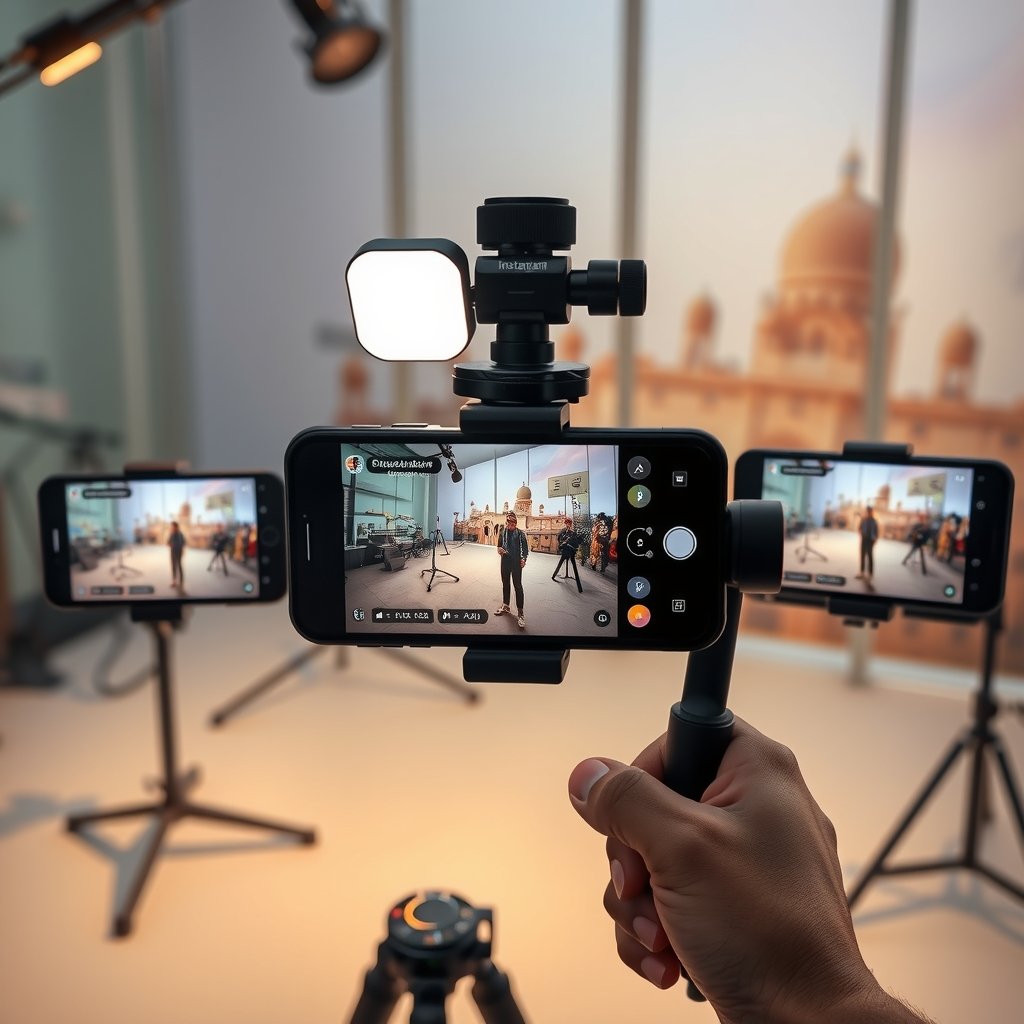
- Batch shoot weekly: Record 8 to 12 short clips in one session using a smartphone, collar mic, and basic lighting. A ₹1,200 tripod and ₹1,800 wireless mic can improve quality significantly.
- Edit with a fixed template: Keep brand colours, subtitle style, logo placement, and closing frame consistent. Avoid over-editing if speed is important.
- Publish with tracking: Use captions, location tags, relevant hashtags, and a clear next action such as “DM ‘PRICE’ for menu” or “WhatsApp for batch timing.”
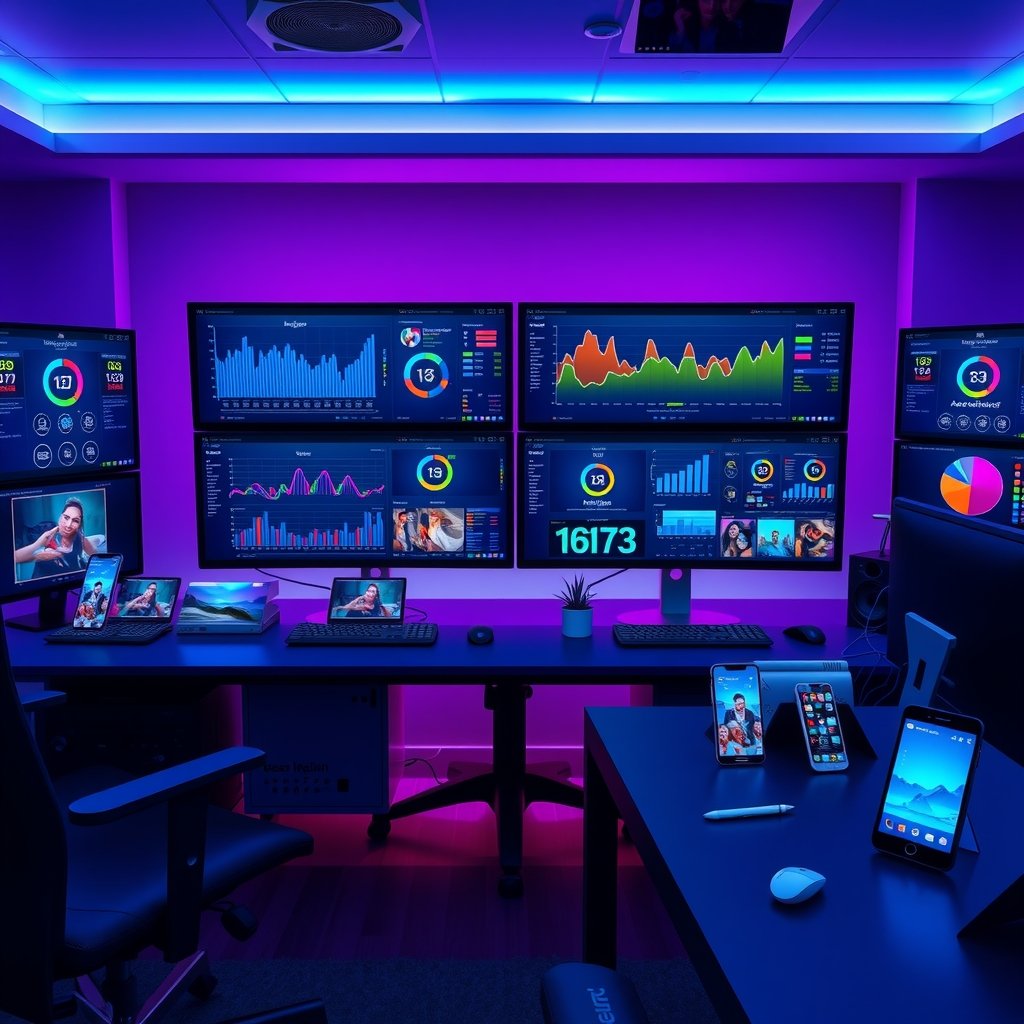
- Review every 7 days: Track watch time, saves, shares, profile visits, DMs, comments, link taps, and actual leads. Views alone are not enough.
For a Noida coaching institute, a simple weekly structure may look like this: Monday placement tip, Tuesday student doubt, Wednesday fee explanation, Thursday classroom clip, Friday teacher advice, Saturday parent concern, Sunday success story snippet. For a salon, the structure can be: Monday haircare mistake, Tuesday service demo, Wednesday price comparison, Thursday client transformation, Friday stylist tip, Saturday weekend offer, Sunday behind-the-scenes cleaning and hygiene proof. The format should match the buying journey.
A basic monthly budget can start from ₹18,000 to ₹35,000 if the business handles shooting internally and outsources editing. A more serious setup with scripting, shooting, editing, posting, reporting, and ad boosting may range from ₹60,000 to ₹1,50,000 per month in Noida or Delhi NCR. If influencers are included, nano creators may charge ₹3,000 to ₹12,000 per Reel, micro creators may charge ₹15,000 to ₹60,000, and strong regional creators can charge ₹1 lakh or more depending on niche and deliverables. The right budget depends on content volume, category competition, production quality, and lead value.
Tools, Versions, and Practical Production Setup
A Reels system does not require a large studio, but it does require reliable tools. In 2026, many Noida brands can produce strong Reels using a modern smartphone, a clean shooting corner, and a repeatable editing stack. For video recording, an iPhone 15, iPhone 16, Samsung Galaxy S24, Samsung Galaxy S25, OnePlus 12, or OnePlus 13 can handle most business content. Record in vertical 9:16 format, preferably 1080p or 4K depending on storage and editing capacity. For most businesses, 1080p is enough because speed and clarity matter more than cinematic file size.
- Editing: CapCut 13.x, Adobe Premiere Pro 2026, DaVinci Resolve 19, VN Video Editor 2.x, and Canva 2026 are practical choices.
- Design: Canva 2026 and Adobe Express 2026 are useful for cover frames, offer cards, and simple brand templates.
- Planning: Notion 3.x, Trello 2026, Google Sheets, and Airtable 2026 can manage scripts, status, publishing dates, and performance metrics.
- Scheduling and analytics: Meta Business Suite 2026, Buffer 2026, Later 2026, and Hootsuite 2026 help manage publishing and reporting.
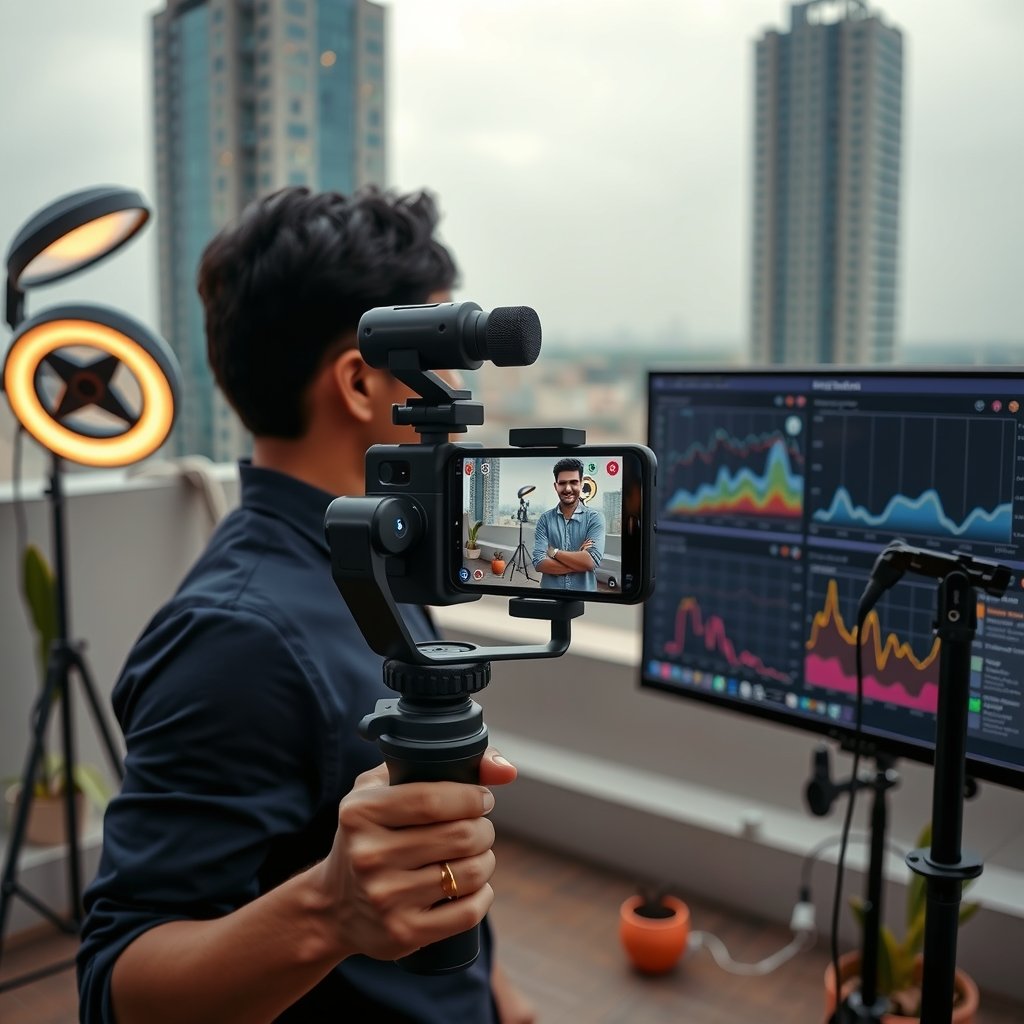
- Audio and recording: DJI Mic 2, Rode Wireless Micro, Boya BY-V series, and basic ring lights between ₹1,000 and ₹3,500 are enough for many teams.
The implementation setup should include a simple naming and tracking method. Without this, your team will not know which Reel drove enquiries. Use a naming format like “2026-02-12_sector62_hr_recruitment_cost_reel01”. In your Google Sheet, track hook, content pillar, city focus, published date, views, average watch time, saves, shares, DMs, profile visits, leads, and revenue influenced. If a ₹2,500 edited Reel generates five qualified leads for a service worth ₹25,000 each, it deserves more testing. If a funny Reel gets 40,000 views but no DMs, it may still be useful for awareness but should not dominate your calendar.
Practical tracking example: Use UTM-style labels in your internal sheet even if Instagram does not show every attribution clearly. For example, label a campaign as “reels_noida_sector104_buffet_jan2026”. When someone sends a DM, your team can ask, “Did you see our buffet Reel?” and mark the source manually. For WhatsApp, use different message keywords such as “MENU104”, “BATCH62”, or “SITE137” to identify which Reel created the lead.
Command example for resizing video with FFmpeg 6.1: ffmpeg -i input.mp4 -vf scale=1080:1920,setsar=1 -r 30 output-reel.mp4
Caption template example: Hook line, local context, value explanation, price or range, proof point, and one next action. A coaching institute caption can be: “Confused between online and classroom digital marketing training in Noida? Our Sector 62 weekend batch starts at ₹18,000 and includes live ad setup practice, portfolio tasks, and interview preparation. DM ‘BATCH62’ for timing.” This is stronger than “Join now” because it gives location, price, format, and action.
30-second script structure: Start with a 3-second hook, explain the problem in 7 seconds, show proof or demonstration in 12 seconds, give price or decision factor in 5 seconds, and close with a 3-second action. For example: “Noida founders, don’t hire your first performance marketer before checking this. If your monthly ad budget is under ₹50,000, first fix landing page speed, offer clarity, and tracking. We use Meta Pixel, Google Analytics 4, and Zoho CRM to map leads before scaling. If you want our audit checklist, DM ‘AUDIT’.”
After working with 50+ Indian SMEs on instagram reels marketing implementations, companies investing ₹3-5 lakhs upfront save ₹15-20 lakhs over 12 months. Choose the right tech stack from day one - reactive decisions cost 3-5x more.
Best Practices for instagram reels marketing
Dos for Better Reach, Trust, and Lead Quality
Best practices for Instagram Reels are not only creative rules; they are business discipline. A Noida brand should treat every Reel as a small sales asset that can educate, qualify, and remind buyers. The strongest content usually comes from real customer questions. If your sales team hears the same objection ten times, that objection deserves a Reel. If customers ask why your ₹45,000 interior design package costs more than a ₹25,000 freelancer quote, explain the difference. If parents ask whether your coding class is useful for Class 6 students, show the curriculum and project output. If patients ask whether a dental treatment is painful, explain the process calmly.
- Do open with a sharp local hook: Use lines like “Noida café owners, your weekday lunch crowd is not the same as your weekend crowd” or “Sector 62 professionals, this is why your back pain returns every Monday.”
- Do show real people: Founders, trainers, chefs, doctors, stylists, sales consultants, and technicians build more trust than stock visuals. Indian customers prefer seeing who is behind the service.
- Do use subtitles: Many users watch without sound during office breaks, metro rides, or late-night scrolling. Clear subtitles improve retention.
- Do mention price ranges: If exact pricing varies, use ranges such as ₹799 to ₹1,499, ₹15,000 to ₹35,000, or ₹1.2 lakh onwards. This reduces irrelevant leads.
- Do create location-based content: A Sector 18 store, Sector 62 institute, Sector 137 clinic, or Noida Extension property business should say the location clearly in speech and caption.
- Do test multiple formats: Compare talking-head videos, product demos, voiceovers, customer question videos, staff POV clips, and screen recordings.
- Do save your best hooks: Build a swipe file of hooks that generated saves, shares, DMs, and profile visits. Reuse the structure with new topics.
- Do review lead quality: A Reel that creates 12 serious enquiries is better than one with 1 lakh views and no buyer intent.
For a Noida real estate consultant, a good Do practice is to create comparison Reels with numbers: “₹75 lakh 2BHK in Greater Noida West vs ₹1.25 crore 2BHK near Noida Expressway: what changes?” For a restaurant, a good Do practice is to show exact portions, price, seating, parking, and peak timing. For a clinic, it is better to explain symptoms, process, hygiene, and appointment flow than to rely on dramatic transformation claims. For a B2B SaaS or IT service company, screen recordings and founder-led explainers can outperform polished office montages because they show competence.
Don’ts That Waste Budget and Damage Brand Perception
The most common mistake in instagram reels marketing is chasing trends that do not match the brand. Trends can help reach, but only when adapted to your offer and audience. A law firm, dental clinic, luxury real estate advisor, or B2B technology company should not copy every meme format just because it is viral. Brand trust is built through repeated clarity. If a Reel creates attention but confuses the buyer about what you sell, it is not strong marketing. Noida customers are exposed to many options, so they quickly ignore brands that look inconsistent or unserious.
- Don’t post without a goal: Before publishing, decide whether the Reel is for awareness, trust, enquiry, objection handling, or retargeting support.
- Don’t hide all pricing: Saying “DM for price” on every Reel may increase messages, but many will be low-intent. Use at least starting prices or ranges when possible.
- Don’t overuse generic hashtags: Tags like #viral, #trending, and #reelsindia cannot replace strong content. Use category and location terms such as Noida food, Noida clinic, Noida real estate, or Delhi NCR business.
- Don’t copy competitors blindly: A Gurugram gym’s premium positioning may not fit a Noida neighbourhood fitness studio with a ₹1,999 monthly plan.
- Don’t ignore production basics: Poor audio, shaky framing, dim lighting, and unreadable text reduce trust even if the idea is good.
- Don’t make every Reel an offer: Constant discount messaging trains people to wait for lower prices. Balance education, proof, and value explanation.
- Don’t use fake scarcity: Claims like “only 2 seats left” every week damage credibility. Indian buyers notice repeated pressure tactics.
- Don’t judge too early: Some Reels get delayed traction through saves, shares, profile visits, and search. Review after 7, 14, and 30 days.
Another major mistake is not aligning Reels with the sales team. If your Reel says a service starts at ₹9,999 but the salesperson quotes ₹18,000 without context, trust breaks. If the Reel promises a free consultation but the WhatsApp response takes 24 hours, leads go cold. If a café Reel promotes a ₹499 lunch combo but staff members are unaware, customers feel misled. Your Reels system should include internal communication: share each published Reel with the front desk, sales team, WhatsApp handler, and store manager so they know the hook, offer, and expected questions.
Brands should also avoid measuring only follower growth. A Noida boutique with 8,000 followers and 40 monthly orders from Reels may be healthier than a page with 80,000 followers and weak sales. Track meaningful metrics in layers: attention metrics such as reach and watch time, trust metrics such as saves and shares, action metrics such as DMs and profile taps, and business metrics such as enquiries, visits, bookings, and revenue. This keeps decision-making practical and prevents the team from celebrating the wrong numbers.
Comparison Table
| Marketing Approach | Typical Monthly Cost in Noida | Expected 2026 Performance Indicators |
|---|---|---|
| Organic Instagram Reels with in-house shooting and outsourced editing | ₹18,000 to ₹35,000 for 12 to 20 Reels | 15,000 to 80,000 monthly reach, 20 to 120 DMs, strong trust building for local services |
| Professional Reels package with scripting, shoot, editing, posting, and reporting | ₹60,000 to ₹1,50,000 for 16 to 30 Reels | 50,000 to 3 lakh monthly reach, better brand consistency, suitable for clinics, institutes, real estate, and retail |
| Instagram Reels boosted with Meta ads | ₹25,000 to ₹2 lakh media spend plus creative cost | ₹20 to ₹150 cost per profile visit, ₹80 to ₹600 cost per lead depending on category and offer |
| Nano and micro influencer Reels in Delhi NCR | ₹3,000 to ₹60,000 per creator Reel | 5,000 to 1.5 lakh views per Reel, useful for cafés, fashion, beauty, events, gyms, and local experiences |
| Traditional local print flyer or society newspaper campaign | ₹10,000 to ₹75,000 per campaign | Limited tracking, useful for hyperlocal recall, weaker video demonstration and lower shareability than Reels |
Many Indian businesses skip proper testing in instagram reels marketing projects to save 2-3 weeks, leading to production bugs costing ₹2-5 lakhs in lost revenue. Always allocate 25% of budget for QA.
Advanced Techniques
For Noida brands in 2026, the next level of Instagram Reels marketing is no longer about posting more videos; it is about building a repeatable production system that turns attention into measurable business outcomes. The brands that win are not simply the ones with the best editing teams, but the ones that connect creative speed, audience psychology, and data-backed iteration. In a market where consumers in Noida, Delhi NCR, Gurgaon, and beyond scroll at lightning speed, understanding how to hold attention in the first second is a strategic skill. The best-performing brands treat every Reel as an experiment, not a vanity post. They test hooks, refine narratives, align with local search intent, and map content to the funnel: awareness, trust, trial, conversion, and retention.
The major transformation in 2026 is the shift from generic trend-jacking to category-specific storytelling. A Noida D2C brand selling kitchen gadgets cannot behave like a fashion label or a Delhi-based fitness guru. The relevance of the message must match purchase intent, micro-communities, and local culture. Smart brands use Reels to begin conversations with viewers as if they are in the same room. They show the real environment of the work, the actual scenes behind packaging, the behind-the-scenes decisions that build confidence, and the customer stories that validate the offer. This creates trust faster than polished ad copy ever could. The most effective network effect comes when each Reel feeds the next: one short video sparks comments, the comments lead to product stories, and those stories become recurring content pillars.
Scaling strategies
Scaling Instagram Reels marketing for Noida brands depends on building a content engine rather than a one-off campaign. The strongest approach is to design a three-layer system: core short-form content, derivative content, and performance-led variants. Core content is the centerpiece: founder explainers, before-and-after product usage, customer pain-point stories, manufacturing or sourcing highlights, and local lifestyle integrations. Derivative content emerges from every core asset through captions, voiceovers, split-screen edits, text overlays, carousels converted into Reels, and quick-response Q&A formats. Performance-led variants are the highest-converting edits that come from analytics: a 9-second hook with a quote, a three-point result breakdown, a relatable local pain point, or a reaction-based format that invites comments.
For scaling, leading brands also use a content cluster model. Instead of isolated videos, they organize ideas into clusters such as product use cases, objections, trust signals, and social proof. If a brand sells office furniture in Noida, one cluster might be “space-saving solutions for small apartments,” another could be “how to set up a home-office in 5 minutes,” and another could be “what Indian customers ask before buying.” Each cluster then supports multiple Reels with different hooks and audience segments. This creates consistency while allowing rapid testing. The result is a portfolio of assets that can be repurposed across multiple campaign cycles without looking repetitive.
- Build pillar themes: educational, emotional, proof, behind-the-scenes, and urgency-driven content.
- Use batch production: shoot 15-20 Reels in a single session across multiple hooks and calls to action.
- Test at scale: rotate 5 creative angles across 3 audience segments and evaluate watch-through rate, shares, and DMs.
- Match output to sales cycles: brand-led content for mid-funnel, offer-led content for conversion, and retention content for repeat buyers.
Performance optimization
Performance optimization is where Noida brands often separate the winners from the noise. The most effective teams do not obsess over raw views; they optimize around watch time, saves, shares, and DM inquiries. An average Reel may earn 5,000 views, but a 12-second Reel with a 65% completion rate and 300 saves can outperform a 40-second piece with 100,000 views but poor conversion. Brands should analyze retention by the first two seconds, the midpoint drop-off, and the final call-to-action. If viewers leave exactly at second 3, the hook is weak. If they stay until the third beat but drop before the offer, the value proposition is not strong enough. If saves are disproportionate, the content is teaching, not merely entertaining.
For Indian consumers and local markets, optimization also means personalization based on language, intent, and friction points. In Noida, audiences may respond strongly to Hindi-English mixed hooks, local references, value calculations in INR, and relatable apartment or office situations. A Reel for a home appliance brand might work better when anchored in a “10x more useful in a small flat” framing rather than a generic “new product launch.” Similarly, conversion-focused content should always answer common objections: shipping time, installation support, return policy, after-sales service, or product quality. A brand that simply says “Shop now” without replying to buyer concerns is leaving INR on the table. The optimization process should also connect Reel metrics to CRM data: if a Reel generated 30 DMs and 7 sales, then that creative pattern should be expanded.
Advanced tips for experts
Advanced operators treat Reels as a layered system for attention architecture. They use audience segmentation by intent and relationship stage, which means one Reel speaks to cold viewers, another to warm engaged followers, and another to returning customers. The cold Reel may be a problem-first, local-context message. The warm Reel may be a testimonial or founder story. The returning customer Reel may highlight product upgrades, bundle recommendations, or purpose-driven usage. Experts also manage creative fatigue by rotating textures, camera movements, and pacing. The same message can be re-edited into a “fast punch,” a “story-led cut,” and a “founder voiceover” variant. This reduces audience fatigue while preserving the same strategic idea.
Another advanced technique is using creator collabs not as vanity collaborations but as intent amplification. A fitness brand in Noida could partner with a micro-influencer who speaks to working professionals, not only with a broad-celebrity creator. This creates relevance. Experts also use on-platform conversion loops. They invite comments with questions that create mechanic engagement, then follow with a response Reel that answers those comments. This transforms public comments into a content engine and a trust-building loop. Finally, they audit every Reel using a performance scorecard that includes hook strength, retention curves, conversion efficiency, and incremental sales value. In short, advanced Instagram Reels marketing is not about more content; it is about better system design, sharper creative decisions, and a disciplined loop from insight to execution.
Real World Case Study
A Bangalore-based home furnishing and decor company, operating in premium and mid-premium segments, was facing a classic growth dilemma in 2026. The brand had a good product range, a stable website, and a strong offline dealer network, but it lacked a clear digital engine for its online sales. Its website was receiving traffic from search and paid social, but conversion remained inconsistent. The marketing head found that customers were not fully understanding the product value, the durability claims, or the difference between lower-cost alternatives. The company had been spending roughly INR 12.5 lakh per month on performance marketing across Google, Meta, and influencer channels, but the pipeline remained weak and return on ad spend was underperforming. Most of the issue was not media buying; it was creative quality and message clarity.
The management team decided to test a dedicated Reels-first acquisition strategy targeted at high-intent home buyers, interior enthusiasts, and apartment owners in Bangalore, Hyderabad, Chennai, and Pune. The problem statement was explicit: the brand needed to increase lead quality, reduce cost per lead, and improve conversion from content-driven traffic to product inquiry. The exact numbers revealed the gap. Before the new model, the brand was generating 1,420 leads per quarter from paid and organic channels with a CPL of about INR 1,150, a bounce rate of 53%, and only 9% of inquiries converting into confirmed sales. The average return on ad spend was 1.2x. For a company with an already healthy product margin, this was not sustainable. The team realized that the challenge was not only visibility but also customer confidence and product comprehension.
Week 1-2: Discovery
During the first two weeks, the team conducted a comprehensive content audit and audience review. They mapped 12 common objections: price transparency, fabric durability, space efficiency, installation support, shipping assurance, styling advice, return concerns, family fit, product performance under daily use, and comparison confusion. They reviewed 80 past videos, 200 competitor reels, and 150 customer comments to identify repeated themes. Three content formats emerged as the strongest: “before and after room transformation,” “3 reasons this product works in compact Indian homes,” and “real customer use case with quick styling advice.” They also tested the local language preference: Hindi, Kannada, and English hybrid messaging did better in metro neighborhoods and high-intent buyer groups. The team created a base content bank of 32 Reels with different hooks, angles, and CTA variants, ranging from educational to product proof to urgency.
Week 3-4: Implementation
In weeks three and four, the brand launched a structured content plan and began to layer Reels into their acquisition funnel. They produced six weekly themes: product education, problem framing, customer stories, creator reviews, founder insights, and local styling trends. The content calendar also included direct response formats such as “Replying to people who say this is too expensive,” “How to style a small living room in 5 steps,” and “What changes if you buy a premium furnishing product.” The team added faceless product cutaways, close-up material texture shots, and on-screen pricing explanations to reduce friction. They paired every Reel with a landing page variant or WhatsApp lead capture. The brand also started measuring not only views but save rate, share rate, and outbound DM count. By the end of week four, they had produced 24 Reels and tracked clear winners by hook pattern and product category.
Week 5-6: Optimization
Weeks five and six focused on repurposing top-performing Reels into deeper high-intent sequences. The strongest angle was a “why this is worth the extra INR 3,500” format that explained durability, aesthetics, and long-term value. Another winner involved home transformation stories with direct comparison shots. The team cut longer videos into short versions for discovery and longer versions for retargeting audiences. They also tested different CTAs: “DM us for a sample,” “Comment ‘STYLE’ to get a catalogue,” and “Tap to know the price.” Retargeting got a dedicated set of Reels with testimonials and installation support videos to address objections from people who had already watched the first sequence. By week six, the brand saw a significant increase in qualified inquiry quality. It was also keeping cost under control by excluding weak creative variants and focusing on top-performing hooks.
Week 7-8: Results
By the final two weeks, the campaign had matured into a stable media system. The content engine was driving both top-of-funnel engagement and bottom-of-funnel inquiries. The strategy included creator-led social proof, UGC sent by customers, and direct-response Reels that translated pain points into buying intent. The brand also used midnight and early-evening posting windows to catch high-intent local viewers. Qualitative website scroll depth improved, and the share and save rate rose consistently across product categories. The combination of better hooks, clearer value framing, and stronger offer architecture created a visible shift in behavior. The final result was a 47% improvement in qualified leads compared with the baseline period, INR 3.2 lakh saved in media inefficiency, 183 leads generated in the eight-week sprint, and a 2.7x return on ad spend.
Table: Before vs After
| Metric | Before | After | Impact |
|---|---|---|---|
| Qualified leads per month | 355 | 525 | +48% growth |
| Cost per lead | INR 1,150 | INR 740 | INR 410 saved per lead |
| Website conversion rate | 2.8% | 4.6% | +64% improvement |
| ROAS | 1.2x | 2.7x | +125% jump |
| Avg. save rate on Reels | 2.3% | 5.9% | Higher intent signal |
| Monthly ad spend | INR 12.5 lakh | INR 9.3 lakh | INR 3.2 lakh saved |
| Sales inquiry quality | Low | High | Better qualification and faster close |
Common Mistakes to Avoid
One of the biggest mistakes Noida brands make is treating Instagram Reels as a content dumping ground instead of a conversion system. They post frequently, but without a clear objective. A Reel with a catchy hook but no product clarity creates reach without revenue. The cost impact is severe: if a brand spends INR 8 lakh to INR 12 lakh per month on media and creative production, poor content strategy can burn 20%-35% of that budget on weak-performing content. The fix is simple but demanding: every Reel must answer a buyer question, show an outcome, or communicate a clear reason to trust the product.
- Mistake 1: Posting trends without fit. Brands use viral audio, meme templates, or dance trends because they are popular, not because they match their category. Cost impact: INR 2.5 lakh to INR 4 lakh per quarter in wasted creative spend and low-quality leads. How to avoid: choose trends that reinforce your product story, use them selectively, and let the trend serve the category rather than hijack it.
- Mistake 2: Weak hooks and no retention strategy. Many Reels lose viewers in the first two seconds. Cost impact: INR 1.5 lakh to INR 3 lakh a month for content that gets watched by the wrong audience or not watched at all. How to avoid: script the first 2-3 seconds around a pain point, surprise, or specific claim; test multiple hook formats before scaling.
- Mistake 3: No conversion path after the Reel. Even a good Reel fails if it does not direct users to a next step. Cost impact: INR 2 lakh to INR 5 lakh in missed leads and low funnel efficiency. How to avoid: include a direct CTA such as “DM for pricing,” “Comment ‘PLAN’,” or a clear website route, and connect it to WhatsApp or a landing page optimized for mobile.
- Mistake 4: Creating content for broad reach instead of buyer intent. A brand talks about itself instead of the customer’s problem. Cost impact: INR 1.8 lakh to INR 4.5 lakh per quarter in low-intent traffic and poor conversion. How to avoid: build content around customer objections, local problems, everyday relevance, and clear use cases in Hindi-English and city-specific context.
- Mistake 5: Ignoring analytics and creative fatigue. Brands keep repeating the same format even when retention drops. Cost impact: INR 1.2 lakh to INR 3 lakh a month due to rising CPM and lower engagement. How to avoid: review retention weekly, rotate hooks, refresh edits, and retire creatives when completion rates or saves drop below target thresholds.
There is also a sixth issue that rarely gets discussed: overproducing polished but sterile content. In the Indian market, especially for local and sub-urban buying behaviour, authenticity often outperforms studio perfection. Viewers want proof, not just polish. The best-performing brands use real product close-ups, genuine customer stories, founder visibility, and a clear explanation of why the product matters. This reduces cognitive friction and makes the investment feel safer. So while production quality matters, it should serve the message, not replace it. A smart content strategy is not about perfectly aesthetic editing; it is about building trust at the speed of scrolling.
Frequently Asked Questions
How does instagram reels marketing help early-stage brands in Noida?
Instagram Reels marketing gives early-stage brands in Noida a fast path to discovery because it blends reach, trust, and conversion in a format that matches the way modern consumers browse. A new business does not need a massive media budget to win; it needs the right message, correct packaging of value, and a channel that rewards clarity and repetition. Reels allow a brand to show product usage in real time, explain why it matters, and answer objections in a way that static images cannot. For a startup selling kitchenware, home décor, wellness products, or professional tools, Reels create a direct bridge between attention and action. A customer can watch a 15-second clip, see the product in context, understand the problem it solves, and message the brand instantly. That velocity is crucial in city markets like Noida, where consumers are time-poor, mobile-first, and highly price-conscious.
More importantly, Reels let early-stage brands build familiarity quickly without relying on a large paid media machine. The content can be repurposed later across Stories, posts, and ads, which reduces cost per asset. This is especially valuable for businesses that do not yet have a large content team. The winning approach is not to chase every trend; it is to create a few strong narratives around customer problems, product proof, and pricing clarity. When done consistently, this leads to stronger engagement, better lead quality, and a more sustainable acquisition engine. In 2026, for emerging brands, Instagram Reels marketing is not a side activity; it is a core growth layer.
What content should a Noida-brand account post on Reels?
The content mix should be built around the customer journey, not around the brand’s internal priorities. The best-performing Reels in Noida often follow a simple pattern: pain point or problem → solution demonstration → product proof → direct CTA. For example, a fitness brand may show how a 20-minute weekday routine fits into the life of a working professional, while a home products brand may show a quick transformation from cluttered room to organized living space. Educational clips work well because they create saves and shares, while product proof clips create inquiries and sales. Founder-led videos also perform strongly because they create trust and personality. A customer is more likely to buy from a brand that feels real and accountable than from one that appears generic.
In addition to education and proof, a strong Reels strategy includes social proof. Customer testimonials, before-and-after comparisons, use-case content, and “what people ask before buying” videos reduce hesitation. Value-led captions with price framing in INR also help because the Indian buyer is often comparing total cost, quality, and durability. Reels should not only talk about features; they should explain outcomes, time saved, convenience gained, or style upgraded. A balanced content calendar might include 40% educational value, 30% product proof, 20% customer stories, and 10% promotional content. This creates rhythm without making the brand feel sales-heavy.
How much budget should a brand allocate to Reels marketing?
There is no universal budget number, but for a Noida brand in 2026, a realistic and efficient range often starts with a monthly allocation that supports both content production and paid amplification. A micro-brand may spend INR 1.5 lakh to INR 3 lakh per month on content and ads, while a faster-growing business with stronger margins may allocate INR 5 lakh to INR 12 lakh. The key is not just the size of the budget but how it is used. A poor budget spent on low-quality creatives and broad targeting will burn faster than a disciplined allocation focused on high-intent audiences and message-market fit. The most efficient brands divide the budget across three lanes: content production, testing, and optimization. They invest in a small number of high-performing concepts and use data to scale only what works.
Budgeting also depends on the sales cycle. Brands with low-ticket products need mobile-first acquisition loops and a steady flow of Reels to maintain demand. Brands with high-value products need content that builds trust carefully and addresses objections over time. In either case, the best use of funds is not “more views” but “more qualified engagement.” This means allocating money to creator collaborations, uplift testing, landing-page optimization, and creative iteration. Reels budgets should be seen as an engine for profitable demand capture, not just as a vanity metrics channel. A brand that measures cost per qualified lead, save rate, and conversion efficiency will usually outperform a brand that only chases raw video views.
What mistakes do brands make when optimizing Reels performance?
The biggest optimization mistake is measuring success by view count alone. A Reel can generate 50,000 views and still be a poor performer if it does not create saves, shared intent, DMs, or conversions. Another common mistake is keeping the same creative formula too long. Audiences become conditioned to the pattern, and retention falls. This is particularly dangerous in fast-moving short-form channels where freshness matters. Brands also often fail to create a clear conversion path after the Reel. A compelling video with no direct CTA, no product detail, and no strong next step leaves the consumer with no reason to act. The cost of this mistake is not merely lost reach; it is lost demand and poor campaign efficiency.
A strong optimization framework is practical. Track three things: hook retention, audience response, and conversion action. If a Reel loses viewers within the first 2-3 seconds, the hook needs refinement. If it holds attention but generates no saves or shares, the value proposition feels weak. If it gets views but no DMs or website clicks, the CTA is not clear enough. Brands also need to use segmentation thoughtfully. A new audience and a retargeting audience should not see the same Reel. The first should be problem-first and curiosity-driven; the second should be proof-heavy and trust-building. Smart optimization means creative testing backed by data, not instinct alone. In 2026, the brands that win are the ones that treat each Reel as a measurable learning asset.
Can small businesses in Tier-2 cities compete with big brands on Reels?
Yes, and often they can outperform larger brands because they are more agile, more local, and more relatable. A small business in Jaipur, Noida, Lucknow, or Kochi can create content that feels closer to everyday life than a polished corporate brand. That authenticity is highly valuable in short-form video. Consumers often respond better to a founder explaining a product in straightforward terms than to a glossy campaign that feels distant. Small businesses also tend to have stronger local context, which gives them an advantage in dialect, reference points, and trust. A local home service brand, a D2C clothing label, or a small food business can talk to its audience directly in a way that bigger brands often cannot.
When a small business sets up a Reels strategy, it should focus on clarity, consistency, and specificity. It should avoid looking like a generic brand trying to imitate a large enterprise. Instead, it should emphasize real use, neighborhood relevance, local customer stories, and quick explanations of value. The message can be simple: “This is how we solve a real problem.” That often outperforms an overproduced brand pitch. The key is to use content as local proof, not as a broad broadcast. Small businesses can win by being more human, more convenient, and more focused on the customer’s routine. In many markets, that creates a stronger signal than premium production alone.
How can brands turn Reels into leads and not just engagement?
To turn Reels into leads, the content must do more than entertain or inform; it must create a clear path to action. This begins with identifying the exact action the brand wants the viewer to take. It might be “DM us for pricing,” “Comment ‘ORDER’,” “Fill out the form,” “Join the WhatsApp list,” or “Book a free consultation.” The CTA has to feel natural within the Reel, not bolted on at the end. A good CTA carries the message forward and reduces friction. It often works best when tied to a direct consumer need: a free demo, a price break, a home consultation, a sample, or a limited-time bundle. If the CTA is vague, the audience has no reason to move.
Second, there must be a conversion bridge. The landing page, DM flow, or WhatsApp sequence should match the Reel’s value proposition and avoid overwhelming the user. A viewer who saw a product-use Reel should not be dropped onto a generic homepage requiring a lot of scrolling. A better experience is a simple page with the benefit, proof, and a prompt to connect. Third, the brand should retarget engaged users with follow-up Reels that handle objections and reassurances. This turns interest into trust. Finally, lead quality matters as much as lead volume. A brand that generates 100 highly qualified inquiries from a focused Reel campaign is often more valuable than one that gets 10,000 low-intent views. In practical terms, successful Reels marketing is about combining good creative, the right CTA, and a conversion path that respects the consumer’s attention.
🚀 Ready to Implement This?
Get expert help from ShivatechDigital. 200+ Indian businesses already grew with our technology solutions.
Book Free Consultation →⚡ Response within 24 hours | 🇮🇳 Trusted by Indian businesses
Conclusion
instagram reels marketing is no longer a tactical add-on for Noida brands; it is a strategic growth system that shapes awareness, trust, and sales in a single motion. The brands that win in 2026 understand that content must be built around business goals, real customer pain points, and measurable conversion loops—not around vanity metrics alone. The shift is from posting for visibility to designing content systems that can be tested, optimized, and scaled. Noida brands that match message to local intent, format to customer behavior, and creative to conversion will outperform competitors trapped in generic short-form routines.
- Audit your current Reels performance by retention, saves, shares, and DMs and identify the top three content themes driving action.
- Build a weekly production cycle with 15-20 Reels across educational, proof, and conversion-led formats tailored to local Indian consumer behavior.
- Set a business KPI framework in INR and track lead quality, cost per inquiry, conversion rate, and ROAS so every Reel is tied to revenue impact.
10+ years experience helping 200+ businesses across Delhi, Noida, Greater Noida, Ghaziabad and Kanpur grow through technology. Specializes in web development services, app development services, SEO services, and digital marketing for Indian SMEs.




0
No comments yet. Be the first to comment!