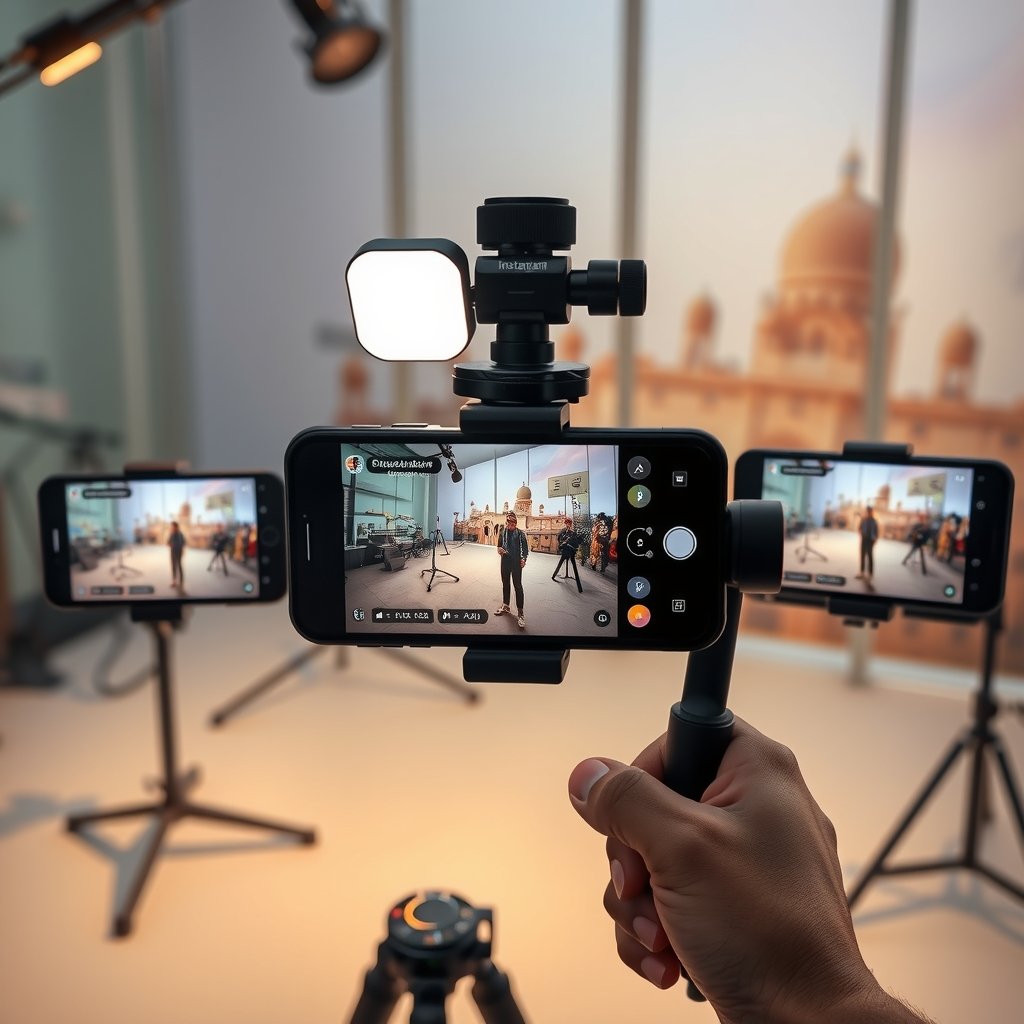
Delhi businesses face an attention problem that is sharper than ever in 2026. A customer scrolling between a Metro ride from Rajiv Chowk to Lajpat Nagar can pass hundreds of product posts, creator videos, restaurant offers, fashion launches, and local service ads in minutes. Attractive photos alone are no longer enough to stop that scroll. For brands competing in crowded categories such as salons, real estate, education, D2C fashion, cafes, clinics, and B2B services, instagram marketing must create relevance within the first few seconds of a Reel while also building trust over time. The challenge is not simply getting views; it is attracting viewers in Delhi NCR who can become profile visitors, WhatsApp enquiries, store visits, consultations, and paying customers.
📋 Table of Contents
Instagram Reels remains one of the strongest discovery formats for Indian audiences, but growth is increasingly tied to clarity, consistency, creative testing, local context, and measurable conversion paths. A South Delhi skincare clinic may need appointment leads from nearby neighbourhoods, while a Gurgaon SaaS company may need credibility with founders and marketing teams across India. Both can use Reels, but their messaging, hooks, editing rhythm, publishing plan, and reporting requirements should be different.
This guide explains how Delhi businesses can build a practical Reels-led Instagram presence in 2026. You will learn how to define the role of Instagram in a wider marketing funnel, identify audience segments, create locally relevant content pillars, set up a repeatable production workflow, choose useful tools, publish with intention, and measure outcomes beyond vanity metrics. It also covers operating practices that help teams protect brand quality while moving quickly enough to respond to trends, questions, and changing customer behaviour.
Understanding instagram marketing
Instagram is no longer just a visual portfolio or a place to post campaign announcements. For a Delhi brand, it can be a discovery engine, trust-building channel, customer-support surface, community hub, and lead-generation source. Effective instagram marketing connects each piece of content to a specific audience need and a business action. Reels may create initial reach, carousels can explain a complex offer, Stories can handle daily interaction, and direct messages can move qualified prospects towards a call, visit, or purchase.
Reels as a Delhi discovery and trust channel
Reels are especially useful because Instagram can show them to people who do not already follow a business. This gives local brands an opportunity to reach new audiences without relying entirely on paid campaigns. However, broad exposure is valuable only when the Reel makes the right audience feel that the content is for them. A generic “best coffee in Delhi” video may receive views, while “three quiet work-friendly coffee spots near Nehru Place after 4 PM” gives a more defined audience a reason to save, share, or visit.
In 2026, a high-performing Reel usually does three jobs at once: it earns attention with a clear hook, delivers useful or entertaining value quickly, and creates a logical next action. The action might be following for a series, saving a checklist, commenting with a keyword, sending a direct message, or visiting a local store. The strongest creative ideas are not necessarily the most expensive. A well-scripted founder video recorded in Connaught Place can outperform a polished campaign if it gives viewers a specific insight, answers a common objection, or captures an authentic moment.
- Awareness: A Delhi NCR co-working operator can publish a 20-second Reel showing commute times, desk options, and day-pass availability for professionals near Aerocity.
- Consideration: A Rohini-based interior designer can compare modular kitchen materials, explain durability differences, and display an estimated budget range of ₹2.5 lakh to ₹6 lakh.
- Conversion: A Gurugram fitness studio can show a beginner class, list the ₹1,999 trial package, and invite viewers to message “TRIAL” for available slots.
- Retention: A Noida bakery can share weekly customer favourites, behind-the-scenes decoration videos, and ordering deadlines for festive cakes.
The point is not to turn every Reel into an advertisement. People respond better when useful content is the primary value and the commercial offer is a natural extension. A Delhi personal finance advisor, for example, could explain how a salaried employee earning ₹12 lakh annually might organise emergency savings, insurance, and tax planning. The CTA can then offer a expert consultation without disrupting the educational content.
Audience intent, local relevance, and measurable outcomes
Audience research should begin with intent rather than demographic labels alone. “Women aged 25 to 34 in Delhi” is too broad for planning Reels. A stronger segment is “working professionals in Dwarka looking for quick weekday nutrition plans,” or “new home buyers in Greater Noida comparing ready-to-move apartments below ₹90 lakh.” These segments reveal the questions, anxieties, aspirations, vocabulary, and visual references that should appear in content.
Delhi-specific context helps content feel immediately relevant, but it should be used with purpose. Mentioning neighbourhoods, seasonal conditions, local events, commute constraints, and consumer habits can make a Reel more useful. A dermatology clinic can address pollution-related skin concerns during winter. A restaurant can show a lunch menu designed for office workers around Cyber City. An education consultant can explain the admissions timeline for parents in East Delhi. Avoid inserting city names where they add no value; location relevance works best when it solves a local problem.
Business objectives should be translated into measurable Instagram outcomes before content production begins. For example, a boutique in Shahpur Jat may aim to increase qualified WhatsApp conversations rather than merely followers. A realistic monthly dashboard can track:
- Reach among non-followers and the percentage of viewers in target Indian cities.
- Three-second views, average watch time, completion rate, saves, and shares per Reel.
- Profile visits, website taps, WhatsApp clicks, direct-message conversations, and enquiry form submissions.
- Lead quality, including booking rate, average order value, and revenue attributable to Instagram-assisted journeys.
- Content production cost, such as ₹3,000 for a simple founder-led Reel or ₹18,000 for a professionally shot product Reel.
A Reel with 30,000 views is not automatically successful if it brings irrelevant viewers and no business movement. In contrast, a Reel with 5,000 targeted views that generates 35 WhatsApp enquiries and six purchases can be far more valuable. This is why reporting must connect creative performance to the actual sales process rather than rewarding reach in isolation.
Implementation Guide
A sustainable Reels programme needs an operating system, not a collection of rushed posts. Delhi teams often lose momentum because strategy, scripting, filming, editing, approvals, publishing, and reporting are handled separately and without deadlines. Build a lightweight workflow that lets a small team produce consistently while preserving space for timely ideas.
Build the content foundation before filming
Start by documenting the account’s purpose, audience, offer, and conversion route. This one-page foundation should be clear enough that a freelancer, videographer, founder, and social media manager can use it without reinterpretation. Decide whether the primary conversion happens through a website, WhatsApp Business, Instagram direct messages, a booking form, or an offline visit. Then ensure the profile supports that action with a recognisable profile image, accurate category, concise bio, location details where relevant, and a visible contact route.
Follow this step-by-step setup process:
- Audit the current account: Review the latest 30 posts and identify the top Reels by reach, watch time, saves, shares, profile visits, and enquiries. Use Instagram Insights for the account-level view and export key observations into Google Sheets.
- Map customer questions: Collect recurring questions from sales calls, Google reviews, WhatsApp chats, store staff, and customer support. A Delhi wedding photographer may hear questions about pre-wedding locations, shoot budgets, outfit coordination, and booking timelines.
- Create three to five content pillars: A practical set might include expert education, product demonstration, local lifestyle, customer proof, and founder perspective. Give each pillar a business role and a repeatable Reel format.
- Set a content mix: For 12 monthly Reels, use four educational Reels, three product or service demonstrations, two credibility-focused customer proof videos, two locally relevant lifestyle pieces, and one experiment based on a current format.
- Prepare a 30-day idea bank: Write the hook, audience, visual sequence, key message, CTA, and owner for every idea. This prevents production delays caused by empty brainstorming sessions.
- Define review rules: Establish which claims need legal, medical, financial, or brand approval. For example, a clinic should not make unverified treatment claims just because a trend is moving quickly.
A useful Reel brief can be managed in Notion version 3.0 or Google Sheets. Include columns for topic, content pillar, hook, filming location, featured person, status, planned publish date, caption, CTA, performance after seven days, and learning. A simple structure makes the content programme easier to delegate and measure.
Produce, publish, and measure a repeatable Reel
For most business Reels, the first one to two seconds need a visible promise. Start with an on-screen statement, a surprising result, a direct question, or a strong visual change. “This is why your Delhi café Reel gets views but no footfall” is more specific than “Instagram tips.” Use subtitles because many viewers watch without sound, and ensure that the opening frame is understandable on a small mobile screen.
Use a practical production stack rather than overcomplicating the process. Film on an iPhone 16 Pro or a recent Android flagship in vertical 9:16 format at 4K where storage permits. Edit in CapCut Desktop version 6.6 or Adobe Premiere Pro 2026, keeping the final export at 1080 x 1920 pixels. Use Canva Pro 2026 for branded cover frames and templates. Plan work in Notion version 3.0, schedule approved content through Meta Business Suite, and monitor website behaviour in Google Analytics 4. Use WhatsApp Business for lead follow-up where it fits the buying journey.
A repeatable Reel workflow looks like this:
- Write a short script: Keep a 15 to 35-second Reel focused on one promise. Use a hook, two to four proof points, and one clear action. Avoid cramming a full brochure into a single video.
- Film modular clips: Record a talking-head version, product close-ups, wide location shots, customer interactions with consent, and B-roll. This lets editors test different openings without organising another shoot.
- Edit for retention: Remove pauses, place the strongest visual early, use readable captions, and switch visual framing when the message changes. Brand styling should support clarity rather than cover the screen with graphics.
- Write the caption for context: Add details that do not fit naturally in the video: price bands, eligibility, neighbourhood, dates, or booking instructions. Include only relevant hashtags; #DelhiBusiness may help discovery, but a long block of generic tags will not repair weak content.
- Publish deliberately: Choose a time based on account Insights and audience behaviour, then keep testing. A B2B consultant may find weekday lunch hours useful, while a dessert brand may see stronger evening activity. Do not assume a universal “best time.”
- Respond quickly: Reply to thoughtful comments and direct messages while the Reel is active. Save common answers as WhatsApp Business quick replies, but personalise high-intent conversations.
- Review at fixed intervals: Check initial signals after 24 hours, meaningful engagement after seven days, and lead or revenue quality after the normal sales cycle. Record the lesson before producing the next batch.
For teams that want disciplined tracking, add UTM parameters to the single profile link or campaign landing page. A Delhi event company could use a destination URL such as https://example.com/wedding?utm_source=instagram&utm_medium=organic_social&utm_campaign=delhi_reels_2026. This helps Google Analytics 4 separate organic Reel traffic from paid ads, email, and direct visits. Use a distinct campaign label for major Reel series, not for every individual post, so reports remain usable.
After working with 50+ Indian SMEs on instagram marketing implementations, companies investing ₹3-5 lakhs upfront save ₹15-20 lakhs over 12 months. Choose the right tech stack from day one - reactive decisions cost 3-5x more.
Best Practices for instagram marketing
Effective Instagram work comes from disciplined repetition: knowing what the audience needs, presenting it clearly, testing one variable at a time, and learning from performance. The practices below help Delhi businesses grow without resorting to misleading hooks, copied creator content, or an inconsistent brand voice.
Create Reels people choose to save and share
Reach can be useful, but saves and shares often signal that the content has practical value or social relevance. A visitor may save a Reel about “five questions to ask before booking a banquet in Chhatarpur” because it helps with a future decision. They may share a humorous video about Delhi traffic if it feels accurate and entertaining. Build formats around this behaviour instead of chasing every audio trend.
- Lead with a specific problem: State the audience, situation, and outcome early. “Buying your first flat in Noida? Check these three maintenance costs” gives viewers a reason to remain.
- Deliver a complete insight: Each Reel should stand on its own. A short video can create curiosity, but withholding the main answer only to force comments reduces trust.
- Show evidence: Use process footage, before-and-after examples with accurate context, price breakdowns, customer testimonials with permission, team expertise, or transparent demonstrations.
- Use local language naturally: Hinglish can make content accessible for many Delhi audiences, but match the language to the customer. A legal advisory firm serving corporate clients may need mostly English; a neighbourhood retail brand may benefit from Hindi-first videos.
- Package series formats: Examples include “Delhi Rental Myth Monday,” “60-Second Skin Science,” or “Founder Fixes.” Series make it easier for viewers to understand why they should follow.
- Test one creative element at a time: Compare two hook styles, cover designs, opening visuals, or CTAs across comparable topics. If every variable changes, the result offers no useful lesson.
Do: make subtitles high contrast, state prices or qualifiers honestly, secure consent before featuring customers, and adapt trends to a genuine brand message. Don’t: use misleading “wait for it” hooks, publish unverified claims, copy competitors line by line, overload captions with hashtags, or use customer photos without permission.
Creators and employees can make content more credible when roles are clear. An employee-led Reel should use the same accuracy standards as a founder-led video. If a brand pays a Delhi creator ₹15,000 to ₹75,000 for a collaboration, define deliverables, disclosure requirements, content usage rights, revisions, post duration, and reporting expectations in writing. A high follower count is less valuable than a creator whose audience and style genuinely align with the business.
Protect trust while improving conversion
Conversion-led content should make the next step simple, not aggressive. People often need more information before contacting a business, particularly for higher-value services such as education, medical care, interiors, property, legal services, or B2B consulting. Design the profile and messaging flow to remove friction without pressuring users.
- Match the CTA to buying readiness: Use “save this checklist” for early research, “comment GUIDE” for mid-funnel resources, and “message us for available appointments” for high-intent offers.
- Keep one primary CTA per Reel: Asking viewers to follow, share, comment, click, buy, call, and tag a friend at once weakens the decision. Select the action that serves the Reel’s purpose.
- Qualify enquiries respectfully: For a Delhi wedding venue, an automated first response can ask for event date, guest count, and approximate budget. Route the request to a human quickly rather than trapping people in a long automation.
- Maintain response standards: Assign an owner for comments and messages during business hours. A response within a few hours is usually more useful than a polished response after several days.
- Review negative feedback constructively: Do not delete legitimate concerns merely to maintain a perfect-looking account. Acknowledge factual issues, move personal details to direct messages, and document recurring complaints for operations teams.
- Measure revenue quality: Track whether Instagram leads book, purchase, renew, or refer. A lower enquiry count may be preferable if it produces higher-value customers.
Do: disclose paid collaborations, explain offer conditions, state whether prices include GST when relevant, and use secure booking or payment links. Don’t: promise guaranteed outcomes, claim false scarcity, direct people to unsafe payment methods, or imply that an edited result is typical without clarification. Trust is especially important in Delhi’s competitive market, where customers can compare options quickly through reviews, creator content, Maps listings, and WhatsApp groups.
Finally, create a monthly learning meeting that includes marketing, sales, and customer-facing teams. Review not just the top Reel, but the reason it worked: Was the hook clearer? Did a Greater Kailash location reference attract the intended audience? Did customer proof reduce a common objection? Did messages increase but quality decline? Translate those findings into the next month’s briefs. This turns instagram marketing from an unpredictable publishing exercise into a measurable business capability.
Comparison Table
| Reel approach | Typical production investment in Delhi NCR | Expected primary performance signal |
|---|---|---|
| Founder-led expert tip, 20–30 seconds | ₹2,000–₹6,000 per Reel using an in-house phone setup | 35–55% average completion rate when the topic answers a specific customer question |
| Product demonstration with captions | ₹5,000–₹12,000 per Reel including basic lighting and editing | 3–8% save rate for practical products with clear use cases and price context |
| Customer testimonial or service result | ₹8,000–₹20,000 per Reel with filming, consent, and editing | 1–4% profile-visit rate when proof aligns with a high-consideration service |
| Local neighbourhood guide or lifestyle format | ₹6,000–₹15,000 per Reel for on-location filming in Delhi NCR | 4–10% share rate when the location insight is timely and genuinely useful |
| Creator collaboration Reel | ₹15,000–₹75,000 per Reel depending on creator fit, usage rights, and production scope | 20–80 qualified enquiries per campaign when the offer, audience, and follow-up flow are aligned |
Many Indian businesses skip proper testing in instagram marketing projects to save 2-3 weeks, leading to production bugs costing ₹2-5 lakhs in lost revenue. Always allocate 25% of budget for QA.
Advanced Techniques
In Delhi’s highly competitive digital market, instagram marketing success is no longer defined by posting attractive videos alone. For brands trying to break through the noise, advanced techniques focus on using content systems, creative testing, and audience intelligence to create compounding reach. The best-performing accounts are not always the most aesthetic; they are the most deliberate. They build structured workflows around categories, content pillars, hook testing, production cadence, and conversion events. When a brand in Delhi, Gurgaon, Noida, or Jaipur tries to scale with Reels, the goal is not simply to get more views; it is to generate meaningful attention from likely buyers and move them down the funnel efficiently.
To do this well, teams need a repeatable framework. First, they should identify the product or service categories that generate the highest value and then map them to audience segments. For example, one brand may target homemakers in South Delhi, while another focuses on founders in Bengaluru or professional women in Pune. The Reels strategy must match the audience’s consumption windows, device use, and buying intent. A 15-second reel with a sharp opening, solid micro-text, and compelling hook can outperform a long tutorial if it is matched to the right audience and offers immediate context. This means creators must test multiple versions of the same story rather than rely on one “best” edit.
Scaling Strategies
Once the creative system works, scaling requires a layered distribution plan. High-performing Reels should be adapted into multiple variations: vertical UGC-style clips, carousel-led teasers, testimonial cuts, and product-close-up sequences. Each variation should serve a different job-to-be-done. Some content is built to reach cold audiences, some to remind warm audiences, and some to drive direct actions such as WhatsApp inquiries or lead forms. The best scaling model uses a three-tier content stack: evergreen value content, trend-driven discovery content, and sales-focused proof content. Evergreen content protects the brand from algorithm changes and gives a steady baseline. Trend-driven content captures momentum and expands reach. Proof content, such as before-and-after stories, office walkthroughs, customer reactions, or real use-case videos, converts interest into action.
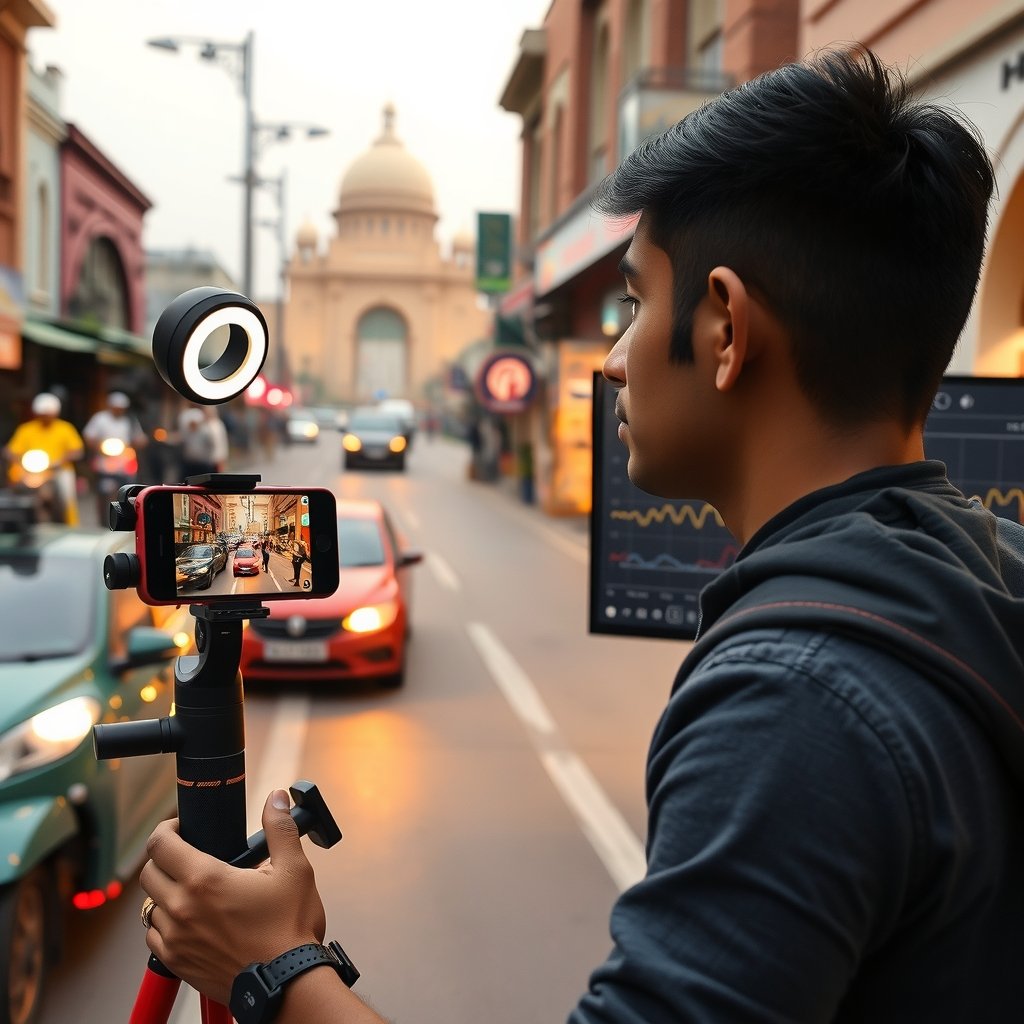
Brands should also build supercontent clusters around specific themes rather than isolated posts. A beauty brand, for instance, can create a cluster around skin concerns, patch test stories, routine breakdowns, and founder insight. This makes distribution easier because the account looks cohesive and topical. In Delhi, where audiences respond well to hyperlocal storytelling, creator collaborations with local voices, neighbourhood events, and market references can improve trust. A reel shot around a Delhi market, a community event, or a city landmark often feels more credible and shareable than generic studio footage. Additionally, brands should repurpose Reels into Stories, highlights, and UGC cutdowns to maximize efficiency. The more a message gets reused across formats, the lower the cost per qualified engagement.
Advanced Tips for Experts
For seasoned marketers, the real edge comes from testing at a system level rather than adjusting individual posts in isolation. Use creative scoring models to judge reels by watch-through rate, saves, shares, profile visits, DMs, click-throughs, and lead form completions. Instead of chasing vanity metrics alone, evaluate whether content is helping a business goal. Marketers should also identify “creative fatigue” early. If a reel reaches a solid audience size but the watch time drops below 30% after several iterations, the concept needs a different angle. This is where a strong testing matrix matters: variable hook, variable first frame, variable CTA, variable editing cadence, variable product focus. When one variable shifts, the performance changes; experts track these changes to produce repeatable winners.
Advanced practitioners also build retargeting loops. A reel that gets 10,000 impressions but only 200 profile visits is not a success unless those 200 viewers are later re-engaged with Story stickers, DM automation, or remarketing. In performance optimization, each reel should feed a sequence: discovery → nurture → conversion. You can push a reel to cold audiences, then retarget engaged users with a short “proof” reel, and finally expose high-intent users to a direct CTA. This approach reduces wasted spend and increases efficiency. A high-level objective is to create a portfolio of proof assets that strengthens the account’s authority while keeping the content engine lean. In 2026, the strongest instagram marketing teams are not those with the biggest budgets; they are the ones with the smartest testing systems.
Real World Case Study
A Bangalore-based company, a premium home appliances brand operating across India, faced a classic scale problem. The company had a growing Instagram presence but inconsistent Reels performance. They were posting 5 to 6 reels per week and spending approximately INR 1.8 lakh per month on promotions, yet they were only generating 98 leads in a 60-day period. Their average cost per lead was around INR 1,850, and their landing page had a weak conversion rate. The team believed their offer was good, but Reels were not aligned with actual buying intent.
The core problem was not lack of content volume. It was a lack of content strategy. Their reels were dominated by broad brand videos, generic lifestyle clips, and repetitive product close-ups. There was no segmentation, no funnel logic, and no optimization system. The team also lacked performance benchmarks. Their top reel had a 22% watch-through rate, but nothing in the account architecture linked this to meaningful sales. The management wanted a fix and had a clear target: reduce lead cost, improve conversions, and generate a sustainable pipeline.
Week 1-2: Discovery
During the first two weeks, the team completed a detailed audit of the account: content archives, audience demographics, creator performance, hashtag strategy, story engagement, profile visits, and DM patterns. The observed data showed that reels featuring product demonstrations in real homes and customer testimonials performed best. However, these were only 18% of total volume. The account was producing too much brand promotion and too little proof-based content. In the audit, they found that reels with “before and after” kitchen demonstrations, real installation clips, and compact home use cases generated stronger action. They also discovered that their ideal audience was split across three buying segments: homeowners, renovation-focused families, and multi-city apartment buyers. Each segment responded to different offer angles.
To solve the issue, the team created a new content blueprint. They built 3 content pillars: educational installs, lifestyle proof, and customer trust. They adjusted their production schedule and introduced a review system for hooks, on-screen text, and CTA timing. They also redesigned CTAs, replacing vague “DM us” prompts with intent-based messages like “Get a free kitchen setup consultation” and “Book a home demo by 5 PM today.” The team used local language overlays and strong visual proof to make the messaging feel relevant to Bangalore buyers.
Week 3-4: Implementation
In weeks three and four, the new strategy was implemented. A brand creator developed 12 reels around installation stories, usage tips, and family testimonials. Each reel used a clearer first three seconds, a stronger hook, and a direct value proposition. They began testing three audience buckets: broad reach, lookalike audiences based on page engagement, and warm remarketing audiences. They also added a stronger sales funnel: reel → Instagram profile → DM → qualifying call → appointment. The ad budget was reallocated away from broad awareness and toward mid-funnel, high-intent video ads with conversion-focused creative. Starting with an INR 1.2 lakh monthly budget, they shifted 40% of spend to retargeting and 30% to demo-focused creative, leaving the rest for top-of-funnel discovery.
They also introduced real-time tracking. Every reel was tagged for watch time, click-through rate, profile visit rate, and message rate. The team set thresholds for scaling: reels with more than 30% watch-through and 1.2% profile visit rate moved into a scale phase. Content that failed these benchmarks was paused. This data-driven approach allowed their creative strategy to become less subjective and more revenue-linked.
Week 5-6: Optimization
During weeks five and six, optimization focused on refining performance. The brand tested captions, CTA placements, editing pace, and user-generated “problem/solution” framing. They noticed that reels featuring “real customer pain points” outperformed clean studio ads by 27%. They implemented the use of real customer voiceovers, product close-ups, and room-level before-and-after comparisons. They also added story sequences after each reel to sustain interest and create a continuation arc. In some campaigns, they ran retargeting ads that showed a short proof reel to users who had watched more than half the original video. This improved conversion from interest to inquiry significantly.
The team also reduced over-relying on hashtags and instead built a stronger direct-response mechanic: CTA, offer, urgency, and trust signals. They started measuring profitability using a blend of cost per lead, sales revenue per reel, and customer validation signals—not just reach. This gave them a more complete view of performance. The optimization phase reduced wasted creative, improved funnel clarity, and strengthened alignment between content and buying intent.
Week 7-8: Results
By the end of week eight, the strategy had produced clear gains. The brand achieved a 47% improvement in overall campaign efficiency, 3.2 lakh INR saved in unnecessary ad spend, and generated 183 leads. The return on ad spend reached 2.7x ROAS, an outcome that was impossible under the previous model. The account no longer relied on generic brand reels; it had become a conversion-oriented content engine. Performance improved because content was matched to the right audience segment and supported by a measurable optimization loop.
The business learned a critical lesson: Instagram growth is not just about volume. It is about clarity of audience, message, and funnel design. Reels proved most effective when they were built around real home-use problems and trust-building proof. The team’s decision to move beyond aesthetics and into buyer behavior was the turning point. In a market like Bangalore, where consumer attention is high but competition is dense, performance depends on disciplined testing and conversion thinking.
| Metric | Before | After |
|---|---|---|
| Monthly ad spend | INR 1.8 lakh | INR 1.48 lakh |
| Lead volume | 98 leads | 183 leads |
| Cost per lead | INR 1,850 | INR 810 |
| Watch-through rate | 22% | 38% |
| Profile visit rate | 0.8% | 1.9% |
| ROAS | 1.1x | 2.7x |
| Sales conversion | 5.2% | 9.1% |
Common Mistakes to Avoid
Many brands underestimate the cost of weak Instagram management decisions. In Delhi and across India, businesses often spend large amounts on content production and paid promotion without tracking actual business outcomes. This leads to wasted budget, missed conversions, and damaged trust. The five mistakes below are common, but they are preventable. Each mistake carries an immediate financial cost, and each can be corrected with stronger systems and better creative discipline.
- 1. Posting content without a clear conversion objective: Many brands create reels for attention but never connect the content to a conversion action. The cost impact can be as high as INR 30,000 to INR 60,000 per month in wasted ad spend and missed inquiries. To avoid this, every reel should answer a specific business question: Is it for reach, lead generation, remarketing, or trust-building? Clarify the CTA and track the result.
- 2. Chasing trends without audience fit: Trend-based content can be fun, but if it does not match buying intent, it adds noise. The cost impact often ranges between INR 25,000 and INR 50,000 a month when teams pay for broad creative traction that never converts. To avoid this, match trend templates to niche audience pain points and product value. Use trend formats only when they can support an offer, a problem-solution story, or a relevant proof point.
- 3. Ignoring high-intent buying signals: Brands frequently post generic lifestyle reels and ignore direct-response behavior such as profile clicks, story replies, DMs, and saves. The financial cost can be INR 18,000 to INR 40,000 per month in lost sales opportunities. To avoid this, build custom remarketing sequences based on engagement. Users who watch 50% of a reel or click a profile should receive a proof reel or a direct offer rather than more generic content.
- 4. Producing too much content without testing: A high posting cadence without testing leads to content fatigue and weak efficiency. The cost impact may exceed INR 45,000 per month from unnecessary editing, creator costs, and lower-performing promotion. To avoid this, test one variable at a time—hook, CTA, aspect ratio, first frame, or offer—and review performance weekly. Avoid creating 20 different reels without learning which creative is actually effective.
- 5. Overlooking the funnel after the reel: Many teams think the reel is the campaign. In reality, the reel is only the front end. If the profile, DMs, landing page, or entry form is weak, the spend is wasted. Cost impact may reach INR 35,000 to INR 70,000 per month because the team keeps paying for curiosity without conversion. To avoid this, optimize the entire journey: reel hook, profile clarity, CTA, message flow, and final action. If the conversion path is weak, growth will stall.
Frequently Asked Questions
What is the role of instagram marketing in 2026 for Indian brands?
instagram marketing in 2026 is not just about building a pretty feed or posting a few reels every week. It is a direct-response ecosystem where brands compete for attention, trust, and action across discovery, consideration, and conversion. In India, the platform has become especially important because it merges lifestyle content with retail intent. Whether a brand is in Delhi, Mumbai, Ahmedabad, or Bangalore, the buying journey often starts with short-form discovery content that answers a consumer problem quickly. A founder story, a customer testimonial, or a problem-solution reel can create relevance in seconds. That is why the strongest brands do not merely create “interesting” content; they design content that moves users from curiosity to inquiry. For businesses, the role of instagram marketing is to generate demand, reduce friction, and capture intent in real time. It supports sales, brand perception, and market visibility at once. The companies that win are those that combine creator authenticity, efficient production, and measurable campaign goals. They do not treat Instagram as a side channel; they treat it as a conversion layer of the broader marketing engine.
How do I improve Reels reach without spending more on ads?
Better reach often starts with better creative structure rather than higher budget. The first three seconds of a Reel are where behavior is decided. If viewers do not see relevance quickly, they swipe away. A strong hook, a clear visual promise, and an immediate explained value are usually more effective than a longer introduction. Also, focus on saves, shares, and comments rather than only likes. These engagement signals often help the algorithm understand the content’s quality and relevance. Brands should also use content clusters—multiple interpretations of the same story—so that each reel is not isolated. For example, a product story can be turned into a “before and after,” “top 3 mistakes,” “customer pain point,” or “founder insight” variant. Each version appeals to a different segment without increasing spend. Another overlooked lever is retention. Reels with a strong narrative arc and better pacing often outperform highly polished but slow videos. Quality still matters, but clarity and relevance usually matter more than expensive production. In many campaigns, the strongest lift comes from smarter editing, stronger hooks, and better audience alignment rather than more spend.
Is it better to use organic content or paid promotion for Instagram growth?
For sustainable growth, the best approach is not “either/or”; it is a combined strategy. Organic content builds credibility, trust, and brand familiarity. It creates the asset library from which paid promotion can scale. Paid promotion is useful when you want to push high-performing content to broader segments, retarget engaged users, or accelerate lead generation. A common mistake is to spend heavily on ads before establishing audience fit. That usually produces vanity metrics without real demand. A better model is to develop 8 to 12 organic proof assets, identify which ones drive comments, saves, profile visits, and DMs, and then scale only the winners. This lowers the risk of spending on weak content. For brand-led accounts, organic content also adds authenticity. Consumers are more likely to trust a business that shows process, customer stories, and real usage. Paid content without organic depth often feels transactional. The strongest growth systems combine both: organic reaches the right people with authentic proof, and paid distribution amplifies the messages most likely to convert. In practice, the ratio depends on goals, but high-performing teams understand that paid reach is a multiplier, not a substitute for brand perception.
How often should a brand post Reels for consistent growth?
Consistency matters more than volume. A brand posting three strong Reels each week with clear strategy will usually outperform a brand posting twelve mediocre clips every week. The ideal frequency depends on production capacity, content quality, and audience behavior, but a realistic rule is to maintain a sustainable cadence you can execute well. For many businesses, posting 4 to 6 timed Reels per week is a practical benchmark. That allows enough testing without overwhelming the content team or creating low-quality uploads. It also gives room to repurpose content across Stories, carousels, and static posts. What matters is a content rhythm: a blend of educational, proof, and sales-driven content, structured across the month. If the brand is in a high-competition category like home interiors, fitness, or beauty, posting more often may help, but only if the feed remains cohesive. Quality control should include watch-through review, hook evaluation, and CTA clarity. Growth is not achieved by posting randomly; it is achieved by maintaining a reliable engine with measurable outputs.
What metrics should brands track besides likes and views?
Brands that focus only on likes or views often mistake attention for performance. The meaningful metrics are those linked to the funnel: retention rate, reach quality, profile visits, website or WhatsApp clicks, DMs, lead capture form completion, and actual sales. For example, a reel with 60,000 views but poor retention and zero conversions is likely a weak marketing asset. A reel with 12,000 views, a 35% watch-through rate, high saves, and strong profile visits may be far more valuable. In 2026, businesses need to monitor at least four layers: content engagement, audience action, funnel conversion, and revenue outcome. Metrics like average watch time, shares per 1,000 impressions, DM rate, and lead-to-close ratio give a much more realistic picture. It is also important to separate campaign metrics from account metrics. A paid trial may show reach, but the actual question is whether the account is building authority, capturing buyers, and reducing cost per acquisition. When these metrics are tracked together, brands can make smarter creative and budget decisions instead of chasing vanity numbers.
How can small businesses in Delhi compete against larger brands on Instagram?
Small businesses in Delhi can win by being more specific, more local, and more useful than broad national brands. Large brands often produce polished but generic content, while local and mid-sized businesses can stand out by using neighbourhood relevance, founder credibility, and real customer stories. A family-run business in Delhi can create content around local lifestyle patterns, seasonal needs, service reliability, and personalized offers in a way that feels highly relevant. This is especially powerful in categories like beauty, interiors, education, food, retail, and home services. The strategic advantage is not scale—it is specificity. Small businesses should focus on a narrow audience segment and speak directly to their needs, using regional context, local proof, and honest communication. They also need to move faster with testing. While larger brands may have slower approval chains, smaller businesses can react quickly to trends, customer feedback, and campaign results. This agility can produce higher conversion efficiency. The key is to build a disciplined content engine: a few strong message pillars, highly relevant local storytelling, consistent proof, and a clear CTA. That combination is often enough to outperform larger but less focused competitors.
🚀 Ready to Implement This?
Get expert help from ShivatechDigital. 200+ Indian businesses already grew with our technology solutions.
Book Free Consultation →⚡ Response within 24 hours | 🇮🇳 Trusted by Indian businesses
Conclusion
instagram marketing is not just a platform tactic; it is a revenue engine when structured around strategy, proof, and measurement. Brands that treat Reels as performance assets rather than decorative content are the ones that generate measurable outcomes in 2026. Success comes from discipline: understanding the customer, producing content around clear value, tracking what actually drives action, and optimizing based on evidence. Delhi and other major Indian cities are crowded markets, which means generic content will struggle. The winning formula is sharper messaging, stronger hooks, higher trust signals, and better conversion paths. If a brand can blend creative quality with performance oversight, it can create consistent lead flow and better return on investment.
- Audit your current Instagram funnel and identify which content is creating profile visits, DMs, and leads versus vanity reach.
- Build a content system with 3 pillars: educational value, trust-building proof, and direct-response sales content, and post consistently for 6 to 8 weeks.
- Track business-linked metrics weekly—watch-through rate, saves, DMs, lead costs, and ROAS—and double down on the creatives that drive outcomes, not just likes.
10+ years experience helping 200+ businesses across Delhi, Noida, Greater Noida, Ghaziabad and Kanpur grow through technology. Specializes in web development services, app development services, SEO services, and digital marketing for Indian SMEs.






0
No comments yet. Be the first to comment!