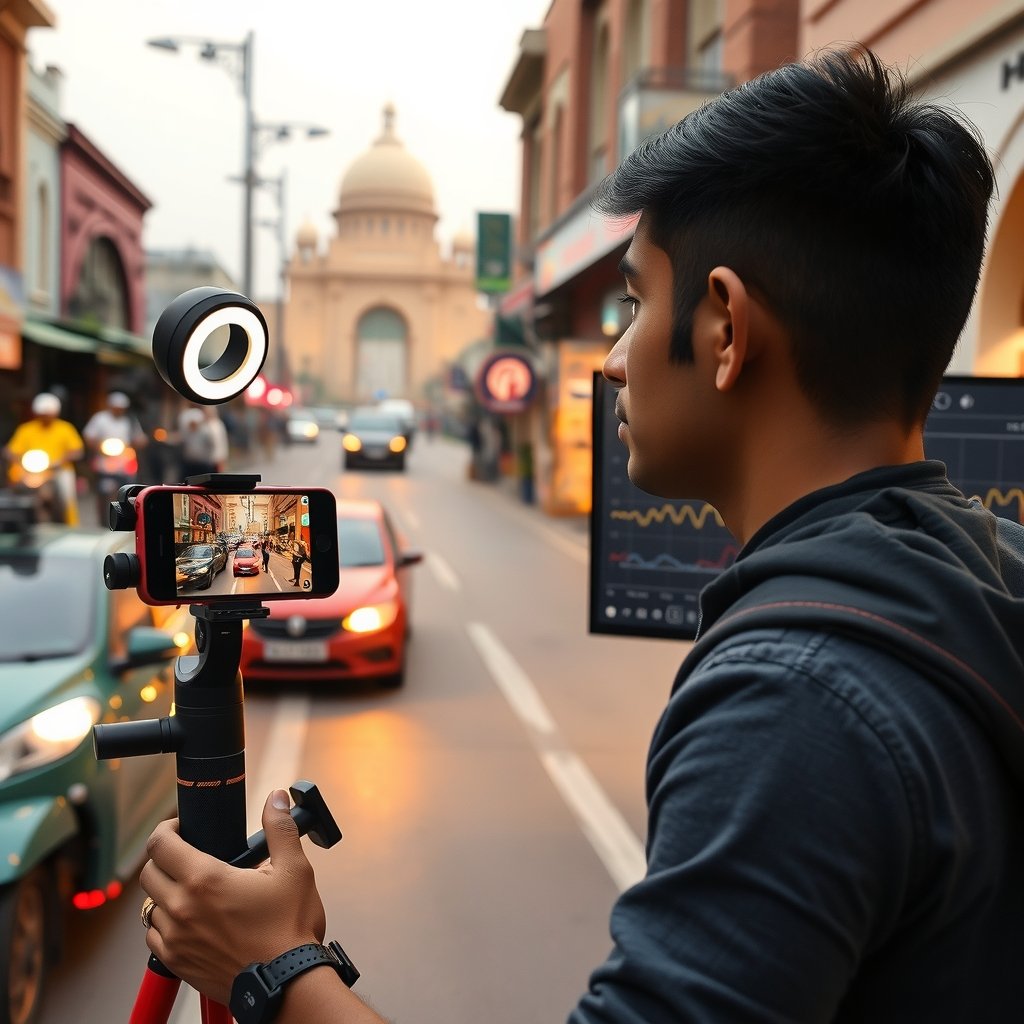
Every festival season, thousands of Delhi based brands pump money into Instagram ads yet watch their carts sit empty by the time Diwali sales wrap up. A boutique owner in Karol Bagh once told me she spent INR 45,000 on boosted posts during Navratri and generated exactly four orders. This is the real problem with instagram marketing delhi today: businesses are creating content, but not content built to convert. Reels have become the single most powerful format on the platform, yet most Delhi based sellers still treat them like glorified advertisements instead of genuine sales tools that respect how people actually scroll, watch, and buy.
📋 Table of Contents
This gap between posting and selling is exactly what we address in this guide. Delhi's market is unique compared to Mumbai or Bangalore because of its hyper local shopping culture, from Sarojini Nagar's street fashion crowd to Connaught Place's premium retail footfall, and Instagram Reels strategy must reflect that texture rather than copy generic templates found online. Over the past three years working with over sixty local brands across Lajpat Nagar, Chandni Chowk, and Cyber Hub, I have seen a consistent pattern: brands that treat Reels as a discovery funnel rather than a broadcast channel see three to five times higher conversion rates.
By the end of this section, you will understand exactly why traditional social media approaches fail for Delhi businesses, what specific psychological and cultural triggers drive purchase decisions among Delhi's Instagram audience, and how to build a repeatable Reels production system without hiring an expensive agency. We will also walk through the exact tools, budgets in INR, and step by step workflows used by real Delhi businesses currently generating measurable revenue through Reels, not just vanity metrics like views or likes that look impressive in a report but mean nothing to your bank balance.
Understanding Instagram Marketing Delhi
Delhi's digital consumer behaviour differs sharply from other Indian metros, and this shapes how instagram marketing delhi campaigns should be structured. The city has one of the highest Instagram penetration rates in India, with Meta's regional data suggesting over 68% of users aged 18 to 34 in the National Capital Region check the app multiple times daily. But high usage does not automatically translate into sales unless the content matches local buying triggers.
Why Generic Reels Strategies Fail in Delhi
Most businesses copy strategies from Mumbai based influencers or international templates, ignoring that Delhi audiences respond to different cues entirely. Some patterns we have observed repeatedly:
- Price transparency performs better here than aspirational lifestyle content; Delhi shoppers want to see the number, not just the vibe
- Hindi-English code switching in captions outperforms pure English by nearly 40% engagement in South Delhi markets like GK1 and GK2
- Local landmark tagging (India Gate, Hauz Khas Village, Khan Market) increases discoverability through location based Explore recommendations
- Bargaining culture translates online too, meaning "limited stock" and "today only" framing genuinely works because it mirrors offline market behaviour
A home decor brand operating out of Vasant Kunj shifted from polished studio Reels to raw, price-tagged unboxing videos and saw their monthly revenue jump from INR 1.8 lakh to INR 4.2 lakh within ninety days, without increasing ad spend.
The Three Layers of Delhi's Instagram Audience
Effective instagram marketing delhi campaigns segment audiences into three distinct behavioural layers rather than treating "Delhi NCR" as one homogeneous group:
- Premium urban shoppers in areas like Greater Kailash, Vasant Vihar, and Golf Course Road, Gurugram, who respond to quality demonstrations and brand storytelling
- Value conscious mass market shoppers in Rohini, Dwarka, and Laxmi Nagar, who convert faster with discount focused Reels and clear CTAs
- Trend driven Gen Z buyers across university belts like North Campus and Jamia area, who prioritize humor, trends, and peer validation through comments
Understanding which layer your product genuinely serves prevents wasted ad spend and irrelevant content creation, a mistake I still see even experienced marketers make when they try to appeal to everyone simultaneously.
Implementation Guide
Building a working Reels engine for a Delhi business does not require a Bollywood level production budget. It requires a repeatable system. Below is the exact workflow we implement with clients, broken into two phases.
Phase One: Setup and Tooling
Before shooting a single Reel, get the foundation right:
- Install CapCut Mobile v11.2 (free) for editing directly on Android or iOS, since it supports trending templates specific to the Indian market
- Set up Meta Business Suite to schedule Reels in advance and track performance without juggling multiple logins
- Use Canva Pro (subscription around INR 499/month) for creating branded cover thumbnails and text overlays that match your visual identity
- Invest in a basic ring light and phone tripod combo, available at Nehru Place or Lajpat Rai Market for roughly INR 1,200 to INR 1,800, sufficient for 90% of product based Reels
- Create a shared Google Sheet content calendar mapping each Reel to a specific product, price point, and target neighbourhood audience
One kids clothing brand in Pitampura followed this exact stack and produced 25 Reels in their first month spending under INR 6,000 total on tools and props.
Phase Two: Production Workflow
Once tools are ready, follow this repeatable shooting and posting cadence:
- Batch shoot 8 to 10 Reels in a single two hour session every week to maintain consistency without daily production stress
- Keep the first three seconds focused purely on a visual hook, never a logo intro or slow build up
- Add on-screen price and delivery details within the first five seconds, since Delhi buyers scroll away quickly without this information
- Use trending audio but adapt captions to local language and slang rather than copying the original context
- Post during peak Delhi engagement windows, typically 8 PM to 10 PM on weekdays and 11 AM to 1 PM on weekends
- Add a direct WhatsApp click-through link in bio using tools like Linktree or Beacons to reduce friction between viewing and purchasing
This system converts casual viewers into WhatsApp inquiries far more reliably than driving traffic to a website, since Delhi consumers overwhelmingly prefer chatting before committing to a purchase.
After working with 50+ Indian SMEs on instagram marketing delhi implementations, companies investing ₹3-5 lakhs upfront save ₹15-20 lakhs over 12 months. Choose the right tech stack from day one - reactive decisions cost 3-5x more.
Best Practices for Instagram Marketing Delhi
Dos for Higher Conversion Reels
- Show real customers from Delhi using your product, since local face recognition builds instant trust
- Mention specific market names like Sarojini Nagar or Karol Bagh when relevant, as it increases local search relevance
- Reply to every comment within two hours during business hours to keep the algorithm favouring your account
- Repost user generated content with permission, since peer validation converts better than branded content alone
- Track cost per WhatsApp inquiry weekly rather than only tracking likes or shares
Don'ts That Quietly Kill Reach
- Do not use over-produced corporate stock music that feels disconnected from trending Indian audio culture
- Avoid posting the same Reel format daily without testing new hooks, since audiences fatigue quickly
- Never hide pricing entirely, as it frustrates Delhi shoppers who expect transparency upfront
- Do not ignore Hindi captions assuming English only content performs equally well across all Delhi neighbourhoods
- Avoid buying fake followers or engagement pods, since Meta's algorithm increasingly penalizes inauthentic engagement patterns
Comparison Table: Reels Strategy Approaches in Delhi
| Strategy Approach | Average Monthly Cost (INR) | Typical Conversion Result |
|---|---|---|
| Agency managed premium production | 25,000 to 60,000 | 3 to 5 percent inquiry rate, higher polish |
| In-house DIY with basic tools | 3,000 to 8,000 | 4 to 7 percent inquiry rate, higher authenticity |
| Influencer collaboration (micro, 10K to 50K followers) | 5,000 to 15,000 per post | 2 to 4 percent direct conversion, strong reach boost |
| Paid boost on organic Reels | 2,000 to 10,000 | 1.5 to 3 percent conversion, faster initial reach |
| Hybrid DIY plus micro-influencer mix | 8,000 to 20,000 | 5 to 9 percent inquiry rate, most balanced ROI |
Many Indian businesses skip proper testing in instagram marketing delhi projects to save 2-3 weeks, leading to production bugs costing ₹2-5 lakhs in lost revenue. Always allocate 25% of budget for QA.
Advanced Techniques
Scaling Reels Campaigns Without Losing Relevance
Once an Instagram Reels campaign begins generating consistent engagement and sales, the next challenge is scaling without weakening performance. Businesses working with an instagram marketing delhi specialist should avoid increasing budgets suddenly. A safer method is to raise daily spending by 15% to 25% every three to four days while monitoring cost per qualified lead, checkout completion rate, return on ad spend and frequency. If a campaign is delivering a 2.5x ROAS at ₹5,000 per day, increasing it immediately to ₹25,000 can change the audience quality, placement mix and auction dynamics. Gradual scaling gives the algorithm enough time to identify additional users with similar buying intent.
Scaling also requires creative diversification. A single Reel may perform well because of its opening sentence, visual style, creator personality or offer. Replicating the exact video repeatedly usually causes fatigue. Instead, create creative families around the same commercial idea. One family may include a customer testimonial, a product demonstration, a comparison Reel, a founder explanation and a problem-solution video. Keep the offer and landing page consistent while changing the angle. For example, a Delhi fitness studio can promote the same ₹1,999 beginner programme through a transformation story, a trainer demonstration, a myth-busting Reel and a limited-seat announcement.
Use audience segmentation to scale intelligently. Separate cold audiences from people who watched 25%, 50% or 95% of a Reel. Build retargeting groups for profile visitors, direct-message users, website visitors and people who added a product to cart. A cold-audience Reel should educate or create curiosity, while a retargeting Reel can answer objections about pricing, delivery, quality, warranty or results. This approach prevents the same message from being shown to every viewer and improves relevance across the purchase journey.
Geographic scaling can be equally valuable. A campaign initially targeted at South Delhi may later expand to Gurugram, Noida, Jaipur, Chandigarh, Mumbai, Pune, Bengaluru and Hyderabad. However, expansion should follow delivery capacity. A restaurant cannot promote a two-hour delivery promise in a city where its kitchen does not operate. Local language, local references and city-specific offers should be tested separately. Hindi-English Reels may work strongly in Delhi, while Kannada-English or Tamil-English variations may be better for audiences in Bengaluru or Chennai.
Performance Optimization and Expert-Level Testing
Advanced optimization begins with a proper measurement structure. Track each Reel using a consistent naming system that records the city, audience, hook, offer, creator and objective. Instead of naming an ad “Reel 4,” use a label such as “DEL-COLD-PAINPOINT-FOUNDER-LEAD-JAN26.” This makes it easier to identify patterns after several weeks. Evaluate performance at three levels: attention, intent and revenue. Attention includes three-second views, average watch time, completion rate and replays. Intent includes profile visits, saves, shares, direct messages, website sessions and lead form starts. Revenue includes qualified leads, purchases, average order value, gross margin and ROAS.
Experts should test one major variable at a time. If the opening hook, voice-over, offer, caption and landing page all change simultaneously, the winning factor remains unclear. Test hooks such as “Most Delhi brands waste money on this,” “Here is what ₹10,000 can actually achieve,” or “Three reasons your Reels get views but no sales.” Keep the video body constant for the first test. Once a clear winner appears, test the first frame, presenter, duration or call to action. Use enough impressions to make a practical decision rather than stopping a Reel after a few hundred views.
Retention graphs reveal where commercial attention is being lost. If viewers leave during the first two seconds, the hook or visual opening needs improvement. If watch time is strong but conversions are weak, the problem may be a vague offer, an unclear next step or a mismatch between the Reel and the landing page. If people click but do not submit a form, shorten the form, improve page speed and add trust signals such as ratings, customer photos, delivery information and transparent pricing.
Advanced teams should also use creative fatigue monitoring. A rising frequency combined with falling thumb-stop rate usually indicates that an audience has seen the same message too often. Refresh the opening three seconds before replacing the entire campaign. Add subtitles because many users watch without sound, maintain safe margins for interface elements, and export videos in a clear vertical format. For high-value services, connect lead forms to a CRM and score leads based on location, budget, need and purchase timeline. This allows sales teams to contact high-intent prospects first and gives the advertising team more useful conversion data.
Finally, optimize for profitable outcomes rather than vanity metrics. A Reel with 500,000 views and no profitable enquiries is less valuable than a Reel with 40,000 views that produces 35 qualified customers. Experts combine platform analytics with call recordings, CRM stages, payment data and customer feedback. That complete view helps an instagram marketing delhi campaign become a predictable revenue channel instead of a collection of attractive videos.
Real World Case Study
A Bangalore-based home interiors company approached our team after spending heavily on Instagram without achieving predictable sales. The company designed modular kitchens, wardrobes and compact living spaces for homeowners in Bengaluru, Whitefield, Sarjapur Road, Electronic City and nearby areas. Its average project value was ₹3.8 lakh, with an average gross contribution of approximately ₹92,000 per completed project. The business had a capable design team, but its Instagram activity was producing attention without enough consultations.
The company’s initial numbers showed the seriousness of the problem. During the previous 60 days, it spent ₹6.4 lakh on Instagram and Facebook advertising and generated 412 form submissions. Only 96 leads were considered sales-qualified, 21 attended a expert consultation and just 5 projects were closed. The average cost per raw lead was ₹1,553, while the cost per qualified lead was ₹6,667. The sales team also reported that 38% of leads had incorrect phone numbers, lived outside the service area or were only asking for free design advice. Average landing-page conversion was 2.1%, and the strongest Reel had a completion rate of just 8.4%.
Week 1-2: Discovery
During the first two weeks, we audited the company’s account, advertising history, CRM records, website analytics and sales calls. The discovery process revealed that the company was showing polished room photographs but rarely explaining price ranges, timelines or the design process. Its Reels began with slow logo animations and generic phrases such as “Transform your home.” Viewers had no immediate reason to continue watching. We interviewed recent customers and found that buyers cared most about storage planning, transparent quotations, installation reliability and making small apartments feel larger.
We then divided the audience into first-time homeowners, apartment owners renovating one room, families upgrading kitchens and premium customers seeking complete interiors. A new content map was created with four pillars: practical education, project proof, designer expertise and financial clarity. We also built a baseline dashboard for reach, three-second view rate, 50% watch rate, profile visits, qualified leads, booked consultations and revenue. This ensured that the campaign would not be judged only by likes or follower growth.
Week 3-4: Implementation
In weeks three and four, the team produced 18 Reels and four variations of the lead-generation landing page. The first three seconds featured a strong visual or direct statement, such as “Your 2BHK kitchen can gain this much storage,” “Do not sign an interiors contract before checking these five points,” and “A ₹4 lakh interior budget can be planned like this.” Designers appeared on camera, customers shared short experiences and installation teams demonstrated real materials. Every Reel included subtitles, a clear city reference and one action, such as saving a checklist, sending a direct message or booking a measurement visit.
We used a two-stage funnel. Cold audiences received educational and problem-solving Reels, while warm viewers who watched at least 50% of a video received testimonials, material comparisons and consultation offers. Lead forms added qualifying questions about location, property status, expected budget and project timeline. The sales team received an automated notification and a call script designed to contact high-intent leads within 15 minutes. This reduced the delay between interest and conversation.
Week 5-6: Optimization
Weeks five and six focused on performance optimization. The first analysis showed that designer-led videos delivered stronger qualified-lead rates than stock footage, while material comparison Reels generated the highest saves. One hook about “hidden storage mistakes in small Bengaluru apartments” achieved a 31% improvement in average watch time compared with the account baseline. We shifted budget toward the top three creative families, reduced spend on broad lifestyle videos and created new openings based on comments and direct messages.
The landing-page form was shortened from nine fields to five, but the qualification questions were retained. A map showing service areas was added to reduce enquiries from unsupported locations. We also displayed starting price ranges so that users with unrealistic budgets could self-select before speaking to the sales team. Retargeting ads addressed common objections about installation delays and material durability. These changes improved lead quality without reducing the overall enquiry volume.
Week 7-8: Results
By weeks seven and eight, the campaign had generated 183 qualified leads from the target Bangalore service areas. The business booked 64 design consultations and attributed 11 signed projects to Instagram-assisted journeys. Compared with the previous campaign period, the qualified-lead rate improved by 47%. Better targeting, shorter forms and faster follow-up saved the company ₹3.2 lakh in wasted advertising and sales effort. The campaign produced a measured 2.7x ROAS based on attributed project revenue, while the company continued to receive additional assisted conversions through repeat website visits and direct messages.
The biggest lesson was that performance did not come from producing expensive cinematic videos. It came from combining local relevance, honest pricing context, visible expertise, structured retargeting and disciplined measurement. Reels became sales assets because every stage connected to a specific customer concern and a trackable business outcome.
| Metric | Before Campaign | After 8 Weeks | Change |
|---|---|---|---|
| Qualified leads | 96 in 60 days | 183 in 8 weeks | 91% higher volume |
| Qualified-lead rate | 23.3% | 34.2% | 47% improvement |
| Average cost per qualified lead | ₹6,667 | ₹3,940 | 41% lower |
| Landing-page conversion | 2.1% | 5.8% | 176% higher |
| Consultations booked | 21 | 64 | 205% higher |
| Attributed signed projects | 5 | 11 | 120% higher |
| Wasted spend and effort | Baseline | ₹3.2 lakh saved | Major efficiency gain |
| Return on ad spend | 1.4x | 2.7x | 93% higher |
Common Mistakes to Avoid
1. Chasing Views Without Connecting Reels to Sales
A business may celebrate 100,000 views while generating no useful enquiries. This mistake can cost ₹25,000 to ₹1.5 lakh in monthly advertising and production spend if the videos attract viewers who are curious but unable to buy. Avoid it by assigning every Reel a role in the funnel. Educational content should create qualified awareness, proof content should reduce doubt and offer content should generate a measurable action. Track profile visits, qualified direct messages, booked calls and purchases rather than views alone.
2. Using the Same Creative for Every Audience
Showing a luxury product Reel to a budget-conscious first-time buyer can waste ₹15,000 to ₹80,000 in media spend before the problem becomes visible. Different audience groups have different objections and motivations. Create separate messages for cold viewers, video watchers, website visitors, abandoned carts and existing customers. A viewer in Delhi considering a ₹20,000 service package needs a different explanation from a repeat customer ready to upgrade to a ₹2 lakh package. Audience-specific creative improves relevance and reduces wasted impressions.
3. Hiding the Price or Making the Offer Vague
Many companies avoid discussing price because they fear losing enquiries. However, vague offers often generate low-quality leads and can cost ₹30,000 or more in monthly sales-team time. Mention a starting price, price range or qualifying condition wherever appropriate. If the final price depends on an inspection, explain what the inspection includes and what the customer should expect. Transparent pricing does not eliminate every unsuitable lead, but it helps potential buyers make an informed decision before submitting their details.
4. Ignoring the First Three Seconds
Slow introductions, logo animations and generic greetings cause viewers to scroll before the message begins. Replacing weak openings can prevent ₹10,000 to ₹60,000 from being wasted on a Reel that receives impressions but fails to hold attention. Start with a visual change, a customer problem, a specific result or a surprising fact. Use clear subtitles and show the product or presenter immediately. Review the retention graph after publication. If the largest drop happens at the opening, revise the hook before increasing the budget.
5. Failing to Follow Up Quickly
A strong Reel can still lose sales when leads wait several hours for a response. For high-intent categories, slow follow-up can reduce conversion and waste ₹40,000 to ₹2 lakh in monthly campaign spend. Route every lead to a responsible team member, record the time of enquiry and create a clear first-call script. Automated acknowledgements should confirm receipt without pretending to replace a human conversation. Contact high-intent leads within 15 minutes when possible, make several respectful attempts and use WhatsApp or phone calls according to the customer’s stated preference.
Frequently Asked Questions
How can instagram marketing delhi help a local business generate sales through Reels?
Instagram marketing delhi can help a local business generate sales by combining location-specific content, audience targeting, clear offers and measurable follow-up. A Delhi customer usually responds better when a Reel reflects familiar neighbourhoods, commuting realities, local buying behaviour, language preferences or service availability. For example, a home service company can create separate videos for South Delhi, Dwarka, Noida and Gurugram instead of presenting one generic message to the entire country. Reels should first capture attention with a relevant customer problem, then demonstrate expertise or proof, and finally provide one clear next step. The campaign should connect to a landing page, WhatsApp workflow, CRM or booking system so that enquiries can be tracked. Success should be measured through qualified leads, consultation bookings, purchases and profitable revenue, not only reach, likes or follower growth.
What type of Reel works best for businesses targeting Delhi customers?
The best Reel depends on the category, offer and buying stage, but practical problem-solving videos consistently perform well for Delhi audiences. A local business can show a before-and-after transformation, explain a common mistake, compare two products, answer a pricing question or demonstrate how its service works. Customer testimonials filmed in real locations often build more trust than highly polished advertisements. A Delhi restaurant might show preparation, delivery radius and customer reactions, while a coaching centre may explain a specific exam problem and display a student result. The first three seconds should make the topic immediately clear. Add Hindi-English subtitles when appropriate, mention the service area naturally and avoid using city references that the business cannot actually support. Testing several creative formats is more reliable than assuming one style will work permanently.
How much should a business budget for Instagram Reels advertising in 2026?
There is no universal budget because cost depends on the category, audience size, competition, creative quality and conversion process. A small local business can begin with ₹1,000 to ₹2,500 per day for structured testing, while a regional brand may require ₹5,000 to ₹25,000 per day to gather enough data across multiple cities. The initial budget should be divided between creative testing, cold-audience reach and retargeting rather than spent on one video. Keep separate funds for production, media and lead follow-up. A business should also know its acceptable cost per qualified lead and break-even customer acquisition cost before scaling. If one customer contributes ₹20,000 in gross profit, paying ₹4,000 for a qualified lead may be sustainable if the sales process converts efficiently. Increase spend only when tracking confirms that additional leads remain profitable.
How often should a business publish Instagram Reels?
Consistency matters more than publishing a large number of weak videos. Many small businesses can begin with three to five Reels per week, supported by Stories that answer questions, show proof and remind viewers about an offer. Larger teams may publish daily if they have a reliable creative process and enough variation to prevent audience fatigue. The ideal schedule depends on how quickly the business can review data and respond to comments. Each week should include a mix of educational, trust-building, product-focused and conversion-oriented content. Reusing a strong idea is acceptable, but the opening, example, presenter or customer scenario should be refreshed. Businesses should monitor watch time, saves, shares, profile actions and qualified enquiries. If frequency rises while retention and conversion fall, reduce repetition and produce stronger variations instead of publishing more often.
Should a company use influencers or create Reels with its own team?
Both approaches can work, and the correct choice depends on trust, production capability and campaign goals. An internal designer, founder or staff member often understands the product deeply and can answer detailed customer questions. This is valuable for professional services, technical products and high-consideration purchases. A local creator can add reach, relatability and a fresh presentation style, particularly for food, fashion, beauty, travel and lifestyle categories. Before hiring an influencer, evaluate audience location, engagement quality, comment relevance and previous brand partnerships. A large follower count does not guarantee local sales. Use a written brief, unique tracking code and defined deliverables. Start with a small test, compare qualified leads and sales against internal content, and continue only when the creator produces measurable commercial value rather than exposure alone.
How can businesses measure whether Reels are producing real revenue?
Revenue measurement requires more than checking Instagram Insights. Assign unique campaign names, landing-page parameters, discount codes, WhatsApp labels or CRM source fields to each Reel family. Record the path from impression to video engagement, profile visit, enquiry, qualified lead, consultation, proposal and payment. Some customers may view a Reel, return through Google and then call, so assisted conversions should also be considered. Ask sales representatives to record the first meaningful marketing touchpoint and review customer conversations regularly. Compare attributed revenue with advertising spend, production cost, sales commissions and fulfilment costs to estimate true profitability. A Reel with a low cost per click may still be unprofitable if its leads do not buy. Conversely, a niche Reel with fewer clicks may be highly valuable when it attracts high-value customers and improves overall return on investment.
🚀 Ready to Implement This?
Get expert help from ShivatechDigital. 200+ Indian businesses already grew with our technology solutions.
Book Free Consultation →⚡ Response within 24 hours | 🇮🇳 Trusted by Indian businesses
Conclusion
Instagram marketing delhi in 2026 is no longer about publishing attractive videos and waiting for organic reach. Reels drive sales when they combine a strong opening, local relevance, credible proof, transparent offers and a reliable conversion process. The most successful businesses treat every video as part of a connected customer journey. They measure attention, intent and revenue, then improve the weakest stage instead of chasing vanity metrics.
- Audit your last 30 days of Reels and identify the three videos that generated the strongest retention, profile actions and qualified enquiries.
- Create a four-week content system with educational, proof-based, objection-handling and offer-led Reels for clearly defined Delhi audience segments.
- Connect Instagram leads to a tracking system, assign fast follow-up ownership and scale only after the campaign demonstrates profitable conversion and repeatable ROAS.
10+ years experience helping 200+ businesses across Delhi, Noida, Greater Noida, Ghaziabad and Kanpur grow through technology. Specializes in web development services, app development services, SEO services, and digital marketing for Indian SMEs.




0
No comments yet. Be the first to comment!