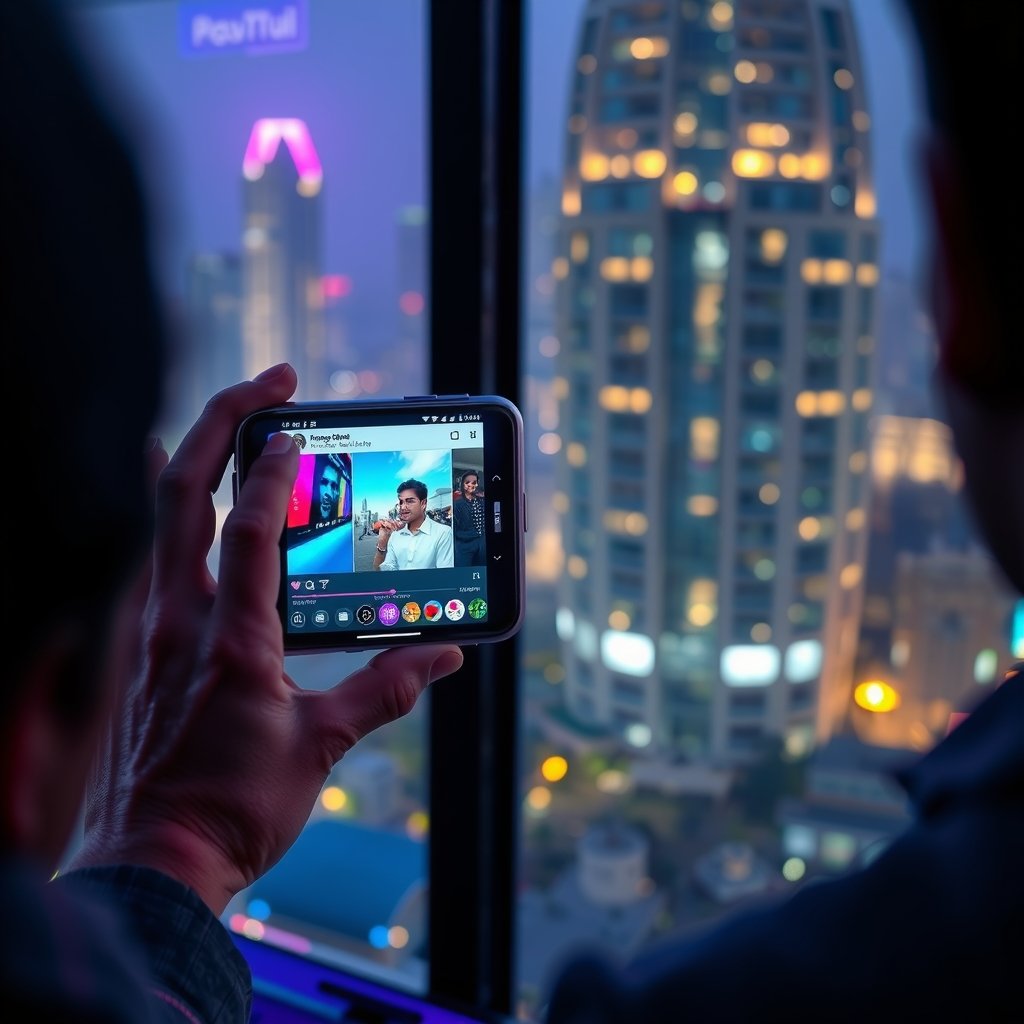
Gurgaon businesses are competing for attention in a market where a customer can compare five salons, three property consultants, and dozens of restaurants before finishing a metro ride from HUDA City Centre to Cyber City. Static posts still have a role, but they rarely create the rapid discovery needed by local brands facing rising ad costs and shrinking organic reach. instagram reels marketing gives Gurgaon companies a practical way to turn everyday expertise, customer questions, products, locations, and people into short videos that can reach audiences beyond existing followers.
📋 Table of Contents
For a DLF Phase 3 cafe, a 20-second Reel showing a lunch combo under Rs. 499 can drive profile visits before noon. For a Golf Course Road interior designer, a before-and-after walkthrough can communicate quality more quickly than a long brochure. For a B2B SaaS company in Udyog Vihar, a founder-led Reel explaining one workflow problem can attract relevant decision-makers without relying entirely on expensive lead-generation ads. The opportunity is substantial, but random posting is not a strategy. Brands need a clear audience, a repeatable production system, well-defined creative formats, reliable measurement, and careful use of paid distribution.
This 2026 guide focuses on the first operational layer: understanding how Reels work as a marketing channel, setting up an implementation process, and applying practices that protect brand quality while improving discoverability. You will learn how to choose content pillars for a Gurgaon audience, plan and produce Reels efficiently, use practical creation and analytics tools, structure strong opening hooks, add local relevance without becoming repetitive, and compare Reels against other common Instagram content formats. The aim is not to chase every trend. It is to build a measured system that helps a business earn attention, turn attention into intent, and turn intent into trackable commercial outcomes.
Understanding instagram reels marketing
Reels are a discovery format, not just a shorter post
Instagram Reels are vertical, mobile-first videos designed for fast consumption and algorithmic discovery. Unlike a feed post that is primarily shown to followers, a Reel can be recommended to people who do not yet follow the account through the Reels feed, Explore surfaces, search, audio pages, shares, and suggested content placements. That distinction matters for Gurgaon brands: the channel can serve both awareness and consideration when the content is specific enough to attract the right viewer.
Effective instagram reels marketing is the disciplined use of this format to achieve a business objective. The objective might be local awareness, store visits, direct messages, website visits, lead qualification, product education, recruitment, or customer retention. A Reel with high view count but no relevance to the target market is not necessarily successful. A boutique fitness studio near Sector 56 may value 8,000 local views, 70 profile visits, and 18 trial-class enquiries more than 200,000 untargeted views from outside its serviceable area.
- Awareness: Show recognisable local settings, category expertise, product demonstrations, or founder stories that help new viewers remember the brand.
- Consideration: Answer purchase objections, compare options, explain pricing logic, and demonstrate outcomes in a concise format.
- Conversion support: Direct interested viewers to a profile action, a WhatsApp enquiry flow, a booking page, or a clearly named offer.
- Retention: Give customers practical usage tips, maintenance advice, behind-the-scenes updates, and community recognition.
Consider a Gurgaon dental clinic. A generic Reel saying “Book your appointment today” is unlikely to create much trust. A more useful Reel could open with, “Why does tooth sensitivity increase during Gurgaon’s winter?” It can then show a dentist explaining three common causes, include simple visual overlays, and finish with a non-pushy reminder to consult a professional for persistent pain. The video earns attention because it starts with a familiar problem, establishes expertise, and remains useful even to viewers who do not book immediately.
The same principle applies to product-based businesses. A fashion retailer in Ambience Mall can make a Reel around “Three office-ready looks under Rs. 3,000” rather than simply filming racks of clothes. A home baker in Sector 46 can show how a Rs. 1,200 customised cake is packed for a monsoon delivery. Both examples turn products into a useful decision-making story.
How the Reel distribution and engagement cycle affects strategy
Instagram evaluates many signals when deciding whether to distribute a Reel more widely. Exact platform weighting changes over time, so marketers should not rely on simplistic claims about one “secret” metric. In practice, the most useful operational signals include whether people stop to watch, continue watching, rewatch, share, save, comment, visit the profile, and take a meaningful next action. Content that earns voluntary shares and saves often has a stronger long-term role than content built only around a temporary visual trend.
A local audience does not require every Reel to say “Gurgaon” in the spoken script. It can be created through relevant problems, visual context, geotagging where appropriate, customer language, neighbourhood references, and distribution choices. A cloud kitchen serving Sector 43 and Sushant Lok should emphasise delivery timing, menu occasions, packaging, and nearby demand patterns. A pan-India D2C skincare brand headquartered in Gurgaon should avoid limiting every Reel to a local-only angle if its customers are nationwide.
- Hook: The opening one to three seconds should create immediate context, tension, curiosity, or utility.
- Value delivery: Demonstrate, explain, compare, reveal, or entertain without making viewers wait too long for the point.
- Retention structure: Use clear scene changes, on-screen text, close-ups, demonstrations, and concise sentences to maintain momentum.
- Interaction prompt: Ask a specific question only when the answer is useful, such as “Which floor-plan issue troubles you most?”
- Business path: Ensure the profile, pinned posts, highlights, and contact method can support the interest generated by the Reel.
For example, a property consultant working in Sohna Road can create a Reel comparing a Rs. 85 lakh two-bedroom apartment with a Rs. 1.15 crore three-bedroom apartment. The content should disclose that prices vary by project, tower, floor, amenities, and registration costs. Its value lies in showing trade-offs: usable area, commute, maintenance, possession status, and family needs. Viewers may save the Reel before they are ready to enquire, which makes the content useful across a longer buying cycle.
The core lesson is that Reels should be planned as a connected system. A compelling video needs a credible profile, sensible publishing rhythm, clear creative purpose, and reporting that links content performance to business activity. Viral reach can be valuable, but relevance, trust, and repeatability are more dependable foundations for growth.
Implementation Guide
Build the content foundation before recording
Start with a business objective and audience definition rather than a list of trending audios. Define one primary outcome for the first 60 to 90 days. A new restaurant may prioritise local awareness and reservations. A coaching centre may prioritise qualified direct messages. A B2B consultancy may prioritise credibility, profile visits, and discovery calls. Choose measurements that reflect that outcome, then establish a baseline from existing Instagram Insights, website analytics, CRM records, or booking data.
- Audit the account: Review the last 20 to 30 posts. Record reach, average watch time where available, shares, saves, profile visits, follower growth, direct messages, and top-performing themes. Also review bio clarity, contact buttons, pinned posts, highlights, and location details.
- Define audience segments: Write down the job, need, location, objections, purchase timeline, preferred language, and likely content triggers for each segment. A Gurgaon preschool may separately address parents in Sector 50, working parents near Cyber City, and families planning admissions six months ahead.
- Create content pillars: Select three to five repeatable categories. Common pillars include education, proof, product or service demonstration, founder perspective, customer experience, local relevance, and myth-busting.
- Prepare a topic bank: Collect sales questions, call transcripts, support tickets, Google Business Profile reviews, competitor gaps, team observations, and seasonal moments. Group each topic by funnel stage and content pillar.
- Plan a production calendar: For a practical start, schedule three Reels each week for eight weeks. Assign an owner, filming date, approval deadline, caption, location tag, CTA, and reporting label for every Reel.
A simple weekly mix for a Gurgaon service business could include one educational Reel, one proof-focused Reel, and one personality or behind-the-scenes Reel. For a premium salon, this may mean a hair-care myth explained by a stylist, a transformation with customer consent, and a short preparation sequence before a wedding-season appointment. This structure prevents the account from becoming an uninterrupted catalogue of offers.
Use a lightweight brief for every video: audience, objective, hook, three to five visual beats, spoken lines, supporting on-screen text, CTA, and success metric. Keep a written record of claims that require approval, particularly in healthcare, finance, real estate, education, and beauty categories. A Rs. 15,000 production budget is better used on a batch of clear, reusable customer-problem videos than on a single glossy video with no distribution plan.
Produce, publish, and measure with a repeatable workflow
For most small and mid-sized teams, smartphone production is sufficient when lighting, sound, framing, and editing are handled well. Shoot vertically at 9:16, keep the subject well lit, use clean audio, and make the first frame understandable without sound. Avoid uploading a file with a visible watermark from another platform, because it weakens brand presentation and can affect distribution.
- Script the first line: Write the opening as a direct viewer benefit, a specific question, a contrarian insight supported by evidence, or a visual reveal. Example: “This is why Gurgaon flats look larger online than they feel in person.”
- Film in batches: Reserve two to four hours for recording six to twelve Reels. Use the same setup, wardrobe plan, and shot list to reduce setup time while retaining enough variation.
- Edit for silent viewing: Add concise captions, clear text hierarchy, and visual cutaways. Ensure text does not sit behind interface elements near the bottom or right edge of the screen.
- Write a contextual caption: Use the caption to add detail, clarify claims, include relevant searchable phrases, and provide a single next step. Do not stuff unrelated hashtags.
- Publish with metadata: Add an accurate cover image, a readable cover title, appropriate collaborator tags, and a location when local discovery is relevant.
- Review performance: Check early response after publication, then conduct a deeper review after seven and 28 days. Compare themes and structures, not just total views.
A practical creation stack can include Instagram app version 373.0 or later for native publishing and Insights, Meta Business Suite version 514.0 or later for scheduling and inbox management, CapCut Desktop version 6.4 or later for captions and vertical edits, Canva version 1.111.0 or later for cover templates, and Google Sheets for maintaining a content tracker. Version availability can vary by operating system and region, so teams should keep the installed version current and use the latest stable release available to them.
For voice-led educational videos, a compact wireless microphone and a basic tripod often improve output more than buying an expensive camera. A small business may begin with equipment costing Rs. 6,000 to Rs. 12,000: a tripod, clip-on or wireless microphone, and compact LED light. If filming food, jewellery, interiors, or products, add a simple overhead mount or use natural window light where consistent.
Track each Reel with a structured naming convention in your sheet, such as GRG-EDU-001-Sector56-TeethSensitivity. Record publish date, topic, pillar, hook type, duration, reach, plays, average watch time, shares, saves, profile visits, follows, direct messages, leads, revenue attribution, and paid spend. A clean tracker makes it possible to identify whether a 15-second comparison format consistently outperforms a 45-second talking-head format for a particular audience.
Where a website is involved, add properly named UTM parameters to the single bio link or campaign landing page so Google Analytics can distinguish Instagram traffic. A readable pattern is:
?utm_source=instagram&utm_medium=organic_reel&utm_campaign=gurgaon_services_q1_2026
Do not use technical tracking as a substitute for business judgement. If a Reel generates direct calls or walk-ins that are not captured by analytics, train reception or sales staff to ask a simple source question and record the answer consistently. Measurement is useful only when it helps the team make better content and budget decisions.
After working with 50+ Indian SMEs on instagram reels marketing implementations, companies investing ₹3-5 lakhs upfront save ₹15-20 lakhs over 12 months. Choose the right tech stack from day one - reactive decisions cost 3-5x more.
Best Practices for instagram reels marketing
Create for usefulness, clarity, and local relevance
Successful Reels feel native to the platform while remaining recognisably connected to the business. The audience should understand what the video is about almost immediately, even if they have never heard of the brand. This does not mean every video requires rapid cuts or loud effects. A calm, clearly explained financial tip may suit a Gurgaon wealth advisory better than a trend-driven edit. The format should match the audience’s need and the brand’s credibility requirements.
- Lead with a concrete promise: Open with the question, result, mistake, comparison, or visual change the viewer will receive. “Three rental clauses Gurgaon tenants should read twice” is clearer than “Important information for renters.”
- Make one central point: A Reel should answer one question or demonstrate one outcome. Split broad topics into a series instead of cramming seven ideas into 30 seconds.
- Use human faces and real environments: A founder, specialist, chef, stylist, or customer-facing employee can make the brand more memorable. Film in the office, store, kitchen, studio, or site when the setting provides useful proof.
- Add readable on-screen text: Keep text short, high contrast, and aligned with what is being said. Many viewers watch without audio, particularly during commutes and office breaks.
- Build series formats: Repeatable formats lower production effort and teach viewers what to expect. Examples include “Friday Gurgaon Office Lunch,” “60-Second Home Inspection,” or “Founder Answers One Pricing Question.”
- Use local references naturally: Mention neighbourhoods, traffic patterns, seasonal needs, delivery zones, and customer situations only when they improve the relevance of the advice.
For a local gym, a useful sequence can be: “If you work near Cyber City and skip breakfast, start here”; show a quick protein-focused option; explain when to eat it; display an easy preparation step; and close with a realistic prompt to save the video. The value is practical and the local setting provides context without excluding viewers elsewhere.
Do not treat trending audio as mandatory. Use it only when the sound supports the topic, the rights available to the account allow commercial use, and the trend is appropriate for the brand. Original voiceovers often perform well for expert-led content because they make the topic clearer and provide a recognisable voice over time. For regulated businesses, original explanatory content is usually safer than adapting a joke format that could confuse or trivialise a sensitive decision.
Dos include obtaining written customer consent before publishing identifiable transformations or testimonials, verifying price and availability claims, adding subtitles, and using representative examples. Don'ts include making guaranteed health, income, admission, investment, or property-return claims; using misleading before-and-after visuals; displaying private customer information; or promising “limited availability” when the offer has no real constraint.
Optimise distribution without sacrificing trust
Reels performance improves when creative execution and account operations support each other. Posting frequently without learning from results can exhaust the team. Posting rarely because every video needs perfection can slow learning. Choose a sustainable cadence, document insights, and improve one variable at a time: hook, topic, duration, presenter, cover, editing pace, caption, or CTA.
- Prioritise shareable utility: Create content that viewers can send to a colleague, spouse, friend, or family member. Checklists, comparisons, buying advice, local tips, and mistakes to avoid are more naturally shareable than generic promotions.
- Use a clear cover: Treat the Reel cover as a compact headline for profile visitors. Use a consistent layout and readable title, such as “Rent Agreement Check” or “Rs. 499 Lunch Review.”
- Respond promptly and accurately: Reply to relevant comments and direct messages with useful information. For detailed sales questions, move the conversation into an approved enquiry process without pressuring the viewer publicly.
- Repurpose proven ideas carefully: Revisit an effective topic with a new hook, example, presenter, or visual treatment. Do not repost the identical video repeatedly unless there is a valid campaign reason.
- Boost selectively: Put paid budget behind Reels that already show relevant organic engagement and align with a clear business goal. Start with a controlled test, such as Rs. 500 to Rs. 1,500 per day for five to seven days, rather than assuming every Reel deserves promotion.
- Review quality and safety: Confirm that collaborators, music, logos, permissions, disclosures, and claims are approved before publication. This is especially important when agencies and in-house teams share access.
Dos and don'ts should be incorporated into the editorial workflow, not left to the final publishing moment. Do create a pre-publication checklist covering pronunciation, captions, pricing, brand terminology, visual permissions, and call-to-action accuracy. Do retain original footage and editable project files in organised folders, because successful concepts may need updates later. Do make the presenter comfortable by using bullet-point scripts instead of forcing every line to be memorised.
Don't buy followers, views, saves, or comments. These inflate visible numbers but distort reporting, weaken audience quality, and can create account integrity risks. Don't use engagement bait such as “comment YES for the secret” when the promised value is not delivered. Don't turn every Reel into a sales pitch. A Gurgaon furniture retailer can alternate product-led videos with room-planning tips, material care advice, delivery explanations, and customer decision guides.
Use monthly reporting to turn activity into decisions. Compare median performance rather than relying only on a single outlier. If customer-question Reels receive two times more saves than polished showroom videos, increase the number of question-led formats. If short 12-second product demonstrations generate profile visits but not enquiries, improve the bio, offer clarity, and follow-up workflow before producing more of the same content. Reels are most effective when creative learning is connected to operational improvements across the customer journey.
Finally, protect consistency without making the feed monotonous. Use stable brand colours, typography, tone, and quality standards, while varying the visual entry point. A viewer may see a talking-head tip one day, a product close-up the next, and a customer question answered on-site after that. The account remains coherent because the audience promise is consistent: useful, credible content for a clearly defined market.
Comparison Table
| Instagram format | Typical organic reach potential | Best Gurgaon marketing use |
|---|---|---|
| Reel: 15-30 seconds | 3,000-25,000 accounts for a focused local small-business post | Discovery, quick demonstrations, local tips, and shareable education |
| Reel: 45-90 seconds | 1,500-15,000 accounts; retention must remain strong | Expert explanations, property walkthroughs, detailed service processes |
| Carousel post: 6-10 slides | 800-8,000 accounts; often strong saves among followers | Checklists, price comparisons, process breakdowns, and reference content |
| Stories: 3-7 frames | 150-2,000 accounts; primarily existing followers | Daily updates, polls, limited offers, replies, and event coverage |
| Boosted Reel | Rs. 500-1,500 daily budget can commonly deliver 4,000-20,000 local impressions, depending on targeting and creative | Testing offers, expanding a proven Reel, and driving measurable local actions |
Many Indian businesses skip proper testing in instagram reels marketing projects to save 2-3 weeks, leading to production bugs costing ₹2-5 lakhs in lost revenue. Always allocate 25% of budget for QA.
Advanced Techniques
Once a Gurgaon brand has established a reliable Reels publishing rhythm, the next stage is to build a system that can scale without sacrificing quality, relevance, or measurable business outcomes. Advanced instagram reels marketing is not simply about producing more videos. It involves combining creative testing, audience segmentation, local search behaviour, paid distribution, creator partnerships, and disciplined performance analysis. Gurgaon audiences move between corporate offices, residential communities, shopping districts, universities, and start-up hubs, so an effective strategy must adapt content to different lifestyles and intent levels.
Scaling Strategies for Gurgaon Brands
Scaling should begin with a repeatable content framework rather than a sudden increase in posting volume. Create four to six recurring content pillars, such as product demonstrations, customer stories, Gurgaon lifestyle content, educational tips, behind-the-scenes videos, and employee-led perspectives. Each pillar should have a defined purpose in the customer journey. For example, entertaining local videos can improve reach, while pricing explainers and comparison videos can support conversions.
Build a monthly production bank instead of filming only when a post is due. A single half-day shoot can generate fifteen to twenty short videos when the team prepares multiple hooks, camera angles, offers, and captions in advance. Record versions for different audience segments, including first-time buyers, returning customers, business owners, students, and working professionals. This reduces the average production cost and gives the brand enough material to respond quickly to trends.
Localisation is another powerful scaling method. A Gurgaon-focused brand can create separate variations for Cyber City, Golf Course Road, Sohna Road, Dwarka Expressway, Manesar, and nearby Delhi neighbourhoods. The product may remain the same, but the opening line, visual reference, language mix, and customer concern can change. Hindi-English voiceovers, local expressions, office commute references, and city-specific examples can make a Reel feel more relevant without requiring an entirely new campaign.
Use a structured testing matrix to scale intelligently. Test three hooks, three formats, two lengths, and two calls to action across a four-week cycle. This creates useful comparisons instead of random experimentation. Once a winning combination appears, produce more variations around the same insight. Scaling successful patterns is safer than copying a competitor’s viral video without understanding why it worked.
- Use content batches to reduce filming and editing costs.
- Separate awareness, consideration, and conversion Reels.
- Repurpose strong Reels into Stories, advertisements, and sales-team assets.
- Develop creator partnerships with clear deliverables and usage rights.
- Maintain a reserve of evergreen videos for weeks when trends slow down.
Performance Optimization and Expert Tips
Performance optimization begins with identifying where viewers leave. A Reel with strong reach but weak three-second retention usually has a poor opening, unclear framing, or a slow visual start. A Reel with good retention but low profile visits may lack a compelling reason to learn more. A Reel with profile visits but few enquiries may have a weak offer, confusing landing experience, or insufficient trust signals. Review the complete journey from impression to enquiry instead of judging every post only by views.
Use the first two seconds as a promise. Show the result, reveal the problem, or state a specific local benefit immediately. For example, “A Gurgaon office can reduce monthly electricity waste by ₹18,000” is more effective than beginning with a logo animation. Add on-screen text because many users watch without sound. Keep the text within safe areas, use strong contrast, and make the key message understandable even when the viewer sees only the first frame.
Advanced advertisers should separate creative performance from audience performance. A strong video shown to an unsuitable audience may appear weak, while an average video shown to a highly relevant audience may generate efficient leads. Analyse cost per three-second view, cost per completed view, profile visit rate, direct-message rate, lead rate, and revenue per lead. For paid campaigns, use separate ad sets for broad Gurgaon audiences, remarketing audiences, website visitors, and high-intent customer lists.
Frequency also matters. If the same person sees the same offer too often, costs can rise and brand sentiment can decline. Rotate hooks, testimonials, presenters, and visual styles while keeping the core message consistent. Create a creative fatigue alert when frequency rises above the account’s normal range or when click-through rate falls for two consecutive reporting periods.
Expert teams should connect Reels data with customer relationship management records. A Reel that generates fewer leads may still attract higher-value customers. Tag enquiries by campaign, content pillar, location, and buying stage. Review lead quality after thirty days, not just at the point of form submission. Finally, use controlled budget increases of approximately 15% to 25% rather than doubling spend overnight. This protects delivery stability and makes it easier to identify whether growth is genuinely incremental.
Real World Case Study
A Bangalore-based workplace technology company, referred to here as VertexDesk Solutions, provides smart meeting-room systems, visitor management software, and workplace analytics for medium-sized businesses. The company had a strong product and an experienced sales team, but its digital acquisition activity was not producing predictable results. Its management wanted to reach operations heads, facility managers, founders, and human-resource leaders in Bangalore, Gurgaon, Hyderabad, and Mumbai.
Before the project began, VertexDesk was spending ₹6.8 lakh per month across social advertising, search campaigns, event sponsorships, and outsourced content production. Its Instagram account published approximately eight Reels per month, but the videos were mostly product demonstrations with long introductions. The average Reel received 4,900 views, generated 11 qualified enquiries, and achieved a 1.4% profile visit rate. The company had 2,860 monthly website visitors from social media, but only 71 marketing-qualified leads. Its average cost per qualified lead was ₹9,577, and the sales team reported that many enquiries were students, job seekers, or very small businesses outside the target segment.
The company also faced a measurable commercial problem. During the previous quarter, it had spent ₹20.4 lakh on marketing activities and attributed only ₹36.2 lakh in closed revenue to those campaigns. This represented a blended ROAS of approximately 1.77x. Management estimated that poor audience qualification, inconsistent creative testing, and weak follow-up had wasted nearly ₹3.2 lakh every quarter. The objective was to increase qualified demand while reducing unnecessary spend, not simply to chase higher view counts.
Week 1-2: Discovery
The first two weeks focused on research and measurement. The team interviewed eight sales representatives, reviewed 183 previous enquiries, analysed competitor Reels in Bangalore and Gurgaon, and mapped common customer objections. The discovery process showed that prospects were most interested in reducing meeting-room booking conflicts, improving visitor security, and proving office utilisation to senior management. Product videos that began with technical features performed poorly, while customer-problem videos attracted longer watch times.
The team then defined three priority audiences: facility and administration leaders in companies with 100 to 1,000 employees, founders and operations heads of fast-growing start-ups, and human-resource managers responsible for hybrid-work policies. Existing analytics events were corrected, and every lead source was tagged by city, creative theme, audience type, and conversion stage. A baseline report was created so that improvements could be measured against actual commercial metrics.
Week 3-4: Implementation
During implementation, VertexDesk produced 32 Reels in two filming sessions. The new creative plan used problem-first hooks such as “Why do employees book three rooms for one meeting?” and “What happens when a visitor enters an office without a host alert?” Videos included office walkthroughs, employee interviews, customer-style scenarios, animated dashboards, and short explanations from the company’s product head.
Each Reel was adapted into two lengths and three opening hooks. Bangalore examples referenced Whitefield, Koramangala, and Electronic City, while Gurgaon versions addressed Cyber City, Golf Course Road, and rapidly expanding offices near Dwarka Expressway. Captions used clear business outcomes, and the call to action asked prospects to request a workplace audit rather than making a generic sales request.
Paid campaigns were reorganised into prospecting, remarketing, and high-intent segments. Low-quality placements were removed after the first data review. The sales team received a simple follow-up script and was required to contact qualified leads within fifteen minutes during working hours. This ensured that content improvements were supported by operational changes.
Week 5-6: Optimization
By week five, the team had enough data to identify patterns. Reels with a visible person in the first frame achieved 41% higher three-second retention than dashboard-only videos. Customer-problem hooks generated 2.3 times more profile visits than feature-led introductions. Videos between 22 and 31 seconds produced the best balance between completion rate and enquiry volume. The team paused six low-retention videos, refreshed their first frames, and shifted budget toward the strongest audience and creative combinations.
Remarketing ads were updated with customer proof, implementation timelines, and a limited expert consultation format. Instead of showing the same video repeatedly, the sequence introduced the problem first, followed with a product explanation, and ended with an objection-handling Reel. The average response time for inbound enquiries fell from 9 hours to 34 minutes, which helped improve lead-to-meeting conversion.
Week 7-8: Results
At the end of eight weeks, VertexDesk recorded a 47% improvement in qualified Instagram-driven enquiries compared with the previous measurement period. The campaign generated 183 qualified leads, including 96 from Bangalore, 42 from Gurgaon, 27 from Hyderabad, and 18 from Mumbai. The company saved ₹3.2 lakh by removing weak placements, reducing inefficient production, improving lead qualification, and reallocating spend to high-performing creative groups.
Revenue tracking showed a 2.7x ROAS on the directly attributed campaign. The sales team also reported that the new leads had clearer business needs and larger average deal potential. While the campaign did not depend on one viral video, several educational Reels continued to generate profile visits and enquiries for weeks after publication. The biggest lesson was that consistent creative testing, local relevance, and rapid follow-up produced more value than occasional high-reach content.
| Metric | Before Campaign | After 8 Weeks | Change |
|---|---|---|---|
| Average monthly Reels views | 39,200 | 91,600 | 134% increase |
| Qualified leads | 71 per month | 183 campaign leads | 47% improvement in qualified enquiries |
| Average cost per qualified lead | ₹9,577 | ₹6,420 | 33% reduction |
| Profile visit rate | 1.4% | 3.8% | 171% increase |
| Lead response time | 9 hours | 34 minutes | Significant operational improvement |
| Marketing waste identified | ₹3.2 lakh per quarter | ₹0 in the corrected allocation plan | ₹3.2 lakh saved |
| Direct campaign ROAS | 1.77x blended baseline | 2.7x | Improved return on spend |
Common Mistakes to Avoid
1. Treating Every Reel as a Sales Advertisement
Many businesses place product pricing, company introductions, and direct sales messages in every video. This can make the audience feel that the account is an advertisement channel rather than a useful source of information. The estimated cost impact can reach ₹40,000 to ₹90,000 per month in wasted production and promotion when low-retention creative is repeatedly boosted. Avoid this mistake by maintaining a balanced content mix. Use educational, entertaining, proof-based, and conversion-focused Reels. A practical structure is 50% discovery content, 30% consideration content, and 20% direct conversion content. Each video should still connect to a business objective, but the objective may be trust or attention rather than an immediate sale.
2. Ignoring the First Two Seconds
A slow logo animation, a long greeting, or an unclear opening can cause viewers to scroll before understanding the subject. For a Gurgaon campaign spending ₹1.5 lakh on paid distribution, a weak hook can easily waste ₹25,000 to ₹60,000 because the platform continues delivering impressions without meaningful engagement. Start with a specific problem, surprising result, visual transformation, or strong question. Show the product in use and place the main promise on screen immediately. Test several first frames before changing the entire video. This small improvement often produces better retention without requiring expensive reshoots.
3. Measuring Views Instead of Business Outcomes
High views can create a false sense of success. A Reel may reach 200,000 people while producing no relevant enquiries, whereas a targeted video with 12,000 views may generate several valuable sales conversations. Depending on the campaign size, this mistake can cost ₹75,000 to ₹2 lakh in monthly budget because money is moved toward attention that does not support revenue. Track qualified profile visits, direct messages, lead forms, booked meetings, cost per qualified lead, and revenue contribution. Use unique campaign tags and ask sales teams to record the original content source. Views should be a diagnostic metric, not the final definition of success.
4. Copying Trends Without Adapting Them
Trends can improve discoverability, but copying a dance, sound, or format without connecting it to the brand can produce irrelevant engagement. A business may spend ₹15,000 to ₹50,000 on rushed production and paid boosting only to attract viewers who have no interest in its product. Use trends as a creative container, not as the complete strategy. Adapt the format to a customer problem, local reference, demonstration, or industry insight. Confirm that the trend is suitable for the brand’s tone and audience. If the trend cannot communicate a meaningful idea within a few seconds, choose a simpler original format instead.
5. Delaying Lead Follow-Up
Even excellent Reels can fail when enquiries remain unanswered. If a Gurgaon service business generates 30 leads but responds after two days, its potential cost may include ₹60,000 to ₹1.5 lakh in lost pipeline, depending on average customer value. Create a response process before launching a campaign. Assign ownership, prepare qualifying questions, use automated acknowledgement messages, and set a response target of fifteen to thirty minutes during business hours. Review lead quality and follow-up status every week. Marketing and sales must share one definition of a qualified lead so that the campaign is not blamed for problems caused by slow or inconsistent handling.
Frequently Asked Questions
What is instagram reels marketing, and why is it useful for Gurgaon businesses?
Instagram Reels marketing is the planned use of short vertical videos to attract attention, build trust, educate prospects, and generate business actions through Instagram. For Gurgaon businesses, it is especially useful because the city has a diverse and active audience that includes corporate employees, entrepreneurs, students, families, property buyers, shoppers, and service professionals. Reels can communicate local relevance quickly through neighbourhood references, Hindi-English language combinations, office-life situations, and city-specific customer problems. The format also allows a small business to compete for attention without requiring the budget of a large television or outdoor campaign. However, success depends on more than posting frequently. A business needs clear audience segments, strong openings, consistent visual quality, useful information, proper tracking, and a follow-up system for enquiries. The most effective approach connects content performance with qualified leads and revenue rather than relying only on views or follower growth.
How often should a Gurgaon business publish Instagram Reels?
Most Gurgaon businesses should begin with three to five well-planned Reels per week, provided that they can maintain quality and respond to comments and enquiries. A lower frequency is acceptable if every video has a clear purpose and the brand publishes consistently. Posting ten weak videos in one week and then disappearing for a month usually creates less value than publishing three relevant videos every week for several months. Businesses with larger teams can use a content-batch model, producing fifteen to twenty videos during one filming session and scheduling them across several weeks. Review performance after thirty days, paying attention to retention, profile visits, saves, shares, qualified messages, and leads. Increase volume only when the team can preserve the quality of hooks, captions, editing, and response management. Local businesses should also consider audience routines. Content about commuting, office breaks, shopping, fitness, education, or family services may perform differently depending on when Gurgaon audiences are most active.
Should a business use Hindi, English, or Hinglish in its Reels?
The right language depends on the audience, product complexity, and brand personality rather than on a universal rule. English may be appropriate for technology companies, premium services, business-to-business products, and audiences that already communicate professionally in English. Hindi can improve accessibility for mass-market services, local retail, home services, education, and community-focused businesses. Hinglish often works well in Gurgaon because many customers naturally switch between both languages in daily conversations. The most effective method is to test language variations while keeping the subject and offer comparable. Use clear subtitles in every version because many viewers watch without sound. Avoid forced slang or exaggerated accents that could weaken credibility. A professional service may use English for technical explanations and Hinglish for customer-problem videos. Analyse completion rates, shares, saves, profile visits, and qualified enquiries by language. The data should guide the final mix, while the wording should remain natural to the people the business wants to serve.
How much budget is required for effective Reels campaigns?
There is no single budget that guarantees results, but a Gurgaon small business can begin with approximately ₹30,000 to ₹60,000 per month for content production and paid distribution, depending on internal resources. A growing brand with professional editing, creator collaborations, and multiple audience segments may require ₹1 lakh to ₹3 lakh per month. Larger campaigns can spend more, but additional budget should follow evidence from creative and conversion testing. Start by reserving money for production, editing, media distribution, tracking, and lead follow-up rather than spending the entire amount on advertisements. For example, a ₹1 lakh monthly budget might allocate ₹35,000 to content, ₹50,000 to paid distribution, ₹10,000 to creator or location costs, and ₹5,000 to measurement and testing. Review cost per qualified lead and revenue contribution before increasing spend. If a campaign has weak hooks, poor targeting, or slow follow-up, adding money will increase waste. Budget expansion should happen gradually after the brand identifies repeatable winners.
What metrics should be monitored every week?
Weekly monitoring should combine creative, audience, and commercial metrics. At the creative level, track three-second retention, average watch time, completion rate, rewatches, shares, saves, and comments that demonstrate genuine interest. At the audience level, review reach by location, age group, language, placement, and new versus returning viewers. At the commercial level, measure profile visits, website sessions, direct messages, form submissions, qualified leads, booked meetings, cost per qualified lead, and revenue attributed to the campaign. For paid Reels, also monitor frequency, click-through rate, cost per result, and conversion rate. Avoid reacting to one unusual post without considering the wider pattern. A video may have low comments but high saves, or modest reach but excellent lead quality. Use a weekly report to decide which hooks to repeat, which audiences to refine, which videos to pause, and which customer questions deserve new content. Keep reporting simple enough that marketing and sales teams use it consistently.
Can Instagram Reels work for B2B companies and professional services?
Yes, Reels can work effectively for B2B companies and professional services when the content explains real business problems in a clear and human manner. B2B audiences still consist of individuals who want practical answers, credible evidence, and confidence that a supplier understands their situation. A Gurgaon consultancy can explain a common compliance error, a software company can demonstrate a workflow improvement, and a commercial real-estate firm can compare office locations using short visual examples. Avoid making every video a technical lecture. Use customer questions, quick case studies, myth-versus-fact formats, employee expertise, process demonstrations, and behind-the-scenes proof. A decision-maker may discover the brand through an educational Reel, save the video, revisit the profile, and contact the company weeks later. Therefore, measurement should include assisted conversions and sales conversations, not only immediate form fills. Strong B2B Reels build familiarity before a prospect enters a longer purchasing process.
🚀 Ready to Implement This?
Get expert help from ShivatechDigital. 200+ Indian businesses already grew with our technology solutions.
Book Free Consultation →⚡ Response within 24 hours | 🇮🇳 Trusted by Indian businesses
Conclusion
Instagram reels marketing gives Gurgaon businesses a practical way to build visibility, trust, and qualified demand in 2026. The strongest results come from combining local relevance with disciplined testing, useful storytelling, accurate tracking, and fast lead follow-up. Brands should not judge success only by viral reach. A focused Reel that reaches the right operations manager, property buyer, parent, founder, or working professional can be more valuable than a widely viewed video that attracts no commercial interest.
- Audit the last thirty days of content and identify the three hooks, topics, and formats that generated the highest-quality engagement.
- Create a four-week content batch with separate awareness, consideration, and conversion Reels for priority Gurgaon audiences.
- Connect every enquiry to its original Reel, review lead quality weekly, and increase budget only for creative combinations that produce measurable business results.
With consistent execution, responsible budget management, and a willingness to improve from real audience data, Gurgaon brands can turn Reels from occasional social posts into a dependable growth channel.
10+ years experience helping 200+ businesses across Delhi, Noida, Greater Noida, Ghaziabad and Kanpur grow through technology. Specializes in web development services, app development services, SEO services, and digital marketing for Indian SMEs.






0
No comments yet. Be the first to comment!