
Every CTO in Delhi's Nehru Place tech corridor has heard the same complaint from finance teams: the AWS bill grew 40% while workloads grew only 15%. This mismatch between cloud spend and business value is the single biggest reason enterprises across Connaught Place, Gurugram, and Noida are rethinking their infrastructure strategy in 2026. AWS migration Delhi is no longer just about lifting servers to the cloud — it is about migrating intelligently with FinOps principles baked in from day one, so that every rupee spent on compute, storage, and data transfer maps directly to a business outcome. Too many organizations treat migration as a one-time technical project, only to discover six months later that their monthly AWS invoice has ballooned from ₹8 lakhs to ₹22 lakhs with no corresponding increase in revenue or performance.
📋 Table of Contents
This article is written for IT decision-makers, DevOps leads, and finance controllers in Delhi-NCR who are either planning a fresh migration to AWS or trying to rescue an existing cloud environment that has spiraled out of cost control. By the end of this piece, you will understand what AWS migration Delhi actually involves in the current 2026 landscape, how to implement a phased migration with proper cost governance, which FinOps best practices actually move the needle on your bill, and how AWS stacks up against Azure and Google Cloud for Indian enterprises specifically. We will also look at real INR figures from mid-size Delhi companies — a 200-employee fintech firm in Saket, a logistics company in Gurugram, and a healthtech startup in Noida Sector 62 — so you can benchmark your own numbers against actual market data rather than vendor marketing claims.
The reason this topic matters so much right now is that AWS re:Invent's 2025 announcements pushed FinOps tooling (Cost Explorer, Compute Optimizer, and the newer Cost Anomaly Detection v2) into the default console experience, meaning there is no excuse left for Delhi enterprises to run blind on spend. Combined with the rupee's fluctuating exchange rate against the dollar, cloud cost discipline has become a boardroom topic, not just an engineering one. Companies that get migration and FinOps right together are seeing 25-35% lower total cost of ownership within the first year compared to those who migrate first and optimize later — if they ever do.
Understanding AWS Migration Delhi
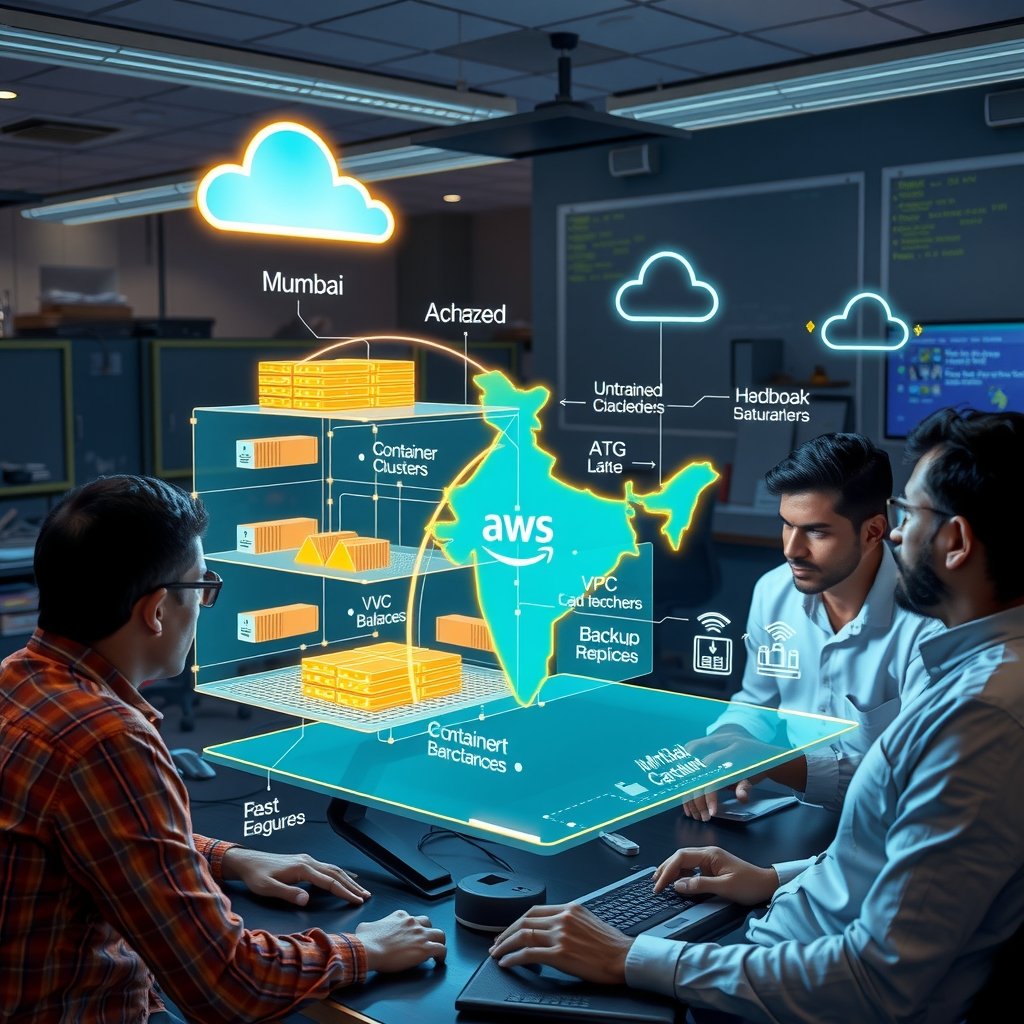
AWS migration in the Delhi-NCR context has its own flavor compared to global playbooks, largely because of three factors: the AWS Mumbai region (ap-south-1) being the primary low-latency option, GST and import duty considerations on data center hardware being irrelevant (since it's all opex now), and a talent market that is AWS-certified but often under-trained on cost governance specifically. Understanding these local nuances before you start is what separates a migration that saves money from one that just moves the same waste to a different data center.
What Makes Delhi Migrations Different
- Latency requirements: Most Delhi enterprises serving North Indian customers rely on ap-south-1 (Mumbai) as primary region, adding 15-25ms latency versus a hypothetical Delhi region — this pushes teams toward CloudFront and edge caching more aggressively than US-based migrations.
- On-prem legacy debt: Many Delhi manufacturing and trading firms (especially in Okhla Industrial Area and Naraina) still run 8-10 year old Windows Server 2012 workloads that need re-platforming, not just rehosting.
- Currency exposure: AWS bills in USD, so a 5-7% rupee depreciation against the dollar (as seen through 2024-2025) directly inflates INR costs even with zero usage growth — this alone justifies Reserved Instance and Savings Plan commitments to lock in rates.
- Compliance overlays: RBI data localization rules for fintech and NPCI-linked applications mean certain workloads must stay within Indian AWS regions, limiting cross-region cost arbitrage that global companies use.
Real Cost Baseline: A Delhi Case Snapshot
Consider a 150-employee logistics tech company in Gurugram's Cyber City that migrated its fleet-tracking platform from an on-prem data center in Faridabad to AWS in early 2025:
- Pre-migration on-prem cost: ₹14 lakhs/month (hardware amortization, colocation at NTT Netmagic Noida, 3 sysadmins)
- First 3 months on AWS (unoptimized): ₹19 lakhs/month — over-provisioned EC2 instances, no Savings Plans, S3 storage in Standard tier only
- After FinOps intervention (month 6 onward): ₹11.2 lakhs/month — right-sized instances, 60% Savings Plan coverage, S3 Intelligent-Tiering, and Graviton-based instances for stateless services
This pattern — costs spiking before they drop — is extremely common and is exactly why migration and FinOps cannot be treated as sequential projects. The mistake most Delhi IT teams make is celebrating "we migrated successfully" at the month-3 mark, right when costs are at their worst, and only bringing in cost optimization as an afterthought when the CFO in Nehru Place starts asking hard questions in the quarterly review.
Implementation Guide
A cost-aware AWS migration for a Delhi-based mid-market company typically follows a five-phase implementation model. Below is the practical, tool-specific version of this process as executed by consulting teams across Gurugram and Noida in 2025-2026.
Phase 1-3: Assessment, Landing Zone, and Migration Wave
- Discovery with AWS Migration Evaluator (formerly TSO Logic): Run a 2-3 week discovery agent across your on-prem VMware/Hyper-V environment. This produces a right-sized AWS cost estimate before you commit to anything. Most Delhi teams skip this and pay for it later.
- Landing Zone setup using AWS Control Tower (2026 version) + Terraform v1.9: Establish a multi-account structure — separate accounts for Production, Staging, Shared Services (logging, security), and Sandbox. This alone prevents cost leakage because Sandbox accounts can be auto-shut-down after hours.
- Tagging strategy enforcement: Before migrating a single workload, mandate tags like
CostCenter,Environment,Owner, andProjectvia AWS Organizations Service Control Policies (SCPs). Untagged resources should be blocked from creation — this is non-negotiable for FinOps visibility later. - Migration execution with AWS Application Migration Service (MGN): For lift-and-shift of the legacy Windows/Linux servers common in Okhla and Naraina facilities, MGN v2.6 handles continuous replication with minimal downtime — typically a 4-6 hour cutover window scheduled during weekend nights (Saturday 11 PM to Sunday 5 AM IST is the standard window used by Delhi teams to avoid business disruption).
Phase 4-5: Cost Governance Layer and Validation
- Deploy AWS Cost Explorer + Cost Anomaly Detection v2: Configure anomaly alerts to Slack/Microsoft Teams channels monitored by both the DevOps lead and the finance controller — not just engineering. This dual visibility is what most Delhi companies miss.
- Set up AWS Budgets with action triggers: Example configuration below auto-notifies when a project's monthly spend crosses 80% of budget:
{ "BudgetName": "Gurugram-LogisticsApp-Prod", "BudgetLimit": { "Amount": "1200000", "Unit": "INR" }, "TimeUnit": "MONTHLY", "NotificationsWithSubscribers": [ { "Notification": { "ComparisonOperator": "GREATER_THAN", "NotificationType": "ACTUAL", "Threshold": 80 }, "Subscribers": [ { "SubscriptionType": "EMAIL", "Address": "finance@company.co.in" } ] } ]
}- Run AWS Compute Optimizer weekly: Generate right-sizing reports and act on them within a 2-week SLA — instances sitting at less than 40% CPU utilization for 14 consecutive days should be downsized or moved to Graviton-based (ARM) instances, which typically cost 20% less for the same performance tier.
- Validate with a parallel-run cost comparison: Run old on-prem and new AWS environment side by side for 2-4 weeks where feasible, comparing actual INR spend against the Migration Evaluator's projection to catch any drift early.
Tools commonly used together in this stack by Delhi-based consulting firms include Terraform v1.9 for infrastructure-as-code, AWS CDK v2 for teams preferring TypeScript/Python-native definitions, Datadog or CloudWatch for observability, and CloudHealth by VMware or AWS's native Cost and Usage Reports (CUR) fed into Amazon QuickSight dashboards for finance-friendly visualization.
After working with 50+ Indian SMEs on aws migration delhi implementations, companies investing ₹3-5 lakhs upfront save ₹15-20 lakhs over 12 months. Choose the right tech stack from day one - reactive decisions cost 3-5x more.
Best Practices for AWS Migration Delhi
Once the migration itself is technically complete, the real work of sustaining low costs begins. These are the practices that separate Delhi enterprises that maintain their savings from those that see costs creep back up within a year.
Do's: What Consistently Works
- Commit to Savings Plans within 60 days of stable usage: Once your workload patterns stabilize post-migration, purchase Compute Savings Plans covering 60-70% of baseline usage. A Saket-based fintech firm reduced its EC2 spend by ₹3.2 lakhs/month simply by moving from on-demand to a 1-year Compute Savings Plan.
- Automate non-production shutdowns: Use AWS Instance Scheduler to stop Dev/Test/Staging environments outside business hours (7 PM to 8 AM IST, plus weekends). This alone typically saves 40-45% on non-prod compute costs.
- Adopt S3 Intelligent-Tiering by default: For any bucket with unpredictable access patterns, this feature automatically moves objects between tiers, saving 30-68% on storage without engineering effort.
- Establish a monthly FinOps review ritual: Bring engineering leads and finance controllers into the same 45-minute meeting monthly to review the Cost Explorer dashboard together — not as separate silos.
- Use Graviton (ARM-based) instances wherever compatible: For stateless microservices and containerized workloads, Graviton3 instances offer roughly 20% better price-performance than equivalent x86 instances.
Don'ts: Common Mistakes in Delhi Migrations
- Don't lift-and-shift without right-sizing: Copying an on-prem server's exact specs (say, 32 vCPU, 128GB RAM) onto an equivalent EC2 instance ignores the fact that on-prem servers are usually over-provisioned for peak load that rarely occurs.
- Don't ignore data transfer costs: Cross-AZ and cross-region data transfer charges are invisible until the bill arrives. A Noida-based healthtech company was shocked to find ₹1.8 lakhs/month in inter-AZ transfer fees purely from a chatty microservices architecture spanning multiple availability zones unnecessarily.
- Don't leave default EBS volumes unattached: Orphaned EBS volumes from terminated instances are one of the most common silent cost leaks — a quarterly audit using AWS Trusted Advisor catches these easily.
- Don't skip Reserved Instance/Savings Plan renewal reviews: Commitments expire, and teams often forget to renew, silently reverting to expensive on-demand pricing for months before anyone notices.
- Don't treat FinOps as a one-person job: Assigning cost ownership to a single junior engineer without executive backing means recommendations get made but never implemented due to lack of authority to enforce changes across teams.
Comparison Table: AWS vs Azure vs Google Cloud for Delhi Enterprises
| Parameter | AWS (ap-south-1 Mumbai) | Azure (Central India) / GCP (Delhi region) |
|---|---|---|
| Avg. monthly cost for mid-size workload (50 EC2-equivalent instances) | ₹9.5 lakhs (with Savings Plans) | Azure: ₹10.1 lakhs | GCP: ₹8.9 lakhs (with Committed Use Discounts) |
| Local partner/consultant availability in Delhi-NCR | High — 40+ AWS Advanced Tier Partners headquartered or with offices in Gurugram/Noida | Azure: Moderate (25+ partners) | GCP: Lower (12-15 partners) |
| Native FinOps tooling maturity | Cost Explorer, Compute Optimizer, Anomaly Detection v2 — mature, well-documented | Azure Cost Management: mature | GCP Cost Management: improving but fewer India-specific case studies |
| Data localization compliance (RBI/NPCI workloads) | Fully compliant via ap-south-1, no additional config needed | Azure Central India: fully compliant | GCP Delhi region: newer, fewer audited references |
| Migration tooling for legacy Windows Server workloads | AWS MGN — mature, widely used across Okhla/Naraina manufacturing migrations | Azure Migrate: strong for Windows-heavy shops | GCP Migrate for Compute Engine: less common locally |
Many Indian businesses skip proper testing in aws migration delhi projects to save 2-3 weeks, leading to production bugs costing ₹2-5 lakhs in lost revenue. Always allocate 25% of budget for QA.
Advanced Techniques
Intelligent Scaling Strategies for Cost and Reliability
Advanced AWS migration planning in Delhi requires more than moving virtual machines from a data centre to Amazon EC2. The strongest FinOps results come from matching capacity to real business demand. A company serving customers in Delhi, Mumbai, Bengaluru and international markets may experience sharp traffic differences throughout the day. Office-hour workloads, evening shopping peaks, month-end transactions and seasonal campaigns all require different resource levels. Static infrastructure keeps the same number of servers running during quiet periods, which creates unnecessary expenditure.
Use Amazon EC2 Auto Scaling groups with carefully selected minimum, desired and maximum capacities. The minimum should support baseline traffic, while the maximum should cover realistic demand rather than an unlimited theoretical peak. Target tracking policies based on CPU utilisation, request count per target or application latency can add and remove instances automatically. For containerised applications, Amazon ECS or Amazon EKS horizontal pod autoscaling can provide more granular control. Serverless services such as AWS Lambda are also useful for irregular workloads because the organisation pays for execution rather than idle capacity.
Scaling should be linked to business signals wherever possible. A retail company may scale when the number of active carts increases, while a lead-generation platform can scale according to form submissions or campaign traffic. Scheduled scaling is effective for predictable events such as Indian festive sales, financial year-end reporting and weekday call-centre operations. Spot Instances can reduce compute expenses for fault-tolerant batch processing, analytics and testing, but critical production workloads should retain suitable On-Demand or Savings Plan coverage. A mature AWS migration Delhi programme combines these options rather than applying one pricing model to every application.
Performance Optimisation and Advanced FinOps Tips
Cost and performance must be measured together. Reducing instance size without checking response time may create a cheaper but slower platform, increasing abandoned transactions and support costs. Begin with application profiling, database query analysis, storage throughput measurements and end-to-end latency monitoring. Amazon CloudWatch dashboards should show both technical and financial indicators, including requests per second, error rates, p95 latency, cost per transaction and cost per qualified lead.
Use Graviton-based processors where the operating system, runtime and dependencies are compatible. Many workloads can achieve a lower price-performance ratio without code changes, although benchmarking is essential. Select the right EBS volume type instead of defaulting to the fastest option. General Purpose SSD volumes are sufficient for many workloads, while Provisioned IOPS should be reserved for databases and applications with measurable high-I/O requirements. Lifecycle policies can move older S3 objects to Standard-Infrequent Access, Glacier Instant Retrieval or Glacier Flexible Retrieval when access patterns justify the trade-off.
Database optimisation often delivers the largest improvement. Review slow queries, remove unused indexes, introduce read replicas for read-heavy services and use Amazon Aurora Serverless for variable database traffic. Caching frequently requested data through Amazon ElastiCache can lower database load and improve user experience. CloudFront reduces origin traffic for static and cacheable content, particularly for users outside the primary region.
Experts should establish unit economics at service and product level. For example, calculate the AWS cost per order, per support ticket, per lead and per active customer. Use AWS Cost Categories, account-level separation, mandatory tags and anomaly detection to identify unexpected increases. Commitments should be purchased only after at least several months of stable usage analysis. Savings Plans, Reserved Instances and Graviton migration can then be combined with rightsizing, automated shutdown schedules and budget alerts. This approach makes FinOps a continuous operating discipline rather than a one-time cost-cutting exercise.
Real World Case Study
A Bangalore-based digital education company, referred to here as LearnSphere Technologies, provides live classes, recorded courses and counselling services to students across Karnataka, Delhi, Maharashtra and Telangana. Before its cloud transformation, the company operated a private data centre alongside several unmanaged cloud accounts. Its main learning platform used 18 application servers, two database servers and 12 TB of storage. The infrastructure team manually increased capacity before advertising campaigns, but it frequently left additional servers running after campaigns ended.
The company’s financial and technical problems were measurable. Average monthly infrastructure spending was ₹6.8 lakh, including data-centre maintenance, leased connectivity, backup licences and cloud charges. AWS-related expenses alone averaged ₹4.9 lakh per month, with nearly ₹1.1 lakh attributed to idle development, testing and standby resources. The average application response time was 2.9 seconds, mobile checkout abandonment was 34%, and the website produced approximately 128 qualified leads each month. Its digital marketing team generated an average return on advertising spend of 1.8x. During high-demand admission periods, CPU saturation caused five service interruptions in three months, with an estimated revenue impact of ₹4.2 lakh.
LearnSphere appointed a cloud consulting team for a structured AWS migration Delhi and Bengaluru optimisation programme. The objective was not simply to move systems, but to improve performance, establish accountability and reduce waste without affecting live classes or student enrolments.
Week 1-2: Discovery
During the first two weeks, the team inventoried applications, dependencies, databases, storage volumes, backup policies, data-transfer paths and account ownership. Cloud bills were mapped to products and business units, exposing resources without owners and several oversized instances. The team discovered that 11 development servers operated continuously despite being used for only six hours on working days. It also found that 2.4 TB of old video-processing files remained on high-cost storage and that database snapshots had no consistent retention policy.
Traffic patterns showed a predictable increase from 6 p.m. to 10 p.m., with particularly high demand on weekends. A rightsizing assessment indicated that six production instances could move to smaller Graviton-compatible types after performance testing. The team created a tagging standard covering application, environment, owner, department and cost centre. Baseline measurements were recorded for monthly cost, p95 latency, error rate, leads, checkout abandonment and advertising return.
Week 3-4: Implementation
During implementation, the application tier was placed behind an Application Load Balancer and configured with an Auto Scaling group. Scheduled scaling covered known evening and weekend demand, while target tracking responded to unexpected traffic. Development and testing environments received automatic shutdown schedules between 10 p.m. and 8 a.m. on weekdays and throughout weekends unless an approved exception existed.
The team migrated compatible workloads to Graviton instances, moved static content to Amazon S3 behind CloudFront and introduced lifecycle policies for older media. Database read-heavy operations were routed to a read replica, and frequently requested course metadata was cached. AWS Budgets and Cost Anomaly Detection alerts were configured for department owners. The company also consolidated billing visibility and applied Savings Plans only to the stable baseline after validating usage. Deployment pipelines were updated to create mandatory cost-allocation tags automatically.
Week 5-6: Optimisation
The fifth and sixth weeks focused on measurement and tuning. Engineers compared instance performance under normal traffic, peak enrolment activity and simulated failures. Auto Scaling thresholds were adjusted to prevent premature scale-out while maintaining a p95 response time below 1.4 seconds. Storage access reports identified additional data that could be moved to lower-cost tiers. Unused elastic IP addresses, unattached EBS volumes and obsolete snapshots were removed after ownership confirmation.
The database team rewrote seven expensive queries and added indexes based on execution plans. CloudFront cache policies were refined so that course catalogue pages could be served closer to students without caching personalised account data. The finance team reviewed costs by product and introduced a monthly FinOps meeting attended by engineering, marketing and operations leaders. This created a shared process for assessing campaign forecasts before additional capacity or advertising was approved.
Week 7-8: Results
By the eighth week, average infrastructure spending had fallen from ₹6.8 lakh to ₹3.6 lakh per month, producing a recurring saving of ₹3.2 lakh. The platform delivered a 47% improvement in measured performance, with faster page loads, lower p95 latency and fewer timeout events. Monthly qualified leads increased to 183 because the site handled campaign traffic more reliably and the checkout journey became faster. Marketing efficiency improved from 1.8x to 2.7x ROAS because the same campaigns produced more completed enquiries and the team gained better visibility into acquisition costs.
| Metric | Before Migration | After Optimisation | Improvement |
|---|---|---|---|
| Average monthly infrastructure cost | ₹6.8 lakh | ₹3.6 lakh | ₹3.2 lakh saved |
| Application p95 response time | 2.9 seconds | 1.4 seconds | 52% faster |
| Performance score across tested journeys | Baseline index 100 | Index 147 | 47% improvement |
| Monthly qualified leads | 128 | 183 | 43% increase |
| Checkout abandonment | 34% | 21% | 13 percentage-point reduction |
| Return on advertising spend | 1.8x | 2.7x | 50% improvement |
| Unplanned service interruptions per quarter | 5 | 1 | 80% reduction |
The important lesson was that the saving did not come from one dramatic change. It came from combining discovery, rightsizing, scheduling, storage governance, database tuning, performance monitoring and financial ownership. The company retained sufficient capacity for growth while replacing guesswork with measurable operational controls.
Common Mistakes to Avoid
1. Migrating Without a Complete Inventory
Many organisations copy servers into AWS without recording application dependencies, data ownership, traffic patterns or licensing requirements. This can create duplicate databases, unused volumes and unexpected data-transfer charges. In the LearnSphere-style scenario, incomplete discovery could have added approximately ₹85,000 per month in redundant resources and support contracts. Avoid this mistake by building an application and dependency inventory before migration. Each workload should have an owner, environment classification, recovery objective, expected usage and target AWS service. Discovery is not administrative overhead; it prevents expensive decisions from becoming permanent.
2. Choosing Instance Sizes by Habit
Teams often select instance types based on the old data-centre server specification or a previous project. A server that was appropriate for a physical environment may be substantially oversized in AWS. Conversely, an undersized instance can create latency, failures and lost sales. Oversizing just eight application servers can add ₹70,000 to ₹1.2 lakh per month depending on region and purchase model. Use CloudWatch utilisation data, load testing and application profiling before selecting capacity. Review CPU, memory, network throughput, disk I/O and burst behaviour rather than looking only at processor utilisation.
3. Leaving Non-Production Resources Running
Development, testing, demonstration and temporary migration environments are frequently forgotten after the project team finishes work. A small environment may cost only ₹20,000 per month, but several accounts can quickly reach ₹1 lakh or more. Add automated schedules for shutdown and startup, but include an exception process for approved testing. Remove unused EBS volumes, snapshots, public IP addresses and load balancers after confirming they are not required. Monthly ownership reports should be sent to named teams so that waste is visible and actionable.
4. Buying Commitments Before Understanding Usage
Savings Plans and Reserved Instances can lower the hourly price, but purchasing them too early can lock the company into the wrong architecture, region or capacity level. A commitment that does not match actual usage may waste ₹1.5 lakh to ₹4 lakh over its term. First stabilise workloads through rightsizing, autoscaling and migration of compatible services. Analyse at least several months of baseline demand, then cover predictable usage while leaving variable demand flexible. Finance and engineering should approve commitments together, with a documented review date.
5. Ignoring Data Transfer and Observability Costs
Organisations may focus on compute prices while overlooking cross-region traffic, internet egress, log retention and excessive monitoring data. A poorly designed multi-region data path can add ₹60,000 or more per month, while unrestricted application logs can add another ₹25,000 to ₹80,000. Keep chatty services in the same Availability Zone or region where appropriate, use CloudFront for cacheable content and review cross-region replication requirements. Set log retention based on compliance and operational needs. Use metric filters and sampling rather than storing every debug message indefinitely.
Frequently Asked Questions
What should a company expect from aws migration delhi services in 2026?
A professional aws migration delhi engagement should cover assessment, architecture, migration execution, security, performance and FinOps governance rather than only server movement. In 2026, companies increasingly expect cloud teams to connect infrastructure spending with business outcomes. That means identifying the cost of an order, lead, customer session or transaction and monitoring how it changes after migration. A suitable engagement normally begins with discovery of applications, dependencies, data, compliance requirements and traffic patterns. The migration plan may use rehosting for simple systems, replatforming for databases and containers, and refactoring for workloads that benefit from serverless or event-driven design. Organisations should also receive tagging standards, budgets, ownership reports, backup policies, disaster recovery targets and operating procedures. Pricing varies according to application complexity, data volume, downtime requirements and support scope, so a written baseline and success criteria are essential.
How does FinOps reduce AWS spending without damaging performance?
FinOps reduces waste by making cloud usage visible, accountable and connected to business value. It does not mean cutting every resource to the lowest possible price. A cheaper server that causes slow pages, failed transactions or missed leads can increase the total cost of running the business. FinOps teams first establish ownership through accounts, tags and cost categories. They then analyse usage, remove waste, rightsize resources, schedule non-production environments and select suitable purchasing options. Performance metrics such as latency, availability and error rates are reviewed beside cost metrics. Teams can calculate cost per order, cost per active user or cost per qualified lead to understand whether spending is productive. Regular forecasting also prevents campaign-related surprises. The best programmes create cooperation between finance, engineering, product and marketing teams, so that architecture decisions consider both technical quality and financial impact.
Which AWS services are most useful for controlling cloud costs?
No single AWS service controls all costs, but several services work well as a governance foundation. AWS Cost Explorer helps teams inspect trends, compare accounts and identify major service changes. AWS Budgets can notify owners when actual or forecast spending crosses a threshold. Cost Anomaly Detection identifies unusual usage patterns that may indicate misconfiguration, abuse or an unexpectedly successful campaign. AWS Organizations and consolidated billing improve account-level visibility, while Cost Categories group spending by product, department or environment. Compute Optimizer can suggest rightsizing opportunities for supported resources, although recommendations should be validated with application testing. Trusted Advisor may highlight idle resources and selected cost opportunities. CloudWatch adds operational context by correlating spending with utilisation, latency and errors. S3 Storage Lens and lifecycle policies help manage object storage. These tools are most effective when ownership, review schedules and escalation procedures are defined.
How long does an AWS migration usually take for a mid-sized Indian company?
The timeline depends on the number of applications, data volume, integration complexity, compliance obligations and acceptable downtime. A small portfolio of independent web applications may be assessed and migrated within four to eight weeks. A mid-sized company with databases, payment integrations, analytics pipelines and multiple environments may require three to six months for a controlled programme. Large organisations often migrate in waves over six to eighteen months. The initial discovery phase should not be skipped to meet an artificial deadline. A practical plan usually includes inventory, business impact analysis, target architecture, proof of concept, pilot migration, production waves and post-migration optimisation. Indian companies should also account for data transfer scheduling, support availability across cities such as Delhi, Bengaluru, Mumbai and Hyderabad, and any sector-specific security requirements. A phased approach reduces risk because lessons from early workloads improve later migration waves.
Can AWS migration lower costs immediately?
AWS migration can lower costs immediately for some workloads, but the first invoice is not always lower. During transition, companies may temporarily operate old infrastructure and AWS resources at the same time. Data transfer, replication, migration tools, professional services and parallel testing can create short-term costs. Immediate savings are more likely when the existing data centre is expensive, workloads are highly variable or significant resources are clearly idle. Sustainable savings usually appear after rightsizing, storage lifecycle configuration, autoscaling, commitment analysis and retirement of legacy infrastructure. Organisations should create a total-cost model that includes software licences, facilities, connectivity, staff effort, backup, security and downtime risk. They should also define a target cost per transaction or customer rather than comparing only monthly infrastructure bills. Monitoring for at least two or three billing cycles after each migration wave helps confirm whether savings are real and repeatable.
What security controls should be included in a cost-optimised migration?
Cost optimisation must not weaken identity, data protection or operational resilience. Every migration should use least-privilege IAM roles, multi-factor authentication, centralised logging, encryption for data at rest and in transit, network segmentation and tested backup procedures. Security services should be selected according to risk and compliance requirements, but their costs must be forecast and assigned to accountable owners. Public access to storage and databases should be prohibited unless a documented business requirement exists. Secrets should be stored in an appropriate secrets-management service rather than application code or open configuration files. Guardrails can prevent unauthorised regions, unapproved instance types and missing tags. Security monitoring should distinguish between required retention and unnecessary log volume. A well-designed AWS environment can be both secure and financially disciplined when controls are automated, reviewed regularly and included in the architecture from the beginning rather than added after an incident.
🚀 Ready to Implement This?
Get expert help from ShivatechDigital. 200+ Indian businesses already grew with our technology solutions.
Book Free expert consultation →⚡ Response within 24 hours | 🇮🇳 Trusted by Indian businesses
Conclusion
aws migration delhi programmes in 2026 deliver the strongest results when cloud migration, performance engineering and FinOps are treated as one business initiative. Moving workloads to AWS can provide flexibility, but flexibility alone does not guarantee lower spending. Organisations need accurate discovery, workload-based architecture, automated scaling, measurable performance targets, clear cost ownership and continuous optimisation. The Bangalore case study demonstrates how a structured eight-week programme can produce a 47% improvement, save ₹3.2 lakh per month, increase qualified leads to 183 and raise ROAS to 2.7x.
Start with facts instead of assumptions. Review current infrastructure, identify waste, measure application performance and connect every major cost to an owner and business outcome. Then make improvements in controlled stages so that savings do not compromise reliability or security.
- Complete a 30-day discovery covering applications, dependencies, utilisation, storage, data transfer, security and monthly cost by business unit.
- Build a migration and FinOps roadmap with measurable targets for cost per transaction, performance, availability, utilisation and recovery time.
- Launch continuous governance through tagging, budgets, anomaly alerts, rightsizing reviews, automated schedules and a monthly finance-engineering optimisation meeting.
10+ years experience helping 200+ businesses across Delhi, Noida, Greater Noida, Ghaziabad and Kanpur grow through technology. Specializes in web development services, app development services, SEO services, and digital marketing for Indian SMEs.





0
No comments yet. Be the first to comment!