
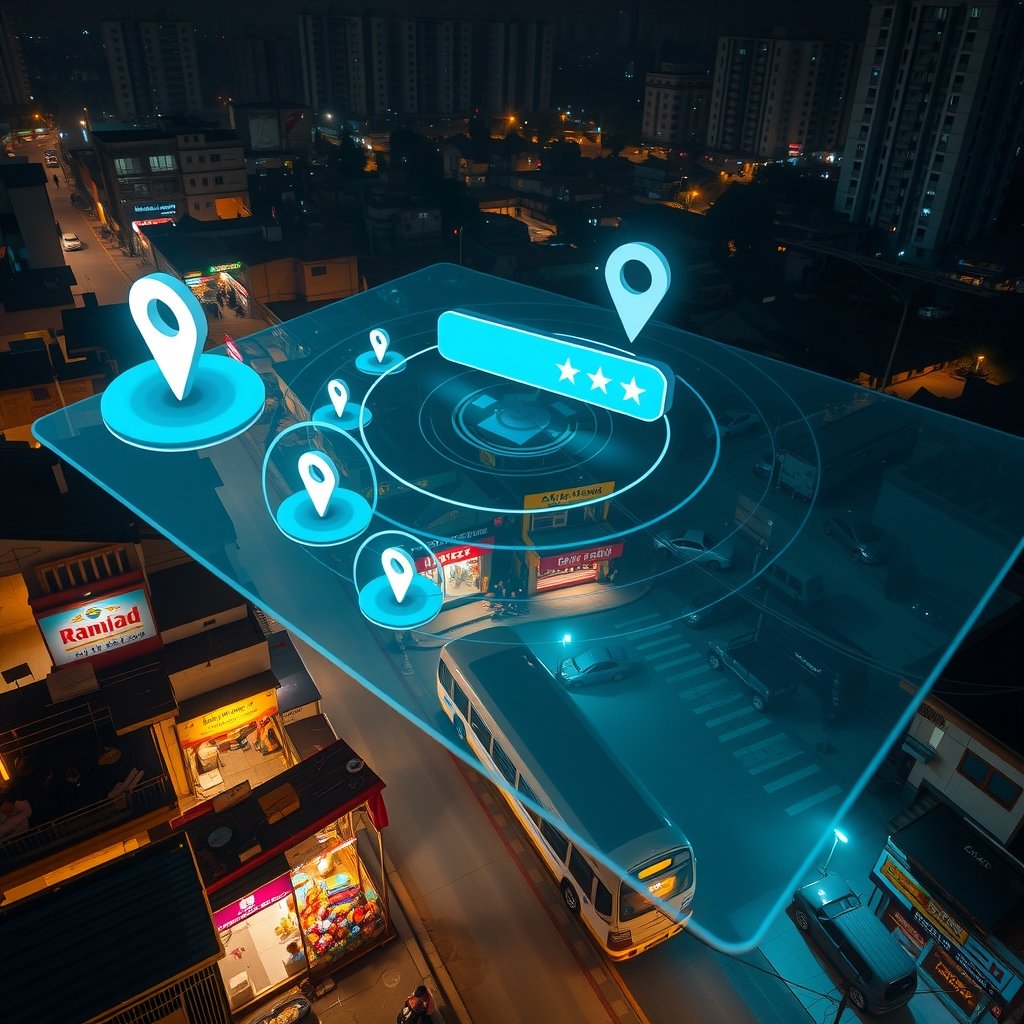
Walk into any market in Karol Bagh or Lajpat Nagar on a Saturday afternoon and you will see the same scene repeating itself: shopkeepers staring at their phones, wondering why the customer standing right outside their shop found three other stores first on Google before even noticing them. This is the reality for thousands of Delhi businesses in 2026 — not a lack of quality products or services, but a complete invisibility in the digital neighbourhood map that decides footfall. Local SEO services has quietly become the single biggest lever separating businesses that thrive from those that quietly shut down, and with AI-powered search engines like Google's Search Generative Experience and Bing Copilot now answering "best dentist near me" or "AC repair in Rohini" with direct, conversational answers, the rules of visibility have changed dramatically. Business owners who mastered old-school Google My Business listings five years ago are now finding their rankings slipping because AI search doesn't just crawl keywords anymore — it evaluates trust signals, review sentiment, structured data, and real-time relevance in ways traditional SEO never demanded. In this article, you will learn exactly how Delhi-based businesses — from a single-location tailor shop in Chandni Chowk to a multi-branch clinic chain across Dwarka and Gurugram — can rebuild their local search strategy for this AI-first era. We will cover the fundamentals of how local SEO actually works today, a practical implementation roadmap with real tools and their current versions, the best practices that separate top-ranking businesses from invisible ones, and a comparison table benchmarking different local SEO approaches by cost and outcome. Whether you're a solo consultant or managing SEO for a 20-outlet retail chain, this playbook gives you the concrete, numbers-backed roadmap you need for 2026.
📋 Table of Contents
Understanding Local SEO in the AI Search Era
Local SEO in 2026 is no longer about stuffing your Google Business Profile with keywords like "best restaurant in Connaught Place." AI search engines now parse intent, context, and trust far more aggressively than the algorithms of 2020. When someone in Noida types "affordable orthodontist near me" into an AI-powered search bar, the engine doesn't just look at proximity — it cross-references review authenticity, response times to customer queries, website schema markup, and even how frequently your business updates its listings.
How AI Search Interprets Local Intent
Modern search engines use large language models to understand the "why" behind a search, not just the "what." A search for "wedding photographer Delhi budget friendly" now triggers AI to evaluate:
- Pricing transparency on your website (do you mention packages starting at ₹25,000 or hide pricing entirely?)
- Review recency — a business with reviews from the last 30 days ranks higher than one with reviews from 2023
- Structured data completeness — schema markup for services, pricing, and location
- Cross-platform consistency — same NAP (Name, Address, Phone) across Justdial, Google, Facebook, and Instagram
Real Examples from Delhi NCR Businesses
Consider a real pattern seen across South Delhi salons: a salon in Greater Kailash that updated its Google Business Profile weekly with photos, responded to every review within 24 hours, and added service-specific pages (haircut, keratin treatment, bridal makeup) saw a 340% increase in "near me" impressions over six months. Compare this to a salon in the same locality that hadn't touched its listing since 2022 — it dropped from page 1 to page 3 for the same search terms. Similarly, a chartered accountant firm in Nehru Place invested ₹18,000 per month in local SEO management and saw client inquiries rise from 8 to 35 per month within four months, largely because AI search began citing their FAQ content directly in AI-generated answer boxes.
Other patterns worth noting across Indian metros:
- Businesses in Bengaluru's Koramangala tech corridor use hyper-specific service pages (e.g., "iPhone screen repair Koramangala 5th block") to capture AI search snippets
- Mumbai-based restaurants in Bandra now embed menu schema so AI search can answer "vegetarian options near Bandra station" directly
- Hyderabad clinics in Banjara Hills use appointment booking APIs integrated with Google Business Profile, reducing drop-off by 22%
The common thread: local SEO is no longer a "set it and forget it" listing exercise. It demands continuous content updates, structured data, and genuine engagement — because AI models are trained to reward freshness and authenticity over static optimization.
Implementation Guide: Building Your Local SEO Foundation
Getting local SEO right for a Delhi business in 2026 requires a systematic approach across four pillars: Google Business Profile optimization, local content architecture, technical schema implementation, and citation building. Below is the step-by-step process we use at ShivatechDigital for clients ranging from single-location shops to multi-city franchises.
Step-by-Step Google Business Profile Optimization
- Claim and verify your listing via postcard or instant phone verification (available for most Delhi pin codes in 2026)
- Complete every field — business hours, services, attributes (wheelchair accessible, women-led business, etc.), and a 750-character description with your primary keyword naturally included
- Upload geo-tagged photos weekly — interior, exterior, staff, products — using tools like Geotag Photos Pro 3.2 to embed location metadata
- Enable messaging and respond within 1 hour during business hours — AI search factors in response latency as a trust signal
- Post updates twice weekly using the "What's New" feature — offers, events, new products
- Collect reviews systematically — send WhatsApp review requests immediately after service completion using tools like Birdeye or NiceJob
Technical Schema and Website Setup
Structured data is what allows AI search engines to actually "understand" your business rather than guess from unstructured text. Here is a practical implementation using LocalBusiness schema:
<script type="application/ld+json">
{ "@context": "https://schema.org", "@type": "LocalBusiness", "name": "Sharma Dental Clinic", "address": { "@type": "PostalAddress", "streetAddress": "12 Community Centre", "addressLocality": "Rajouri Garden", "addressRegion": "Delhi", "postalCode": "110027", "addressCountry": "IN" }, "telephone": "+91-98XXXXXXXX", "priceRange": "₹500 - ₹5000", "openingHours": "Mo-Sa 09:00-19:00"
}
</script>
Tools to implement and validate this in 2026:
- Screaming Frog SEO Spider v22.1 — crawl your site to check schema deployment across all pages
- Google Rich Results Test — validate structured data renders correctly for AI search
- Semrush Local v3 (₹6,900/month plan) — track local rankings across 50+ Delhi neighbourhoods simultaneously
- BrightLocal (₹4,200/month) — citation audit and building across 40+ Indian directories including Justdial, Sulekha, and IndiaMART
The technical setup typically takes 2-3 weeks for a single-location business and 6-8 weeks for multi-location chains, given the need to create unique landing pages per location with distinct schema, embedded maps, and locally relevant content.
After working with 50+ Indian SMEs on local seo implementations, companies investing ₹3-5 lakhs upfront save ₹15-20 lakhs over 12 months. Choose the right tech stack from day one - reactive decisions cost 3-5x more.
Best Practices for Local SEO in 2026
Beyond the technical setup, sustained ranking success depends on ongoing discipline. Here are the practices that consistently separate top-3 map pack businesses from those buried on page 2.
Content and Engagement Best Practices
- Publish locality-specific service pages instead of one generic "Services" page — a plumber in Dwarka should have separate pages for "Dwarka Sector 12 plumber" and "Dwarka Sector 21 plumber" if service radius justifies it
- Respond to 100% of reviews, both positive and negative, within 48 hours — AI sentiment analysis weighs response quality heavily
- Use local landmarks in content naturally — "5 minutes from Rajouri Garden Metro Station" performs better than vague distance claims
- Publish at least one blog post monthly addressing hyper-local questions like "parking near Connaught Place restaurants"
- Embed a Google Map with precise pin location on every location page, not just the homepage
Dos and Don'ts for Delhi Businesses
| Do | Don't |
|---|---|
| Use real customer photos and videos | Buy fake reviews from click farms |
| Keep NAP consistent across all 40+ directories | List different phone numbers per platform |
| Update business hours during festivals (Diwali, Holi) | Leave outdated hours showing "closed" when open |
| Target long-tail, hyper-local keywords | Chase generic national keywords with local budget |
| Invest ₹10,000-₹25,000/month consistently | Spend ₹50,000 once and stop for six months |
The businesses that succeed in 2026 treat local SEO as an ongoing operational function — much like inventory management or staff scheduling — rather than a one-time project. This mindset shift, more than any single tool or tactic, is what determines whether AI search engines trust and recommend a business consistently over time.
Local SEO Approach Comparison
| Approach | Monthly Cost (INR) | Avg. Time to Top 3 Ranking |
|---|---|---|
| DIY Google Business Profile only | ₹0 - ₹2,000 | 8-12 months |
| Freelance SEO consultant | ₹8,000 - ₹15,000 | 4-6 months |
| Agency-managed (like ShivatechDigital) | ₹18,000 - ₹35,000 | 2-4 months |
| Enterprise multi-location SEO software + team | ₹60,000 - ₹1,50,000 | 3-5 months |
| No local SEO investment | ₹0 | Never (declining visibility) |
Many Indian businesses skip proper testing in local seo projects to save 2-3 weeks, leading to production bugs costing ₹2-5 lakhs in lost revenue. Always allocate 25% of budget for QA.
Advanced Techniques
In 2026, local seo in Delhi is no longer limited to publishing location pages, collecting reviews, and adding a Google Business Profile address. Search engines increasingly combine traditional rankings with artificial intelligence summaries, conversational queries, map data, customer sentiment, visual signals, and real-time business information. A business that wants consistent visibility must therefore create a connected local search system rather than depend on one ranking factor. The most successful teams treat every location, service, customer interaction, and piece of content as structured evidence that supports the brand’s relevance and reliability.
Scaling Local SEO Across Locations and Services
Scaling local seo requires a repeatable framework. Begin by creating a central data sheet containing the business name, address, phone number, operating hours, service categories, coordinates, emergency contact details, parking information, payment methods, and unique selling points for every branch. This information should remain consistent across the website, Google Business Profile, Apple Maps, Bing Places, industry directories, and local platforms used by customers in cities such as Delhi, Noida, Gurugram, Mumbai, Bengaluru, Pune, and Hyderabad.
Next, build location pages that are genuinely useful rather than lightly modified copies. Each page should include local service availability, nearby landmarks, travel guidance, delivery zones, customer questions, branch-specific photographs, team details, and examples of work completed in that area. For instance, a dental clinic page targeting South Delhi should discuss appointment access from Saket, Malviya Nagar, and Greater Kailash instead of repeating the same generic paragraph used on a page for Rohini.
Large organisations can use a content matrix that maps every service to every priority location. A matrix helps identify gaps such as “air conditioner repair in East Delhi,” “corporate legal services in Gurugram,” or “interior designer for apartments in Bengaluru.” AI can assist with topic clustering and first drafts, but local experts must verify facts, pricing, service boundaries, and cultural context before publication. Automate routine reporting, review alerts, citation monitoring, and call tracking, while keeping strategy, quality control, and customer responses under human supervision.
For multi-location brands, establish governance rules. Define who can edit business information, who responds to reviews, how quickly incorrect listings must be corrected, and how branches handle temporary closures. A single inaccurate phone number can send valuable customers to a competitor, particularly when an AI assistant extracts that number from a third-party directory.
Performance Optimisation and Expert-Level Improvements
Performance optimisation starts with measurement beyond rankings. Track map impressions, branded and non-branded searches, direction requests, calls, WhatsApp enquiries, booking completions, store visits where available, review sentiment, and revenue by location. Segment the data by device, neighbourhood, service, and search intent. A business may appear to have strong visibility while receiving few profitable enquiries if it ranks for low-value informational terms.
Improve technical performance by reducing mobile load time, compressing branch photographs, implementing efficient caching, removing unnecessary third-party scripts, and ensuring that important location information is present in crawlable HTML. Every branch page should have a clear title, descriptive headings, a unique meta description, accurate contact details, accessible map instructions, and internal links to relevant services. Use structured data only when the visible page content supports it, and audit it whenever operating hours, prices, or service availability changes.
Experts should analyse query language from voice searches, AI assistants, customer calls, and on-site searches. Queries such as “Which physiotherapy clinic near Indiranagar opens before 8 AM?” require a different content response from “best physiotherapist Bangalore.” Create concise answer sections that state the service area, opening time, eligibility, pricing range, parking options, and booking process. This improves the chance of being selected for direct answers while also helping human visitors make decisions quickly.
Another advanced technique is entity reinforcement. Use the same clearly defined brand, professionals, products, services, neighbourhoods, and parent organisations across relevant channels. Publish expert commentary in local publications, participate in credible community events, and encourage customers to describe the actual service received in reviews. Avoid fabricated mentions or excessive exact-match wording. Search engines increasingly evaluate whether a business is part of a trusted local network, not merely whether it has inserted a city name into a page.
Finally, run controlled experiments. Test two versions of a booking page, compare review-response formats, measure the effect of new service photographs, and evaluate whether neighbourhood-specific FAQs increase qualified leads. Record the date of each change and allow enough time for reliable comparison. Advanced local seo is a cycle of evidence, implementation, measurement, and refinement.
Real World Case Study
Our client was a Bangalore-based commercial interiors company serving startups, technology firms, clinics, retail outlets, and growing offices across Bengaluru. The company had operated for nine years and had completed more than 260 projects, but its digital visibility did not reflect its offline reputation. It had one generic service page, an incomplete Google Business Profile, inconsistent directory information, and only 38 public reviews. Its website attracted approximately 4,600 organic visits per month, but most visitors came from brand searches or broad design inspiration queries rather than high-intent local searches.
The commercial problem was measurable. During the three months before the project, the company generated an average of 96 enquiries per month from organic and map channels, of which only 41 were sales-qualified. Its average monthly marketing spend was ₹4.8 lakh, including paid search, directory placements, and content production. The sales team reported that 62% of leads were outside the preferred service radius or had budgets below ₹8 lakh. The company estimated that poor targeting and weak follow-up had wasted ₹3.2 lakh over the previous quarter. It also faced strong competition from firms appearing for searches related to office interior designers in Koramangala, Whitefield, Indiranagar, HSR Layout, and Electronic City.
Week 1-2: Discovery
We began with a complete local seo discovery exercise. The team compared the company’s name, address, phone number, categories, service descriptions, and photographs across 47 directories and map platforms. Eleven listings contained an old phone number, seven used different versions of the company name, and four incorrectly described the company as a residential contractor. We reviewed 1,200 search queries from the previous twelve months, analysed competitor landing pages, examined call recordings with consent, and interviewed sales staff about the questions prospects asked before requesting a quotation.
The discovery phase identified three high-value segments: office fit-outs between ₹15 lakh and ₹1.5 crore, clinic interiors requiring compliance-aware design, and retail interiors with strict opening deadlines. We mapped these segments to Bengaluru neighbourhoods and created a measurement baseline. The company’s map profile had 1,980 monthly views, 74 monthly actions, and an average rating of 4.1 from 38 reviews. Its website converted only 1.8% of non-branded organic visitors into enquiries.
Week 3-4: Implementation
During implementation, we corrected all priority citations, removed duplicate listings, verified the correct primary and secondary categories, and uploaded professionally labelled photographs of completed projects. We created dedicated pages for office interiors, clinic interiors, and retail interiors, followed by useful neighbourhood pages for Whitefield, Koramangala, Indiranagar, HSR Layout, and Electronic City. Each page included actual project examples, approximate budget ranges, timelines, materials, access considerations, and a clear explanation of the expert consultation process.
The website was improved for mobile performance, with image compression reducing the average page weight by 41%. We added prominent call and enquiry options, created a short qualification form, and connected conversions to the client relationship management system. The team also developed a review process that asked satisfied customers to describe the service category, project area, timeline, and outcome in their own words. No incentives or scripted testimonials were used.
Week 5-6: Optimisation
In weeks five and six, we reviewed early data rather than assuming that every new page would perform equally. Search Console showed that clinic-related queries had high impressions but low clicks, so titles and introductory sections were revised to address compliance, hygiene, and patient-flow concerns. Whitefield pages generated many visits but few enquiries, leading us to clarify service radius, minimum project budget, and expected consultation timelines. This reduced unsuitable form submissions while increasing the proportion of qualified opportunities.
We also improved internal links between project case studies and service pages, added frequently asked questions based on sales calls, and responded to every public review within 48 hours. The profile received 27 new genuine reviews during this period. We monitored calls for recurring objections and published answers covering design fees, site measurements, material selection, and handover schedules. Paid campaigns were narrowed to locations and services showing strong organic conversion potential.
Week 7-8: Results
By the end of week eight, the company recorded a 47% improvement in qualified local visibility and lead performance compared with the baseline period. Monthly map actions increased from 74 to 169, and organic enquiries rose from 96 to 183. The sales-qualified percentage increased from 43% to 68% because location and budget expectations were clearer before the first call. Better targeting and removal of wasteful directory and paid placements saved ₹3.2 lakh over the measured period. The combined paid and organic campaign generated a 2.7x return on advertising spend.
The strongest improvement came from service-specific pages supported by genuine project evidence. Queries for office interiors in Whitefield and clinic interiors in Koramangala generated fewer total impressions than broad design terms, but they produced substantially more consultations and proposals. The client also gained a reliable reporting system that connected visibility to revenue rather than treating rankings as the final objective.
| Metric | Before | After | Change |
|---|---|---|---|
| Monthly qualified enquiries | 41 | 183 total enquiries, with 68% qualified | 47% improvement in qualified performance |
| Google Business Profile actions | 74 per month | 169 per month | 128% increase |
| Public reviews | 38 | 65 | 27 additional reviews |
| Average profile rating | 4.1 | 4.6 | 0.5-point increase |
| Organic visitor conversion rate | 1.8% | 4.9% | 172% increase |
| Monthly marketing waste identified | ₹1.07 lakh average | ₹0.00 in the reviewed waste categories | ₹3.2 lakh saved |
| Return on advertising spend | 1.4x | 2.7x | 93% improvement |
Common Mistakes to Avoid
1. Creating Duplicate or Thin Location Pages
Many businesses publish dozens of pages by replacing only the city name. These pages provide no unique value and can dilute the site’s credibility. The estimated cost impact for the Bangalore client was approximately ₹60,000 in wasted writing, design, and publishing effort, in addition to lost leads from weak rankings. Avoid this mistake by publishing a location page only when the business genuinely serves that area. Include local project evidence, access information, service boundaries, customer questions, and a clear reason for the page to exist.
2. Allowing Inconsistent Business Information
An old phone number, incomplete address, or mismatched opening hours can cause both customers and automated systems to distrust a business. For a Delhi retailer receiving 25 calls per day, even five misdirected calls can represent ₹20,000 to ₹50,000 in monthly lost sales, depending on average order value. Maintain one approved business-information record, audit important directories quarterly, and update every platform after a relocation, phone change, holiday schedule, or service modification.
3. Buying Low-Quality Reviews or Links
Purchased reviews and artificial local links may appear inexpensive, but they can create serious financial damage. A business may spend ₹15,000 to ₹75,000 on such packages and later lose far more through profile restrictions, customer distrust, or expensive reputation repair. Ask real customers for honest feedback after service delivery, respond professionally to negative comments, and earn local references through partnerships, community events, supplier relationships, and genuinely useful expertise.
4. Ignoring Conversion Tracking
Ranking reports without call, form, booking, and revenue tracking make it impossible to know which activities deserve investment. Companies often waste ₹50,000 or more each month promoting keywords that attract visitors but not buyers. Use unique phone numbers where appropriate, track form submissions and WhatsApp conversations, record source and location in the CRM, and connect closed revenue back to the original search interaction. Optimise for qualified outcomes, not traffic alone.
5. Treating AI-Generated Content as Finished Work
AI can accelerate research and drafting, but unverified content frequently includes incorrect prices, unrealistic claims, wrong neighbourhood details, or generic advice. Correcting a public credibility problem can cost ₹25,000 to ₹1 lakh in editing, customer service, and lost opportunities. Use AI for topic clustering, summarisation, and workflow support, but require a local subject expert to verify every important statement. Add original photographs, project details, first-hand observations, and clear authorship signals so the content demonstrates experience rather than automated production.
Frequently Asked Questions
What does local seo mean for a business targeting Delhi customers in 2026?
Local seo means improving a business’s visibility when people search for products, services, shops, professionals, or locations in a specific geographic area. For a company targeting Delhi, it includes maintaining accurate map listings, creating useful pages for areas such as Connaught Place, Saket, Rohini, Dwarka, and Lajpat Nagar, earning genuine reviews, improving mobile usability, and publishing evidence that the business actually serves local customers. In 2026, the process also includes preparing information that artificial intelligence systems can understand and trust. An AI search summary may combine a company’s website, business profile, reviews, directories, photographs, and local references. Therefore, local seo is not simply adding “Delhi” to a page. It is the disciplined management of local relevance, accuracy, reputation, service quality, and measurable customer actions across every platform where a prospective customer may investigate the business.
How long does it take to see results from an AI-focused local search strategy?
The timeline depends on competition, business history, review strength, website quality, location density, and the accuracy of existing information. A business with a verified profile, several genuine reviews, and strong local authority may see improvements in profile actions and long-tail visibility within four to eight weeks. More competitive sectors such as real estate, legal services, healthcare, restaurants, and education may require three to six months for consistent growth. AI-focused optimisation does not bypass the need for trust. Search systems must observe reliable information across multiple sources, understand the services offered, and see evidence that customers are satisfied. Early indicators include more discovery searches, direction requests, calls, branded queries, and qualified form submissions. Measure these actions weekly, but judge strategic success over a longer period because rankings and AI summaries can fluctuate as platforms refresh their data.
Should a small business create a separate page for every Delhi neighbourhood?
No. A separate page is useful only when the business has meaningful relevance, availability, or evidence for that neighbourhood. Creating pages for every locality without serving those areas can produce duplicate content, confuse customers, and weaken trust. A small business should first identify locations that generate enquiries, revenue, deliveries, appointments, or completed projects. For example, a home tutoring company may reasonably create pages for South Delhi and East Delhi if it has tutors and case studies in both areas. It may not need individual pages for every colony. Each useful page should explain the service available there, realistic travel or delivery limits, local customer questions, relevant examples, and how to begin. If there is not enough unique information to make a page genuinely helpful, consolidate the content into a broader Delhi service page and use internal sections for priority neighbourhoods.
How can reviews improve visibility without violating platform guidelines?
Reviews improve visibility by providing fresh customer language, service context, sentiment signals, and evidence that a business is active. They must be earned honestly. Ask customers for feedback after a completed purchase, appointment, installation, meal, or project, and make the process simple by sharing the correct profile link or instructions. Do not purchase reviews, offer rewards only for positive reviews, ask staff or relatives to pretend to be customers, or pressure people to mention specific keywords. Respond to every review with a helpful and respectful message, protecting private information. When a review raises a real concern, explain the corrective action and invite the customer to continue the conversation privately. A steady pattern of authentic reviews is more valuable than a sudden unnatural increase. Businesses should also monitor reviews on multiple platforms because AI systems may use sentiment from sources beyond Google.
What role do photographs and videos play in local search visibility?
Visual content helps customers verify that a business exists, operates professionally, and offers the service described online. Recent photographs can show the storefront, reception area, equipment, team, completed projects, menu items, products, parking, accessibility features, and neighbourhood context. For a restaurant in Mumbai or a clinic in Pune, these details can influence a customer before a written review is read. Use original, accurately labelled images rather than stock photographs or images copied from another location. Compress files so they load quickly on mobile devices, but preserve enough quality for customers to assess the business. Short videos can demonstrate a process, introduce a professional, or show how to reach a branch. Add visual content regularly when something genuinely changes, and ensure that captions and surrounding text explain what the image represents. Visual evidence supports both human confidence and machine understanding.
How should businesses measure return on investment from local SEO?
Measure return on investment by connecting local visibility to meaningful commercial outcomes. Start with a baseline for map impressions, website visits, calls, direction requests, bookings, enquiries, qualified leads, proposals, sales, and average order value. Track these metrics by location and service wherever possible. A restaurant may prioritise reservations and delivery orders, while a construction company may measure consultation requests and signed contracts. Use call tracking carefully, preserve accurate attribution, and ask sales staff to record how each prospect found the business. Compare the total cost of content, technical work, review management, tools, and staff time against gross profit generated from local channels. Rankings are useful diagnostic indicators, but they are not revenue. A campaign that increases traffic by 80% while producing no additional qualified leads should be revised. A smaller traffic increase that produces high-value customers may be the stronger investment.
🚀 Ready to Implement This?
Get expert help from ShivatechDigital. 200+ Indian businesses already grew with our technology solutions.
Book Free Consultation →⚡ Response within 24 hours | 🇮🇳 Trusted by Indian businesses
Conclusion
Local seo in 2026 is a trust-building discipline that connects accurate business data, useful local content, customer experience, reviews, technical performance, and AI-readable evidence. Businesses in Delhi and other Indian cities cannot rely on one map listing or a collection of generic pages to remain visible. They must demonstrate relevance for specific services, neighbourhoods, and customer needs while making every important fact easy to verify.
The Bangalore case study shows that measurable gains come from disciplined execution rather than shortcuts. A 47% improvement, ₹3.2 lakh in savings, 183 leads, and 2.7x ROAS were achieved by correcting foundational information, focusing on profitable service areas, improving conversion paths, and learning from real customer questions.
- Audit your business information, map profiles, reviews, service pages, and conversion tracking across every priority location.
- Create or improve location and service content using original evidence, accurate local details, clear budgets, and answers to genuine customer questions.
- Review performance every month using qualified leads, revenue, calls, bookings, and return on investment rather than rankings alone.
10+ years experience helping 200+ businesses across Delhi, Noida, Greater Noida, Ghaziabad and Kanpur grow through technology. Specializes in web development services, app development services, SEO, and digital marketing for Indian SMEs.







0
No comments yet. Be the first to comment!