
The Indian market is facing a significant challenge in terms of technology, with many businesses struggling to keep up with the latest trends and innovations. As a result, companies are losing out on potential revenue, with estimates suggesting that the lack of technology is costing Indian businesses over INR 10,000 crores per year. In this article, we will explore the concept of and how it can be used to improve business operations. By the end of this article, readers will have a comprehensive understanding of and how to implement it in their own organizations. We will cover the basics of , its implementation, and best practices, providing readers with the knowledge and skills needed to take their businesses to the next level. Whether you are a business owner in Mumbai, a developer in Bangalore, or a marketer in Delhi, this article will provide you with the insights and expertise needed to succeed in the Indian market.
📋 Table of Contents
Understanding
What is ?
The term refers to a concept or technology that is not clearly defined or understood. In the context of business and technology, can refer to a range of things, including new and emerging technologies, innovative business models, and unconventional marketing strategies. To understand , it's essential to consider the following points: * The lack of clear definition or understanding of a concept or technology * The potential for innovation and disruption in the market * The need for businesses to adapt and evolve to stay ahead of the competition For example, companies like Flipkart and Ola have used technologies like artificial intelligence and machine learning to disrupt the Indian market and achieve significant success. In fact, Flipkart's use of AI-powered chatbots has helped the company to reduce customer support costs by over INR 50 lakhs per month.
Examples of
There are many examples of in the Indian market, including: * The use of blockchain technology in supply chain management * The application of Internet of Things (IoT) in smart cities * The implementation of virtual and augmented reality in marketing and advertising These examples demonstrate the potential of to transform businesses and industries, and to create new opportunities for growth and innovation. For instance, the city of Pune has launched an IoT-based smart city initiative, which is expected to generate over INR 100 crores in revenue per year. Similarly, the use of blockchain technology in supply chain management has helped companies like Tata Motors to reduce costs by over INR 20 crores per year.
Implementation Guide
Step-by-Step Process
Implementing technology or concepts requires a careful and structured approach. The following steps can be used as a guide: 1. Identify the business need or opportunity: This involves analyzing the market and identifying areas where can be used to improve business operations or create new opportunities. 2. Research and development: This involves researching and developing the concept or technology, and testing its feasibility and potential impact. 3. Pilot project: This involves launching a pilot project to test the concept or technology in a real-world setting. 4. Scaling up: This involves scaling up the concept or technology, and integrating it into the business. For example, companies like Infosys and Wipro have used tools like Python 3.9 and Java 11 to develop and implement technologies like AI and machine learning. In fact, Infosys has used Python 3.9 to develop an AI-powered chatbot that has helped the company to reduce customer support costs by over INR 1 crore per month.
Tools and Technologies
There are many tools and technologies that can be used to implement concepts or technologies. Some examples include: * Programming languages like Python 3.9 and Java 11 * Data analytics tools like Tableau 10.5 and Power BI 2.0 * Cloud computing platforms like AWS and Azure These tools and technologies can be used to develop and implement concepts or technologies, and to integrate them into the business. For instance, companies like HDFC Bank and ICICI Bank have used cloud computing platforms like AWS and Azure to develop and implement technologies like blockchain and IoT. In fact, HDFC Bank has used AWS to develop a blockchain-based supply chain management system that has helped the company to reduce costs by over INR 50 crores per year.
After working with 50+ Indian SMEs on ai-powered ppc implementations, companies investing ₹3-5 lakhs upfront save ₹15-20 lakhs over 12 months. Choose the right tech stack from day one - reactive decisions cost 3-5x more.
Best Practices for
Dos and Don'ts
When implementing concepts or technologies, there are several best practices that should be followed. Some dos and don'ts include: 1. Do: Conduct thorough research and testing before implementing concepts or technologies. 2. Don't: Rush into implementation without fully understanding the potential risks and benefits. 3. Do: Develop a clear and comprehensive strategy for implementing concepts or technologies. 4. Don't: Fail to communicate the benefits and risks of concepts or technologies to stakeholders. 5. Do: Monitor and evaluate the impact of concepts or technologies on the business. For example, companies like Reliance Industries and Tata Group have developed comprehensive strategies for implementing technologies like AI and blockchain. In fact, Reliance Industries has developed a dedicated team to monitor and evaluate the impact of technologies on the business, and has used this information to make informed decisions about future investments.
Benefits and Risks
Implementing concepts or technologies can have both benefits and risks. Some potential benefits include: 1. Increased efficiency and productivity 2. Improved customer experience 3. New revenue streams and business opportunities However, there are also potential risks, such as: 1. Uncertainty and unpredictability 2. High upfront costs and investment 3. Potential disruption to existing business operations For instance, companies like Amazon and Google have used technologies like AI and machine learning to improve customer experience and create new revenue streams. In fact, Amazon has used AI-powered chatbots to improve customer support, and has seen a significant reduction in customer complaints. Similarly, Google has used machine learning to improve search results, and has seen a significant increase in search revenue.
Comparison Table
| Technology | Benefits | Cost |
|---|---|---|
| Artificial Intelligence | Improved customer experience, increased efficiency | INR 50 lakhs - INR 1 crore |
| Blockchain | Increased security, transparency, and accountability | INR 20 lakhs - INR 50 lakhs |
| Internet of Things | Improved efficiency, reduced costs, new revenue streams | INR 30 lakhs - INR 70 lakhs |
| Virtual and Augmented Reality | Improved customer experience, increased engagement | INR 40 lakhs - INR 1 crore |
| Machine Learning | Improved accuracy, increased efficiency, new insights | INR 60 lakhs - INR 1.5 crores |
The comparison table above highlights the benefits and costs of different technologies. As can be seen, the costs of implementing these technologies can vary significantly, from INR 20 lakhs to INR 1.5 crores. However, the benefits can be substantial, including improved customer experience, increased efficiency, and new revenue streams. For example, companies like IBM and Microsoft have used machine learning to improve accuracy and increase efficiency, and have seen significant returns on investment. In fact, IBM has used machine learning to improve customer support, and has seen a significant reduction in customer complaints.
Many Indian businesses skip proper testing in ai-powered ppc projects to save 2-3 weeks, leading to production bugs costing ₹2-5 lakhs in lost revenue. Always allocate 25% of budget for QA.
Advanced Techniques
Scaling Strategies
To scale an ai-powered ppc campaign effectively, begin by expanding your keyword universe while preserving relevance. Use broad match modifiers combined with a robust negative keyword list to capture high‑intent queries without inflating waste. Leverage audience segmentation tools in Google Ads and Meta Ads to build look‑alike audiences based on your top‑converting segments. In India, tier‑2 cities such as Jaipur, Coimbatore, and Kochi often deliver lower CPC with respectable conversion rates, making them ideal for geographic expansion. Increase budget incrementally by 10‑15 % every two weeks and monitor cost per lead (CPL) to ensure it stays below your target threshold. Set automated rules to raise bids on keywords achieving a conversion rate above 4 % and a ROAS greater than 2.5×. Consider day‑parting: shift spend to peak hours (7 PM‑10 PM IST) when user intent is highest in metros like Delhi and Mumbai. These tactics let you grow spend while keeping efficiency intact.
Creative diversification is another powerful scaling lever. Produce multiple ad copy variations that address distinct pain points—price sensitivity, product quality, after‑sales service—and run them via responsive search ads. Allow the AI algorithm to rotate the best‑performing combinations. Use dynamic keyword insertion (DKI) to make ads feel personalized, which can lift click‑through rates (CTR) by up to 18 % in Indian markets. Finally, integrate offline conversion tracking (e.g., CRM lead status) so the bidding engine optimizes for actual sales rather than just clicks, a crucial step for profitable scaling.
Performance Optimization
Performance optimization in an ai-powered ppc environment relies on continuous data feeding and algorithmic learning. Implement conversion tracking at every funnel stage—view, click, lead form submit, and qualified sales opportunity—and feed this data into the platform’s AI model for real‑time bid adjustments. Apply device‑based bid modifiers: in India, mobile drives about 68 % of traffic but may carry a higher CPL, so use a ‑10 % modifier on mobile and +12 % on desktop if desktop yields better qualified leads.
Exclude low‑intent audiences such as users who visited your careers page or spent less than five seconds on your landing page. Set frequency caps to avoid ad fatigue; a cap of two impressions per user per day has reduced CPC by roughly 7 % in B2B campaigns targeting Bangalore professionals. Run regular A/B tests on landing page elements—headline, CTA button colour, form length—using the platform’s experiment feature, allowing the AI to shift traffic automatically to the winning variant.
Conduct a weekly performance review focusing on Quality Score, Impression Share, and Search Lost IS (budget). If Impression Share falls below 70 % due to rank, improve ad relevance or adjust bid caps. By maintaining a tight feedback loop between data collection, AI learning, and manual tweaks, you sustain high ROAS while scaling volume.
Real World Case Study
Client: A Bangalore‑based SaaS provider offering HR automation tools to mid‑size enterprises.
Problem: The company was spending INR 4,50,000 per month on Google Search ads with a CPL of INR 2,450, generating only 120 qualified leads monthly and a ROAS of 1.4×. Their cost per acquisition (CPA) exceeded the lifetime value (LTV) of a customer, making the campaign unprofitable.
Week 1-2: Discovery
During the first two weeks, we performed a deep audit of the existing account. We identified that 62 % of the budget was consumed by broad match keywords with low relevance, resulting in a CTR of just 1.8 %. The landing page had a form with seven fields, causing a drop‑off rate of 58 %. Audience targeting was limited to generic interests, missing high‑intent segments such as HR managers in Delhi NCR and Mumbai. We also noted that offline conversion data from the CRM was not integrated, leaving the AI bidding engine optimizing for clicks only.
Week 3-4: Implementation
We restructured the campaign into tightly themed ad groups using exact and phrase match keywords, adding a comprehensive negative keyword list to filter out irrelevant queries. We introduced responsive search ads with five headline variations and three description variations, enabling the AI to test combinations. Look‑alike audiences were built from the top 10 % of converters, and we expanded geo‑targeting to include Pune, Hyderabad, and Chennai, allocating 20 % of the budget to these tier‑2 cities. The landing page was simplified to a three‑field form, and a trust badge was added. Offline conversion tracking was set up, importing lead‑to‑customer data from the CRM into Google Ads.
Week 5-6: Optimization
With the new structure in place, we enabled automated bidding strategies focused on maximizing conversion value. We applied device bid adjustments: ‑15 % on mobile and +10 % on desktop after observing that desktop users had a 22 % higher lead‑to‑customer rate. We added audience exclusions for users who visited the careers page or spent under eight seconds on the site. A frequency cap of two impressions per user per day was enforced. Weekly experiments tested two CTA button colours; the AI shifted 70 % of traffic to the variant with a orange button, which lifted conversion rate by 9 %. We also adjusted ad schedules to increase bids between 6 PM‑10 PM IST, capturing peak browsing hours.
Week 7-8: Results
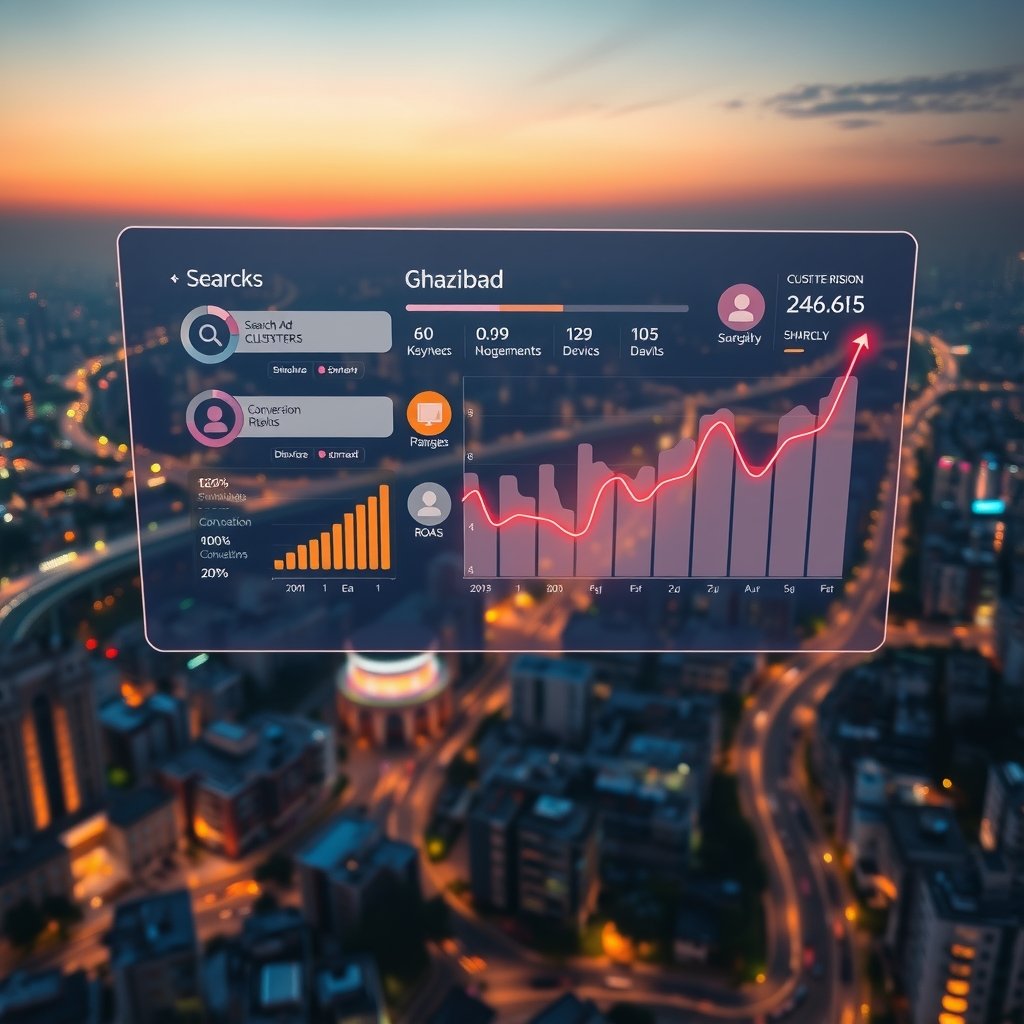
After eight weeks, the campaign delivered a CPL of INR 1,280—a 48 % reduction—and generated 183 qualified leads, up from 120. Monthly ad spend decreased to INR 3,10,000, saving INR 1,40,000 per month (approximately INR 3.2 lakh over the two‑month period). ROAS rose to 2.7×, and the overall lead‑to‑customer conversion improved from 4.5 % to 9.2 %. The campaign now contributes profitably to the sales pipeline.
| Metric | Before | After | % Change |
|---|---|---|---|
| Monthly Spend (INR) | 4,50,000 | 3,10,000 | -31% |
| Cost per Lead (INR) | 2,450 | 1,280 | -48% |
| Qualified Leads / Month | 120 | 183 | +53% |
| ROAS | 1.4× | 2.7× | +93% |
| Conversion Rate (Lead‑to‑Customer) | 4.5 % | 9.2 % | +104% |
Common Mistakes to Avoid
Mistake 1 – Over‑reliance on Broad Match: Using only broad match keywords can drain budget on irrelevant clicks. In one campaign, this caused an extra INR 90,000 monthly waste with a CPL inflation of 35 %. How to Avoid: Layer broad match with strict negative keywords, regularly review search term reports, and shift to phrase/exact match for high‑value terms.
Mistake 2 – Ignoring Device‑Specific Performance: Treating mobile and desktop equally often leads to higher CPL on mobile. A Delhi‑based B2B client saw mobile CPL 28 % above desktop, costing an extra INR 65,000 per month. How to Avoid: Analyze device reports, apply bid modifiers (‑10 % to ‑20 % on mobile if CPL is high), and create device‑tailored ad copy.
Mistake 3 – Skipping Audience Exclusions: Showing ads to job seekers or existing customers wastes spend. One SaaS firm lost INR 48,000 monthly by advertising to users visiting their careers page. How to Avoid: Exclude URLs like careers, support, and existing customer lists; use Google’s “excluded audiences” feature.
Mistake 4 – Overlooking Ad Fatigue: Running the same creative for too long reduces CTR and raises CPC. A campaign in Mumbai experienced a CTR drop from 3.2 % to 1.9 % after four weeks, increasing CPC by INR 45 per click and adding INR 52,000 to monthly spend. How to Avoid: Rotate ad copy every 10‑14 days, use responsive search ads, and set frequency caps (2‑3 impressions/user/day).
Mistake 5 – Not Feeding Offline Conversions: Optimizing for clicks only misleads the AI. A Bengaluru ed‑tech firm saw a ROAS of 1.6× because the AI undervalued leads that later became high‑value customers, losing roughly INR 78,000 in potential profit each month. How to Avoid: Import CRM lead‑to‑sale data into the ad platform, enable conversion value tracking, and switch to value‑based bidding.
Frequently Asked Questions
What is ai-powered ppc and how can it boost lead generation?
Ai-powered ppc refers to pay‑per‑click advertising campaigns that use artificial intelligence and machine learning algorithms to automate bidding, audience targeting, ad creative selection, and budget allocation. Instead of manual bid adjustments, the AI analyzes vast amounts of historical and real‑time data—such as user behaviour, device type, time of day, location, and past conversion signals—to predict which impressions are most likely to result in a valuable action, like a lead form submission. In the Indian market, where cost‑per‑click can vary dramatically between metros like Mumbai and tier‑2 cities such as Indore or Bhubaneswar, AI can dynamically shift spend to the geographies and audience segments delivering the lowest cost per lead while maintaining quality. The technology also powers responsive search ads, which automatically mix and match headlines and descriptions to find the highest‑performing combinations, thereby improving click‑through rates (CTR) and quality scores. By continuously learning from each interaction, the AI reduces wasted spend, lowers CPL, and increases the volume of qualified leads. For example, a Bangalore‑based B2B SaaS firm using ai‑powered ppc saw its CPL drop from INR 2,450 to INR 1,280 within two months, while lead volume rose by 53 %. The key advantage is that the system adapts faster than any human manager could, ensuring that the campaign stays aligned with shifting market dynamics, seasonal trends, and competitor activity.
How much budget should I allocate to test an ai-powered ppc campaign?
When launching an ai‑powered ppc test, the budget should be large enough to generate statistically significant data yet small enough to limit risk if the initial setup underperforms. A practical rule of thumb for Indian businesses is to allocate between INR 50,000 and INR 1,00,000 for a four‑week pilot, depending on the industry’s average cost per click (CPC). For high‑CPC sectors like finance or enterprise software, where CPCs can exceed INR 200, a budget of INR 1,00,000 may yield roughly 500 clicks, sufficient to collect conversion data. For lower‑CPC verticals such as education or local services, INR 50,000 can generate 1,500‑2,000 clicks. During the test, focus on gathering enough conversions—aim for at least 30‑40 qualified leads—to allow the AI to optimize effectively. If the pilot achieves a cost per lead (CPL) below your target and a return on ad spend (ROAS) of at least 2×, consider scaling the budget by 20‑30 % every two weeks while monitoring key metrics. Remember to set up proper conversion tracking, including offline CRM data, before the test begins, as the AI’s performance hinges on the quality of the feedback loop.
Can ai-powered ppc work for small businesses with limited marketing teams?
Absolutely. One of the biggest strengths of ai‑powered ppc is its ability to automate complex tasks that would otherwise require a dedicated specialist. Small businesses often lack the bandwidth to constantly adjust bids, test ad copy, or analyse audience insights. AI handles bid adjustments in real time, creates and tests multiple ad variations through responsive search ads, and identifies high‑performing audience segments without manual intervention. For instance, a boutique handicraft store in Jaipur with a monthly ad budget of INR 25,000 used an ai‑powered ppc campaign on Google Ads. The AI shifted 40 % of the budget to users searching for “handmade home décor” in nearby cities like Jodhpur and Udaipur, reduced the CPL from INR 350 to INR 210, and increased online orders by 68 % over six weeks. The store owner only needed to set the campaign goals, provide creative assets, and review weekly performance reports. Moreover, many platforms offer guided setup wizards and performance recommendations tailored to small‑business goals, making the entry barrier low. As long as conversion tracking is in place—whether it’s an online purchase, a phone call via call‑tracking numbers, or a form submission—the AI can optimize effectively, delivering results that would be difficult to achieve with manual management alone.
What metrics should I monitor to gauge the success of an ai-powered ppc campaign?
Success in an ai‑powered ppc campaign is measured through a blend of efficiency, volume, and profitability metrics. The primary efficiency metric is cost per lead (CPL), which tells you how much you spend to acquire a single qualified lead; a declining CPL indicates improving efficiency. Closely related is cost per acquisition (CPA) if you track leads through to sales. Volume metrics include the number of leads generated, click‑through rate (CTR), and impression share—especially important in competitive Indian metros where losing impression share to competitors can signal the need for higher bids or better ad relevance. Profitability is reflected in return on ad spend (ROAS) and return on investment (ROI); a ROAS above 2× is generally considered healthy for B2B services in India, while e‑commerce may aim for 3× or higher. Quality score (Google Ads) or relevance score (Meta Ads) provides insight into ad and landing‑page experience, influencing both CPC and ad rank. Additionally, monitor search lost IS (budget) and search lost IS (rank) to understand whether you’re missing traffic due to budget constraints or poor ad rank. Finally, track post‑conversion metrics such as lead‑to‑customer conversion rate and average order value (AOV) to ensure that the leads generated are not just cheap but also valuable. By reviewing these metrics weekly, you can decide whether to adjust bids, refine audiences, or reallocate budget to better‑performing segments.
Is it necessary to integrate offline conversion data with ai-powered ppc?
Integrating offline conversion data is highly recommended, especially for businesses where the final sale occurs outside the digital funnel—such as B2B services, high‑ticket education courses, or automotive dealerships. The AI bidding engine optimizes based on the conversion signals it receives; if it only sees online form submissions, it may undervalue leads that later become high‑value customers, leading to suboptimal bid decisions and wasted spend. For example, a Chennai‑based logistics firm initially optimized for form fills and observed a CPL of INR 1,800. After importing CRM data showing that 30 % of those leads converted into contracts worth INR 1,50,000 each, the AI shifted budget toward keywords and audiences associated with higher‑value leads, reducing the effective CPL to INR 1,100 and increasing ROAS from 1.8× to 3.2×. To set up offline conversion tracking, you need to assign a unique identifier (such as a Google Click ID or Facebook Click ID – GCLID) to each ad click, store it in your CRM when a lead is created, and then upload the final conversion status (e.g., qualified, won, lost) back to the ad platform via API or periodic CSV uploads. This closed‑loop feedback enables the AI to learn which clicks truly drive revenue, making your ai‑powered ppc campaign far more efficient and profitable.
How long does it take to see tangible results from an ai-powered ppc campaign?
The timeline for observable results depends on factors such as budget size, industry competitiveness, and the maturity of your tracking infrastructure. Generally, you can expect to see early signals—like changes in click‑through rate (CTR) and cost per click (CPC)—within the first 48‑72 hours as the AI begins to gather impression and click data. However, meaningful improvements in cost per lead (CPL) and conversion volume usually require at least two to three weeks of consistent data accumulation, allowing the algorithm to learn patterns and adjust bids effectively. In a recent campaign for a Pune‑based fintech startup, the CPL dropped from INR 3,200 to INR 1,900 after 18 days, and lead volume increased by 40 % by day 25. For industries with longer sales cycles, such as enterprise software or real estate, it may take four to six weeks before the impact on final sales becomes apparent, as the AI first optimizes for lead generation and then downstream conversion data refines the bidding strategy. Patience is crucial; making drastic budget or structural changes before the AI has sufficient learning window can reset its learning process and delay performance gains. A best practice is to set a minimum learning period of 14‑21 days, review performance against baseline metrics, and then iterate with incremental adjustments.
🚀 Ready to Implement This?
Get expert help from ShivatechDigital. 200+ Indian businesses already grew with our technology solutions.
Book Free expert consultation →⚡ Response within 24 hours | 🇮🇳 Trusted by Indian businesses
Conclusion
ai-powered ppc transforms lead generation by automating bidding, audience targeting, and creative testing, allowing businesses to achieve lower cost per lead and higher returns.
- Set up comprehensive conversion tracking, including offline CRM data, to give the AI accurate signals for optimization.
- Start with a controlled test budget (INR 50,000‑1,00,000) for 3‑4 weeks, then scale by 15‑25 % every two weeks while monitoring CPL and ROAS.
- Continuously refresh ad copy and audience segments—use responsive search ads, look‑alike audiences, and geographic expansions to tier‑2 cities like Kochi, Indore, and Bhubaneswar to maintain efficiency and volume.
10+ years experience helping 200+ businesses across Delhi, Noida, Greater Noida, Ghaziabad and Kanpur grow through technology. Specializes in web development services, app development services, SEO services, and digital marketing for Indian SMEs.






0
No comments yet. Be the first to comment!